Cook without recipes
This curriculum moves from intuitive, sensory-based cooking fundamentals all the way to the underlying science and creative flavor logic that let you improvise freely. Each stage builds the vocabulary and muscle memory needed for the next, so by the end you can walk into a kitchen with raw ingredients — no recipe required — and cook with confidence and intention.
Foundations: Learning to Cook by Feel
BeginnerDevelop core knife skills, heat control, and the sensory instincts (sight, smell, sound, touch) that let you judge doneness without a timer or thermometer.
▸ Study plan for this stage
Pace: 8–10 weeks total: Weeks 1–4 cover "Salt, Fat, Acid, Heat" (~25–30 pages/day, reading each of the four elements as a focused unit before moving on); Weeks 5–10 cover "The Food Lab" (~20–25 pages/day, prioritizing the foundational science chapters and technique deep-dives over recipe text on a first p
- The four elemental levers of flavor — salt, fat, acid, heat — and how each one independently and collectively transforms food (Nosrat's core framework)
- Salting by instinct: understanding salt's role in drawing out moisture, seasoning in layers, and tasting as you go rather than salting only at the end (Salt, Fat, Acid, Heat, Salt chapter)
- Fat as flavor carrier and texture builder: the difference between fats used for cooking (high smoke-point oils) vs. fats used for finishing (butter, olive oil) and how each changes a dish's character (Salt, Fat, Acid, Heat, Fat chapter)
- Acid as a balancing tool: how brightness from citrus, vinegar, or fermented ingredients can rescue a flat or over-salted dish, and when to add acid early vs. late (Salt, Fat, Acid, Heat, Acid chapter)
- Heat and the Maillard reaction vs. caramelization: understanding why dry, high heat browns food and wet, low heat steams it — and how to control your pan temperature by sight, sound, and smell (Salt, Fat, Acid, Heat, Heat chapter; The Food Lab, heat-transfer chapters)
- The scientific 'why' behind technique: López-Alt's hypothesis-and-test methodology teaches you to question cooking rules and understand the underlying physics and chemistry rather than follow recipes blindly (The Food Lab, Introduction and methodology sections)
- Knife skills and mise en place as the foundation of control: uniform cuts for even cooking, the importance of a sharp knife, and organizing your workspace before heat is applied (The Food Lab, Equipment and Knife Skills sections)
- Sensory doneness cues: using the sound of a sizzle, the color of a crust, the smell of caramelization, and the resistance of food under a finger or tongs to judge readiness without relying on timers or thermometers (synthesized across both books)
- According to Nosrat, what specific role does each of the four elements — salt, fat, acid, and heat — play in making food taste 'right,' and what happens to a dish when any one of them is out of balance?
- The Food Lab argues that understanding the 'why' behind a technique is more valuable than memorizing a recipe. Using one example from López-Alt's methodology, explain how you would troubleshoot a dish that isn't browning properly.
- How do the Maillard reaction and caramelization differ in terms of the ingredients involved and the temperatures required, and why does moisture in the pan prevent both from happening efficiently?
- Nosrat describes acid as a 'balancing' tool rather than just a souring agent. Give two practical scenarios — one where you add acid early in cooking and one where you add it at the end — and explain why the timing matters.
- What sensory signals (visual, auditory, olfactory, tactile) should you look for to know that a pan is hot enough before adding protein, and what do those signals tell you about the heat transfer happening at the surface?
- How does the concept of 'seasoning in layers' from Salt, Fat, Acid, Heat connect to López-Alt's scientific explanations of how salt penetrates and changes the structure of meat or vegetables over time?
- The Four-Element Diagnosis: Cook the same simple dish (e.g., sautéed vegetables or a fried egg) four times in one week, deliberately under-applying one element each time (no salt, no fat, no acid finish, low heat). Taste critically after each and write two sentences on what is missing — training your palate to isolate each lever as Nosrat describes.
- Knife Skill Drill (from The Food Lab's knife section): Practice the three fundamental cuts — julienne, dice, and chiffonade — on onions, carrots, and fresh herbs until all pieces in a batch are visually uniform. Time yourself each session and aim to halve your time over two weeks without sacrificing uniformity.
- The Sizzle-and-Steam Test: Heat a dry skillet over medium-high, then flick a few drops of water in. Observe and note the sound and behavior at three heat levels (low, medium, high). Then add a piece of protein and track the sound, color, and smell every 60 seconds without touching it — building the sensory vocabulary the Heat chapter demands.
- Acid Rescue Challenge: Intentionally over-salt a small batch of soup or sauce, then use only acid (lemon juice or vinegar, added in small increments) to bring it back into balance. Document how much acid it took and how the flavor profile shifted, reinforcing Nosrat's point that acid and salt are counterweights.
- Fat Comparison Cook: Prepare the same recipe (e.g., roasted potatoes or a simple pan sauce) using three different fats — a neutral high-smoke-point oil, butter, and extra-virgin olive oil added at the end. Taste side by side and write tasting notes on flavor, texture, and aroma, connecting your observations to the Fat chapter's framework.
- The Food Lab Replication Experiment: Choose one technique that López-Alt tests with multiple variables (e.g., burger smash technique, pasta water salinity, or resting meat after cooking). Replicate at least two of his tested variations at home, record your results, and compare them to his conclusions — practicing his hypothesis-driven approach firsthand.
Next up: Mastering these sensory fundamentals and the 'four-element' flavor framework gives you the intuitive baseline needed to tackle more complex techniques — such as braising, emulsification, and dough development — where multiple variables interact simultaneously and confident judgment replaces step-by-step instruction.
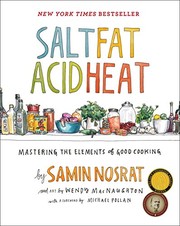
The perfect starting point: it teaches the four universal levers of good cooking rather than individual recipes, immediately training you to think in principles instead of steps.

Builds on Nosrat's principles with rigorous, experiment-driven explanations of why techniques work, giving beginners a reliable mental model for heat, browning, and texture.
Classical Technique: The Grammar of Cooking
BeginnerMaster the canonical French-rooted techniques — sautéing, braising, roasting, sauce-making — that form the shared grammar every professional kitchen uses.
▸ Study plan for this stage
Pace: 10–12 weeks total. Weeks 1–5: Jacques Pépin's "New Complete Techniques" — treat it as a visual reference manual; read 15–20 pages per session (3–4 sessions/week), pausing to cook each technique before moving on. Weeks 6–12: Julia Child's "Mastering the Art of French Cooking" — read 20–25 pages per s
- The five French mother sauces (béchamel, velouté, espagnole, hollandaise, sauce tomat) and how Child's recipes derive daughter sauces from them
- Dry-heat vs. moist-heat cooking methods: Pépin's photographic breakdowns of sautéing, roasting, and grilling versus Child's braising and poaching recipes
- Knife skills and mise en place as the foundation of every technique — Pépin dedicates entire chapters to cuts (julienne, brunoise, chiffonade) that Child's recipes assume you already know
- The Maillard reaction and fond: understanding why browning meat before braising (as Child instructs in Boeuf Bourguignon) builds flavor, as explained through Pépin's technique photos
- Fat management: clarifying butter (Pépin), using it as a cooking medium, and Child's insistence on not crowding the pan during sautéing
- Stock as infrastructure: Pépin's step-by-step stock construction (fond blanc, fond brun) underpins nearly every sauce and braise in Child's book
- Emulsification: Pépin's visual guide to hollandaise and mayonnaise technique paired with Child's written recipes for the same sauces
- Timing and heat control: reading doneness by touch, color, and internal temperature — a thread running through both authors' instructions
- After studying Pépin's knife chapters, can you name and demonstrate five classical cuts and explain which dish contexts call for each?
- Child's Boeuf Bourguignon involves sautéing, braising, and sauce reduction in sequence — can you explain why each step is performed in that order and what would go wrong if you skipped one?
- Pépin illustrates multiple ways to truss and roast a chicken; what is the purpose of trussing, and how does it affect heat distribution and final texture?
- Both authors cover hollandaise: what are the two most common failure points Pépin identifies visually, and how does Child's written recipe guard against them?
- Child builds her chapter on sauces around the mother-sauce concept — can you trace how a simple velouté becomes at least two different finished sauces using her recipes?
- How do Pépin's stock recipes function as a 'hidden ingredient' in Child's braised dishes, and what can you substitute if you have no homemade stock on hand?
- Technique week (Pépin-driven): Cook the same chicken breast three ways in one week — sautéed, poached, and roasted — using Pépin's photographic technique guides, then write a one-paragraph comparison of texture, crust, and moisture for each method.
- Stock marathon: Follow Pépin's fond blanc (white veal/chicken stock) and fond brun (brown stock) recipes back-to-back on a weekend; freeze in ice-cube trays and use exclusively in all subsequent Child recipes to taste the difference stock quality makes.
- Mother-sauce ladder: Using Child's sauce chapter, make béchamel from scratch, then use that béchamel as the base to produce Mornay sauce and Soubise — documenting each transformation in a cooking journal.
- The Boeuf Bourguignon benchmark: Cook Child's Boeuf Bourguignon in full, cross-referencing Pépin's photos for each sub-technique (lardons, mushroom sauté, pearl-onion glazing). Plate it, taste critically, and note one thing you would adjust next time.
- Knife-skills drill: Before each cooking session, spend 10 minutes practicing one Pépin cut (brunoise on Monday, julienne on Wednesday, chiffonade on Friday) until all three can be executed consistently and safely at moderate speed.
- Emulsion challenge: Make hollandaise using Pépin's visual guide, intentionally break it, then rescue it using his repair technique — repeat with Child's written method and compare the two experiences in your cooking journal.
Next up: Mastering these French-rooted techniques and the logic behind them — why you brown, why you deglaze, why stock matters — gives you the analytical framework to understand how other world cuisines either mirror, adapt, or deliberately subvert the same principles, making the exploration of global or modern cooking far more meaningful.

The most thorough visual guide to classical technique in print; reading it after the first stage gives you the 'how' to match the 'why' you already understand.

Works through classical French methods step by step in plain language, cementing technique through repetition across dozens of related dishes so patterns become second nature.
Flavor Intuition: Building and Balancing Taste
IntermediateUnderstand how flavors are constructed, layered, and balanced so you can season and compose a dish from scratch without relying on a recipe's measurements.
▸ Study plan for this stage
Pace: 6–8 weeks total. Week 1–3: Read "The Flavor Bible" — treat it as active reference work rather than cover-to-cover reading. Spend Week 1 on the introductory essays on flavor theory (~50 pages), then dedicate Weeks 2–3 to deep-diving 15–20 ingredient entries per day, pausing to study the affinity logi
- Flavor affinity vs. flavor contrast: The Flavor Bible distinguishes between ingredients that harmonize (share flavor compounds) and those that create tension — both are valid tools for composition.
- The four building blocks of taste — salt, acid, fat, heat — and how adjusting each one shifts the entire profile of a dish.
- Flavor layering and sequencing: when in the cooking process you add an ingredient (e.g., garlic raw vs. toasted vs. slow-cooked) dramatically changes its flavor contribution.
- Aroma as the dominant component of flavor: The Flavor Bible's introductory essays explain that most of what we perceive as 'taste' is olfactory, making fragrant ingredients (herbs, spices, citrus zest) disproportionately powerful.
- Ottolenghi's signature technique of building complexity through textural and flavor contrast within a single dish — sweet + bitter, creamy + sharp, warm spice + fresh herb.
- Seasoning in stages vs. seasoning at the end: Plenty's recipes demonstrate salting at multiple points (roasting, dressing, finishing) to build depth rather than just saltiness.
- The role of 'bridge' ingredients — items like tahini, pomegranate molasses, or preserved lemon in Plenty that link otherwise disparate flavor elements into a coherent whole.
- Trusting palate over measurement: using The Flavor Bible's affinity lists as a creative scaffold, not a rulebook, to develop personal seasoning instincts.
- After studying The Flavor Bible, can you look at a single hero ingredient and name at least five high-affinity pairings — and explain *why* those pairings work in terms of taste (sweet/acid/bitter/umami) or aroma families?
- Can you identify the moment in a Plenty recipe where Ottolenghi introduces acid, and explain what role it plays relative to the fat and salt already present in the dish?
- What is the difference between a dish that is 'well-seasoned' and one that is 'flavor-balanced,' and how do The Flavor Bible's principles help you achieve both simultaneously?
- How does cooking method (roasting vs. steaming vs. raw) change an ingredient's flavor contribution, and can you find two examples of this principle illustrated across different Plenty recipes?
- If a dish tastes flat or one-dimensional, which of the four taste levers would you reach for first, and how would you decide — drawing on the tasting framework introduced in The Flavor Bible?
- Can you reconstruct the flavor logic of one Ottolenghi dish — listing its salt layer, acid layer, fat layer, aromatic layer, and finishing element — without looking at the recipe?
- The Flavor Bible Ingredient Sprint: Pick one vegetable you cook often. Open its entry in The Flavor Bible and map its top 10 affinities onto a hand-drawn flavor web. Then cook that vegetable three ways — each time incorporating a different cluster of affinities — and taste-compare the results.
- Blind Seasoning Drill: Make a simple base (roasted carrots, lentil soup, or plain cooked grains). Divide into four bowls. Adjust only one variable in each bowl — more salt, more acid (lemon/vinegar), more fat (olive oil/butter), or a new aromatic — then taste all four side by side and write tasting notes describing the shift.
- Ottolenghi Reverse Engineering: Choose any three recipes from Plenty. Before cooking, annotate each recipe by labeling every ingredient with its flavor role (salt, acid, fat, bitter, sweet, aromatic, bridge). After cooking, evaluate whether your predictions matched your palate experience.
- Build-a-Dish from Affinities: Without a recipe, choose a seasonal vegetable, consult The Flavor Bible for its affinities, and compose an original dish using at least one ingredient from four different affinity categories. Cook it, taste it critically, and iterate with one adjustment before serving.
- The Subtraction Test: Cook a complete Plenty recipe as written, then cook it again omitting one 'bridge' ingredient (e.g., the pomegranate molasses, the preserved lemon, or the tahini). Taste both versions and write a paragraph on what the bridge ingredient was actually doing to the overall flavor balance.
- Weekly Palate Journal: Each week, after any meal you cook or eat, write 3–5 sentences identifying the dominant flavor layer, what is missing or out of balance, and what single ingredient — drawn from The Flavor Bible's affinity logic — would improve it.
Next up: ">Mastering flavor construction and balance here gives you the perceptual vocabulary and palate confidence to tackle the next stage — where technique, heat, and texture become the primary tools — because you'll be able to evaluate not just *how* a dish is cooked but *why* each technique serves the intended flavor outcome.
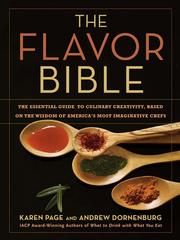
A reference-style map of ingredient affinities that trains your palate to think in flavor relationships rather than fixed combinations — essential for improvisation.

Demonstrates bold, ingredient-forward flavor building in practice; reading it alongside The Flavor Bible shows how abstract flavor logic translates into real, exciting dishes.
The Science Layer: Understanding What's Really Happening
IntermediateGrasp the underlying chemistry and physics of cooking — Maillard reaction, emulsification, protein denaturation, starch gelatinization — so you can diagnose and fix problems on the fly.
▸ Study plan for this stage
Pace: 10–12 weeks total. Weeks 1–8: "On Food and Cooking" by Harold McGee (~25–30 pages/day, focusing on chapters most relevant to core reactions — eggs, meat, dairy, grains, and heat/energy). Weeks 9–12: "The Kitchen as Laboratory" by César Vega (~15–20 pages/day, reading essay by essay and pausing to cr
- The Maillard reaction: how reducing sugars and amino acids combine under heat to create hundreds of flavor and color compounds, and the conditions (temperature, pH, moisture) that accelerate or inhibit it
- Protein denaturation and coagulation: how heat, acid, salt, and mechanical action unfold and re-bond proteins in eggs, meat, dairy, and gluten networks
- Emulsification: the role of emulsifiers (lecithin in egg yolk, casein in dairy) in stabilizing oil-in-water and water-in-oil systems, and why emulsions break
- Starch gelatinization and retrogradation: how starch granules absorb water and swell when heated, and how retrogradation causes staling in bread and gelling in sauces
- Caramelization vs. the Maillard reaction: distinguishing the two browning pathways, their different temperature thresholds, and their distinct flavor profiles
- Heat transfer modes — conduction, convection, and radiation — and how each affects cooking speed, crust formation, and moisture loss as explained through McGee's physical framework
- Collagen-to-gelatin conversion: the slow hydrolysis of connective tissue collagen during moist low-and-slow cooking, and its implications for braising and stock-making
- The scientific method applied to the kitchen: how the essays in Vega's 'The Kitchen as Laboratory' use controlled experiments and sensory analysis to validate or challenge culinary intuitions
- After reading McGee's sections on meat and eggs, can you explain in plain language why a steak forms a crust only after surface moisture evaporates, and what this tells you about pan temperature management?
- How does lowering the pH of an egg-white foam (e.g., adding cream of tartar) stabilize the protein network, and which sections of 'On Food and Cooking' ground this answer?
- Drawing on both McGee and the relevant essays in Vega's 'The Kitchen as Laboratory,' what variables can a cook manipulate to control the rate of starch gelatinization in a sauce or custard?
- What is the structural difference between a temporary and a permanent emulsion, and how does the concentration and type of emulsifier determine which you get?
- Using McGee's explanation of collagen hydrolysis, why does a braise cooked at a rolling boil produce tougher, drier meat than one held at a bare simmer, even if both reach the same internal temperature?
- How do the experimental essays in 'The Kitchen as Laboratory' extend or complicate McGee's foundational explanations — can you cite one specific example where the lab findings surprised you or contradicted a common assumption?
- Maillard control experiment: Cook three identical chicken thighs — one in a dry pan at high heat, one in a pan with a pinch of baking soda added to the surface (raises pH), one patted completely dry vs. one left moist. Document color, aroma, and flavor differences and map them back to McGee's conditions for the Maillard reaction.
- Emulsion build-and-break lab: Make a classic vinaigrette (temporary emulsion) and a mayonnaise (permanent emulsion) side by side. Then deliberately break the mayo by adding water too fast, and practice re-emulsifying it. Write a one-paragraph diagnosis using the vocabulary from McGee's dairy and egg chapters.
- Starch gelatinization comparison: Make four small batches of sauce using cornstarch, potato starch, flour, and arrowroot at the same concentration. Note the temperature at which each thickens, the final texture, and what happens after refrigeration (retrogradation). Cross-reference with McGee's grains chapter.
- Collagen conversion slow-cook: Braise a collagen-rich cut (e.g., beef short rib or pork shoulder) twice — once at a bare 180°F/82°C simmer for 4 hours and once at a vigorous 212°F/100°C boil for the same time. Compare texture, moisture, and gelatin content of the braising liquid, then write up findings as a mini lab report in the style of a Vega essay.
- Protein denaturation temperature mapping: Poach eggs in water held at 140°F, 155°F, 165°F, and 180°F. Photograph and taste each. Use McGee's egg chapter to predict the texture before cooking, then compare prediction to result — note where your model was right or wrong.
- Reading journal — hypothesis-first: Before each major chapter in McGee, write a one-paragraph hypothesis about the topic (e.g., 'I think caramelization and browning are the same process'). After reading, write a one-paragraph revision. When you reach Vega, apply the same habit to each essay's experimental question before reading its results section.
Next up: Mastering the science of why ingredients behave as they do sets the foundation for the next stage, where that mechanistic understanding gets translated into deliberate technique — knowing not just what is happening in the pan, but how to control it with precision and consistency.
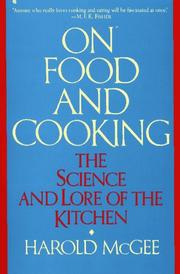
The definitive scientific reference for cooks; reading it now, after you have hands-on experience, makes the science immediately meaningful rather than abstract.

Bridges food science and practical cooking with accessible essays, deepening the McGee foundation and showing how scientific thinking directly improves everyday decisions at the stove.
Creative Freedom: Cooking Without a Net
ExpertSynthesize everything into a personal, improvisational cooking practice — learning to conceive, compose, and execute original dishes guided by taste, season, and instinct alone.
▸ Study plan for this stage
Pace: 6–8 weeks total: Weeks 1–4 cover "An Everlasting Meal" (~20–25 pages/day, reading slowly and reflectively — this book rewards re-reading passages); Weeks 5–8 cover "The Elements of Cooking" (~15–20 pages/day, pausing frequently to cross-reference techniques with live cooking sessions). Cook alongsid
- The 'everlasting meal' philosophy: cooking is a continuous, cumulative act where nothing is wasted and every meal feeds the next (Adler)
- Improvisational cooking as a mindset — reading what ingredients need rather than what a recipe demands (Adler)
- The transformative power of heat, salt, fat, and acid as the four universal levers a cook pulls instinctively (Adler & Ruhlman)
- Ruhlman's 'elements' framework: understanding cooking through ratios, techniques, and vocabulary rather than recipes
- Stock, sauce, and brine as foundational building blocks that give a cook structural freedom (Ruhlman)
- Mise en place as a philosophy of mind, not just a physical setup — thinking ahead so instinct can operate freely (Ruhlman)
- Flavor composition: balancing contrast (acid vs. fat, sweet vs. bitter) and harmony (complementary textures and aromatics) without a script (Adler)
- Seasonal and pantry-driven cooking: letting available ingredients — not a shopping list — define the dish (Adler)
- After reading Adler, can you articulate in your own words what she means by 'an everlasting meal,' and how does that philosophy change the way you approach leftovers, scraps, and 'nothing in the fridge' moments?
- Ruhlman organizes cooking around elements and ratios rather than recipes — what are the core ratios he identifies, and how do they function as a creative scaffold rather than a constraint?
- How do Adler and Ruhlman together reframe the role of stock and braising liquid — not just as technique, but as a connective tissue between meals?
- What is the difference between following instinct and following a whim in the kitchen, and how do both authors suggest a cook develops reliable instinct?
- Can you describe a complete original dish — from concept to plating — using only the compositional logic drawn from these two books, without referencing any recipe?
- How does Ruhlman's precise technical vocabulary (e.g., emulsification, reduction, seasoning) coexist with Adler's more intuitive, essayistic approach — and how do you reconcile the two in practice?
- The Everlasting Meal Chain: Cook one intentional 'anchor' meal (e.g., a roast chicken), then for five consecutive days cook only from what that meal leaves behind — bones become stock, stock becomes a braise, the braise becomes a pasta sauce, etc. Document each link in the chain and reflect on Adler's continuity principle.
- Ratio Cooking from Ruhlman: Pick three of Ruhlman's core ratios (e.g., brine, vinaigrette, béchamel) and cook each one from memory using only the ratio as your guide — no recipe. Vary one variable each time (fat type, acid, aromatics) and taste critically after each adjustment.
- The Blank Plate Exercise: Once a week, stand in front of your refrigerator and pantry for two minutes, then commit to cooking a complete meal in 45 minutes using only what is there. Write a one-paragraph 'composer's note' afterward explaining every flavor decision you made and why.
- Vocabulary-to-Plate Drill (Ruhlman): Choose five technical terms from 'The Elements of Cooking' glossary (e.g., 'nappe,' 'fond,' 'liaison') and design a dish specifically engineered to demonstrate each term — then cook and evaluate whether the technique is visible and intentional in the final plate.
- Seasonal Market Improvisation: Visit a farmers market or grocery store without a plan. Buy only what looks best and most alive. Return home and compose a two-course meal from those ingredients using Adler's instinct-first approach. No recipe lookup allowed — rely entirely on the sensory and compositional logic absorbed from both books.
- Written Dish Conception: Before cooking, write a full 'dish brief' — ingredient list, intended flavor arc (opening, middle, finish), texture contrasts, and the technique(s) from Ruhlman that will execute it. Cook the dish, then compare the brief to the result and write a honest post-mortem on where instinct overrode the plan and whether it improved or hurt the dish.
Next up: By internalizing Adler's improvisational philosophy and Ruhlman's elemental technical framework, the reader now has both the creative confidence and the structural vocabulary to move into any specialized culinary domain — whether world cuisines, pastry, fermentation, or professional technique — approaching new material not as a beginner following rules, but as a fluent cook asking sharper, more sp
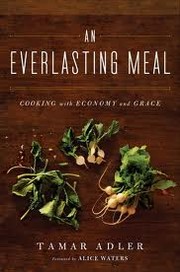
A philosophical and deeply practical guide to cooking intuitively from whatever is on hand; it reframes leftovers, scraps, and improvisation as the highest form of kitchen skill.
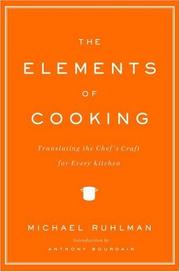
A concise, chef-minded lexicon of cooking concepts that consolidates everything learned across the curriculum into a portable mental framework for lifelong improvisation.
Discussion
Keep reading
Paths that share books, cover the same subject, or open a related topic.