Best Books on Parenting an Autistic Child
This curriculum moves from foundational understanding of autism through practical daily strategies, then into navigating schools and services, and finally centers autistic voices so parents can truly see the world through their child's eyes. Each stage builds the vocabulary, empathy, and advocacy skills needed for the next, creating a well-rounded, deeply informed autism parent.
Foundations: Understanding Autism
BeginnerBuild a compassionate, accurate mental model of what autism is, how it presents differently in every child, and how to move away from deficit-based thinking toward a strengths-based lens.
▸ Study plan for this stage
Pace: 4–5 weeks, ~25–30 pages/day. Read "Ten Things Every Child with Autism Wishes You Knew" in week 1–2 (approximately 200 pages), then "Uniquely Human" in weeks 3–5 (approximately 300 pages). Allow 2–3 days between books for reflection and note consolidation.
- Autism as a neurological difference, not a defect or tragedy—understanding the autistic perspective and lived experience
- Sensory processing differences: how autistic children experience the world through heightened or altered sensory input (sound, light, touch, taste, smell)
- Executive function challenges and the need for structure, predictability, and support in transitions and planning
- Communication diversity: autism presents across a spectrum of verbal and non-verbal communication styles; silence or atypical speech does not indicate lack of understanding or intelligence
- The concept of 'dynamic developmental individual differences' (DDI)—each autistic child is unique; avoid one-size-fits-all assumptions
- Strengths-based thinking: recognizing autistic traits as potential gifts (pattern recognition, attention to detail, deep focus, logical thinking) rather than only deficits
- The role of relationships and connection in autism; autistic children want meaningful relationships but may need different pathways to build them
- How anxiety, meltdowns, and behavioral challenges are often communication attempts or responses to sensory/emotional overwhelm, not willful misbehavior
- What are the 'ten things' Notbohm identifies that autistic children wish others knew, and why does each matter for how you interact with an autistic child?
- How do sensory processing differences affect an autistic child's behavior and emotional regulation? Give 2–3 specific examples from the books.
- What does Prizant mean by 'dynamic developmental individual differences,' and how should this concept change your expectations when parenting or supporting an autistic child?
- Describe the difference between a deficit-based and strengths-based lens for autism. How would your parenting approach differ under each?
- Why might an autistic child have a meltdown or 'behavioral outburst'? What does Prizant suggest these moments communicate, and how should adults respond?
- How do autistic children experience relationships and connection differently? What does this mean for building trust and attachment with them?
- Create a 'sensory profile' for an autistic child you know (or a hypothetical child). List their sensory sensitivities and preferences across all five senses, then brainstorm 3–5 environmental or daily-life modifications that could reduce overwhelm.
- Reframe three common 'autistic behaviors' (e.g., stimming, avoiding eye contact, repetitive speech) using Notbohm's and Prizant's frameworks. Write a short paragraph for each explaining what the behavior might mean from the child's perspective.
- Read Notbohm's 'ten things' list and write a personal reflection: which points surprised you most, and which challenged your previous assumptions about autism?
- Observe or recall a time an autistic child had a meltdown or shutdown. Using Prizant's concept of behavior as communication, hypothesize what sensory, emotional, or developmental need might have been unmet. What could an adult have done differently?
- Interview a parent, educator, or autistic adult (if possible) about a strength or 'gift' they associate with autism. Document their answer and reflect on how this aligns with or expands the strengths-based lens presented in the books.
- Create a one-page 'strengths inventory' for an autistic child you know, listing 5–7 abilities, interests, or traits that are often overlooked. Share it with a caregiver or educator and discuss how these strengths could be leveraged in daily life.
Next up: This stage establishes the foundational understanding that autism is a neurological difference with distinct sensory, communication, and developmental characteristics—not a tragedy—which prepares you to move into the next stage: practical strategies for supporting autistic children's learning, communication, and emotional regulation in everyday contexts.
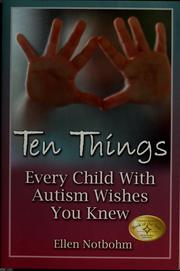
A warm, accessible first read that immediately reframes autism from the child's perspective, giving new parents empathy and practical insight without overwhelming jargon.

Introduces the neurodiversity-affirming framework and reframes 'challenging behaviors' as meaningful communication, setting the philosophical foundation for all later reading.
Communication & Sensory Needs
BeginnerUnderstand how autistic children communicate — verbally, nonverbally, and through behavior — and how sensory processing differences shape every moment of their day.
▸ Study plan for this stage
Pace: 6–8 weeks, ~25–30 pages/day (approximately 2–3 weeks per book with time for reflection and exercises)
- Lagging skills vs. willful misbehavior: Understanding that explosive behavior often stems from unmet cognitive and emotional needs, not defiance
- The collaborative problem-solving framework: How to involve your child as a partner in identifying and solving problems that trigger dysregulation
- Sensory processing differences: How autistic children perceive and process sensory input (touch, sound, sight, movement, taste, smell) differently, often leading to overload or seeking
- Behavioral communication: Recognizing that challenging behaviors are communication attempts—your child is expressing unmet needs through their actions
- Sensory diet and environmental modifications: Practical strategies to reduce sensory triggers and provide appropriate sensory input throughout the day
- Verbal and nonverbal communication styles: How autistic children may communicate through echolalia, scripting, selective mutism, or alternative methods beyond typical speech
- The connection between sensory dysregulation and behavioral escalation: How unaddressed sensory needs directly fuel meltdowns and explosive moments
- Intentional communication strategies: Using environmental cues, visual supports, and child-led interaction to build language and understanding
- What is the difference between a lagging skill and a behavioral choice, and why does this distinction matter when your child has a meltdown?
- How can you use the collaborative problem-solving approach from Greene to help your autistic child communicate their needs before they escalate?
- What are the main sensory systems affected in autistic children, and how might sensory overload manifest as 'explosive' behavior?
- How do you recognize when your child's challenging behavior is actually an attempt to communicate, and what should you do in response?
- What is a sensory diet, and how can you design one tailored to your child's specific sensory seeking and avoiding patterns?
- What are three nonverbal or alternative communication methods your autistic child might use, and how can you build on these to expand their communication?
- Track your child's meltdowns for one week: Note the time, trigger, sensory environment (noise, lighting, crowds), and behavior. Identify patterns—are certain sensory conditions present before escalation?
- Practice the collaborative problem-solving steps from Greene with one recurring problem: Empathize, ask what's up, explain your concern, and brainstorm solutions together. Document the conversation and outcome.
- Create a sensory profile for your child: List their sensory sensitivities (what overwhelms them) and sensory seeking behaviors (what they crave). Then design a simple sensory diet with 3–5 activities to offer throughout the day.
- Observe and document your child's nonverbal communication for 3 days: Note gestures, sounds, body language, scripting, or echolalia. What are they trying to tell you? Create a simple chart of their 'communication signatures.'
- Audit your home environment for sensory triggers: Identify one room with excessive noise, visual clutter, or harsh lighting. Make one modification (dim lights, reduce clutter, use white noise) and observe your child's behavior for a week.
- Record a 10-minute interaction with your child and review it: Identify moments where they communicated (verbally or nonverbally), where sensory input affected them, and where you could have used a sensory strategy. Reflect in writing.
Next up: This stage equips you to see your child's communication and behavior through a sensory and skill-development lens, setting the foundation for the next stage, which will likely focus on building specific skills, managing daily routines, and creating structured support systems that honor both their communication style and sensory needs.

Teaches the Collaborative Problem Solving approach to meltdowns and rigidity; reading this early prevents parents from misreading stress responses as defiance.
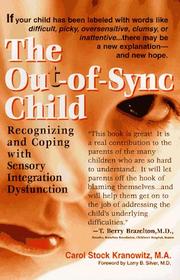
The definitive parent guide to sensory processing differences — explains why textures, sounds, and movement affect behavior so profoundly, with clear real-life examples.
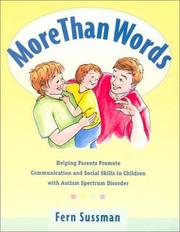
Developed by Hanen, this practical guide helps parents of minimally verbal or nonverbal children build communication through everyday interaction and play.
School, Services & Advocacy
IntermediateNavigate IEPs, therapies, school placements, and service systems with confidence, and become an effective advocate for your child's rights and needs.
▸ Study plan for this stage
Pace: 4–5 weeks, ~25–30 pages/day (approximately 150–170 pages total)
- The legal framework of IDEA and your child's right to a free appropriate public education (FAPE)
- The structure and purpose of IEPs: measurable goals, present levels of performance, and accommodations vs. modifications
- How to prepare for and participate effectively in IEP meetings, including documentation and communication strategies
- Understanding special education placement options and how to evaluate whether your child's current placement is appropriate
- Your role as a parent advocate: knowing your rights, requesting evaluations, and challenging school decisions
- How to read and interpret IEP documents, including understanding service delivery models and frequency of services
- The difference between procedural safeguards and substantive rights, and when to invoke them
- What does FAPE mean, and what are the key components that must be included in an IEP to ensure your child receives it?
- How do you prepare for an IEP meeting, and what documentation should you bring to advocate effectively for your child?
- What are the main differences between accommodations and modifications, and how do you determine which your child needs?
- What are your procedural rights under IDEA if you disagree with the school's evaluation or proposed IEP?
- How do you evaluate whether your child's current school placement is the least restrictive environment (LRE) for them?
- What questions should you ask during an IEP meeting to ensure the goals are measurable and the services are appropriate?
- Create a template document for tracking your child's current performance data (academic, social, behavioral) to bring to IEP meetings
- Write out 3–5 specific, measurable goals you believe your child should have, using the SMART framework (Specific, Measurable, Achievable, Relevant, Time-bound)
- Conduct a mock IEP meeting with a partner or family member, practicing how you would present concerns and ask clarifying questions
- Review your child's current IEP (if one exists) and annotate it, identifying each component: present levels, goals, services, placement, and accommodations/modifications
- Create a one-page 'IEP meeting agenda' for your next meeting, including specific topics you want to address and questions you want answered
- Research your state's special education due process procedures and create a simple flowchart of what happens if you disagree with the school's decision
Next up: This stage equips you with the knowledge and confidence to navigate the formal systems that support your child's education; the next stage will expand your toolkit to address related services (therapies, evaluations, accommodations outside school) and build a broader support ecosystem beyond the IEP.

A thorough, parent-friendly legal and practical guide to the Individualized Education Program process — essential reading before any school meeting.
Autistic Voices: Seeing the World from the Inside
IntermediateDeeply internalize the autistic experience by reading first-person accounts and autistic-authored guidance, transforming how parents interpret their child's behavior and inner life.
▸ Study plan for this stage
Pace: 8–10 weeks, ~40–50 pages/day (accounting for reflection pauses and re-reading passages for deeper understanding)
- Autistic cognition operates through different sensory and processing pathways (visual thinking, pattern recognition, detail-focus) rather than deficits—Temple Grandin's framework of thinking in pictures as a legitimate alternative cognitive style
- The internal autistic experience is rich, intentional, and communicative even when external expression appears limited—Naoki Higashida's insights into why autistic people behave as they do and what they're experiencing internally
- Autistic children have agency, preferences, and perspectives that parents often cannot directly access without learning to interpret non-traditional communication and behavior
- Sensory experiences (overwhelm, filtering, seeking) drive much autistic behavior and are not willful misbehavior—understanding the sensory world as autistic people experience it
- Neurodiversity as identity: autism is not something to be cured but understood and accommodated; autistic people have strengths, values, and ways of being that deserve respect
- The gap between how autistic people experience themselves internally versus how they appear externally to non-autistic observers—and why this gap exists
- Practical strategies for supporting autistic children based on understanding their actual needs rather than normalizing them
- How autistic women and nonbinary autistic people's experiences differ from and expand upon the more commonly centered male autistic narrative
- How does Temple Grandin describe her thinking style, and what does she mean by 'thinking in pictures'? How might this help you reframe your child's problem-solving or learning approach?
- According to Naoki Higashida, why do autistic children engage in repetitive behaviors or seemingly 'difficult' actions? What is he communicating about his internal experience?
- What does Higashida reveal about autistic people's capacity for love, connection, and understanding of others' emotions? How might this change your assumptions about your child's inner life?
- What specific accommodations or interpretations do the autistic authors suggest parents should make to better support their children? Name at least three concrete examples from the books.
- How do the perspectives in 'Sincerely, Your Autistic Child' (particularly from women and nonbinary autistic people) add nuance or challenge ideas presented in the earlier books?
- Describe a behavior your child exhibits that frustrated or confused you before reading this stage. How would Temple Grandin, Naoki Higashida, or the authors of 'Sincerely, Your Autistic Child' help you reinterpret it?
- While reading 'Thinking in Pictures,' keep a 'sensory journal' documenting your own sensory preferences and how you process information (visual, auditory, kinesthetic, etc.). Compare your patterns to Grandin's descriptions and reflect on how your child's sensory profile might differ.
- After finishing 'The Reason I Jump,' write a 'day in the life' narrative from your autistic child's perspective, imagining their internal experience during a typical day. Use Higashida's insights about why he does things to inform your interpretation.
- Create a 'behavior translation guide' for your child: list 3–5 behaviors that typically trigger frustration or confusion, then reinterpret each one using the lens of sensory experience, communication attempts, or autistic processing style from the books.
- Select one passage from each book that shifted your understanding most significantly. Write a reflection (1–2 paragraphs per passage) on how it changes how you see your child and what you might do differently as a result.
- Practice 'autistic perspective-taking' in real time: during a challenging moment with your child, pause and ask yourself 'What might Temple Grandin, Naoki Higashida, or the authors of 'Sincerely, Your Autistic Child' say about what's happening right now?' Document these moments and what you discovered.
- Interview or observe your autistic child (or another autistic person if your child is pre-verbal or non-speaking) about their sensory preferences, interests, or how they experience a specific situation. Use the frameworks from the books to ask better questions and listen for what they're communicating.
Next up: This stage transforms your understanding of your child's inner world and autistic cognition itself; the next stage will equip you with practical, evidence-based strategies and systems to design your home, routines, and parenting approach around these insights.

The landmark memoir by the world's most recognized autistic author; gives parents a vivid, detailed window into visual and sensory thinking that no clinical text can match.

Written by a nonspeaking autistic teenager, this book answers the questions parents most want to ask — why repetition, why meltdowns, why — in a profoundly humanizing way.

A diverse anthology of autistic voices addressing parents directly on identity, masking, and what support actually helps — the ideal capstone that ties every prior stage together.
Discussion
Keep reading
Paths that share books, cover the same subject, or open a related topic.