Best books for single parents raising kids solo
This curriculum takes a single parent from emotional grounding and daily survival skills all the way through financial independence and raising resilient, emotionally healthy children. Each stage builds on the last — you'll first stabilize your mindset and routines, then master boundaries and communication, and finally tackle money and long-term resilience — so no stage feels overwhelming without the foundation of the one before it.
Foundations: Stability, Mindset & Daily Routines
BeginnerEstablish a confident single-parent identity, create workable daily routines, and build the emotional resilience needed to lead your household with calm and purpose.
▸ Study plan for this stage
Pace: 6–7 weeks, ~25–30 pages/day. Week 1–3: "The Whole-Brain Child" (approximately 304 pages); Week 4–7: "The Miracle Morning" (approximately 240 pages), with overlap for integration and practice.
- The brain architecture of children: left vs. right hemisphere functions and how to integrate them for emotional regulation and resilience
- Mindsight: the ability to understand your child's (and your own) inner mental life, reducing reactive parenting and building connection
- The Window of Tolerance: recognizing when your child (and you) are in a calm, learning state versus dysregulated, and techniques to return to baseline
- Whole-brain integration strategies: naming emotions, connecting with your child, and using storytelling to help children process difficult experiences
- The Miracle Morning routine (SAVERS): Silence, Affirmations, Visualization, Exercise, Reading, and Scribing as a daily foundation for calm, purposeful leadership
- Morning rituals as a non-negotiable anchor: how a consistent AM routine creates stability for the entire household and models self-care for your children
- Emotional resilience through self-awareness: understanding your own triggers and stress responses so you can parent from intention rather than reaction
- What is the difference between left-brain and right-brain functions in children, and why does integrating both matter for a single parent managing household stress?
- How can you use mindsight to de-escalate a conflict with your child, and what is the first step you should take when your child is emotionally dysregulated?
- What are the signs that you or your child are outside the Window of Tolerance, and what are three concrete techniques from 'The Whole-Brain Child' to return to calm?
- How does a consistent Miracle Morning routine (SAVERS) create stability in your household, and which element feels most achievable for you to start with?
- What is your personal trigger or stress response as a single parent, and how can understanding it help you model emotional resilience for your children?
- How can you integrate a whole-brain parenting approach with a morning-centered routine to build both daily structure and emotional connection?
- Map your child's (and your own) left-brain vs. right-brain tendencies over one week: note when emotions arise, how they're expressed, and which hemisphere seems dominant. Identify one situation where you can intentionally engage the weaker side.
- Practice mindsight: choose one daily conflict with your child and pause before reacting. Spend 30 seconds imagining what your child might be feeling/thinking underneath their behavior, then respond with curiosity instead of correction.
- Create a personal Window of Tolerance chart: list your physical and emotional signs of being calm/regulated, mildly stressed, and highly dysregulated. Share an age-appropriate version with your child so you both recognize the signs.
- Design your Miracle Morning SAVERS routine: commit to just 6 minutes total for one week (1 minute per element). Track which elements energize you most and which feel forced; adjust accordingly.
- Write down your top 3 parenting triggers (e.g., morning chaos, bedtime resistance, sibling conflict). For each, identify the underlying need or fear, then brainstorm one whole-brain response you could use next time.
- Conduct a 'whole-brain family meeting': use the Whole-Brain Child's storytelling technique to help your child process a recent difficult moment. Record (mentally or on paper) what you learned about their inner experience.
Next up: This stage equips you with the neuroscience and daily rituals to stay calm and connected under pressure; the next stage will build on this foundation by teaching you how to set boundaries, manage sibling dynamics, and handle specific behavioral challenges with the same whole-brain, resilient mindset.

Introduces essential vocabulary about child brain development and emotional regulation, giving you a science-backed lens for understanding your kids' behavior right from the start.

Teaches a structured morning routine framework that single parents can adapt to reclaim personal time and energy — a critical skill before adding more complex responsibilities.
Boundaries & Communication: Running a Calm Household
BeginnerLearn to set loving, consistent boundaries with your children, communicate effectively under stress, and reduce daily conflict so the home feels safe and structured.
▸ Study plan for this stage
Pace: 4–5 weeks, ~25–30 pages/day. Week 1–2: "How to Talk So Kids Will Listen" (approximately 270 pages). Week 3–5: "No-Drama Discipline" (approximately 320 pages), with overlap for practice and integration.
- Reflective listening and acknowledging feelings as the foundation for reducing conflict and building trust
- Naming emotions and validating children's inner experiences rather than dismissing or minimizing their feelings
- Setting limits with empathy: how to say 'no' while maintaining connection and respect
- The brain science of discipline: understanding how stress and shame shut down a child's learning capacity
- The SLAPN framework (Stop, Label, Ask, Pause, Nurture) for responding to misbehavior with calm presence
- Replacing punishment and shame-based discipline with teaching moments that build neural pathways for better behavior
- Consistency and follow-through as expressions of love, not control
- Creating household routines and structures that prevent conflict before it starts
- What is reflective listening, and how does it differ from advice-giving or problem-solving? Give a specific example from your own parenting.
- How do you acknowledge a child's feelings while still maintaining a boundary they don't like? Use a concrete scenario.
- According to Siegel's brain science, why does shame and punishment often backfire in discipline? What happens in the child's brain?
- What is the difference between 'time-out' as punishment and time-in or connection-based discipline? When would you use each?
- Describe a recent conflict in your household. How could you have applied either reflective listening or the SLAPN framework to change the outcome?
- What role do routines and predictability play in reducing daily conflict, and how can you build them into your family's day?
- Practice reflective listening: For one week, respond to your child's complaints or emotions by naming what you hear (e.g., 'It sounds like you're frustrated because...') before offering solutions. Record what you notice about their response.
- Create a 'feelings chart' with your child(ren) listing emotions and body sensations. Use it daily to help them name what they're experiencing before behavior escalates.
- Role-play a boundary-setting conversation with a partner or friend. Practice saying 'no' while validating the child's disappointment (e.g., 'I know you really want to stay up late, and bedtime is 8 p.m.').
- Identify one recurring conflict in your home (e.g., morning rush, screen time, sibling arguing). Design a routine or structure to prevent it, and implement it for two weeks.
- After a discipline moment, write a brief reflection: What was the child's behavior? What was their emotional state? How did you respond? What would you do differently using Siegel's approach?
- Teach your child the SLAPN framework in age-appropriate language. Practice it together during a calm moment, then use it the next time they're upset.
Next up: Mastering calm communication and consistent boundaries creates the emotional safety and trust needed to move into the next stage, where you'll learn to navigate specific parenting challenges (such as managing your own stress, handling difficult behaviors, and building resilience) with confidence and clarity.
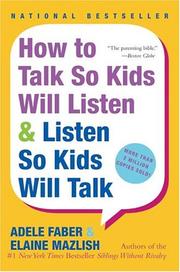
The canonical guide to parent-child communication — reading this after the brain-development foundation of Stage 1 lets you immediately apply its scripts and techniques.

Builds directly on The Whole-Brain Child to show how to enforce boundaries without power struggles, which is especially vital when you are the sole disciplinarian in the home.
Solo Finances: Security & Independence
IntermediateBuild a realistic budget on a single income, eliminate financial anxiety, start saving, and create a financial safety net for your family.
▸ Study plan for this stage
Pace: 6–8 weeks, ~25–30 pages/day (approximately 1–2 weeks per book with time for exercises and budget implementation)
- The Baby Steps framework: building an emergency fund, paying off debt, and creating wealth systematically
- Behavioral psychology of money: understanding emotional spending patterns and how to rewire financial habits
- Creating a realistic single-income budget that accounts for fixed costs, variable expenses, and irregular expenses
- Debt elimination strategies: the debt snowball method and why it works psychologically for solo parents
- Automating finances to remove willpower from the equation and build consistent saving habits
- The 50/30/20 framework: allocating income to needs, wants, and savings in a sustainable way
- Building a financial safety net: emergency fund targets, insurance needs, and protecting your family's future
- Investing basics for long-term wealth: understanding retirement accounts and how to start investing on a single income
- What are Dave Ramsey's Baby Steps, and how would you adapt them to your specific situation as a single parent?
- How do you identify and eliminate emotional spending triggers, and what strategies from both books help you stay accountable?
- Walk through your actual monthly expenses: what are your fixed costs, variable costs, and irregular expenses, and how do they fit into a realistic budget?
- What is your debt elimination plan using the debt snowball method, and how long realistically will it take you to become debt-free?
- How will you automate your finances to ensure you save consistently without relying on willpower alone?
- What does a 3–6 month emergency fund look like for your family, and what's your timeline for building it?
- Complete a full expense audit: track every dollar spent for 2 weeks, categorize expenses, and identify spending leaks and emotional triggers
- Build your first realistic single-income budget using Ramsey's zero-based budgeting approach; include all fixed costs, variable costs, and a small 'fun money' allocation
- List all debts (credit cards, student loans, car loans, etc.) and calculate the debt snowball: order by smallest to largest balance and project payoff timelines
- Set up automatic transfers to a separate savings account for your emergency fund; start with whatever amount is realistic (even $25–50/paycheck counts)
- Create a 'money autobiography': write down your earliest money memories, family messages about money, and current financial fears to identify behavioral patterns
- Calculate your target emergency fund amount (3–6 months of expenses) and break it into milestones; celebrate each milestone reached
- Research and open a high-yield savings account for your emergency fund and automate deposits to remove the temptation to spend it
- Implement one 'automation rule' from Sethi's system: set up automatic bill payments, savings transfers, or investment contributions so money moves before you see it
Next up: This stage equips you with a solid financial foundation—a working budget, eliminated high-interest debt, and an emergency safety net—which positions you to move into the next stage focused on building long-term wealth, investing confidently, and securing your family's educational and retirement future.

A clear, step-by-step debt-elimination and savings plan that works on any income level — the straightforward 'baby steps' framework is ideal for a single parent starting from scratch.
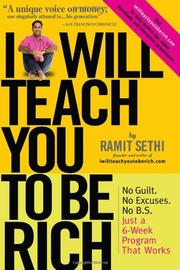
Complements Ramsey's foundational plan with modern automation strategies — automating savings and bills reduces the mental load that single parents carry disproportionately.
Raising Resilient Kids: Emotional Health & Independence
IntermediateUnderstand how to raise emotionally strong, self-sufficient children in a single-parent home, helping them thrive despite adversity and develop a growth mindset.

Introduces 'emotion coaching' — a research-backed method for helping children name and manage feelings, which is especially powerful when one parent carries the full emotional load.
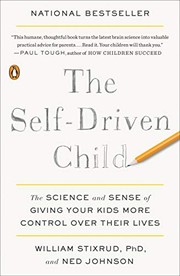
Shows how to give children appropriate autonomy and control over their own lives, building the independence and resilience that single-parent kids especially need to develop.
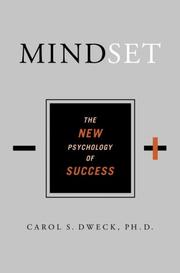
Caps the curriculum by teaching you how to model and instill a growth mindset in your children — a proven predictor of long-term success and resilience that you can practice together.
Discussion
Keep reading
Paths that share books, cover the same subject, or open a related topic.