Best Books on Teaching a Child to Read
This curriculum takes a parent from zero background in reading instruction all the way to confident, research-backed practice at home. It begins with the "why" behind the science of reading, moves into the practical mechanics of phonics and decoding, then equips you to spot and respond to difficulty early, and finally celebrates the joy of reading aloud together — because fluency and love of books go hand in hand.
The Big Picture: Why Reading Is Taught the Way It Is
BeginnerUnderstand the science behind how children learn to read, why phonics is essential, and what 'the reading wars' debate means for your child today.
▸ Study plan for this stage
Pace: 4–5 weeks, ~25–30 pages/day (approximately 150–180 pages/week). "Proust and the Squid" is dense with neuroscience and history, so allow time for reflection and note-taking between chapters.
- The reading brain is a recent evolutionary development that repurposes existing neural circuits (the 'neuronal recycling' hypothesis) rather than using innate, dedicated reading areas
- Phonological awareness and the ability to map sounds to symbols are foundational prerequisites that must develop before fluent reading can occur
- Different writing systems (alphabetic, logographic, syllabic) engage the brain differently and require different neural pathways
- Dyslexia and reading difficulties arise from differences in how the brain processes phonological information, not from lack of intelligence or effort
- The 'reading wars' debate between whole-language and phonics-based approaches has real neurobiological underpinnings that Wolf's research clarifies
- Individual differences in reading development are normal; children's brains develop reading circuits at different rates and through different neural routes
- Reading proficiency requires the integration of multiple brain systems: phonological, orthographic, semantic, and syntactic processing working in concert
- What does Maryanne Wolf mean by the 'neuronal recycling' hypothesis, and why is reading not a 'natural' ability like spoken language?
- How do phonological awareness and phonemic awareness differ, and why does Wolf argue they are critical prerequisites for learning to read?
- What are the key differences in how the brain processes alphabetic versus logographic writing systems, and what does this tell us about reading instruction?
- How does Wolf explain dyslexia in neurobiological terms, and what does her research suggest about the relationship between dyslexia and intelligence?
- What is the 'reading wars' debate, and what does Wolf's neuroscientific evidence suggest about the role of phonics versus whole-language approaches?
- Why does Wolf argue that reading development is not a single linear pathway, and what does this mean for how we should expect children to learn to read?
- Create a visual diagram of the reading brain based on Wolf's description of the neural circuits involved in reading (phonological, orthographic, semantic areas). Label each region and explain its role in the reading process.
- Track your own reading experience: As you read 'Proust and the Squid,' pause and notice when you are processing phonological information (sounding out words) versus accessing meaning directly. Reflect on how this changes with familiar versus unfamiliar words.
- Conduct a mini-experiment with a child or peer: Assess their phonological awareness by asking them to identify rhyming words, segment words into sounds, and blend sounds into words. Compare your observations to Wolf's descriptions of phonological development.
- Create a comparison chart of alphabetic, logographic, and syllabic writing systems (using examples from the book). For each, note which brain regions Wolf says are most heavily engaged and why.
- Write a 1–2 page reflection on the 'reading wars' debate: Summarize Wolf's position on phonics versus whole-language instruction, and explain how her neuroscientific findings support a balanced approach.
- Interview a parent, teacher, or reading specialist about how they have seen reading difficulties manifest in children, and connect their observations to Wolf's neurobiological explanations of dyslexia and reading struggles.
Next up: This stage establishes the neuroscientific foundation for why reading instruction matters and how the brain learns to read, preparing you to move into the next stage where you'll learn the specific, evidence-based instructional methods and strategies that align with this science.
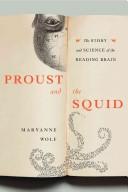
Wolf explains how the human brain is literally rewired to read, giving you a deep and accessible understanding of what is actually happening in your child's mind as they learn — essential intuition before diving into methods.
Foundations: Phonics and the Science of Reading
BeginnerLearn the core principles of systematic phonics instruction and understand the Simple View of Reading so you can guide your child's earliest decoding steps with confidence.
▸ Study plan for this stage
Pace: 6–7 weeks, ~25–30 pages/day (approximately 3–4 weeks for Kilpatrick, then 3 weeks for Engelman's lessons)
- The Simple View of Reading: decoding and language comprehension as the two essential pillars, and why both matter equally
- Phonological awareness (rhyming, syllable segmentation, phoneme manipulation) as a prerequisite foundation before letter-sound instruction
- Systematic phonics: the structured, explicit teaching of letter-sound correspondences in a deliberate sequence, not incidental or whole-word methods
- The alphabetic principle: understanding that letters represent sounds and that blending these sounds creates words
- Orthographic mapping: how repeated decoding of words gradually builds automatic word recognition in memory
- The role of oral language and vocabulary development alongside decoding instruction
- Practical implementation of Engelman's Direct Instruction model: scripted lessons, immediate feedback, and cumulative review to ensure mastery
- What are the two components of the Simple View of Reading, and why is it insufficient to teach only one of them?
- How does phonological awareness differ from phonics, and why should phonological awareness activities precede formal letter-sound instruction?
- What does 'systematic phonics' mean, and how does it differ from incidental phonics or whole-word approaches?
- Explain the alphabetic principle and describe how a child uses it to decode an unfamiliar word like 'cat' or 'blend'.
- What is orthographic mapping, and how does it explain the transition from slow, effortful decoding to automatic word recognition?
- How do the scripted lessons and cumulative review structure in 'Teach Your Child to Read in 100 Easy Lessons' implement the principles from Kilpatrick's work?
- Complete a phonological awareness audit: assess a child's ability to rhyme, segment syllables, and manipulate phonemes (initial sound deletion, blending sounds). Record baseline performance.
- Work through Lessons 1–20 of 'Teach Your Child to Read in 100 Easy Lessons' with a child or peer, noting how the scripted format introduces one new letter-sound at a time and builds cumulative review.
- Create a written summary of the Simple View of Reading using Kilpatrick's framework, then identify a real reading difficulty (e.g., a child struggling with fluency) and diagnose whether the problem stems from decoding, comprehension, or both.
- Design a 2-week phonological awareness sequence for a beginner reader, selecting activities from Kilpatrick's recommendations (rhyming games, sound blending, phoneme isolation) and document the progression.
- Teach a child or peer three unfamiliar decodable words using systematic phonics (sound-by-sound blending), then observe and record how many repetitions it takes before the word becomes automatic (orthographic mapping in action).
- Analyze Lessons 50–70 from Engelman's book to identify how cumulative review, spacing, and interleaving of previously taught letter-sounds reinforce the principles Kilpatrick describes about memory and automaticity.
Next up: Mastering these foundational principles equips you to move forward into structured lesson planning and curriculum selection, where you'll learn to sequence phonics instruction, select decodable texts, and monitor progress—all grounded in the science you've now internalized.

Kilpatrick distills the science of reading into a practical, parent- and teacher-friendly guide; reading it first in this stage gives you the theoretical backbone for the hands-on phonics work that follows.
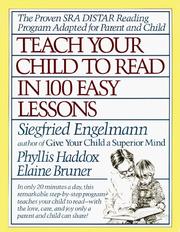
A structured, scripted, lesson-by-lesson phonics program you can use directly at home — the most widely used parent-led phonics curriculum, best started once you understand the 'why' from Kilpatrick.
Decoding, Fluency, and Building the Reading Brain
IntermediateMove beyond sounding out individual words to building automatic word recognition, reading fluency, and a rich vocabulary that supports comprehension.
▸ Study plan for this stage
Pace: 4–5 weeks, ~25–30 pages/day, with 2–3 days per week dedicated to reflection and application exercises
- Background knowledge is the foundation of reading comprehension and fluency—students cannot decode fluently without understanding what they're reading
- The 'knowledge gap' explains why some students struggle with reading despite strong decoding skills; vocabulary and conceptual understanding matter more than phonics alone
- Building a rich vocabulary requires intentional exposure to domain-specific and academic language across multiple contexts, not just isolated word lists
- Fluency develops when students have sufficient background knowledge and vocabulary to process text automatically, freeing cognitive resources for comprehension
- Teaching reading effectively means systematically building knowledge and vocabulary alongside decoding instruction, not treating them as separate skills
- Schema and prior knowledge activation are critical pre-reading strategies that dramatically improve both fluency and comprehension
- The cumulative nature of knowledge means early gaps in background knowledge compound over time, making intervention increasingly difficult in later grades
- What is the 'knowledge gap' and how does it explain reading difficulties in students who can decode but struggle with comprehension?
- Why is background knowledge more predictive of reading comprehension than decoding ability alone, according to Wexler's research?
- How should teachers integrate vocabulary and knowledge-building into reading instruction to support fluency development?
- What are the consequences of treating decoding, vocabulary, and knowledge-building as separate rather than interconnected components of reading instruction?
- How can you activate and build prior knowledge before, during, and after reading to support automatic word recognition and fluency?
- What specific instructional strategies does Wexler recommend for closing the knowledge gap in early elementary grades?
- Map out a week of read-alouds or guided reading lessons for a specific grade level, explicitly planning how you'll build background knowledge and vocabulary before, during, and after each text
- Select a challenging grade-level text and create a pre-reading knowledge-activation plan that identifies what students need to know to read it fluently and comprehend it
- Audit a current reading curriculum or lesson plan: identify where decoding, vocabulary, and knowledge-building are taught in isolation, and redesign one unit to integrate all three
- Create a vocabulary-building sequence for a single domain (e.g., life cycles, weather, community helpers) that spans 2–3 weeks and shows how words build on each other
- Observe or video-record a reading lesson and analyze whether the teacher is building background knowledge and activating prior knowledge; identify missed opportunities
- Design a small-group intervention for a student who can decode but struggles with fluency and comprehension, focusing on knowledge and vocabulary gaps rather than phonics review
Next up: Understanding that fluency and comprehension depend on knowledge and vocabulary—not just decoding—prepares you to design reading instruction that systematically builds both word-level automaticity and the conceptual understanding needed for deeper comprehension and engagement with increasingly complex texts.
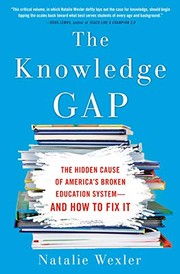
Wexler shows how background knowledge and vocabulary — not just decoding skill — drive reading comprehension, expanding your understanding of what fluent reading really requires.
Spotting and Responding to Difficulty: Dyslexia and Struggling Readers
IntermediateRecognize the early signs of reading difficulty and dyslexia, understand what the research says about intervention, and know exactly what to do if your child is struggling.
▸ Study plan for this stage
Pace: 8–10 weeks, ~25–30 pages/day. Start with "Overcoming Dyslexia" (approximately 400 pages) over 5–6 weeks, then move to "Essentials of Assessing, Preventing, and Overcoming Reading Difficulties" (approximately 300 pages) over 3–4 weeks. Allocate 1 week for review and integration of both texts.
- Dyslexia is a neurobiological condition with a specific cognitive profile: weakness in phonological processing despite normal intelligence and opportunity to learn
- Early warning signs of reading difficulty appear before formal diagnosis—phonological awareness deficits, slow naming speed, letter-sound confusion, and difficulty with rhyming are red flags
- The Simple View of Reading (decoding + language comprehension) explains why some struggling readers have specific deficits in word recognition while others struggle with comprehension
- Phonological awareness and phonics instruction are evidence-based interventions that must be explicit, systematic, and intensive for struggling readers and those with dyslexia
- Response to Intervention (RTI) and curriculum-based measurement allow parents and teachers to monitor progress objectively and identify children who need specialized assessment
- Neuroimaging research shows that dyslexic brains process written language differently, but intensive intervention can create measurable changes in brain activation patterns
- Assessment must distinguish between dyslexia (a specific reading disability) and other causes of reading difficulty such as limited exposure, language disorders, or comprehension gaps
- Early intervention (kindergarten through second grade) is far more effective and less costly than waiting until third grade or later, when reading gaps widen significantly
- What is the neurobiological basis of dyslexia according to Shaywitz, and how does it differ from other causes of reading difficulty?
- What are the earliest warning signs of reading difficulty that parents and teachers can observe in preschool and early elementary years?
- How do phonological processing deficits specifically affect reading development, and why is phonological awareness instruction critical for struggling readers?
- What does the research in both texts say about the effectiveness of explicit, systematic phonics instruction for children with dyslexia compared to whole-language or balanced literacy approaches?
- How can parents and teachers use Response to Intervention (RTI) frameworks and curriculum-based measurement to monitor progress and determine when a child needs formal assessment?
- What accommodations and interventions does the research support for children diagnosed with dyslexia, and how should these be adjusted based on individual response to intervention?
- Conduct a phonological awareness screening on a child you know (or a hypothetical child): assess rhyming, syllable segmentation, onset-rime awareness, and phoneme manipulation. Document which tasks are difficult and compare to Shaywitz's description of phonological deficits.
- Administer a rapid automatized naming (RAN) task: show a child a series of familiar objects, letters, or numbers and time how quickly they can name them. Compare the result to typical benchmarks discussed in both texts to identify potential naming-speed deficits.
- Create a simple curriculum-based measurement (CBM) probe for oral reading fluency or nonsense-word fluency based on Kilpatrick's guidance. Administer it to a child weekly for 4 weeks and graph the progress to practice progress monitoring.
- Analyze a reading sample from a struggling reader (or create a hypothetical one): identify whether errors suggest phonological/decoding deficits, language comprehension gaps, or both, using the Simple View of Reading framework.
- Design a 4-week intervention plan for a child with phonological awareness and phonics deficits, specifying the explicit, systematic activities you would use based on Kilpatrick's assessment and intervention guidance.
- Interview a parent or teacher about a child they know who struggles with reading. Gather information about early warning signs, current reading behaviors, and interventions tried. Map this onto Shaywitz's and Kilpatrick's frameworks to hypothesize the underlying difficulty.
Next up: This stage equips you to recognize and respond to reading difficulty in real time; the next stage will deepen your ability to support advanced readers and differentiate instruction across the full spectrum of reading abilities.
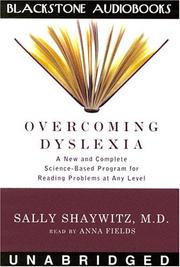
The definitive parent guide to dyslexia by a leading Yale neuroscientist — read this first in the stage so you can identify warning signs before moving to broader intervention strategies.

Kilpatrick's deeper, research-grounded handbook on diagnosing and remediating reading problems; builds directly on Shaywitz and gives you a concrete action framework.
Reading Together: Aloud, for Pleasure, and for Life
BeginnerBuild a rich read-aloud practice at home, cultivate a love of books, and understand how shared reading supercharges vocabulary, comprehension, and a lifelong reading identity.
▸ Study plan for this stage
Pace: 8–10 weeks, ~25–30 pages/day (alternating between both books; read Trelease first for foundational framework, then Gurdon for deeper cultural and emotional context)
- Read-aloud as a foundational literacy practice: how it builds phonemic awareness, vocabulary, and comprehension before independent reading
- The neuroscience and psychology of shared reading: how it creates emotional bonding, reduces screen time, and establishes reading as a social pleasure rather than a task
- Selecting books strategically: criteria for age-appropriate, engaging texts that match your child's interests and stretch their language development
- Creating a sustainable read-aloud routine: practical strategies for consistency, managing interruptions, and adapting read-aloud to different ages and family schedules
- The role of discussion and interaction during read-alouds: asking open-ended questions, following your child's curiosity, and letting comprehension emerge naturally
- Building a reading identity: how regular read-alouds shape children's self-perception as readers and their lifelong relationship with books
- The cultural and emotional dimensions of reading together: how shared stories create family rituals, transmit values, and deepen parent-child relationships
- What are the core literacy benefits of read-alouds, and at what ages are they most critical according to Trelease?
- How does Gurdon describe the emotional and psychological impact of shared reading on children's development and family relationships?
- What criteria should you use when selecting books for read-aloud, and how do Trelease and Gurdon differ in their approach to book selection?
- What are practical strategies for establishing and maintaining a consistent read-aloud routine in a busy household, and what obstacles might you encounter?
- How should you respond when your child interrupts, asks questions, or loses interest during a read-aloud, and why does the quality of interaction matter?
- How does reading aloud to children contribute to their developing identity as readers and their long-term relationship with literacy?
- Audit your current home literacy environment: inventory books available, screen time habits, and existing read-aloud practices (if any). Identify one barrier to establishing a read-aloud routine and brainstorm solutions using Trelease's practical strategies.
- Select three books appropriate for your child's age and interests using the selection criteria from both Trelease and Gurdon. Read the first 10 pages of each aloud (to yourself or a partner) and reflect on pacing, vocabulary, and engagement level.
- Establish a read-aloud schedule for the next 4 weeks: choose a specific time, duration, and location. Track consistency and note what helps or hinders your routine. Adjust based on what you learn.
- Conduct a practice read-aloud session with your child (or a willing listener). Record yourself or have someone observe. Afterward, reflect: Did you ask questions? Did you pause for discussion? Did you adjust your pace or tone? How did your listener respond?
- Create a 'read-aloud toolkit' for your household: a list of 10–15 books curated for your child, a set of open-ended discussion prompts (e.g., 'What do you think happens next?' 'How would you feel in that situation?'), and a backup plan for days when read-aloud feels rushed or difficult.
- Interview a family member or friend about their childhood read-aloud memories (or lack thereof). Reflect on how those experiences shaped their current reading habits and relationship with books. Consider what read-aloud legacy you want to create for your own child.
Next up: This stage establishes read-aloud as the emotional and cognitive foundation for literacy; the next stage will build on this shared-reading practice by introducing strategies for supporting your child's transition to independent reading, decoding, and phonics instruction.

The classic, research-backed guide to reading aloud with children of all ages — packed with book recommendations and the evidence for why reading together is one of the most powerful things a parent can do.

A beautiful, evidence-rich celebration of the read-aloud habit that ties together everything in the curriculum — best saved for last as an inspiring capstone that motivates you to keep going for years.
Discussion
Keep reading
Paths that share books, cover the same subject, or open a related topic.