Teaching a child to read is one of the few parenting tasks where the research is comparatively settled and the public conversation is not. Speech develops without instruction; reading does not. The brain has no dedicated reading circuit and must repurpose regions built for vision and language, which is why explicit, systematic teaching of the sound-to-letter code outperforms approaches that expect children to infer it from exposure.
Read the instructional books first and you will be picking sides in an argument you cannot evaluate. Read the science first and the rest of the path organises itself. One honest caveat: if a child is struggling well past their peers, that is a matter for a school psychologist, a speech-language pathologist, or a reading specialist with formal assessment tools. Books help a parent teach; they do not diagnose.
Understand what reading is
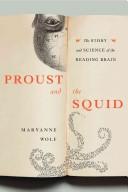
Start with Proust and the Squid, Maryanne Wolf's account of how the reading brain is built. It covers the history of writing systems, what happens developmentally as a child learns to decode, and why fluency — not accuracy alone — is what frees attention for comprehension. It is the book that makes every later recommendation intelligible rather than arbitrary.
Then read Equipped for Reading Success, David Kilpatrick's practical programme. This is the operational core of the path: phonemic awareness training, orthographic mapping, and short daily exercises that build the sound manipulation skills underneath decoding. It is written for teachers but is entirely usable by a parent, and it is specific about sequence and about what to do when a child stalls.
Teach the code
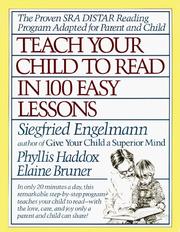
Teach your child to read in 100 easy lessons is the scripted, direct-instruction option — twenty minutes a day, a fixed sequence, and a modified orthography that fades out as the child progresses. Its rigidity is exactly the point; you do not need to design a curriculum, only follow one. Some children find the format tedious, and if yours does, use Kilpatrick's exercises with decodable readers instead. Do not run both programmes at once.
The Knowledge GAP comes next, and it corrects the most common mistake made by parents who succeed at decoding. Natalie Wexler's argument is that comprehension is not a transferable skill you can drill; it depends on background knowledge, so a child who can decode fluently still cannot understand a passage about ecosystems or the Roman Republic without knowing something about them. This is why history, science, and geography belong in early childhood, not just phonics.
Difficulty, and the part that keeps it joyful
Overcoming Dyslexia is Sally Shaywitz's account of the research and of what effective intervention looks like. Read it if reading is not clicking, and read it knowing that a formal evaluation is still necessary — the book explains what to ask for and how to read a report, which is exactly what a parent needs when talking to a school.
Essentials of Assessing, Preventing, and Overcoming Reading Difficulties is Kilpatrick's fuller, more technical volume covering assessment and intervention design. It is written for specialists. If you are a parent who has read Equipped for Reading Success, you can skip it unless you want the underlying evidence in depth; if you are a teacher or tutor, it is the more valuable of the two.
Close with the books that keep a reader rather than a decoder. The read-aloud handbook makes the case for reading aloud well past the point a child can read alone, with practical guidance and booklists. The Enchanted Hour covers the same territory with more attention to what shared reading does for attention and connection in a screen-saturated house.
Read them in this order and you will teach the code without losing the pleasure. Follow the full path for the whole sequence.
Follow the full ordered path here: How to Teach Your Child to Read: The Best Books, in Order.