Parents new to this subject usually discover quickly that the books are arguing with each other. One tradition frames autism primarily as a set of deficits to be remediated through intensive behavioural intervention; another, associated with the neurodiversity movement and with autistic adults writing about their own childhoods, frames it as a different way of processing the world where the goal is support and accommodation rather than approximation of typical behaviour. The disagreement is real, it is not settled, and it touches practical decisions about therapy that you may have to make soon.
This path does not adjudicate it. It sequences the reading so you get the practical grounding first, then the advocacy skills, then hear directly from autistic writers — because reading the last group only after you have already committed to a programme is the wrong order.
Say this plainly once: diagnosis, speech and occupational therapy, and any medical decision belong with qualified professionals who have met your child. Books help you understand what you are seeing and ask better questions in appointments. They do not diagnose and they do not substitute for services.
Start plain, then reframe
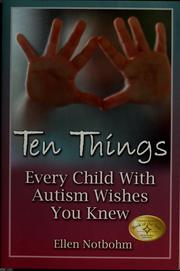
Ten things every child with autism wishes you knew is the right first book: short, written in the child's voice, and organised around the things parents most commonly misread — sensory overload, literal language processing, the difference between will not and cannot. It takes an evening and it changes how you interpret the next difficult afternoon.
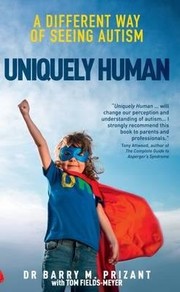
Then Uniquely human. Barry Prizant's central argument is that autistic behaviours are coping strategies rather than symptoms to be extinguished, and that the productive question is always what the behaviour is doing for the child. It is written by a clinician with decades in the field, which gives it standing in both camps, and it is the single most useful framework on this path.
Tools for the day to day
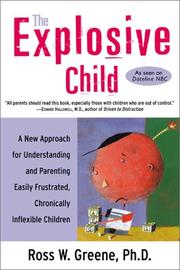
The explosive child addresses the meltdowns and the rigidity around transitions and demands. Ross Greene's collaborative approach — identifying the specific unsolved problems and working them through together, outside the moment of crisis — travels well to autistic children, particularly where demand avoidance is prominent.
The out-of-sync child covers sensory processing, which is often the largest and least visible factor in daily distress: the seams in the socks, the sound of the extractor fan, the child who seeks pressure or spins. It will explain behaviour that looks arbitrary until you see the sensory input driving it. More Than Words is the Hanen programme guide for parents of children who are not yet using speech reliably — practical, evidence-informed strategies for building communication into ordinary routines, and one of the few books here that is genuinely a manual you work from.
Advocacy, then autistic voices
The complete IEP guide is the American special-education reference: eligibility, assessment, writing measurable goals, disputes, and your legal rights in the process. If you are elsewhere the specifics will not transfer, but the underlying discipline — document everything, request in writing, know what you are entitled to ask for — does.
Finish with three books by autistic authors. Thinking in Pictures is Temple Grandin's account of visual thinking and sensory experience, and of building a career around how her mind actually works. The Reason I Jump is a young non-speaking Japanese author's answers to questions parents ask, and it is worth knowing that its translation and facilitation method have been debated; read it as one person's testimony rather than as a general account. Sincerely, Your Autistic Child collects essays by autistic women and nonbinary writers on their own childhoods, and it is the most direct challenge to the deficit framing on this list. Reading it last, rather than not at all, is the point of the whole sequence.
If ADHD is also in the picture, as it frequently is, the parenting a child with ADHD hub covers the overlap. Follow the full path to read these in order.
Follow the full ordered path here: Best Books on Parenting an Autistic Child, in Order.