Setting boundaries: the best books for healthier relationships, in order
This curriculum guides you from the emotional roots of boundary struggles all the way to advanced relational and identity-level work. Each stage builds on the last: you first understand *why* boundaries are hard, then learn *how* to set them, then deepen the practice in specific relationships, and finally integrate boundaries as a lifelong expression of self-respect and compassion.
Foundations — Understanding Why Boundaries Are Hard
BeginnerUnderstand what boundaries actually are, why we struggle to set them, and begin to recognize the emotional patterns (people-pleasing, guilt, fear) that keep us stuck.
▸ Study plan for this stage
Pace: 4–5 weeks, ~25–30 pages/day. Week 1–2: "Set Boundaries, Find Peace" (approx. 240 pages); Week 3–5: "The Disease to Please" (approx. 280 pages), with 2–3 days of review and reflection built in.
- Boundaries are limits and rules you set for yourself about what you will and won't accept from others—they are acts of self-care, not selfishness
- The four types of boundaries: physical, emotional, mental, and material (from Tawwab)
- Core emotional patterns that sabotage boundaries: people-pleasing, guilt, fear of abandonment, and the need for approval
- The 'disease to please' is a compulsive need to gain approval and avoid conflict by prioritizing others' needs over your own
- Recognizing your personal boundary violations: where you say yes when you mean no, and the emotional cost of doing so
- The role of childhood conditioning, family patterns, and cultural messages in making boundaries feel dangerous or wrong
- Guilt and fear are the primary emotional blockers that keep you from setting and maintaining boundaries
- Boundaries are not punishment or rejection—they are necessary for healthy relationships and self-respect
- What are the four types of boundaries, and can you identify an example of each from your own life?
- Why do you personally struggle to set boundaries? What emotions come up (guilt, fear, shame) and where do you think they originated?
- What is the 'disease to please,' and how does it show up in your relationships and daily decisions?
- How have your family of origin and cultural background shaped your beliefs about whether boundaries are acceptable?
- What is the difference between being selfish and having healthy boundaries, and why is this distinction important?
- Can you identify three specific situations where you violate your own boundaries, and what emotional payoff you're seeking by doing so?
- Boundary audit: List 5–10 recent situations where you said yes when you wanted to say no. For each, note the emotion you felt (guilt, fear, shame) and what you feared would happen if you'd said no.
- Family pattern mapping: Draw or write out the boundary patterns you observed in your family of origin. Who had boundaries? Who didn't? What messages did you receive about whether boundaries were safe or selfish?
- Emotion tracking: For one week, notice each time you feel guilt, anxiety, or shame around a request or expectation. Write down the trigger, the emotion, and what you did. Look for patterns.
- Values clarification: List your top 5–7 personal values. Then identify one boundary violation for each value (e.g., if 'health' is a value, do you skip sleep to help others?). This clarifies why boundaries matter to you.
- Dialogue with your inner critic: Write out the voice that tells you boundaries are selfish. Then write a compassionate response that reframes boundaries as self-respect. Read both aloud.
- Boundary language practice: Choose one small boundary you want to set (e.g., not answering work emails after 6 PM). Write out exactly what you'll say, practice it aloud 3 times, and notice what emotions arise.
Next up: This stage builds your awareness of *why* boundaries are hard and what's keeping you stuck emotionally; the next stage will teach you the specific skills and language to actually *set and communicate* boundaries in real relationships.
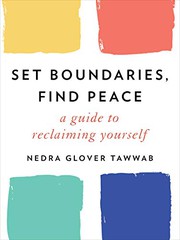
The perfect starting point: warm, clear, and practical. Tawwab defines boundaries in plain language and normalizes the struggle, giving beginners an immediate vocabulary and framework before anything else.
Digs into the psychology of people-pleasing — the root cause behind most boundary failures. Reading this second helps you understand *why* saying no feels so dangerous before you try to change the behavior.
Building the Skill — Learning to Say No
BeginnerDevelop the practical language, scripts, and emotional courage needed to actually say no, disappoint others, and survive the discomfort that follows.
▸ Study plan for this stage
Pace: 4–5 weeks, ~25–30 pages/day (approximately 2 weeks per book with time for reflection and practice)
- The distinction between guilt, obligation, and actual responsibility—and why saying no doesn't make you selfish
- Common scripts and language patterns for declining requests clearly and without over-explaining
- The 'people-pleasing trap': how childhood conditioning and fear of abandonment drive automatic yes-saying
- The physical and emotional discomfort that follows saying no is temporary and survivable, not a sign you did something wrong
- Boundary-setting as an act of self-respect that actually improves relationships by establishing authenticity
- The difference between being 'nice' (conflict-avoidant, inauthentic) and being 'kind' (honest, respectful)
- Identifying your actual values and priorities so you can say no from conviction, not just willpower
- What is the difference between guilt and actual responsibility, and how does this distinction help you say no?
- What are 3–4 specific scripts or phrases from the books you can use to decline a request without over-explaining or apologizing excessively?
- How does people-pleasing behavior develop, and what role does fear of abandonment or rejection play in your own tendency to say yes?
- Why does discomfort or guilt after saying no not mean you made a mistake, and how do you distinguish between healthy discomfort and a genuine boundary violation?
- How is being 'nice' (as defined in Not Nice) different from being kind, and which one allows for authentic relationships?
- What are your top 3 values or priorities, and how would clarifying these help you say no more confidently?
- Write down 3 recent situations where you said yes when you wanted to say no. For each, identify what you were afraid would happen if you declined, then challenge that fear with evidence.
- Practice 5 different 'no' scripts from the books in front of a mirror or with a trusted friend, aiming for a calm, steady tone without justification or apology.
- Identify one low-stakes request you typically say yes to (e.g., a social invitation, extra work task, favor). Say no to it this week and journal about the emotions that follow—note what actually happened vs. what you feared.
- Create a personal 'boundary statement' for 2–3 areas of your life (work, family, friendships) that clarifies what you will and won't accept, grounded in your values.
- Role-play a difficult boundary conversation with a friend or therapist, focusing on staying calm and not over-explaining when they push back or express disappointment.
- Track one week of requests and your responses. Note which yeses felt authentic and which felt obligatory. Identify patterns in who asks and what topics trigger automatic yes-saying.
Next up: By mastering the language and emotional resilience to say no, you'll be ready to move into the next stage—managing the fallout and maintaining boundaries over time—where you'll learn how to handle guilt, repair relationships after disappointing others, and stay firm when people test your new limits.

A highly accessible, step-by-step guide focused purely on the mechanics of declining requests without guilt. Its short chapters make it easy to apply immediately after the conceptual groundwork of Stage 1.

Challenges the deep belief that being 'nice' requires self-sacrifice. Gazipura's direct, compassionate tone helps readers move from theory into real-world boundary-setting with confidence.
Going Deeper — Boundaries in Key Relationships
IntermediateApply boundary skills to the most challenging relationships — family, romantic partners, and the workplace — and understand how trauma and attachment patterns complicate the process.
▸ Study plan for this stage
Pace: 8–10 weeks, ~40–50 pages/day (with reflection breaks). Read "Boundaries" (2 weeks), "Adult Children of Emotionally Immature Parents" (2.5–3 weeks), then "Codependent No More" (3–4 weeks) to allow time for integration and journaling between books.
- The four types of boundaries (physical, emotional, mental, spiritual) and how to identify which ones are weak in specific relationships
- How emotionally immature parents create boundary violations and how adult children internalize permission to ignore their own needs
- Attachment patterns and trauma responses that make boundary-setting feel dangerous or selfish
- The cycle of codependency: caretaking, enabling, and loss of self in relationships
- Boundary-setting as an act of self-care and respect, not rejection or punishment
- How to communicate boundaries clearly and maintain them when others resist or escalate
- The role of guilt, shame, and fear in preventing boundary enforcement across family, romantic, and workplace contexts
- What are the four types of boundaries, and which type do you struggle with most in your family of origin? In your current romantic or work relationships?
- How did your parents' emotional maturity (or lack thereof) teach you to ignore your own boundaries as a child, and how does that pattern show up today?
- What is the difference between healthy boundary-setting and codependency, and how can you tell which one you're practicing in a specific relationship?
- Describe a time you felt guilty, ashamed, or afraid when trying to set a boundary. What belief about yourself or the other person was underneath that feeling?
- What does it mean to 'own your own behavior' and 'let others own theirs,' and why is this distinction critical to maintaining boundaries?
- How do your attachment patterns (anxious, avoidant, or disorganized) influence the way you set or avoid boundaries in intimate relationships?
- Map your boundary violations: For each key relationship (parent, partner, boss, close friend), write down one physical, emotional, mental, and spiritual boundary that is currently crossed. Identify which type is most violated.
- Identify your emotionally immature parent patterns: List 3–5 ways your parents avoided responsibility, dismissed your feelings, or made you responsible for their emotions. Write how each pattern manifests in your adult relationships.
- Codependency audit: Track your behavior for one week—note instances where you over-gave, over-explained, over-apologized, or took responsibility for someone else's feelings. Identify the fear or belief driving each instance.
- Write a boundary statement: Choose one relationship where you need a boundary. Draft a clear, non-blaming statement (e.g., 'I'm not available to discuss this topic' or 'I need to leave work by 6 PM'). Practice saying it aloud three times.
- Guilt and shame investigation: Identify one boundary you want to set but haven't. Write down the guilt or shame you feel, then trace it back to its origin (parent message, trauma, belief about love/loyalty). Challenge the belief with evidence.
- Role-play resistance: With a trusted friend or therapist, practice setting a boundary while they push back, escalate, or guilt-trip you. Notice what happens in your body and practice staying calm and repeating your boundary.
Next up: This stage equips you to recognize and name boundary violations in your most intimate contexts; the next stage will teach you to sustain boundaries over time, navigate complex emotions that arise when others resist, and build a life and identity that exists independent of others' approval.

A landmark, comprehensive book that maps boundaries across every major relationship type. Its depth makes it ideal at this stage, once you already have foundational language and basic skills.

Explains how childhood dynamics with emotionally immature caregivers create the boundary wounds adults carry. Essential for anyone whose family relationships feel especially charged or confusing.
A classic on how over-responsibility for others' feelings destroys our own boundaries. Placed here because readers now have enough self-awareness to recognize codependent patterns in their own lives.
Integration — Boundaries as Self-Respect & Identity
ExpertInternalize boundaries not as rules or walls, but as a natural expression of self-worth, values, and compassion — for yourself and others — and sustain them for the long term.
▸ Study plan for this stage
Pace: 8–10 weeks, ~25–30 pages/day. Week 1–5: "The Gifts of Imperfection" (approx. 240 pages); Week 6–10: "Nonviolent Communication" (approx. 250 pages). Allow 1–2 weeks overlap for integration and reflection.
- Vulnerability as strength: boundaries emerge from accepting imperfection and showing up authentically, not from defensive walls
- Shame resilience and self-compassion: understanding how shame undermines boundaries and how self-compassion sustains them
- Values-driven boundaries: boundaries rooted in personal values (courage, authenticity, connection) are sustainable and aligned with identity
- Needs and feelings as data: recognizing your own needs, feelings, and values as legitimate information that informs boundary-setting
- Empathetic communication: expressing boundaries with honesty and compassion, honoring both your needs and others' humanity
- Wholehearted living: integrating boundaries as an expression of self-respect and worthiness, not punishment or control
- The four components of NVC: observation, feeling, need, request—a framework for boundaries rooted in connection rather than blame
- How does Brené Brown distinguish between boundaries as walls and boundaries as expressions of self-respect? What role does vulnerability play in this distinction?
- What is shame resilience, and how does it support sustainable boundary-setting according to Brown?
- How does Marshall Rosenberg's Nonviolent Communication framework help you express a boundary without blame or defensiveness?
- Can you identify a personal value (from Brown's work) and articulate how it informs a specific boundary you need to set?
- What is the relationship between self-compassion and boundary-setting in both authors' frameworks?
- How would you communicate a boundary using NVC's four components (observation, feeling, need, request) in a real-life scenario?
- Values mapping: List your top 5–7 core values from Brown's work (e.g., authenticity, courage, connection). For each, write one boundary that protects or honors that value.
- Shame resilience practice: Identify a recent situation where shame prevented you from setting a boundary. Rewrite the scenario using Brown's shame-resilience tools (recognizing the shame, reaching out, talking about it).
- NVC translation exercise: Take 3 past boundary-setting conversations that felt clumsy or hurtful. Rewrite each using Rosenberg's four-step framework (observation, feeling, need, request).
- Vulnerability audit: Choose one relationship where you've been guarded. Identify what fear or shame is underneath. Write one small, authentic boundary you could set in that relationship.
- Needs inventory: Using Rosenberg's universal needs list, identify 5 of your core unmet needs. For each, draft a boundary that would help meet it.
- Role-play or journaling: Practice expressing a difficult boundary (real or hypothetical) using NVC language. Record or write it out, then reflect on how it feels different from your usual approach.
Next up: This stage anchors boundaries in identity and values, preparing you to explore how sustained, compassionate boundaries transform relationships, communities, and systems in the next stage.
Brown reframes boundaries as an act of love and wholehearted living. At this advanced stage, readers are ready to see that the most compassionate people are also the most boundaried.

Teaches how to express needs and limits with empathy and precision, transforming boundaries from defensive walls into honest, connecting conversations — the ultimate integration of skill and compassion.
Discussion
Keep reading
Paths that share books, cover the same subject, or open a related topic.