Building resilience and grit: the best books to bounce back stronger, in order
This curriculum builds a psychology-backed understanding of resilience and grit from the ground up — starting with accessible, story-driven science, moving through the cognitive and emotional mechanics of perseverance, and finally reaching advanced frameworks used by researchers and elite performers. Each stage deepens the vocabulary and mental models needed to fully absorb the next, so that by the end you have both practical tools and a rigorous theoretical foundation.
Foundations: The Science of Perseverance
BeginnerUnderstand what grit and resilience actually mean through research-backed storytelling, and build a shared vocabulary for the rest of the path.
▸ Study plan for this stage
Pace: 8–10 weeks, ~40–50 pages/day (approximately 2–3 weeks per book, with 1 week for integration and reflection)
- Grit as a trainable skill: the combination of passion and perseverance over talent alone (Duckworth)
- Fixed vs. growth mindset: the belief that abilities can be developed through effort changes how we respond to challenges (Dweck)
- The role of deliberate practice in building expertise and resilience across domains
- Resilience as active coping: how to bounce back from setbacks by reframing adversity and building psychological flexibility (Sandberg)
- The importance of purpose and meaning in sustaining long-term effort and motivation
- Social support and community as foundational to both grit and resilience
- The neuroscience and psychology behind why perseverance matters more than innate ability
- What is grit according to Duckworth, and why does she argue it matters more than talent or IQ?
- How do fixed and growth mindsets differ, and what are concrete examples of each from Dweck's research?
- What is the relationship between mindset and resilience—how does believing in your ability to grow help you recover from failure?
- How does Sandberg define resilience in Option B, and what are the three pillars or strategies she recommends for building it?
- How do deliberate practice, purpose, and social support work together to sustain grit over time?
- Can you identify a personal challenge you face and explain how grit, growth mindset, and resilience frameworks apply to it?
- Grit audit: Map your own 'grit score' across 3–4 domains (work, relationships, hobbies, learning). Where do you show high passion + perseverance? Where do you quit? Reflect on why.
- Mindset journal: For one week, record moments when you encounter difficulty. Label each as 'fixed mindset' or 'growth mindset' thinking, then rewrite fixed statements as growth-oriented ones.
- Deliberate practice plan: Choose one skill you want to develop. Design a 4-week deliberate practice schedule with specific, measurable goals and feedback loops (inspired by Duckworth's examples).
- Adversity reframe: Identify a recent setback or failure. Using Sandberg's resilience framework, write how you could reframe it, who you'd reach out to, and what small action you'd take next.
- Purpose statement: Write a 1–2 paragraph statement of why grit and resilience matter to you personally. What long-term goal or value drives your perseverance?
- Peer discussion: In a group or with a partner, share one fixed mindset belief you hold and brainstorm growth-oriented alternatives together. Notice how social support shifts your perspective.
Next up: This stage establishes the *why* and *what* of resilience—the research, definitions, and personal awareness needed—so the next stage can move into the *how*: specific techniques, habits, and systems for cultivating grit and resilience in real-world contexts.
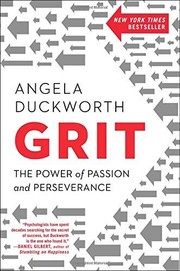
The essential starting point — Duckworth's landmark research defines grit (passion + perseverance) in plain language and introduces the core psychological framework the rest of the curriculum builds on.
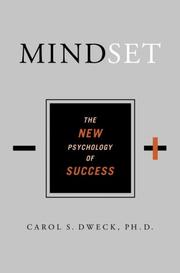
Read second because a growth mindset is the foundational belief system that makes grit possible; Dweck's research explains why effort and persistence are learnable, not fixed traits.
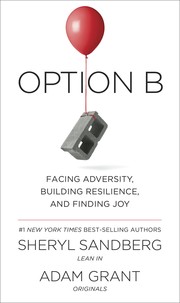
A deeply human, story-driven introduction to resilience after loss, co-written with psychologist Adam Grant — bridges the gap between abstract research and real-life recovery.
Going Deeper: Coping, Stress & Mental Toughness
IntermediateUnderstand the psychological and physiological mechanics of stress, coping, and bouncing back — and start applying evidence-based strategies to your own life.
▸ Study plan for this stage
Pace: 8–10 weeks, ~40–50 pages/day (mix of reading and reflection). Allocate roughly 3 weeks per book to allow time for exercises and integration between titles.
- Stress mindset: reframing stress as enhancing rather than debilitating (McGonigal's core thesis)
- The physiology of stress response: how your body mobilizes resources and builds resilience through challenge
- Coping mechanisms: active vs. avoidant strategies and when each serves you
- The neurobiology of resilience: how the brain's threat-detection and reward systems interact (Hanson's HEAL model)
- Meaning-making as a coping tool: how finding purpose buffers against suffering (Frankl's logotherapy)
- Post-traumatic growth: bouncing back stronger by integrating difficult experiences
- The role of social connection and self-compassion in stress recovery
- Practical stress inoculation: building mental toughness through graduated exposure to manageable challenges
- How does McGonigal argue that stress can be beneficial, and what is the evidence for a 'stress-is-enhancing' mindset?
- What are the key differences between active coping and avoidant coping, and when is each appropriate?
- According to Hanson, how do the brain's threat-detection and reward systems contribute to resilience, and what is the HEAL model?
- What is logotherapy (Frankl's approach), and how does finding meaning help people endure and recover from extreme adversity?
- How can you apply Frankl's concept of meaning-making to a current stressor or challenge in your own life?
- What is post-traumatic growth, and what conditions help it emerge after difficulty?
- Stress reappraisal journal: For one week, log a stressful event daily. Write down the stress response (heart rate, anxiety, etc.), then reframe it as your body preparing you for challenge. Notice any shifts in how you experience the stress.
- HEAL practice (from Hanson): Daily 5-minute practice—Have a positive experience (real or recalled), Enrich it by savoring details, Absorb it by feeling it in your body, Link it to a resilience quality. Track mood and stress levels before and after over 2 weeks.
- Meaning-mapping exercise: Identify a current stressor. Write down what this challenge could teach you or how it aligns with your values. Create a one-page 'meaning statement' that reframes the difficulty as purposeful.
- Coping strategy audit: List 5 recent stressors and how you coped. Categorize each as active (problem-focused) or avoidant. Reflect: which coping style dominates? Design one active-coping experiment for a small upcoming stressor.
- Stress inoculation challenge: Choose a manageable discomfort (cold shower, public speaking practice, difficult conversation). Expose yourself to it in a controlled way 2–3 times. Journal how your stress response changes with repetition.
- Resilience interview: Talk to someone you admire for their grit. Ask them about a major setback, how they found meaning in it, and what coping strategies helped. Synthesize their insights into your own resilience toolkit.
Next up: This stage equips you with the psychological and physiological *understanding* of resilience and practical coping tools; the next stage will focus on *building systems and habits* that sustain resilience over time and scaling these insights to relationships, work, and long-term goals.

Reframes stress as a tool rather than an enemy using Stanford research — a crucial mindset shift that makes the coping strategies in later books far more effective.

Provides a neuroscience-grounded, practical toolkit for building inner resources (calm, courage, connection) — the most hands-on guide in the curriculum for day-to-day resilience practice.
![Man's Search for Meaning adapted for Young Adults [adaptation]](https://covers.openlibrary.org/b/id/11203708-M.jpg)
Frankl's account of surviving the Holocaust and his logotherapy framework introduces the idea that meaning-making is the deepest source of human resilience — a perspective that elevates everything read before it.
Advanced: Elite Performance & Psychological Mastery
ExpertSynthesize the full picture of mental toughness as practiced by elite performers and studied by cutting-edge researchers, and develop a personal, durable system for sustained resilience.
▸ Study plan for this stage
Pace: 8–10 weeks, ~40–50 pages/day with 2–3 reflection days per week. Allocate 2–3 weeks per book to allow deep engagement with case studies and personal application.
- Deliberate practice: the structured, feedback-driven method that separates elite performers from the rest, requiring intense focus and discomfort
- The 40% rule and mental toughness: how to push past perceived limits by recognizing that the mind quits before the body does
- Psychological mastery through adversity: reframing obstacles as opportunities and using them as fuel for growth rather than excuses for failure
- The role of mindset and self-talk: how elite performers use internal dialogue and belief systems to sustain effort through pain and setback
- Building a personal resilience system: integrating deliberate practice, mental toughness, and stoic philosophy into a durable, repeatable framework
- Accountability and environmental design: how to structure your life, relationships, and surroundings to reinforce resilience habits
- The compounding effect of small, consistent actions: how elite performance is built through incremental gains over years, not sudden breakthroughs
- What is deliberate practice, and how does it differ from mere repetition or passive experience? How does Ericsson's framework apply to your own skill development?
- Explain the 40% rule in your own words. Can you identify a recent moment when your mind quit before your body did, and how might you apply this insight differently?
- How does David Goggins use adversity and pain as tools for psychological mastery? What specific techniques does he employ to reframe suffering?
- According to Ryan Holiday, what is the relationship between obstacles and opportunity? How does stoic philosophy help elite performers maintain resilience when facing setbacks?
- Design a personal resilience system that integrates insights from all three books. What are the non-negotiable elements, and how will you measure progress?
- How do elite performers use accountability and environmental design to sustain their resilience practices over years? What role does community or mentorship play?
- Deliberate practice audit: Identify one skill you want to master. Design a 12-week deliberate practice plan using Ericsson's framework—define the specific goal, identify the feedback mechanism, and schedule focused practice sessions with built-in discomfort.
- The 40% rule challenge: Commit to a physical or mental challenge (e.g., cold shower, extended workout, difficult conversation) where you feel the urge to quit. Document the moment you want to stop, then push 40% further. Reflect on what changed mentally.
- Goggins-style accountability: Find an accountability partner or create a public commitment (social media, journal, or trusted friend) for a 30-day resilience goal. Check in weekly and share your struggles, not just wins.
- Obstacle reframing journal: For one week, capture every obstacle or setback you encounter. For each, write down: (1) what the obstacle is, (2) how you initially reacted, (3) how you could reframe it as an opportunity using Holiday's stoic framework, and (4) one action you'll take.
- Personal resilience system design: Create a written or visual map of your resilience system. Include: deliberate practice routines, mental toughness triggers (self-talk, breathing, visualization), obstacle-response protocols, accountability structures, and environmental supports. Test it for 4 weeks.
- Elite performer case study analysis: Choose one elite performer from the books (or research one independently). Map their journey using all three frameworks: their deliberate practice path, moments they applied the 40% rule, and how they used obstacles as fuel. Present or write a 2–3 page synthesis.
Next up: This stage synthesizes the science and psychology of elite resilience into a personal operating system; the next stage will likely focus on applying and scaling this system across life domains (career, relationships, health, creativity) and sustaining it through long-term challenges and identity shifts.

Ericsson's deliberate practice research reveals the precise mechanism by which sustained effort produces mastery — the scientific backbone behind why grit pays off over time.

A visceral, extreme case study in mental toughness that challenges the reader to audit their own limits; best read after the psychological frameworks are in place so you can critically evaluate and adapt his methods.

Draws on Stoic philosophy to build a timeless, integrated mental framework for turning adversity into advantage — a fitting capstone that unifies the emotional, cognitive, and philosophical threads of the entire curriculum.
Discussion
Keep reading
Paths that share books, cover the same subject, or open a related topic.