A calmer mind as you age
This curriculum moves from understanding what anxiety is and how it shows up in later life, through practical self-help techniques, and finally into evidence-based therapeutic and lifestyle strategies tailored for older adults. Each stage builds the vocabulary and self-awareness needed to get the most from the next, so readers arrive at the deeper material already equipped to apply it.
Foundations: Understanding Anxiety in Later Life
BeginnerUnderstand what anxiety is, why it is common in older adults, and how it differs from depression — building the basic vocabulary needed for everything that follows.
▸ Study plan for this stage
Pace: 6–8 weeks total: spend the first 3–4 weeks on "The Anxiety and Worry Workbook" (Clark) at a relaxed pace of ~15–20 pages/day, pausing to complete the in-book worksheets as you go; then spend the next 3–4 weeks on "Worry" (Hallowell) at ~20–25 pages/day, reading more continuously since it is narrativ
- The cognitive model of anxiety: how thoughts, feelings, and behaviors interact in a self-reinforcing cycle, as laid out by Clark in 'The Anxiety and Worry Workbook'
- The distinction between normal, adaptive worry and chronic, impairing anxiety — and why older adults are especially vulnerable to the latter
- Core cognitive distortions that fuel worry in later life (catastrophizing, overestimating threat, underestimating coping ability), drawn from Clark's framework
- The physical, emotional, and behavioral symptoms of anxiety and how they can be misread or masked in older adults (e.g., mistaken for medical illness or 'just aging')
- Hallowell's concept of worry as a spectrum — from productive concern that motivates action to toxic worry that paralyzes — and his 'five steps' for moving from toxic to productive worry
- How anxiety differs from depression: overlapping symptoms, key distinguishing features (future-focused fear vs. past-focused loss), and why the distinction matters for self-help strategies
- The role of avoidance: how steering clear of feared situations provides short-term relief but maintains and strengthens anxiety long-term
- Self-monitoring as a foundational skill: using thought records and worry logs (introduced in Clark) to build awareness before attempting change
- In your own words, how does Clark's cognitive model explain why a worried thought can spiral into a full anxiety episode? What are the three components of the cycle?
- According to Hallowell, what separates 'toxic worry' from 'productive worry,' and what is the first practical step he recommends for converting one into the other?
- Why might anxiety in an older adult be overlooked or misdiagnosed, and what physical symptoms does Clark identify that are commonly confused with medical conditions?
- How do Clark and Hallowell each describe the role of avoidance in maintaining anxiety — and do their perspectives complement or contradict each other?
- What is the key difference between anxiety and depression as described across these two books, and why is getting that distinction right important before choosing a coping strategy?
- After completing Clark's self-assessment worksheets, what specific cognitive distortions showed up most strongly in your own worry patterns?
- Complete every worksheet and self-assessment in 'The Anxiety and Worry Workbook' as you encounter it — do not skip ahead. Keep all responses in a dedicated notebook so you can track patterns across chapters.
- Keep a 7-day Worry Log before starting 'Worry' by Hallowell: each time you notice anxious or worried thinking, jot down (1) the trigger, (2) the worried thought, (3) the physical sensation, and (4) what you did next. Use Clark's symptom checklist to label each entry.
- After finishing Hallowell's five-step model, pick one recurring worry from your log and walk it through all five steps in writing. Note where you get stuck — that sticking point is your personal learning edge for later stages.
- Write a one-page 'anxiety vs. depression' comparison in your own words, drawing only on what Clark and Hallowell say. Then identify one example from your own life that fits anxiety and one that fits depression, using the books' criteria.
- Create a personal 'anxiety vocabulary' glossary of 10–15 terms (e.g., catastrophizing, avoidance, rumination, toxic worry) with a definition in your own words and a real-life example for each — grounded in the two books.
- At the end of the full stage, write a brief (1–2 page) personal reflection: What did I believe about worry and anxiety before reading these books? What has changed? What one insight from Clark and one from Hallowell will I carry into the next stage?
Next up: ">Mastering the vocabulary and self-awareness built here — especially Clark's cognitive cycle and Hallowell's worry spectrum — gives you the conceptual scaffolding needed to engage with active intervention strategies (such as cognitive restructuring and behavioral techniques) that form the heart of the next stage.
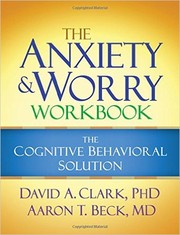
A highly accessible, clinician-authored introduction to how anxiety works in the mind and body. Reading it first gives the learner a clear framework — triggers, thought patterns, physical symptoms — that all later books assume you already have.
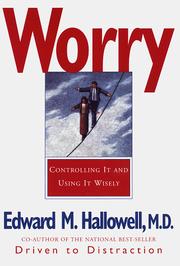
A warm, readable overview of chronic worry written by a psychiatrist. It normalises the experience and introduces the idea that worry is manageable, building motivation before the learner tackles structured techniques.
Core Skills: Cognitive and Behavioural Tools
BeginnerLearn and practise the foundational CBT techniques — thought-challenging, behavioural activation, and relaxation — that underpin almost every evidence-based anxiety programme.
▸ Study plan for this stage
Pace: 8–10 weeks total. Weeks 1–6: Mind Over Mood (~15–20 pages/day, working through chapters sequentially and completing all in-book worksheets as you go — do not skip ahead). Weeks 7–10: The Relaxation and Stress Reduction Workbook (~12–15 pages/day, reading one technique chapter per sitting and practis
- The Cognitive Model (Mind Over Mood): the relationship between situations, thoughts, moods, behaviours, and physical reactions — and how changing one element shifts the others
- Automatic Thoughts vs. Hot Thoughts: identifying the specific thought that carries the most emotional charge and learning to single it out for examination
- Thought Records (Mind Over Mood): the structured 7-column worksheet process for catching, evaluating, and rebalancing unhelpful thoughts about anxiety-provoking situations
- Evidence-Based Thinking: gathering real evidence FOR and AGAINST a hot thought rather than relying on gut feeling or catastrophic assumptions
- Behavioural Activation (Mind Over Mood): scheduling meaningful, pleasurable, or mastery activities to break the avoidance-anxiety cycle common in later life
- Progressive Muscle Relaxation (The Relaxation and Stress Reduction Workbook): systematically tensing and releasing muscle groups to reduce the physical tension that amplifies anxiety
- Diaphragmatic Breathing and Breath Control (The Relaxation and Stress Reduction Workbook): using slow, belly-centred breathing as an immediate, portable tool to down-regulate the stress response
- Body-Scan Awareness (The Relaxation and Stress Reduction Workbook): developing moment-to-moment awareness of where tension lives in the body as a foundation for all other relaxation techniques
- After completing Mind Over Mood, can you draw and label the five-part cognitive model diagram from memory and give a personal example that fills in each component?
- What is the difference between an automatic thought and a hot thought, and why does Mind Over Mood instruct you to focus thought-challenging work on the hot thought specifically?
- Walk through each column of the Mind Over Mood Thought Record using a real anxiety episode from the past week — what alternative or balanced thought did you arrive at, and did your mood rating shift?
- How does behavioural activation in Mind Over Mood address the avoidance behaviours that are especially common in older adults (e.g., withdrawing from social events or medical appointments)?
- After working through The Relaxation and Stress Reduction Workbook, which relaxation technique produced the most noticeable reduction in physical tension for you, and what does the workbook say about why regular practice matters more than technique selection?
- How do the breathing and muscle-relaxation skills from The Relaxation and Stress Reduction Workbook complement the cognitive skills from Mind Over Mood — in what order would you use them during an acute anxiety episode?
- Daily Thought Record journalling (Mind Over Mood): Every evening this week, complete at least one full 7-column Thought Record using the worksheets printed from Mind Over Mood. Focus on anxiety-related situations. Review your mood ratings before and after to track change over time.
- Hot-Thought Spotting drill: For one week, carry a small notepad. Each time you notice a spike in anxiety, pause and write down the situation and every thought that surfaces. Circle the one that feels most emotionally charged — your 'hot thought.' Compare your selections to the criteria described in Mind Over Mood.
- Behavioural Activation scheduling (Mind Over Mood): Using the activity-monitoring and scheduling worksheets in Mind Over Mood, plan three activities per week that you have been avoiding or have stopped doing. Rate your mood before and after each activity and note any surprises.
- Progressive Muscle Relaxation practice (The Relaxation and Stress Reduction Workbook): Follow the full PMR script from the workbook every day for two consecutive weeks, ideally at the same time each day. Keep a brief log rating your tension level (0–10) before and after each session.
- Diaphragmatic breathing micro-practice (The Relaxation and Stress Reduction Workbook): Set three phone alarms daily labelled 'breath check.' When each alarm sounds, spend 3 minutes on the diaphragmatic breathing technique described in the workbook. Practice this for the entire duration of the relaxation workbook stage.
- Integration exercise — Combined Coping Response: Choose one upcoming situation you feel anxious about. First, complete a Thought Record (Mind Over Mood) to address the cognitive component. Then, immediately before the situation, use the diaphragmatic breathing technique (The Relaxation and Stress Reduction Workbook) to manage physical tension. Afterward, write a half-page reflection on how the two
Next up: Mastering thought records, behavioural activation, and relaxation techniques here provides the practical toolkit that more advanced stages will build upon — particularly when applying these same CBT and somatic skills to specific anxiety presentations (such as health anxiety, social anxiety, or worry) that are especially prevalent in later life.
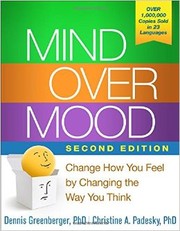
The gold-standard self-help CBT workbook, used in clinical settings worldwide. Its step-by-step thought records and mood logs are the practical engine of this curriculum; completing the exercises here makes every subsequent book more actionable.

Provides a comprehensive, evidence-based toolkit of relaxation methods — progressive muscle relaxation, breathing techniques, mindfulness basics — that complement the cognitive work in Mind Over Mood and are especially well-suited to older adults managing physical tension.
Ageing-Specific Approaches: Anxiety in the Older Adult Context
IntermediateApply anxiety-management strategies specifically to the challenges of later life — health concerns, loss, retirement, and changing identity — using frameworks designed for or validated in older populations.
▸ Study plan for this stage
Pace: 8–10 weeks total. Weeks 1–4: "Overcoming Health Anxiety" (~20–25 pages/day, 4–5 days/week), completing all chapters plus worksheets. Weeks 5–9: "The Mindfulness & Acceptance Workbook for Anxiety" (~15–20 pages/day, 4–5 days/week), working slowly to complete every in-book exercise before moving on. W
- Health anxiety in later life: distinguishing legitimate medical vigilance from anxiety-driven hypervigilance, as addressed in Willson's cognitive-behavioural framework
- The reassurance-seeking cycle: how repeated checking, doctor visits, and internet searches maintain and amplify health anxiety rather than resolving it (Willson)
- Cognitive restructuring for health-related fears: identifying catastrophic misinterpretations of bodily sensations and replacing them with balanced, evidence-based appraisals (Willson)
- Behavioural experiments and exposure: gradually confronting feared health situations and resisting safety behaviours to break the anxiety maintenance cycle (Willson)
- Acceptance vs. control: the ACT principle from Forsyth that struggling against anxiety — especially anxiety tied to ageing losses — amplifies suffering, while acceptance reduces it
- Psychological flexibility: the six ACT core processes (acceptance, defusion, present-moment awareness, self-as-context, values, committed action) as a unified framework for older adults navigating identity and role changes (Forsyth)
- Values clarification in later life: using Forsyth's values exercises to reorient away from anxiety-avoidance and toward meaningful living despite health concerns, grief, or retirement transitions
- Mindfulness as a daily practice: Forsyth's guided mindfulness exercises as a concrete, low-barrier tool validated for reducing anxiety in older populations
- According to Willson, what specific cognitive and behavioural patterns distinguish health anxiety from appropriate health awareness, and why is reassurance-seeking counterproductive?
- How does Willson's CBT model explain why bodily sensations become amplified in health anxiety, and what role does attention play in this process?
- What is the ACT 'hexaflex' model presented by Forsyth, and how does each of its six processes apply to an older adult dealing with grief, chronic illness, or loss of identity after retirement?
- How do Willson's behavioural experiments and Forsyth's committed action exercises complement each other when addressing avoidance behaviours in later life?
- Using Forsyth's values clarification framework, how would you help an older adult shift focus from 'eliminating anxiety about my health' to 'living a life that matters despite uncertainty'?
- What mindfulness practices does Forsyth introduce, and how can they be adapted for older adults who may have physical limitations or who are new to contemplative practice?
- Willson's Thought Record (weeks 1–4): Each day, log one health-related anxious thought using Willson's five-column thought diary — situation, emotion, automatic thought, evidence for/against, balanced alternative. Review weekly for recurring patterns.
- Reassurance Audit (week 2): Using Willson's framework, track every reassurance-seeking behaviour for one full week (Google searches, self-checks, asking others). Count frequency, note the short-term relief and long-term anxiety spike, and set a reduction target for week 3.
- Behavioural Experiment Design (weeks 3–4): Following Willson's template, design and carry out at least two behavioural experiments — e.g., resisting a body-check for 24 hours or reading a health article without seeking follow-up reassurance — and record predictions vs. actual outcomes.
- ACT Values Card (week 5): Complete Forsyth's values clarification exercises and distil your top 3–5 life values into a wallet-sized card. Each morning, read the card and identify one small action that day that honours a value despite anxiety.
- Mindfulness Practice Log (weeks 6–9): Follow Forsyth's guided mindfulness exercises (breath awareness, leaves-on-a-stream, body scan) for at least 10 minutes daily. Keep a brief log noting what arose, how you related to it, and any shifts in your relationship to anxious thoughts.
- Integration Synthesis (week 10): Write a 1–2 page personal 'Later-Life Anxiety Plan' that maps Willson's CBT tools (thought records, exposure hierarchy) onto Forsyth's ACT framework (acceptance, defusion, values), specifying which tool you will use for which type of anxiety trigger (health worry, grief, identity loss, retirement adjustment).
Next up: By mastering CBT-based health anxiety management (Willson) and ACT-based psychological flexibility (Forsyth), the reader has a robust dual-framework toolkit for later-life anxiety, and is now ready to advance to deeper clinical or relational dimensions — such as anxiety within caregiving relationships, end-of-life concerns, or group-based therapeutic approaches — that build directly on these valid

Health-related worry is the single most common anxiety presentation in older adults. This CBT-based guide addresses it directly, building naturally on the core skills already practised and filling a gap the general workbooks leave open.
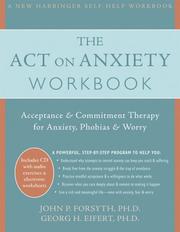
Introduces Acceptance and Commitment Therapy (ACT), which research shows is particularly effective for older adults because it focuses on living a valued life alongside discomfort rather than eliminating it — a realistic and empowering shift in perspective at this stage.
Lifestyle and Long-Term Resilience
IntermediateEmbed anxiety management into daily life through sleep, exercise, social connection, and meaning-making — the lifestyle pillars that sustain mental wellbeing in later life.
▸ Study plan for this stage
Pace: 6–8 weeks total: Weeks 1–3 on "Say Good Night to Insomnia" (~25–30 pages/day, including active journaling time); Weeks 4–7 on "Spark" (~20–25 pages/day, with lighter reading pace to allow reflection on neuroscience content); Week 8 as an integration week to review notes, complete exercises, and cons
- The 6-week CBT-based program in 'Say Good Night to Insomnia': replacing sleep medication with behavioral and cognitive techniques tailored to older adults
- Sleep restriction and stimulus control as the two most powerful non-drug interventions for chronic insomnia, as outlined by Jacobs
- Cognitive restructuring of dysfunctional beliefs about sleep (e.g., 'I must get 8 hours') to reduce the anxiety-insomnia feedback loop
- Relaxation response techniques (progressive muscle relaxation, diaphragmatic breathing) as nightly anxiety regulators from Jacobs's program
- Ratey's core argument in 'Spark': aerobic exercise is a frontline treatment for anxiety, depression, and stress by remodeling the brain's threat-response systems
- The role of BDNF (brain-derived neurotrophic factor) and neurotransmitter regulation (serotonin, norepinephrine, dopamine) as the neurological bridge between exercise and reduced anxiety
- Exercise dosage and type for older adults: Ratey's evidence on moderate-intensity aerobic activity (walking, cycling, swimming) as sufficient to produce measurable anxiety relief
- Lifestyle integration: how consistent sleep hygiene and regular physical movement form mutually reinforcing pillars of long-term resilience against anxiety in later life
- According to Jacobs, what are the three behavioral pillars of the 6-week insomnia program, and why does he argue they outperform sleep medication for older adults?
- How does the anxiety-insomnia cycle work, and what specific cognitive techniques does Jacobs recommend to interrupt it?
- What does Ratey mean when he says exercise is 'Miracle-Gro for the brain,' and which neurochemicals are most relevant to anxiety reduction in later life?
- How does Ratey's research explain why even a single bout of moderate aerobic exercise can produce an immediate reduction in anxiety symptoms?
- How can the sleep strategies from Jacobs and the exercise prescriptions from Ratey be combined into a single weekly lifestyle routine for an older adult managing chronic anxiety?
- What barriers to sleep hygiene and regular exercise are most common in later life, and what solutions do these two books collectively offer?
- Sleep diary practice (Jacobs): Keep a daily sleep log for the full 3 weeks of reading 'Say Good Night to Insomnia' — recording bedtime, wake time, estimated sleep duration, and morning anxiety rating. Use Jacobs's own scoring method to track improvement.
- Sleep restriction experiment: Following Jacobs's protocol, identify your current average sleep window and apply a mild sleep restriction schedule for one week, then gradually extend it — noting the effect on both sleep quality and daytime anxiety levels.
- Cognitive restructuring worksheet: List your top 5 beliefs about sleep (e.g., 'If I don't sleep well, tomorrow will be ruined'). Use Jacobs's reframing techniques to write a balanced counter-belief for each, and rehearse them before bed for two weeks.
- Exercise prescription design (Ratey): After finishing 'Spark', draft a personal 4-week aerobic exercise plan specifying activity type, duration, frequency, and intensity. Anchor it to Ratey's recommended thresholds for anxiety relief and adapt it to any physical limitations.
- Mind-body integration walk: Three times per week during the 'Spark' reading period, take a 20–30 minute brisk walk immediately before a known high-anxiety time of day (e.g., late afternoon). Journal for 5 minutes afterward on mood, tension, and sleep anticipation.
- Lifestyle resilience blueprint: At the end of Week 8, write a one-page personal plan that integrates Jacobs's sleep hygiene rules and Ratey's exercise principles into a sustainable daily and weekly routine — including specific contingency strategies for high-stress or low-motivation days.
Next up: By establishing sleep and exercise as non-negotiable biological foundations for anxiety resilience, this stage prepares the reader to explore the equally vital social and meaning-making dimensions of wellbeing in later life — the relational and existential pillars that complete a whole-person approach to managing anxiety.
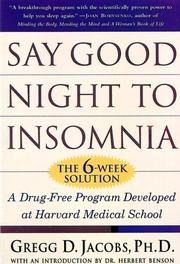
Sleep disruption and anxiety are tightly linked in older adults. This evidence-based, drug-free CBT-for-insomnia programme addresses that link directly, and improving sleep reliably reduces baseline anxiety — making it a high-leverage intervention at this stage.
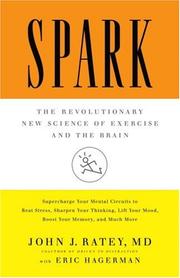
Presents the neuroscience of exercise as medicine for anxiety and depression, with compelling evidence that physical activity is one of the most potent anti-anxiety interventions available. It motivates lasting behaviour change by explaining exactly why movement works in the brain.
Advanced Integration: Meaning, Acceptance, and Flourishing
ExpertSynthesise all previous learning into a coherent philosophy of ageing well — moving from anxiety reduction to genuine psychological flourishing in later life.
▸ Study plan for this stage
Pace: 6–8 weeks total: Weeks 1–3 on "Man's Search for Meaning" (~20–25 pages/day, including reflection pauses after each of the three parts); Weeks 4–7 on "The Gift of Years" (~15–20 pages/day, reading one or two short chapters per sitting as Chittister intends); Week 8 reserved for synthesis, journalling
- Logotherapy and the will to meaning — Frankl's argument that the primary human drive is not pleasure or power but the search for meaning, even amid suffering
- Tragic optimism — the capacity to say 'yes' to life despite pain, guilt, and death, which Frankl presents as the mature alternative to naive positivity
- Meaning found three ways — through what we give to the world (creation/work), what we receive from it (love/beauty), and how we face unavoidable suffering (attitudinal values)
- The last of human freedoms — Frankl's core insight that we cannot always choose our circumstances but can always choose our response, a principle directly applicable to the losses of later life
- Regret as a teacher, not a prison — Chittister's reframing of regret as the raw material for wisdom and self-understanding rather than a source of shame
- Gratitude and the fullness of time — Chittister's insistence that later life is not a diminishment but a season of depth, in which accumulated experience becomes a gift to oneself and others
- Letting go and the freedom of simplicity — Chittister's treatment of relinquishment (of roles, possessions, and former identities) as a spiritual and psychological liberation
- Integrity and legacy — the integration of both authors' ideas into a coherent sense of a life well-lived and a self still capable of growth and contribution
- According to Frankl, why is meaning — rather than the absence of anxiety — the most robust foundation for psychological wellbeing, and how does this shift the goal of managing anxiety in later life?
- What does Frankl mean by 'attitudinal values,' and can you give two concrete examples of how an older adult might exercise this freedom when facing illness, bereavement, or dependency?
- How does Chittister distinguish between regret that paralyses and regret that matures, and what practices or attitudes does she suggest enable the transition from one to the other?
- In what ways do Frankl's concept of tragic optimism and Chittister's concept of the 'gift of years' complement each other, and where, if anywhere, do they tension or contradict each other?
- Chittister argues that later life offers unique opportunities for depth, wisdom, and contribution. How does this reframe the anxiety-provoking narratives of decline and irrelevance that often accompany ageing?
- Having read both books, how would you articulate your own emerging philosophy of ageing well — what does flourishing in later life mean to you, and which specific ideas from Frankl and Chittister anchor that philosophy?
- Meaning audit journal: After finishing Frankl, spend 30 minutes listing the current sources of meaning in your life under his three categories (creative/work, experiential/love, attitudinal). Identify which category feels most alive and which feels most depleted — then write one concrete action to nourish the depleted area.
- The 'last freedom' log: For one week during the Frankl reading, keep a daily note of one moment where you felt anxious or constrained by circumstances beyond your control. For each, write a single sentence describing the response you chose (or could choose) — practising the muscle of attitudinal freedom.
- Chapter-by-chapter reflection with Chittister: Because each chapter of 'The Gift of Years' addresses a distinct theme (regret, loneliness, fulfillment, etc.), write a two-sentence personal response at the end of every chapter — one sentence naming how the theme shows up in your own life, one sentence naming what Chittister's reframe offers you.
- Regret-to-wisdom letter: Identify one significant regret from your past. Write a compassionate letter to your younger self that transforms the regret into a lesson, using Chittister's framework. Then write a second paragraph describing how that lesson is still active and useful in your life today.
- Integrated philosophy statement: In Week 8, write a 400–600 word personal 'philosophy of ageing well' that explicitly draws on at least three ideas from Frankl and three from Chittister. Read it aloud, revise it, and consider sharing it with a trusted friend or discussion group as a way of testing and deepening it.
- Flourishing conversation: Invite one other person (a peer, family member, or reading-group companion) to a 45-minute conversation structured around three questions — What gives your life meaning right now? What have you had to let go of, and what did that free you for? What do you want the remaining years to be about? Use both books as a shared reference point.
Next up: By synthesising Frankl's meaning-centred resilience with Chittister's spirituality of ageing, this stage equips the reader with a personal, philosophically grounded framework — the essential foundation for any subsequent work on translating these insights into daily habits, relationships, and community engagement in later life.
![Man's Search for Meaning adapted for Young Adults [adaptation]](https://covers.openlibrary.org/b/id/11203708-M.jpg)
A foundational text on finding purpose under conditions of profound uncertainty and loss. At this final stage, having built practical skills, the learner is ready to engage with the deeper existential question of meaning — the most durable long-term buffer against anxiety.
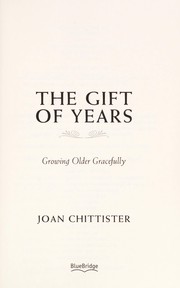
A reflective, wisdom-oriented exploration of what later life offers rather than what it takes away. It consolidates the entire curriculum by reframing ageing as a stage of growth, giving the learner an affirming and sustainable mindset to carry forward.
Discussion
Keep reading
Paths that share books, cover the same subject, or open a related topic.