Organizational Design: The Best Books on Structuring a Company, in Order
Organizational design is the set of choices about who reports to whom, who decides what, how work is divided and how the divided parts are coordinated again — and the central finding of the literature is that there is no best structure, only structures that are well or badly matched to a strategy. This path starts with the practitioner books that give you a working method, goes back for the classical theory that everything since is a variation on, then adds the interpretive and cultural literature that explains why redrawing a chart usually fails, and ends with the modern claims about flatter and more autonomous organisations, read sceptically. Note that one book here is a genuinely technical academic text and several others are consultancy-derived; each entry says which, because the evidence behind them is not equivalent.
A Working Method
BeginnerGet a usable process for a design or redesign — diagnosis, options, sequencing — before meeting the theory that justifies it.
▸ Study plan for this stage
Pace: Three weeks for about 830 pages, none of it heavy going. Stanford's Organization Design is 288 pages and is the most straightforwardly useful book here - a step-by-step process with diagnostics and worked cases, written for someone who has actually been asked to restructure something. Read it first
- Design as a sequence rather than a drawing: diagnosis, design criteria, options, choice, transition, and the fact that most organisations skip straight to the chart
- Galbraith's star model - strategy, structure, processes, rewards and people - and its central claim that structure alone determines almost nothing
- Design criteria written down before options are generated, so that a preferred answer cannot be reverse-engineered into a rationale
- The grouping question: by function, product, geography, customer or some matrix of those, and what each grouping makes easy and hard
- Lateral mechanisms - roles, teams, processes and integrators - as the way a chosen grouping's costs are paid for
- Why reorganisations fail: the failure modes ReOrg reports, which are mostly about transition, sequencing and unowned decisions rather than about the design itself
- Decision rights as the substance of a structure - who decides, who is consulted, who is merely informed
- State Galbraith's five points and give an example of a structure change that failed because one of the other four was not moved with it.
- What does grouping by product make easy that grouping by function makes hard, and vice versa? Answer with a specific coordination cost in each direction.
- What are Stanford's design criteria for, and what goes wrong when a team writes them after choosing an option?
- From ReOrg: what are the commonest causes of reorganisation failure, and how many of them are visible on the day the new chart is announced?
- These three books are all written by practitioners and consultants. Which of their claims are supported by anything beyond experience, and how would you tell?
- Draw your own organisation's current chart from memory, then get the official one and mark every difference. The gaps are where the real structure and the formal structure have diverged, and Stanford's diagnostics begin there.
- Fill in the star model for your own organisation: one page, five headings, honest sentences under each. Then mark every point where a strategy commitment is not supported by a process, a reward or a role. That page is the diagnosis Galbraith's handbook is designed to produce.
- Write design criteria for a restructure you have actually been part of - five to eight statements of what the design must achieve - and then check whether the structure that was chosen meets them. Doing this retrospectively on a decision already made is the cheapest way to learn what criteria are for.
- Take ReOrg's failure modes as a checklist and score a reorganisation you have lived through against each one. The book's survey basis makes the list unusually concrete, and most readers find their own experience matching four or five items exactly.
Next up: You have a method and a vocabulary but no theory of why any of it works; the next stage supplies the founding arguments that every framework in this one is a simplification of.

The most straightforwardly useful book on this path: a step-by-step design process with diagnostics and worked cases, written for someone who has actually been asked to restructure something. Start here so the theory in the next stage has something concrete to attach to.

Galbraith and his co-authors reduce his own academic framework to a practitioner's handbook — strategy, structure, processes, rewards, people. The short version of the model that stage two takes seriously, and the right thing to read second.

Two former McKinsey consultants on why reorganisations fail and how to run one that does not, drawn from a survey of nearly two thousand executives. Consultancy-derived and openly so; valuable for the failure modes, which the design books tend to skip.
The Classical Theory
IntermediateLearn the underlying model — that structure follows from the information-processing demands of the work — and the vocabulary the whole field still uses.
▸ Study plan for this stage
Pace: Five to six weeks for only 760 pages, because the pages are much denser than stage one. Galbraith's Designing Complex Organizations is 150 pages, published in 1973, and it is the founding text of the information-processing view - short, compressed, and the intellectual origin of nearly every practit
- Uncertainty as the driver of design: the more uncertain the task, the more information must be processed during execution, and structure is the mechanism for handling that load
- Galbraith's two strategic responses to information load - reduce the need for information (slack resources, self-contained units) or increase the capacity to process it (vertical systems, lateral relations) - and the fact that these are the only two
- Mintzberg's five configurations: simple structure, machine bureaucracy, professional bureaucracy, divisionalised form and adhocracy
- The five coordinating mechanisms - mutual adjustment, direct supervision, and standardisation of work, outputs and skills - and how each configuration rests on one of them
- The parts of the organisation in Mintzberg's scheme (strategic apex, middle line, operating core, technostructure, support staff) and which part pulls hardest in each configuration
- Contingency and fit: Burton and colleagues' claim that design is a matching problem with diagnosable misfits, and what a misfit costs
- Why there is no best structure, only structures matched or mismatched to a strategy and an environment - the finding all three books converge on from different directions
- Give Galbraith's four design strategies for handling information load and a real organisation that uses each.
- Which of Mintzberg's five configurations is your own organisation closest to, and which coordinating mechanism does it actually run on rather than claim to?
- A professional bureaucracy and a machine bureaucracy both standardise. What do they standardise, and why does the difference change everything about how they can be managed?
- What does Burton and colleagues' framework let you diagnose that Stanford's handbook cannot?
- Where does Mintzberg's taxonomy fail - what real organisation have you seen that does not fit any of the five?
- Classify five organisations you know well into Mintzberg's configurations, and for each write the coordinating mechanism it depends on and the part of the organisation that dominates. The exercise only works with real cases; the taxonomy is useless as memorisation and sharp as a diagnostic.
- Take one coordination failure you have personally witnessed and analyse it in Galbraith's terms: was the organisation short of information-processing capacity, or was it trying to run on too little slack? Then say which of his four responses would have fixed it and what it would have cost.
- Run the Burton, DeSanctis and Obel diagnostic on your own organisation, following their steps properly and recording each input rather than jumping to the conclusion. Then compare the misfits it reports against the star-model page you wrote in stage one. Two methods on the same organisation, agreeing or not, is the most informative thing you can do with this stage.
- Read Galbraith's 1973 book and then reread the Designing Dynamic Organizations handbook from stage one, and list what the practitioner version drops. The omissions are consistent and instructive: they are almost all the parts that make the theory falsifiable.
Next up: The classical theory treats structure as the object of design; the next stage is written by people who think that is precisely the mistake.

The 1973 book that founded the information-processing view of organisation design, and the source of the idea that coordination cost is the thing being traded off. Short, dense, and the intellectual origin of almost every practitioner framework in the previous stage.
Mintzberg's five configurations — simple structure, machine bureaucracy, professional bureaucracy, divisionalised form, adhocracy — and the coordinating mechanisms behind each. This is the condensed version of his much longer The Structuring of Organizations; read the long one only if the taxonomy grips you.

A genuinely academic step-by-step text, written with DeSanctis and Obel, that treats design as a fit problem with diagnostics and contingency rules. The most rigorous book here and the most demanding; take it up once the Galbraith and Mintzberg vocabulary is familiar.
Why Redrawing the Chart Is Not Enough
IntermediateUnderstand the organisation as culture, system and set of metaphors — the layer that determines whether a structural change survives contact with the people in it.
▸ Study plan for this stage
Pace: Six weeks or more, and the most enjoyable stage on the path. Morgan's Images of Organization is 485 pages and works through eight metaphors - machine, organism, brain, culture, political system and others - each producing a different diagnosis of the same company; read it slowly, a metaphor at a sit
- Morgan's core move: a metaphor is not decoration but a diagnostic frame, and every frame both reveals and conceals
- The machine metaphor as the unexamined default of the design literature, and what it hides about power, culture and adaptation
- Organisations as political systems - coalitions, interests and negotiated order - which is the frame most conspicuously absent from stages one and two
- Schein's three levels of culture: visible artefacts, espoused values, and the underlying assumptions nobody states because nobody notices holding them
- How culture is created and changed by leaders in Schein's account, and why culture change on a project timetable almost never works
- Senge's systems archetypes - limits to growth, shifting the burden, the tragedy of the commons - and delay as the reason structural fixes produce displaced consequences
- Silos as a specialisation failure with measurable costs, and Tett's demonstration of what a coordination failure actually costs in money and in missed information
- The cumulative argument of the stage: a structure is a claim about how work will be coordinated, and culture, politics and delay determine whether the claim is true
- Take one organisational problem and diagnose it through three of Morgan's metaphors. What does each frame make actionable, and what does each make invisible?
- What is an underlying assumption in Schein's sense, and how would you find one in an organisation that by definition does not talk about it?
- Which of Senge's archetypes describes a pattern you have seen, and where was the delay that made it hard to see?
- Tett's cases are journalism rather than research. Which of her four cases would you trust most, and what makes it stronger than the others?
- After this stage, what would you now add to the design criteria you wrote in stage one?
- Write the same organisational problem up four times, once each through Morgan's machine, political, cultural and organism metaphors, one page each. Then decide which diagnosis you would act on. This is the exercise the book exists for and it does not work in the head.
- Do a Schein artefact audit on your own workplace: list twenty visible artefacts - meeting formats, seating, who speaks first, what gets celebrated - then work upward to espoused values and inward to assumptions. Show the result to a long-serving colleague and see which assumptions they recognise and which they deny.
- Take a structural change your organisation made and map its consequences as a Senge causal loop, with the delays marked. Then check the second-order effects that actually appeared six to twelve months later against your loop.
- Pick one of Tett's four cases and write down what the silo cost in that instance - in money, in time, or in information not acted on. Then estimate the same figure for one silo in your own organisation. The estimate will be rough and the exercise is still worth an afternoon.
- Return to your Mintzberg classification from stage two and ask what it failed to predict about how your organisation actually behaves. Morgan and Schein between them will name the missing variable.
Next up: With structure, theory and culture all in hand, you are equipped to read the modern claims about flat, autonomous organisations for what they are: strong cases in search of a general rule.

Eight metaphors — machine, organism, brain, culture, political system and others — each shown to produce a different diagnosis of the same company. The best single antidote to believing that a structure is the organisation, and the most intellectually enjoyable book on this path.
The standard work on culture as artefacts, espoused values and underlying assumptions, and on how leaders create and change it. Read after Morgan: Morgan shows you that culture is a lens, Schein gives you the model to work with.

Systems thinking applied to organisations, and the source of the standard argument that structural fixes produce delayed and displaced consequences. Popular rather than academic, and its research base is thin, but the systems archetypes are genuinely useful design tools.

A journalist with an anthropology doctorate examining specialisation failures at UBS, Sony, the Bank of England and Facebook. The concrete cases that the previous three books theorise about, and the clearest demonstration of what a coordination failure actually costs.
The Modern Claims, Read Sceptically
IntermediateAssess the contemporary arguments for flatter, faster, more autonomous structures, and work out which parts are design and which are ideology.
▸ Study plan for this stage
Pace: Four weeks for about 1,150 pages, and the stage that most needs the previous three behind it. McChrystal, Collins, Silverman and Fussell's Team of Teams is 297 pages, built on the restructuring of a special operations command in Iraq, and it is the most influential recent argument for pushing decisi
- Shared consciousness and empowered execution as McChrystal's actual mechanism, and the information conditions it requires to be safe
- The distinction between decentralising decisions and decentralising information - one does not work without the other
- Conway's law and the inverse manoeuvre: that a system's architecture mirrors the communication structure of the organisation that built it, and that this can be used deliberately
- Team Topologies' four team types and three interaction modes, and cognitive load as an explicit design constraint on how much a team can own
- Laloux's developmental-stage model and its three practices - self-management, wholeness, evolutionary purpose - and the fact that the stage model is an assertion rather than a finding
- Selection on the dependent variable: what it means to study twelve successes and no failures, and what that does and does not permit you to conclude
- Holacracy as a concrete constitution - roles rather than jobs, circles rather than departments, and governance meetings that change the structure continuously
- Why adopters abandon it: the evidence from the well-known cases, and what it suggests about the transferability of any of these models
- What conditions made shared consciousness workable in McChrystal's command, and which of them hold in an ordinary company?
- Give an example of Conway's law operating in an organisation you know - a system whose shape mirrors the org chart that produced it.
- In Team Topologies' terms, what is cognitive load and how would you tell that a team has been given more of it than it can carry?
- Laloux studied twelve organisations that had adopted his practices and were succeeding. What claim can that design support, and what claim can it not?
- Holacracy has been adopted and abandoned publicly. What are the reported reasons, and do they indict the model, the adoption, or the reporting?
- Map your own organisation using Team Topologies: name every team, assign it one of the four types, and mark the interaction mode between each connected pair. Where a team does not fit a type or an interaction is undefined, you have found a real design problem. This is the most immediately usable exercise on the whole path.
- Do the Conway's law audit: take your main product or system, draw its component boundaries, then draw your org chart, and lay them on top of each other. The correspondence is usually uncomfortable and always informative.
- Read Laloux and then go and find one organisation that adopted these practices and reverted. Write a page on why. The book contains no such case by construction, and supplying one yourself is the difference between reading it and evaluating it.
- Take Robertson's governance-meeting format and run one real meeting by it, exactly as written, on a genuine unresolved question about who owns what. Then write down what the format handled well and where it broke. Holacracy is a procedure, and procedures can be tested in an hour.
- Finish the path by returning to the star model page from stage one and the design criteria you wrote there. Revise both with everything from stages two to four in hand, and note for each revision which book caused it. That annotated page is the deliverable, and it will tell you plainly which of these sixteen books actually changed your mind.
Next up: This is the last stage, and it ends on the most falsifiable book here by design: having read the classical theory, the cultural critique and the modern claims, you can now tell a design argument from a design fashion.

The most influential recent argument for pushing decision rights downward, built on the restructuring of Joint Special Operations Command in Iraq. A strong case study and a weak generalisation; read it for the mechanism — shared consciousness plus empowered execution — rather than the doctrine.

The best modern application of Conway's law: four team types and three interaction modes, aimed at software organisations but applicable well beyond them. The most concrete and testable of the contemporary books.

The influential case for self-managing organisations, built on twelve company studies and a developmental-stage model. Read it as the fullest statement of the position and note what it is not: the sample is selected on the outcome, and there are no failures in it.
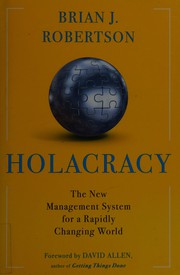
The specific operating system Laloux describes in the abstract, written by its inventor — roles, circles, governance meetings, and a constitution. The right last book because it is falsifiable in a way the others are not: several well-known adopters have since abandoned it, which is itself the most useful data on this path.
Discussion
Keep reading
Paths that share books, cover the same subject, or open a related topic.