Market Design and Auction Theory: The Best Books, in Order
Market design is the branch of economics that treats a market as an engineering artefact: something you can specify, test and rebuild when prices alone cannot clear it. This path opens with the popular accounts — kidney exchange, school choice, spectrum auctions — because they establish what the problem is before any notation appears. It then builds the game-theoretic prerequisites, works through auction theory proper at graduate level, moves into matching and whole-market design, and finishes with the computational side. Stages 3 to 5 are genuine graduate economics: they assume comfort with calculus, probability and static and dynamic games, and Bayesian Nash equilibrium is used without apology from stage 3 onward. A reader who only wants to understand what the field does can stop after stage 1.
What market design is, before any mathematics
BeginnerUnderstand the class of problems market design exists to solve — matching markets, thickness, congestion, repugnance — and why a price is sometimes the wrong instrument, with no formal apparatus required.
▸ Study plan for this stage
Pace: Three weeks, about 825 pages, and all of it is trade nonfiction — no notation, no prerequisites. Alvin Roth's Who gets what--and why is 260 pages and is the Nobel laureate's own account of his field; read it first. John McMillan's Reinventing the Bazaar is 333 pages and is a wider survey of what mar
- Matching markets versus commodity markets: what changes when you cannot simply raise the price
- Thickness, congestion and safety as the three failures Roth says a market designer has to fix
- Repugnance as a binding constraint on design, not a moral aside — it is why kidneys cannot be bought
- Unravelling: markets that move earlier and earlier in time until they break, and the fixes that stop it
- The FCC incentive auction as a two-sided design problem — buying spectrum back from broadcasters and reselling it
- Why a designed market has to be evaluated against a real alternative rather than against a theoretical ideal
- What are the three things Roth says a marketplace must provide, and which does each of his case studies fail at?
- Why is a kidney exchange chain necessary at all — what specifically does the ban on payment force the design to do?
- What problem was the FCC incentive auction solving, and what made it two-sided?
- Where does McMillan's framing add something Roth's does not, and where is it just broader?
- In each of these books the author designed the thing being described. Name one place where that shows in the argument.
- Write out the top-trading-cycles and deferred-acceptance procedures from Roth's descriptions as numbered algorithms, in plain language, before you meet either formally in stage 4.
- Take one market Roth describes as broken — medical residencies before the match, or school choice in Boston — and write down which of thickness, congestion and safety was failing, and how the fix addressed it.
- Read Milgrom's account of the incentive auction and draw the two sides on one page: who is selling, who is buying, and what clears between them.
- Pick a market you use — housing, dating, university admissions — and write 300 words diagnosing it in Roth's vocabulary.
Next up: Everything above was described; the rest of this path is derived, and stage 2 supplies the equilibrium concepts the derivations will use without restating.
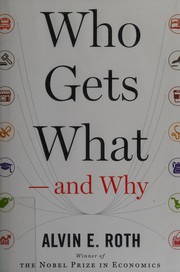
The Nobel laureate's own trade book, and the best single entry to the field: kidney exchange chains, the medical residency match and school choice explained without a line of algebra. Read it first because every formal chapter later in the path is a model of something described here. Open Library files it under the display title 'Who gets what--and why'; it is the same 2015 book.
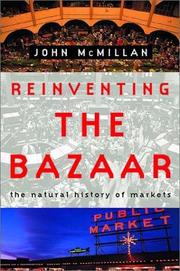
The wider framing Roth assumes: what markets need in order to work at all — property rights, information, trust, competition — surveyed across everything from Dutch flower auctions to Soviet transition. Here because it stops market design being read as a purely technical exercise.

Milgrom's short lecture-derived account of the FCC incentive auction, the largest market ever designed. Placed at the end of stage 1 because it is the field's showpiece and the most concrete answer to 'what does a market designer actually do', while still being readable ahead of the formal auction theory in stage 3.
The game theory the field assumes
IntermediateAcquire the equilibrium concepts every later chapter uses without restating: Nash and subgame-perfect equilibrium, games of incomplete information, Bayesian Nash equilibrium and the revelation principle.
▸ Study plan for this stage
Pace: Eight to ten weeks, about 1,529 pages, and this is the stage where the path becomes genuinely technical. Steven Tadelis's Game Theory is 416 pages and is the gentlest of the three — the right starting point if your last formal economics was intermediate micro; it works through static and dynamic gam
- Nash equilibrium in pure and mixed strategies, and why existence needs the mixed extension
- Backward induction and subgame perfection, and what they rule out that Nash does not
- Games of incomplete information, types, and the Harsanyi transformation into a Bayesian game
- Bayesian Nash equilibrium, which every chapter from stage 3 onward uses without apology
- The revelation principle — Myerson's result, and the reason auction theory can restrict attention to direct truthful mechanisms
- Incentive compatibility and individual rationality as the two constraints every mechanism must satisfy
- Expected-utility reasoning over type distributions, which is the actual computational skill the later stages demand
- Can you state Bayesian Nash equilibrium formally and explain what each object in the definition ranges over?
- What exactly does the revelation principle let you assume, and what does it not let you conclude?
- Why is subgame perfection the right refinement for a sequential auction and not for a sealed-bid one?
- What is the difference between incentive compatibility and strategy-proofness, and when does it matter?
- Given a two-type Bayesian game, can you compute the equilibrium without looking anything up?
- Work every end-of-chapter problem in Tadelis's chapters on static and dynamic games of incomplete information. This is the specific material Krishna assumes.
- Prove the revelation principle for yourself from Myerson's statement, then write the proof out in half a page in your own notation.
- Take a two-player, two-type Bayesian game from Osborne and compute the equilibrium by hand; then vary one type probability and recompute, so you can feel which parameters bind.
- Compare Tadelis's and Osborne's treatments of the same topic — extensive-form games with imperfect information — and note where Osborne's added rigour actually changes a conclusion rather than just the presentation.
Next up: With Bayesian equilibrium and the revelation principle in hand, auction theory becomes a set of derivations you can follow rather than results you have to accept.

The gentlest of the three and the right starting point if your last formal economics was intermediate micro. Covers static and dynamic games and incomplete information with worked examples rather than theorem-proof density. Open Library displays it simply as 'Game Theory'.
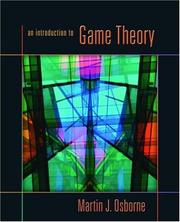
A step up in rigour from Tadelis and the standard advanced-undergraduate text. Read second, for the cleaner treatment of extensive-form games and Bayesian games that Krishna and Milgrom take for granted.
The graduate reference, by the economist who proved the revelation principle — the single result auction theory leans on hardest. Do not read it cover to cover; use it as the place to settle mechanism-design questions that stages 3 and 4 raise. Also displays bare as 'Game Theory', so check the author when buying.
Auction theory proper
BeginnerDerive and use the core results — revenue equivalence, optimal reserve prices, the winner's curse, common versus private values, and the linkage principle — and understand why real auctions depart from them.
▸ Study plan for this stage
Pace: Ten to twelve weeks, about 956 pages, and the slowest reading on this path. Paul Klemperer's Auctions is 256 pages — a compact survey plus essays on what went wrong in the European 3G spectrum auctions; read it first, because it tells you which theorems matter in practice. Vijay Krishna's Auction Th
- The four standard formats — first-price sealed bid, second-price, English and Dutch — and their strategic equivalences
- The revenue equivalence theorem: its statement, the four assumptions it needs, and what fails when each is dropped
- Optimal reserve prices, and the fact that the optimum does not depend on the number of bidders
- Private values versus common values, and the winner's curse as a consequence of the latter
- Milgrom and Weber's linkage principle and the revenue ranking it implies for affiliated values
- Multi-object and package auctions: the exposure problem and why simultaneous ascending auctions were invented
- Collusion, entry deterrence and the practical failure modes Klemperer documents in the 3G auctions
- Can you state revenue equivalence precisely and name all four assumptions?
- Why does the optimal reserve price not depend on the number of bidders, and what is the intuition?
- What is the winner's curse, and what does rational bidding under common values require you to do about it?
- What went wrong in the European 3G auctions, and which of Klemperer's failures were design failures rather than bad luck?
- What is the exposure problem, and how does Milgrom's design address it?
- Derive the symmetric equilibrium bid function for the first-price sealed-bid auction with n bidders and values uniform on [0,1] from Krishna's setup, and confirm you get (n-1)/n times your value. Then compute expected revenue and check it equals the second-price auction's.
- Compute the optimal reserve price for the uniform [0,1] case and verify for yourself that it is independent of n, then work out how much revenue the reserve adds at n = 2 and at n = 10.
- Take Klemperer's account of one national 3G auction and work out which of Krishna's assumptions the real auction violated.
- Work Krishna's exercises on common-value auctions until you can compute the equilibrium bid shading for a given signal distribution without the book open.
- Read Milgrom's chapter on activity rules and write down what strategic behaviour each rule exists to prevent.
Next up: Auctions handle the half of market design where money can move; matching theory handles the half where it cannot, which is stage 4.

The bridge into the formal literature: a compact survey plus Klemperer's essays on what actually went wrong in the European 3G spectrum auctions. Read before Krishna because it tells you which theorems matter in practice. Open Library files it under the bare title 'Auctions'.

The standard graduate textbook and the mathematical spine of this path. Assumes the stage 2 material outright and works through private-value, common-value and multi-object auctions in a unified framework. A solutions manual circulates separately; make sure you are buying the textbook itself.

Where the theory meets a real design brief, from the economist who designed the FCC auctions. Read after Krishna: it assumes the equilibrium results and spends its energy on package bidding, activity rules and the practical failures theory does not predict.
Matching, and designing a whole market
BeginnerWork with the other half of the field — two-sided matching without transfers — including deferred acceptance, stability, strategy-proofness and the trade-offs made in real school-choice and residency systems.
▸ Study plan for this stage
Pace: Six to eight weeks, about 671 pages. Roth and Sotomayor's Two-Sided Matching is 279 pages and is still the definitive statement of the theory — it is a monograph, theorem-and-proof throughout, and it assumes mathematical maturity rather than any particular economics. Guillaume Haeringer's Market Des
- Stability as the solution concept for matching, and what a blocking pair is
- The Gale-Shapley deferred acceptance algorithm and its proof of convergence to a stable matching
- The lattice structure of the set of stable matchings, and the opposition of interests between the two sides
- The rural hospitals theorem and what it says about which agents are matched across all stable matchings
- Strategy-proofness for one side only, and the impossibility results that constrain every real match
- Top trading cycles and its use in school choice and in kidney exchange
- Design trade-offs actually made in the National Resident Matching Program and in Boston and New York school choice
- Can you prove that deferred acceptance produces a stable matching, and that it is optimal for the proposing side?
- Why can no stable mechanism be strategy-proof for both sides? State the impossibility result exactly.
- What does the rural hospitals theorem say, and why did it matter for the residency match in practice?
- When is top trading cycles the right tool and when is deferred acceptance? What property distinguishes the two cases?
- What did Boston's school-choice mechanism do before the redesign, and what specifically made it manipulable?
- Run deferred acceptance by hand on a four-by-four preference profile of your own construction, once with each side proposing, and verify you get the two extreme points of the lattice.
- Construct a preference profile where a receiving-side agent gains by misreporting under deferred acceptance. This is the impossibility result made concrete and it takes about twenty minutes.
- Run top trading cycles on a six-agent housing example and check the resulting allocation is in the core.
- Take Roth's narrative account of the residency match from stage 1 and map each design decision he describes onto the theorem in Roth and Sotomayor that justifies it.
- Work Haeringer's exercises on school choice and compare his notation with Roth and Sotomayor's; reconciling the two is itself useful.
Next up: Both halves of the classical field are now in place; the final stage covers the designs that exist only because a computer can solve them.

Roth and Sotomayor's monograph is still the definitive statement of matching theory: Gale-Shapley deferred acceptance, the lattice structure of stable matchings, and the impossibility results that constrain every real match. The formal counterpart to stage 1's opening book.

The most recent textbook to treat auctions and matching as one subject rather than two literatures, which is how practitioners now think about it. Placed here as the consolidation of stages 3 and 4. Open Library displays it as 'Market Design'.
Computation and large-scale implementation
BeginnerHandle the designs that only exist because they can be computed — combinatorial and package auctions, approximation and complexity limits, and the mechanism-design questions that arise at internet scale.
▸ Study plan for this stage
Pace: Eight to ten weeks, about 1,432 pages, both of them edited volumes rather than textbooks — read them by chapter, not cover to cover. Cramton, Shoham and Steinberg's Combinatorial Auctions is 672 pages and made package bidding a practical tool; it covers winner-determination algorithms, bidding langu
- The winner-determination problem as an integer program, and its NP-hardness
- Bidding languages: what a bidder can express, and the trade-off between expressiveness and tractability
- The VCG mechanism, its optimality properties, and the practical objections that keep it out of real auctions
- Approximation and the price of anarchy — measuring how much equilibrium behaviour costs relative to the optimum
- Mechanism design without money, and computational constraints as design constraints in their own right
- Sponsored search auctions as the largest deployed application, and the generalised second-price auction's departure from VCG
- Why computational tractability changes which mechanisms exist, not merely which are convenient
- Why is winner determination NP-hard, and what structure on bids restores tractability?
- What are the objections to VCG in practice, and which of them are theoretical rather than political?
- What does the price of anarchy measure, and what is a bound you can state for a specific class of games?
- How does the generalised second-price auction used in sponsored search differ from VCG, and why was it adopted anyway?
- Which results in this stage change what a designer can build, rather than merely how quickly they can compute it?
- Formulate a small combinatorial auction winner-determination problem as an integer program and solve it by hand for four bidders and three items; then double the items and observe how the enumeration grows.
- Compute VCG payments for that same example and compare them with the pay-as-bid outcome; the gap is the objection practitioners raise.
- Take one chapter of Algorithmic game theory on the price of anarchy and reproduce its main bound from the definitions.
- Read the sponsored-search chapters and work out, on paper, a bidder's best response under the generalised second-price rule for two slots.
- Write two pages tracing one design — the FCC incentive auction — from Roth's popular description in stage 1, through Milgrom's account in stage 3, to the algorithmic treatment here, noting what each level of description adds.
Next up: This closes the path: you can read the current market-design literature, follow its proofs and judge a proposed design on its incentives, its stability and its computability.

The edited volume that made package bidding a practical tool: winner-determination algorithms, bidding languages and the empirical record. Read after Milgrom, whose designs it formalises.
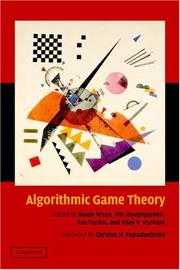
The Nisan-Roughgarden-Tardos-Vazirani volume that founded the computer-science branch of the field. Closes the path because it reframes everything above as a computational question — what can be implemented, not just what exists in equilibrium — and points to the sponsored-search and matching-market literature that followed.
Discussion
Keep reading
Paths that share books, cover the same subject, or open a related topic.