Change management: an ordered reading list to lead transformation
This curriculum builds from the psychology of why change is hard to the practical mechanics of leading it, then to advanced strategy for sustaining transformation at scale. Each stage layers new vocabulary and frameworks onto the last, so by the final stage the reader can diagnose, design, and embed lasting change across any organization.
Foundations: Why Change Is Hard
BeginnerUnderstand the human psychology behind resistance to change and develop a shared vocabulary for talking about organizational transformation.
▸ Study plan for this stage
Pace: 4–5 weeks, ~40–50 pages/day (approximately 2 weeks per book with overlap)
- The emotional and psychological roots of resistance to change (fear, loss of identity, uncertainty)
- The role of mindset and belief systems in accepting or rejecting change—moving from a fixed 'cheese' to adaptability
- The three-part framework for change: directing the rider (rational mind), motivating the elephant (emotional mind), and shaping the path (environment and systems)
- The importance of creating urgency and a compelling vision before attempting organizational transformation
- How small wins and incremental progress build momentum and overcome inertia
- The distinction between individual change and organizational change, and how they interact
- The power of storytelling and metaphor in making abstract change concepts concrete and memorable
- Why do people resist change, and what are the psychological mechanisms behind that resistance?
- How does the 'cheese' metaphor in Johnson's work help explain different responses to change in organizations?
- According to the Heath brothers, what are the three elements needed to create sustainable change, and why is each one necessary?
- What role does emotion play in change management, and how does it differ from rational persuasion alone?
- How does Kotter's penguin parable illustrate the stages of organizational transformation, and what is the critical first step?
- What is the relationship between creating urgency, building a guiding coalition, and communicating a vision in driving change?
- Map your own 'cheese'—identify something you've resisted changing in your life or work, and journal about what made it difficult. Compare your experience to the characters in Johnson's book.
- Analyze a recent change initiative you've witnessed (at work, school, or in your community) using the 'Rider, Elephant, Path' framework from Switch. Identify which element was strongest and which was weakest.
- Create a one-page 'change story' for a hypothetical organizational challenge using the structure and tone of Kotter's penguin parable—include the problem, the urgency, and the first steps toward a solution.
- Conduct a peer interview: ask a colleague or friend about a change they successfully navigated. Map their experience onto the concepts from all three books and identify which frameworks best explained their journey.
- Design a 30-second 'elevator pitch' for a change initiative that addresses both the rational mind (rider) and emotional mind (elephant), drawing on techniques from Switch.
- Create a visual comparison chart of the three books' approaches to change, noting where they overlap and where they offer unique insights into the change process.
Next up: This stage establishes the psychological and emotional foundations of why change is difficult, equipping you with a shared vocabulary and mental models; the next stage will build on this understanding by exploring practical strategies for leading change at different organizational levels and scales.

A deceptively simple parable that immediately frames why people resist change and how mindset shifts unlock adaptability — the perfect entry point before tackling heavier frameworks.
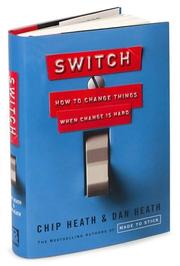
Introduces the Rider/Elephant/Path model, giving beginners a concrete, memorable framework for understanding the rational, emotional, and environmental forces that drive or block change.
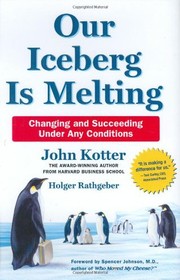
A fable that dramatizes Kotter's 8-Step model in an accessible story format, bridging the gap between the psychology of change and structured organizational process.
Core Frameworks: Leading Transformation
IntermediateMaster the most widely used change leadership models and learn how to plan, sequence, and communicate a change initiative from start to finish.
▸ Study plan for this stage
Pace: 6–7 weeks, ~40–50 pages/day. Week 1–3: "Leading Change" (Kotter's 8-step model and case studies); Week 4–6: "Managing Transitions" (Bridges' 3-phase framework); Week 7: Integration and synthesis exercises.
- Kotter's 8-Step Change Model: create urgency, build a guiding coalition, form a vision and strategy, communicate the change vision, empower action, create short-term wins, consolidate gains, anchor change in culture
- The distinction between change management (managing the transition process) and change leadership (inspiring and guiding people through it)
- Bridges' 3-Phase Transition Framework: Ending/Losing/Letting Go, Neutral Zone, and New Beginning—understanding that people experience transitions psychologically, not just organizationally
- The critical role of communication in change: frequency, consistency, and multiple channels to overcome resistance and build buy-in
- Identifying and mobilizing a guiding coalition: selecting influential stakeholders who can champion the change and model new behaviors
- Creating and sustaining short-term wins to maintain momentum and prove the change is working
- The Neutral Zone as a necessary but uncomfortable period where old ways are gone but new ways aren't yet stable—managing this requires patience and support
- Anchoring change in organizational culture: embedding new behaviors, values, and practices so change sticks and doesn't revert
- What are the eight steps in Kotter's change model, and why is the sequence important? How does each step build on the previous one?
- How do Bridges' three phases of transition differ from Kotter's steps, and when would you apply each framework in a real change initiative?
- What is the Neutral Zone, why do people struggle during it, and what specific leadership actions help people navigate it successfully?
- How would you create a guiding coalition for a change initiative, and what role should they play at each stage of the change process?
- Describe a communication strategy for a major change initiative based on both Kotter's and Bridges' frameworks. What messages, channels, and timing would you use?
- Why do short-term wins matter in change leadership, and how would you identify and celebrate them to maintain momentum?
- Map a real or hypothetical organizational change (e.g., digital transformation, restructuring, culture shift) against Kotter's 8-step model. Identify which steps are most critical and which are most likely to be skipped or rushed.
- Create a detailed communication plan for a change initiative using both frameworks: identify key messages for each phase, target audiences, communication channels, and frequency of touchpoints.
- Design a guiding coalition for a change initiative: identify 5–7 key stakeholders, map their influence and position on the change, and outline how you'd engage and mobilize them.
- Conduct a Neutral Zone analysis for a specific change scenario: describe what people are losing, what uncertainty they face, what support they need, and how you'd help them move through this phase.
- Identify and plan 3–4 short-term wins for a change initiative: define what success looks like, how you'd measure it, and how you'd communicate and celebrate these wins to build momentum.
- Write a case study analysis of a change initiative you've witnessed or researched: evaluate it against both Kotter's and Bridges' frameworks, identify what worked and what didn't, and propose improvements.
Next up: This stage equips you with the foundational models and communication strategies needed to lead transformation; the next stage will deepen your ability to handle resistance, navigate organizational politics, and sustain change over the long term.
The canonical text behind the 8-Step model — reading the full framework after the fable version gives the reader the rigorous, research-backed detail needed to actually apply it.
Introduces the ADKAR model (Awareness, Desire, Knowledge, Ability, Reinforcement), the most widely used individual-focused change framework, which complements Kotter's organizational view.
Bridges distinguishes between 'change' (the event) and 'transition' (the psychological process), a critical distinction that explains why so many well-planned changes still fail to stick.
Communication & Resistance: Winning Hearts and Minds
IntermediateDevelop the communication strategies and influencing skills needed to overcome resistance, build coalitions, and keep people engaged through uncertainty.
▸ Study plan for this stage
Pace: 6–8 weeks, ~40–50 pages/day (approximately 3–4 hours/week for reading and reflection)
- The Six Sources of Influence: personal motivation, personal ability, social motivation, social ability, structural motivation, and structural ability as levers for changing behavior
- Emotional engagement and storytelling as the primary drivers of change adoption, not rational arguments alone
- Building coalitions and creating 'guiding teams' to amplify your message and model desired behaviors
- Identifying and addressing root causes of resistance by understanding what people truly value and fear
- The power of vivid, concrete examples and 'see-feel-change' narratives over abstract data and statistics
- Sustaining momentum through visibility, celebration, and reinforcement of early wins
- Distinguishing between compliance and genuine commitment in change initiatives
- What are the six sources of influence, and how can you leverage all six simultaneously rather than relying on just one or two?
- Why does 'see-feel-change' work better than 'analyze-think-change' when overcoming resistance to change?
- How do you identify and recruit a guiding coalition, and what role should they play in your change communication strategy?
- What are the key differences between the approaches in 'Influencer' and 'The Heart of Change,' and when would you use each?
- How can you use stories and emotional narratives to address specific sources of resistance in your organization?
- What structural and social barriers prevent people from adopting desired behaviors, and how do you remove them?
- Map the six sources of influence for a change initiative you're currently involved in or familiar with; identify which sources are strongest and which are weakest, then design interventions for the weak ones
- Collect or create three 'see-feel-change' stories from your organization or industry that illustrate successful change adoption; analyze what makes them emotionally compelling
- Interview 3–5 people who resisted a past change initiative; document their root concerns and map them to the six sources of influence to understand what would have shifted their behavior
- Draft a communication plan for a specific change using both 'Influencer' frameworks (all six sources) and 'Heart of Change' principles (emotional narrative + guiding team); compare the two approaches
- Identify and recruit a small guiding coalition (3–5 people) for a real or hypothetical change; document their roles, how you'll engage them, and what stories/examples they'll help amplify
- Create a 'resistance map' for a change you're leading: list the key objections, fears, and barriers, then design targeted communication and structural changes to address each
Next up: This stage equips you with the communication and influence frameworks to win buy-in and overcome resistance; the next stage will build on this foundation by teaching you how to embed change into systems, culture, and processes so it sticks long-term rather than reverting once attention fades.

Provides a research-backed, multi-source model for changing behavior at scale, directly addressing how to move resistant individuals and groups using the right levers.

Focuses specifically on the emotional and storytelling dimensions of change leadership, teaching readers how to use 'see-feel-change' communication rather than data-heavy arguments.
Advanced Strategy: Making Change Stick at Scale
ExpertApply systems thinking and culture-change strategy to embed transformation permanently into large, complex organizations and sustain it over time.
▸ Study plan for this stage
Pace: 8–10 weeks, ~40–50 pages/day, with 2–3 days per week dedicated to reflection and synthesis
- Systems thinking and feedback loops: how organizations function as interconnected systems where small changes ripple across structures, processes, and behaviors
- Mental models and their role in organizational learning: how deeply held assumptions shape perception, decision-making, and resistance to change
- The learning organization: building cultures where continuous adaptation, experimentation, and collective intelligence become embedded practices
- Organizational culture as the primary lever for sustained change: how shared values, rituals, symbols, and artifacts either enable or block transformation
- Culture embedding mechanisms: how leaders use hiring, socialization, storytelling, and structural reinforcement to make new behaviors stick permanently
- Balancing espoused values with enacted values: recognizing and closing the gap between what organizations say they believe and what they actually do
- Leadership's role in culture change: how leaders model vulnerability, question assumptions, and create psychological safety for deep organizational learning
- Sustaining change over time: preventing regression by aligning reward systems, decision-making processes, and organizational structures with new cultural norms
- How do reinforcing and balancing feedback loops operate in organizations, and why do well-intentioned change initiatives often fail to produce lasting results?
- What are mental models, how do they form, and what specific strategies can leaders use to help organizations surface and challenge them?
- What distinguishes a learning organization from a traditional organization, and what are the five disciplines Senge identifies as essential to building one?
- How does Schein define organizational culture, and what are the three levels at which culture operates? How do these levels interact to either support or sabotage change?
- What are the primary mechanisms through which leaders embed new cultural values into an organization, and why is alignment across all mechanisms critical for sustainability?
- How can leaders diagnose whether an organization's espoused values match its enacted values, and what interventions can close this gap?
- Systems mapping exercise: Select a change initiative you know (from your organization or a case study). Map the reinforcing and balancing feedback loops at play. Identify where unintended consequences emerge and propose leverage points based on Senge's thinking.
- Mental models audit: Interview 5–7 people across different levels of an organization about their assumptions regarding a specific change. Document the mental models you uncover, identify where they conflict, and design a learning intervention to surface and challenge them.
- Learning organization assessment: Using Senge's five disciplines as a framework, evaluate an organization (real or case-based) on each dimension. Score it 1–10 on each, identify the weakest discipline, and propose concrete steps to strengthen it.
- Culture level analysis: Apply Schein's three levels of culture (artifacts, espoused values, basic assumptions) to an organization undergoing change. Document what you observe at each level, identify misalignments, and explain how these misalignments create resistance.
- Culture embedding plan: Design a comprehensive culture-change strategy for a hypothetical or real organization. Specify how you would use hiring, onboarding, storytelling, symbols, reward systems, and structural changes to embed new values. Explain why each mechanism is necessary.
- Espoused vs. enacted values case study: Analyze a real organizational failure or success through the lens of alignment between espoused and enacted values. What signals did leaders send through their own behavior? How did this cascade through the organization?
Next up: This stage equips you with the theoretical frameworks and diagnostic tools to understand why change sticks or fails at the systemic and cultural level; the next stage will focus on translating these insights into concrete implementation roadmaps, stakeholder engagement tactics, and real-time adaptation strategies for leading transformation in your own context.

Introduces systems thinking and the learning organization concept — essential for understanding why change initiatives fail systemically and how to build organizations that continuously adapt.
The definitive text on how culture forms and resists change; reading this last equips the practitioner to diagnose deep cultural barriers and design interventions that reach the roots of an organization.
Discussion
Keep reading
Paths that share books, cover the same subject, or open a related topic.