The chemical elements and the periodic table: an ordered reading path to understanding them
This curriculum takes a beginner from the wonder of individual elements all the way to a rigorous understanding of atomic structure and periodic trends. It opens with narrative and storytelling to build curiosity and vocabulary, then layers in the science of how and why the periodic table is organized the way it is, and finally reaches into the deeper chemistry and physics that govern elemental behavior — making chemistry's great map feel both logical and alive.
First Encounters — Wonder & Story
BeginnerFall in love with the elements as characters: their discovery stories, quirks, and human drama. Build an intuitive feel for the periodic table as a map before studying it systematically.
▸ Study plan for this stage
Pace: 8–10 weeks, ~40–50 pages/day (alternating between the two books to maintain narrative momentum and variety)
- Elements as characters with distinct personalities, discovery narratives, and human drama—not abstract symbols
- The periodic table as a living map that reveals patterns in element behavior, reactivity, and properties through storytelling
- How historical context, accident, and genius shaped which elements were discovered when and by whom
- The connection between an element's atomic structure (protons, electrons, position on the table) and its real-world behavior and uses
- Elements as tools that shaped civilization: from ancient alchemy to modern technology, and the human cost of their extraction and use
- Quirky element facts and memorable stories as anchors for later systematic learning of chemistry and the periodic table
- Can you tell the discovery story of at least 5 elements from these books and explain what makes each story compelling or surprising?
- What is one element from 'The Disappearing Spoon' and one from 'Periodic Tales' that you found most memorable, and why?
- How does knowing an element's history or a quirky fact about it change the way you think about that element compared to just seeing its symbol on the periodic table?
- What patterns or connections have you noticed between where elements sit on the periodic table and their properties or uses (based on the books)?
- Can you describe at least three ways that elements have shaped human history, civilization, or individual lives based on stories from these books?
- What is one element that surprised you because its real-world behavior or uses contradicted what you expected?
- Create a 'character card' for 5–8 elements from the books: include the discovery story, a quirky fact, one key use, and a personal reaction or memory aid
- Draw or sketch your own mental map of the periodic table based on the stories you've read—group elements by theme (e.g., 'elements that poisoned people,' 'elements that built empires,' 'elements discovered by accident') rather than by chemistry
- Write a short narrative (1–2 pages) imagining a conversation between two elements from the books—let their personalities and histories shine through
- Make a timeline of 5–10 element discoveries from the books, noting the historical period, the discoverer, and what was happening in the world at that time
- Choose one element from each book that appears in your daily life (e.g., in your phone, food, medicine, jewelry) and trace its story from the book to your pocket
- Create a 'periodic table poster' or digital collage where each element is represented by an image, symbol, or phrase that captures its personality or story from the books
Next up: With a vivid, story-driven foundation and an intuitive sense of element personalities and periodic table patterns, you'll be ready to move into systematic study of atomic structure, chemical bonding, and the underlying rules that explain *why* elements behave as they do.
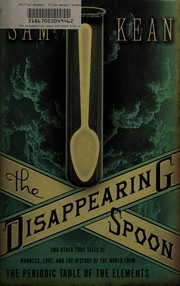
A perfect entry point — Kean tells the human stories behind each element with wit and narrative flair, making the periodic table feel like a cast of characters rather than a memorization exercise. Read this first to build curiosity and a mental map of the table.

Complements Kean by exploring elements through culture, art, and history, deepening the sense that elements are woven into human civilization. Reading it second reinforces the table's geography with fresh, non-overlapping stories.
Foundations — Atomic Structure & the Table's Logic
BeginnerUnderstand what an atom actually is, why elements are arranged as they are, and what the periodic table's rows and columns mean — building the scientific vocabulary needed for everything that follows.
▸ Study plan for this stage
Pace: 4–5 weeks, ~25–30 pages/day. Week 1–2: "Atom" (complete); Week 2–3: "The Periodic Table" (complete); Week 3–5: "Napoleon's Buttons" (select chapters on atomic bonding and molecular structure).
- Atomic structure: protons, neutrons, electrons, and how they determine an element's identity
- Atomic number and mass number as the defining properties of an element
- Electron shells and valence electrons as the basis for chemical behavior
- The periodic table's organization: periods (rows) reflect electron shells; groups (columns) reflect valence electron configuration
- How periodic trends (reactivity, electronegativity, atomic radius) emerge from atomic structure
- Chemical bonding: how atoms share or transfer electrons to form molecules, illustrated through real-world compounds
- The connection between atomic structure and macroscopic properties of substances
- What are the three main subatomic particles, and how do they determine what element an atom is?
- Why are elements in the same group (column) of the periodic table chemically similar?
- How does the number of electron shells relate to an element's position in the periodic table?
- What is a valence electron, and why does it matter for chemical bonding?
- How do atomic structure and electron configuration explain periodic trends like reactivity or atomic size?
- What role does electron transfer or sharing play in forming the compounds described in 'Napoleon's Buttons'?
- Create a detailed diagram of a carbon atom and a sodium atom, labeling all subatomic particles and electron shells; explain why they behave differently chemically
- Build physical or digital models of 5–6 atoms (e.g., hydrogen, helium, carbon, oxygen, sodium, chlorine) showing electron configurations; predict their likely bonding partners
- Map out the first three periods of the periodic table by hand, labeling atomic number, electron configuration, and valence electrons for each element; identify patterns in reactivity
- Read the sodium chloride section in 'Napoleon's Buttons' and draw electron-transfer diagrams showing how Na and Cl form an ionic bond; relate this back to their positions in the periodic table
- Select three compounds from 'Napoleon's Buttons' (e.g., aspirin, nylon, or gunpowder components) and identify the elements involved; explain why those elements bond based on their valence electrons
- Write a 1–2 page explanation of why noble gases (Group 18) are unreactive, grounding your answer in electron configuration and periodic table position
Next up: This stage equips you with the atomic and structural foundations needed to understand chemical reactions, bonding types, and how elements combine to create the diverse materials and compounds you'll explore in the next stage.

A visually rich, accessible history of how scientists uncovered the atom's structure — from Dalton to Bohr to quantum mechanics. Reading this first in the stage gives the conceptual scaffolding (protons, electrons, shells) that makes periodic trends make sense.
Levi's literary masterpiece uses elements as metaphors for episodes in his own life, but in doing so illuminates the real chemical personalities of elements with extraordinary precision. It bridges the storytelling of Stage 1 with the science of this stage, showing chemistry as a human discipline.
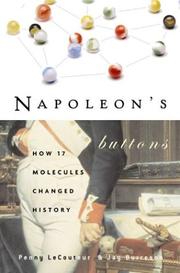
Explores how the molecular and elemental properties of specific substances changed history, reinforcing why atomic structure matters in the real world. It cements the idea that chemistry's rules have tangible, large-scale consequences.
Going Deeper — Periodic Trends & Chemical Behavior
IntermediateGrasp the systematic patterns of the periodic table — electronegativity, ionization energy, reactivity, and group behavior — and understand why elements in the same column act alike.
▸ Study plan for this stage
Pace: 4–5 weeks, ~40–50 pages/day. Start with "The Elements" (2 weeks, visual/narrative approach), then transition to "Chemistry The Central Science" chapters on periodic trends (2–3 weeks, deeper quantitative focus).
- Periodic trends: atomic radius, ionization energy, electron affinity, and electronegativity increase/decrease predictably across periods and down groups
- Electronegativity differences determine bond type (ionic, polar covalent, nonpolar covalent) and predict molecular behavior
- Group behavior: elements in the same column share similar valence electron configurations and therefore similar chemical properties and reactivity patterns
- Ionization energy and electron affinity explain why elements gain, lose, or share electrons in predictable ways
- Reactivity trends: alkali metals and halogens are most reactive; noble gases are inert due to filled valence shells
- Effective nuclear charge and electron shielding explain why periodic trends occur and how they vary across the table
- Transition metals and lanthanides/actinides show variable oxidation states and unique bonding behavior due to d- and f-orbital filling
- The periodic table is a predictive tool: you can infer an element's properties, reactivity, and likely compounds from its position
- Why does atomic radius decrease across a period but increase down a group? Explain using effective nuclear charge and electron shielding.
- How does electronegativity relate to ionization energy and electron affinity? Why are these trends important for predicting chemical bonding?
- Why do elements in Group 1 (alkali metals) and Group 17 (halogens) show such high reactivity, while Group 18 (noble gases) are inert?
- Explain the difference between ionic, polar covalent, and nonpolar covalent bonding using electronegativity differences. Give examples from the periodic table.
- How does the filling of d-orbitals in transition metals affect their oxidation states and chemical behavior compared to main-group elements?
- Given an element's position on the periodic table, how would you predict its likely oxidation state, reactivity, and the type of compounds it forms?
- Read 'The Elements' chapters on specific element families (alkali metals, halogens, noble gases, transition metals). For each family, create a one-page visual summary showing how properties change within the group and why.
- Using data tables from 'Chemistry The Central Science,' plot atomic radius, ionization energy, and electronegativity across a period (e.g., Period 3: Na to Ar). Annotate the graph with explanations of why trends occur.
- Select 5–6 elements from different groups (e.g., Na, Cl, Ca, Fe, O, Ne). For each, predict: (a) likely oxidation state(s), (b) type of bonding it forms, (c) reactivity level. Then verify against 'The Elements' or a periodic table reference.
- Work through 10–15 ionization energy and electronegativity problems from 'Chemistry The Central Science' practice sets. Focus on comparing trends across periods and groups, not just memorizing values.
- Create a 'periodic trends concept map' linking effective nuclear charge → electron shielding → atomic radius, ionization energy, and electronegativity. Use specific examples from both books.
- Conduct a comparative analysis: choose two elements from the same group (e.g., Na and K, or F and Cl). Explain their similarities and differences in reactivity, bonding, and compounds using periodic trends.
Next up: Mastering periodic trends and group behavior provides the foundation to predict and explain chemical bonding, molecular structure, and reaction mechanisms in the next stage.
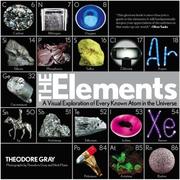
Gray's stunning photographic reference presents every element with its physical form, key properties, and uses. After the narrative stages, this acts as a visual periodic table companion that anchors abstract trends to real, tangible substances — ideal to read alongside more analytical texts.
The gold-standard introductory chemistry textbook, covering atomic theory, electron configuration, and periodic trends with rigor and clarity. Reading it here — after narrative immersion — means the formalism lands on fertile ground rather than feeling abstract.
The Deeper Map — History of Discovery & Scientific Thought
IntermediateUnderstand how the periodic table was actually constructed — Mendeleev's insight, the quantum revolution, and the ongoing synthesis of new elements — appreciating chemistry as a living, evolving science.
▸ Study plan for this stage
Pace: 6–8 weeks, ~40–50 pages/day (accounting for dense historical and scientific narrative)
- Mendeleev's bold prediction method: leaving gaps for undiscovered elements and reordering known elements by chemical properties rather than atomic weight alone
- The historical context of element discovery: how 19th-century chemists isolated and characterized individual elements (oxygen, hydrogen, chlorine, etc.) before understanding their deeper nature
- The quantum revolution's impact: how atomic structure (electrons, orbitals, quantum numbers) explained *why* the periodic table works and revealed its underlying mathematical order
- The relationship between atomic number, electron configuration, and periodic trends: periodicity as a direct consequence of electron shell filling
- The synthesis and discovery of new elements: from Mendeleev's predictions to modern superheavy element creation, showing the table as an incomplete, evolving framework
- The role of chemical properties vs. physical properties in organizing elements: understanding why chemical behavior (not just atomic weight) is the true organizing principle
- The philosophical shift from empiricism to theoretical understanding: how the periodic table evolved from a useful organizing tool to a fundamental law of nature
- What was Mendeleev's key insight that allowed him to predict undiscovered elements, and how did his predictions validate his approach?
- How did the discovery of the electron and the development of quantum mechanics fundamentally change our understanding of *why* the periodic table has its particular structure?
- Explain the relationship between electron configuration and periodic trends (e.g., ionization energy, electronegativity, atomic radius). Why do these properties repeat in a predictable pattern?
- What role did the isolation and characterization of individual elements (as described in 'A Tale of Seven Elements') play in building the empirical foundation for the periodic table?
- How have synthetic elements and superheavy element research extended the periodic table beyond what Mendeleev could have imagined, and what does this reveal about the table's universality?
- Describe the historical tension between organizing elements by atomic weight versus by chemical properties. How was this resolved?
- Create a visual timeline mapping the discovery of the seven elements featured in Scerri's first book, noting the experimental methods used and the chemical properties that made each element significant. Annotate where each fits in the modern periodic table.
- Reconstruct Mendeleev's reasoning: select three elements with known properties and predict the properties of a 'missing' element between them using periodic trends. Compare your predictions to the actual element's properties.
- Build an electron configuration chart for the first 20 elements, then map how the filling of s, p, d, and f orbitals corresponds to the rows and blocks of the periodic table. Explain why this structure emerges from quantum mechanics.
- Write a 2–3 page historical narrative explaining how one of the seven elements was discovered and how its properties eventually fit into Mendeleev's framework (or challenged it).
- Analyze a modern superheavy element (e.g., oganesson, flerovium) by researching its synthesis method, predicted properties based on periodic trends, and actual observed behavior. Discuss what this reveals about the limits and power of the periodic table.
- Create a concept map linking atomic number, electron configuration, orbital filling, and periodic trends (ionization energy, electronegativity, atomic radius). Use specific examples from the books to illustrate each connection.
Next up: This stage transforms the periodic table from a memorized grid into a coherent story of scientific discovery and theoretical understanding, preparing you to apply this deeper knowledge to chemical bonding, reactivity, and the properties of compounds in the next stage.
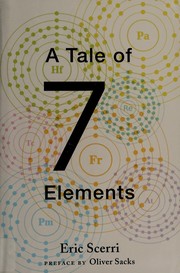
Scerri, the leading historian of the periodic table, tells the story of the seven elements discovered to fill Mendeleev's predicted gaps. It shows the table not as a given truth but as a hard-won scientific achievement, deepening appreciation for its logic.
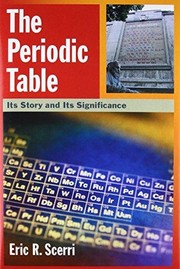
Scerri's definitive scholarly account of the periodic table's philosophical and scientific foundations. Reading it after his more narrative book lets you engage with the deeper questions: what does it mean to 'explain' the table with quantum mechanics?
Mastery — Quantum Foundations & the Frontier
ExpertUnderstand the quantum mechanical basis of the periodic table at a deep level — electron orbitals, the aufbau principle, relativistic effects in heavy elements — and appreciate the frontier of superheavy element synthesis.
▸ Study plan for this stage
Pace: 8–10 weeks, ~40–50 pages/day. "The Making of the Atomic Bomb" (680 pages) takes 3–4 weeks; "Superheavy" (350 pages) takes 2–3 weeks; final 2–3 weeks for synthesis, problem sets, and deep review.
- Quantum mechanical model of the atom: orbitals, energy levels, and the probabilistic nature of electron position versus classical Bohr model
- Aufbau principle and electron configuration: how electrons fill orbitals in order of increasing energy, explaining periodic table structure and chemical properties
- Relativistic effects in heavy elements: spin-orbit coupling, orbital contraction, and how relativity distorts expected periodic trends in superheavy elements
- Nuclear stability and the valley of beta stability: neutron-to-proton ratios, magic numbers, and why superheavy elements are so short-lived
- Synthesis of superheavy elements: fusion reactions, target-projectile selection, detection methods, and the experimental challenges of creating elements 104+
- Historical context of nuclear physics: how the Manhattan Project and Cold War competition drove both theoretical understanding and experimental capability
- Island of stability hypothesis: theoretical predictions of longer-lived superheavy nuclei and the search for them in nature and the lab
- Limits of the periodic table: how quantum mechanics and nuclear physics define the ultimate boundary of possible elements
- How does the quantum mechanical model of electron orbitals explain the structure of the periodic table, and why does the aufbau principle work?
- What are relativistic effects in heavy elements, and how do they cause deviations from the periodic trends predicted by non-relativistic quantum mechanics?
- Why are superheavy elements so unstable, and what role do neutron-to-proton ratios and magic numbers play in nuclear stability?
- What experimental methods are used to synthesize and detect superheavy elements, and what are the practical limitations?
- What is the island of stability, and what evidence supports or challenges its existence?
- How did the historical development of nuclear physics (Manhattan Project, Cold War) shape our understanding of atomic structure and the periodic table?
- Map electron configurations for elements 1–118 using the aufbau principle; identify where relativistic effects begin to significantly alter expected configurations (around Z=80+).
- Create a detailed diagram showing orbital energy levels and electron filling order; annotate where spin-orbit coupling becomes important for heavy elements.
- Work through nuclear stability calculations: plot neutron-to-proton ratios for stable isotopes; identify magic numbers and explain why superheavy nuclei fall outside the valley of beta stability.
- Research and summarize one superheavy element synthesis experiment from Chapman's book (e.g., element 114, 118); describe the target, projectile, reaction mechanism, and detection method.
- Compare predicted vs. observed chemical properties of a superheavy element (e.g., flerovium, nihonium) based on periodic table position; explain relativistic corrections.
- Write a 2–3 page synthesis essay: 'How quantum mechanics and nuclear physics together define the structure and limits of the periodic table,' drawing on both Rhodes and Chapman.
Next up: This stage grounds you in the quantum and nuclear physics that *explains* the periodic table at its deepest level, preparing you to explore how these principles apply to chemical bonding, materials science, and the role of elements in the universe.

Rhodes's Pulitzer Prize-winning masterwork shows the full power of understanding atomic structure — how the deepest knowledge of the nucleus was harnessed. It synthesizes physics, chemistry, and history into a profound capstone on what understanding the elements truly means.

A thrilling account of the race to synthesize elements 113–118 and complete the seventh period of the table. Reading this last shows that the periodic table is still being written, and that the science learned throughout this curriculum is alive at the cutting edge.
Discussion
Keep reading
Paths that share books, cover the same subject, or open a related topic.