There is a specific failure mode in reading about nuclear weapons, and the order of your books determines whether you fall into it. Start with strategy and you learn a vocabulary — second strike, counterforce, escalation dominance — that is genuinely useful and completely anaesthetic. The theory was built to make the unthinkable tractable, and it succeeds. Reading the physical and human history first inoculates you against mistaking the model for the thing.
The second reason for order is that the strategic literature is a conversation. Schelling is answering the problem Brodie posed, Kahn is pushing Schelling's logic to its limit, Sagan is attacking the assumptions all of them share. Read out of sequence and the arguments look like unrelated opinions rather than a chain of rebuttals.
What the weapon is, and what it did
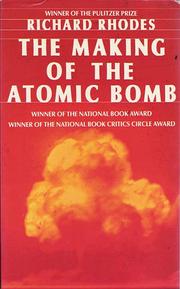
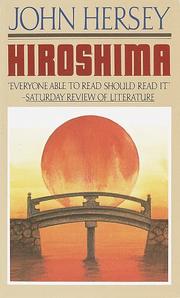
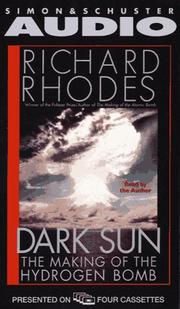
The making of the atomic bomb by Richard Rhodes is the standard starting point and deserves the reputation: it covers the physics, the personalities and the wartime decision in one narrative, and it is long without being slow. Hiroshima is John Hersey's 1946 account of six survivors, and it is the necessary counterweight — thirty thousand words that do more than any statistic to establish what is actually at stake. Read it immediately after Rhodes. Dark Sun, Rhodes's sequel, covers the hydrogen bomb and Soviet espionage, and matters because thermonuclear yields are the reason the strategic problem became unmanageable.
How deterrence theory was invented
The Wizards of Armageddon by Fred Kaplan is the history of the RAND analysts who built American nuclear strategy, and it is the book that makes the rest legible — you learn who these people were and what they were trying to solve before you read what they wrote. Arms and influence is Thomas Schelling's own statement of the theory: coercion as bargaining, the threat that leaves something to chance, the deliberate cultivation of risk. It is the intellectual core of the field and remains persuasive.
On Thermonuclear War by Herman Kahn is the hardest book on this list to place. Kahn argued that nuclear war might be survivable and should therefore be planned for, and the book was received on publication as morally monstrous by many readers. It is a period document as much as an argument, and it is worth reading precisely because it shows where the logic goes when followed without flinching.
The case against the theory
The spread of nuclear weapons presents the formal debate between Scott Sagan and Kenneth Waltz on whether proliferation makes war more or less likely — Waltz arguing that nuclear states are cautious states, Sagan that organisations fail in predictable ways. It is a genuine standoff between serious scholars, not a settled question, and the book is structured so you can watch each answer the other.
Command and Control by Eric Schlosser builds the empirical case through a single 1980 Titan II accident and a catalogue of others. The Limits of Safety is Sagan's academic version of the same argument, applying organisational theory to near-misses, and it is the more rigorous of the two. Nuclear Folly by Serhii Plokhy revisits the Cuban Missile Crisis with Soviet archival material and shows how much of the outcome was luck.
The Doomsday Machine is Daniel Ellsberg's account of his years as a nuclear war planner, including his claim that American plans in the early 1960s projected hundreds of millions of deaths. Ellsberg wrote much of it from memory after losing his copied documents, and some specifics have been questioned; the broad picture is corroborated elsewhere. Finish with The bomb, Kaplan's later history of nuclear war planning through to the present, which updates the story his first book began. If you are choosing only one Kaplan, take the earlier one.
Follow the full path for the sequence as ordered, or browse nuclear physics for the underlying science.
Follow the full ordered path here: Best Books on Nuclear Weapons and Deterrence, in Reading Order.
Ready to learn something deeply?
Build a reading path — free