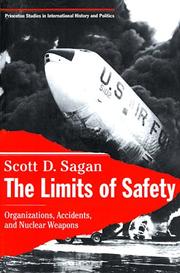
The Limits of Safety
Scott Douglas Sagan · 1993 · 302 pages
As an Amazon Associate we earn from qualifying purchases. Some book links are affiliate links; you pay the same price and we may earn a small commission.
About this book
Environmental tragedies such as Chernobyl, the Exxon Valdez, and Bhopal remind us that catastrophic accidents are always possible in a modern world full of hazardous technologies. Yet, the safety record appears to be extraordinarily good with nuclear weapons, the most dangerous technology of all. This safety record has led scholars, policy-makers, and the public alike to believe that nuclear weapons can serve as a safe and secure deterrent into the foreseeable future in the post-Cold War era. In this provocative and path-breaking book, Scott Sagan challenges such optimistic beliefs. Sagan's painstaking research into formerly classified archives penetrates the veil of safety that has surrounded U.S. nuclear weapons operations. Guided by theories of reliability in complex organizations, Sagan has uncovered a hidden history of frightening "close calls" to disaster: lost nuclear-armed bombers fly into the Russian warning net, Air Force officers tamper with missiles to be able to launch them without orders, B-52 bombers crash with thermonuclear weapons aboard and then vanish from the official histories, an unstable pilot deliberately turns on the two arming switches on his aircraft's nuclear bombs, and false warnings during the Cuban missile crisis lead pilots and radar operators to believe that the United States is under nuclear attack. Incomprehension, political maneuvering, and even cover-ups have limited what we have learned from these dangerous incidents, and Sagan maintains
Appears in these reading paths
Best Books on Nuclear Weapons and Deterrence, in Reading Order
Related reading guides
Reader reviews
Ratings and notes from readers — tagged with how deep into the subject they were.
Loading reviews…