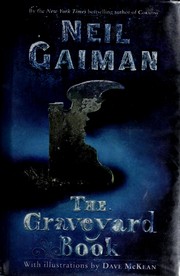
Start with The Graveyard Book. It is short, it is complete, and it is the clearest demonstration of what this writer actually does: take an existing structure — here, Kipling's The Jungle Book — and rebuild it with the supernatural taken entirely for granted. A toddler escapes a murder, is raised by the dead in a graveyard, and grows up under rules that the book never bothers to justify. That matter-of-factness about the impossible is the engine.
American Gods is the book most people are sent to first, and it is the wrong door. It is 600 pages, its middle third slows to a crawl in a Midwestern town while the plot waits, and it is unrepresentative — bigger, baggier and more American than almost anything else he has written. Read it, but read it fourth or fifth, once you already know the voice.
The short novels first
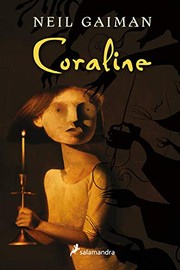
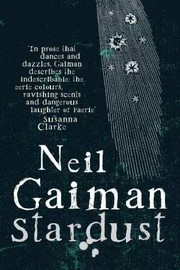
After The Graveyard Book, read Coraline. It is shorter still, nominally for children, and considerably more frightening than most horror written for adults: a girl finds a door to a house identical to her own, except that the mother there has buttons for eyes. Then Stardust, a deliberately old-fashioned fairy tale about a young man who crosses a wall to fetch a fallen star. It is the lightest thing on this list and the most purely charming.
His other well-known short novel, Neverwhere, is not in this collection; if the London-underneath premise appeals, it is the obvious next purchase.
The short stories
This is where the skipping usually happens, and it should not. Smoke and Mirrors and Fragile Things collect the short fiction, and the short form suits him better than the long one — a Gaiman idea often has exactly twenty pages in it, and these collections are where the ideas get exactly twenty pages. Both are uneven by nature. Read them in publication order, Smoke and Mirrors first, and skip anything that is not working after three pages.
Good Omens belongs here too, the comic apocalypse novel written with Terry Pratchett — it is catalogued in this collection under Pratchett's name. It is genuinely a joint book and reads more like Pratchett than like anything else on this page, which is part of the fun.
The long novels
Now American Gods, and then Anansi Boys, which is set in the same world but is a different kind of book: a comedy about two brothers and a father who was a god, much lighter and much better paced. Reading them together is worthwhile precisely because of the contrast; Anansi Boys does not require American Gods, but it is funnier if you have just spent 600 pages in the solemn version of that world.
Sandman: where to actually begin
The comics are the work Gaiman is most likely to be remembered for, and there is a well-known ordering problem. The first collected volume, Preludes and Nocturnes, is not in this collection, and it is also the weakest — early, tonally uncertain, and drawn before the series found itself.
The standard advice among long-time readers is to begin at the second volume, The Doll's House, which is where the series becomes itself, and go back to the first volume later for the setup. Season of Mists, the fourth volume, is the one where the whole conception clicks: Dream goes to Hell to free an old lover, and Lucifer responds by handing him the keys and leaving. Both are in this collection and both are excellent starting points.
Norse Mythology and where to stop
Norse Mythology is a straight retelling of the Eddic material — Odin, Thor, Loki, the end of the world — in plain, dry, well-paced prose. It is the least ambitious book here and one of the most enjoyable, and it is a good place to end if you have had enough.
If you read only four: The Graveyard Book, Coraline, Season of Mists and American Gods.
More fantasy and mythology reading paths are on Discover.
Follow the full ordered path here: Neil Gaiman Reading Order: Where to Start.