The Sandman Reading Order: Where to Start
This curriculum guides a first-time reader through Neil Gaiman's The Sandman universe in a carefully staged order: beginning with the ten canonical collected volumes in sequence, then expanding into the major spin-offs and companion works that deepen the mythology. Each stage builds on the characters, themes, and lore established before it, so nothing feels out of context.
The Core Story, Part One — Enter the Dreaming
BeginnerMeet Morpheus, the Lord of Dreams, and establish the foundational mythology, tone, and cast of The Sandman across the first five collected volumes.
▸ Study plan for this stage
Pace: 8–10 weeks total, reading roughly 20–25 pages per sitting, 4–5 sittings per week. Suggested pacing: Week 1–2 — The Doll's House (roughly 240 pages); Week 3 — Dream Country (roughly 160 pages, shorter stories so allow time to sit with each one); Week 4–6 — Season of Mists (roughly 220 pages); Week 7–
- Morpheus as a mythic archetype: Dream is not merely a character but a personification of an abstract force — ancient, proud, and bound by rules he did not choose.
- The Dreaming as a living world: Morpheus's realm reflects his inner state; its inhabitants, architecture, and stability are extensions of his will and emotional condition.
- The Endless as a family and a concept: The Sandman introduces the idea that beings like Dream, Death, Desire, and Despair are not gods but something older — embodiments of universal human experiences.
- Responsibility and consequence as a moral engine: From Rose Walker's role as a dream vortex in The Doll's House to Morpheus reopening Hell's gates in Season of Mists, every arc turns on the weight of obligation and the cost of past choices.
- Short-form vs. long-form storytelling within a single series: Dream Country's standalone tales (including 'A Midsummer Night's Dream' and 'Calliope') show how Gaiman uses the anthology format to expand the mythology without advancing a central plot.
- The nature of stories and dreams as intertwined: Across all four volumes — especially in Dream Country and A Game of You — Gaiman argues that the stories we tell and the dreams we dream are the same act of meaning-making.
- Power, gender, and identity in A Game of You: Barbie's dream-land and the cast of marginalized characters (particularly Wanda) interrogate who gets to be the hero of their own story and whose reality is validated.
- Hell as a political and theological space: Season of Mists reframes Lucifer's abdication and the subsequent diplomatic scramble as a meditation on power vacuums, duty, and what it means to be free of a role you were assigned.
- By the end of The Doll's House, what is a dream vortex, and why does Morpheus believe he must destroy Rose Walker — and what does his ultimate choice reveal about his character?
- Dream Country contains four standalone stories. How does each one use a different genre or literary tradition (Greek myth, Shakespearean drama, horror, fable) to illuminate a single consistent theme about the nature of dreams and stories?
- In Season of Mists, Morpheus returns to Hell to free a soul he condemned there. How does Gaiman use the subsequent power struggle over Hell's key to comment on the nature of responsibility and the burden of rulership?
- A Game of You is often considered the most divisive volume among new readers because it shifts focus away from Morpheus almost entirely. What thematic argument does Gaiman make by centering Barbie and her companions instead, and how does Wanda's arc complicate or deepen that argument?
- Across all four volumes, how does Gaiman establish the visual and tonal language of The Dreaming — and what recurring symbols (the helm, the pouch of sand, the ruby, the gallery of dreams) carry mythological weight?
- How do the relationships Morpheus has with women across these four volumes — Nada (referenced in The Doll's House and central to Season of Mists), Calliope (Dream Country), and the female cast of A Game of You — form a pattern that hints at a deeper flaw in his character?
- Dream Journal Mapping: After finishing The Doll's House, draw a simple map of The Dreaming as you imagine it based on textual and visual cues. Label key locations (the palace, the gallery, the gate). Revisit and revise the map after each subsequent volume to track how your mental model of the realm evolves.
- Character Voice Log: Choose one member of the Endless who appears across multiple volumes (Dream, Death, or Desire are good choices). After each volume, write 3–5 sentences in that character's voice responding to the events of that volume — this forces close attention to how Gaiman differentiates their speech and worldview.
- Dream Country Close Reading: Pick any two of the four stories in Dream Country and write a one-page comparison identifying (a) the mythological or literary source Gaiman is drawing on, (b) the central argument about dreams or stories, and (c) one panel or page of Dave McKean's cover or interior art that encapsulates the story's theme.
- Season of Mists Debate Prep: The various factions (Norse gods, Egyptian gods, faerie, demons, angels) all make competing claims for ownership of Hell. List each faction's argument as if preparing for a debate. Then write a short paragraph explaining whose claim you find most philosophically compelling and why.
- A Game of You Perspective Swap: The volume is told largely from Barbie's perspective, but Thessaly, Hazel, Foxglove, and Wanda each have a distinct relationship to the dream-land. Write a single-page diary entry from Wanda's point of view set during the storm sequence, using only details present in the comic — no invention beyond her established voice.
- Thematic Thread Tracker: Create a simple two-column chart. In the left column, list the four volumes. In the right column, write one sentence describing how each volume advances or complicates the series' central argument: that dreams and stories are how human beings make meaning and survive. Use this chart as a reference when moving into the next stage.
Next up: Completing these four volumes gives the reader a firm grasp of Morpheus's mythology and moral architecture, making them ready to confront the longer, more structurally ambitious arcs ahead — particularly the braided historical storytelling of Brief Lives and the escalating consequences of Morpheus's pride that drive the series toward its conclusion.

Expands the human stakes with Rose Walker's story and deepens the rules of the Dreaming; builds directly on the escaped dreams from Vol. 1.

Four standalone short stories — including the Hugo-winning 'A Midsummer Night's Dream' — that teach the anthology range of the series before the longer arcs resume.
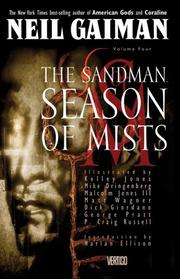
Morpheus returns to Hell in a pivotal arc that redefines his relationships with Lucifer and the other Endless; a major tonal escalation that rewards the groundwork laid in Vols. 1–3.

Returns to Rose Walker's world and explores identity and the nature of dreams through a more intimate, character-driven lens — a necessary counterpoint to the cosmic scope of Season of Mists.
The Core Story, Part Two — Myth, History & Endgame
BeginnerComplete the main Sandman narrative across the final five collected volumes, culminating in the series' legendary conclusion.
▸ Study plan for this stage
Pace: 2–3 weeks, ~20–25 pages per day (Brief Lives spans roughly 240 pages across 9 chapters; a relaxed beginner pace allows time to re-read key scenes and sit with the emotional weight of the ending)
- The nature of change vs. constancy — Dream's central flaw is his resistance to change, and Brief Lives forces this theme into the open through Delirium's quest to find Destruction
- The Endless as a family unit — Brief Lives is the most family-focused volume, revealing sibling dynamics, old wounds, and the emotional costs of immortality among Dream, Delirium, and their absent brother Destruction
- Destruction's voluntary abdication — the radical idea that one of the Endless can simply walk away from their realm and what that means for identity, duty, and free will
- Delirium as a lens character — her fractured, non-linear perception is not mere comic relief but a way of seeing truth that other characters (and readers) miss
- Mortal collateral damage — nearly everyone Dream and Delirium contact during their search dies, raising questions about the responsibility powerful beings have toward humans
- Dream's relationship with his son Orpheus — the mythological echo of Orpheus and Eurydice is reactivated here, and Dream's long-avoided debt to his son becomes the emotional climax of the volume
- Foreshadowing the endgame — the favor Dream owes after visiting Orpheus sets in motion the chain of consequences that will define the rest of the series
- Grief, guilt, and the price of pride — Dream's emotional arc in Brief Lives is fundamentally about confronting what his pride has cost him and those he loves
- Why does Destruction choose to abandon his realm, and how does his reasoning challenge the assumption that the Endless must fulfill their functions?
- What does Delirium's behavior throughout the quest reveal about her past self (Delight) and the nature of her transformation?
- How does the pattern of deaths surrounding Dream and Delirium's search function thematically — is it coincidence, consequence, or something more?
- What is the history between Dream and his son Orpheus, and why has Dream avoided him for so long before this volume?
- What favor does Dream owe Orpheus after their reunion, and why is fulfilling it so personally devastating for Dream?
- How does Brief Lives use Greek myth (Orpheus, the Fates, the idea of the quest) to structure its narrative, and what does Gaiman change or subvert about those myths?
- Map the family tree: Draw or diagram all seven of the Endless, noting what each personifies, and annotate each sibling with every detail Brief Lives reveals about them — this builds the foundation for understanding the family dynamics that drive the rest of the series
- Track the deaths: Keep a running list of every mortal character who dies during Dream and Delirium's quest; after finishing, write 2–3 sentences on whether you think Dream bears moral responsibility and why
- Myth comparison: Read or re-read the myth of Orpheus and Eurydice (freely available online) and then write a short paragraph identifying what Gaiman borrows, what he changes, and what emotional effect those changes create
- Delirium's dialogue close-read: Choose three of Delirium's speeches or thought-captions and 'translate' them — write out what you think she is actually communicating beneath the fractured surface, then reflect on whether the distorted version is more or less true
- Destruction's letter/speech reflection: Re-read the scene where Destruction explains his reasons for leaving; write a one-page personal response — do you find his argument convincing or a form of avoidance? Use evidence from the text
- Predict forward: Based solely on Brief Lives, write down three consequences you expect Dream's visit to Orpheus to have on his future — seal the paper or save the note and return to it after completing the rest of the series
Next up: Brief Lives ends with Dream having committed an irrevocable act — fulfilling his debt to Orpheus — that cracks open his emotional armor and sets a chain of mythic and personal consequences in motion, making the reader urgently aware that the story is now building toward an ending Dream himself may not survive.

Delirium and Morpheus search for their lost brother Destruction in the emotional and thematic heart of the series — essential before the endgame begins.
Essential Companions — Death & Overture
IntermediateExplore the two most celebrated companion works: the prequel that reframes the entire series, and the beloved spin-off starring Dream's most popular sibling.
▸ Study plan for this stage
Pace: 4–5 weeks total: Week 1–2 — Read The Sandman: Overture in two sittings (it is 6 issues collected into one volume; aim for ~1 issue/day with a rest day between each for reflection). Week 3–4 — Read Death (collecting "The High Cost of Living" and "The Time of Your Life" story arcs) at a pace of roughl
- The cosmological origin of Dream — Overture reveals what Morpheus was doing immediately before his 1916 capture, expanding the mythology of the Endless and the universe they inhabit
- The concept of a 'Dream vortex' and its catastrophic implications, establishing why Dream's imprisonment in the main series was so cosmically consequential
- J.H. Williams III's experimental page architecture in Overture — how panel layout, symmetry, and color palette are themselves narrative tools that mirror Dream's fractured state
- The Endless as anthropomorphic personifications rather than gods — their nature, limitations, and the rules that bind them, deepened by both books
- Death's characterization as warmth, wit, and acceptance — her role as a counterpoint to Dream's austerity, and what her humanity says about Gaiman's thematic project
- 'The High Cost of Living': the one-day-per-century rule, mortality, and what it means to truly choose life
- 'The Time of Your Life': the cost of bargains with the Endless, grief, parenthood, and the price of a wish granted
- Visual storytelling contrast — comparing Williams III's baroque maximalism in Overture with the warmer, grounded linework in Death, and how each style serves its protagonist
- In Overture, why does Dream travel to the edge of the universe, and how does the revelation of his past mistake recontextualize his behavior and emotional state throughout the main Sandman series?
- How does J.H. Williams III use mirrored page layouts and shifting color palettes in Overture to reflect Dream's psychological and cosmological journey — find at least two specific examples.
- What is the significance of Death spending one day as a mortal every century, and how does this ritual shape her philosophy toward the humans she collects in 'The High Cost of Living'?
- Compare Dream and Death as siblings: based on Overture and the Death collections, what fundamental difference in worldview separates them, and which of the two does Gaiman seem to present as the wiser Endless?
- In 'The Time of Your Life,' what bargain is at the center of the story, what is its true cost, and how does Gaiman use it to explore themes of grief and the unintended consequences of desire?
- Both books are companion works to the main Sandman series — in what ways does Overture function as a prequel that adds dramatic irony, while Death functions as a spin-off that broadens the series' emotional range?
- Close-read the opening and closing pages of Overture side by side: write a one-page analysis of how Williams III's art creates a visual 'loop' that connects the prequel seamlessly to the first page of Preludes & Nocturnes.
- Create a two-column character study comparing Dream (as seen in Overture) and Death (as seen in both Death collections) — list their values, their relationships with mortals, their emotional responses, and their stated philosophies. Conclude with a paragraph on what each sibling reveals about the other.
- Select any single double-page spread from Overture and sketch (even roughly) a panel-by-panel breakdown of its layout. Annotate each panel with notes on how the composition, color, or geometry advances the story or mood — no art skill required, just observation.
- Write a short (300–400 word) personal reflection from the perspective of Foxglove or Hazel (from 'The Time of Your Life') one year after the events of the story — what do they remember, what do they regret, and how has the bargain changed them?
- Research the real-world mythology or literary tradition behind one element in Overture (e.g., the Corinthian's cameo, the alien Dream aspects, or the 'star' that is a Dream) and write a paragraph connecting Gaiman's use of it to its source.
- Re-read the scene in 'The High Cost of Living' where Death and Sexton discuss why people hold on to life. Write 5 discussion questions you would bring to a book club, designed to push the conversation beyond plot summary into philosophy and personal meaning.
Next up: Mastering Overture's cosmological depth and Death's emotional warmth gives readers the thematic and visual literacy needed to tackle the broader Sandman universe's most ambitious standalone and side stories with confidence.
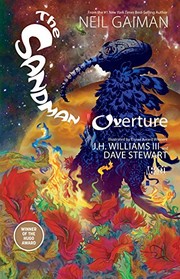
A gorgeous prequel set just before Vol. 1 that reveals what Morpheus was doing when he was captured — best appreciated after finishing the main series so every callback lands fully.
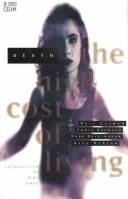
The first and most acclaimed Death spin-off, in which she spends one day as a mortal; read after the main series when you already love the character and want to spend more time with her.
Spin-offs & Expanded Universe
IntermediateBroaden the Sandman universe through spin-offs focused on other Endless and key supporting characters, enriching the mythology without requiring any new prerequisites.
▸ Study plan for this stage
Pace: 3–4 weeks total: Week 1 — Read "Death" (~20–25 pages/day, including pausing to reflect on each short story/vignette); Weeks 2–3 — Read "The Dream Hunters" (~15–20 pages/day, savoring the prose-poem pacing and artwork); Week 4 — Review, journaling, and exercises.
- Death as a compassionate, humanized figure — contrasting traditional grim-reaper archetypes and reframing mortality as a gentle, personal encounter
- The Endless as concepts rather than gods — both 'Death' and 'The Dream Hunters' reinforce that the Endless embody universal forces that exist independently of worship or belief
- Dream's duality of power and vulnerability — 'The Dream Hunters' portrays Morpheus as simultaneously omnipotent within his realm and emotionally susceptible to love and loss
- The role of sacrifice and selflessness — the fox's willingness to sacrifice herself in 'The Dream Hunters' and Death's compassionate stewardship both center selfless love as a mythological force
- Folklore and myth as structural scaffolding — 'The Dream Hunters' is explicitly rooted in Japanese folklore (kitsune, Buddhist monks, oni), showing how Gaiman grafts the Sandman mythology onto world traditions
- Intimacy and the individual — both books zoom in on one-on-one relationships (Death and a single mortal; Dream and the monk/fox) rather than epic-scale conflicts, revealing character depth
- Visual and prose style as meaning — the illustrated 'Death' stories and P. Craig Russell's or Yoshitaka Amano's art in 'The Dream Hunters' use aesthetic choices to reinforce thematic tone
- Mortality as gift, not punishment — a thread connecting both books is the reframing of death and endings as natural, even beautiful, completions rather than tragedies
- How does Gaiman's portrayal of Death in 'Death' challenge or subvert the cultural archetypes of death figures you were already familiar with, and what specific scenes or dialogue best illustrate her character?
- In 'The Dream Hunters,' how does the fox's transformation from trickster to devoted protector mirror or contrast with Dream's own emotional journey throughout the story?
- Both books feature mortal characters whose lives are profoundly altered by contact with the Endless — what do these encounters suggest about the relationship between immortal beings and human fragility?
- How does Gaiman use Japanese folklore conventions in 'The Dream Hunters' to tell a story that still feels unmistakably part of the Sandman universe? Where do the two traditions blend most seamlessly?
- What does Death's 'one day in a century' (living as a mortal) reveal about her philosophy toward her own role, and how does it deepen your understanding of the Endless as a whole?
- Considering both books together, what recurring thematic statement does Gaiman seem to be making about love — whether between mortals, or between mortals and the Endless?
- Character portrait journal: After finishing 'Death,' write a 1–2 page first-person monologue from Death's perspective on a day she finds particularly meaningful — draw directly on her voice, values, and mannerisms as Gaiman establishes them.
- Folklore source comparison: Research one or two of the Japanese folklore elements in 'The Dream Hunters' (e.g., kitsune mythology, the role of Buddhist monks in Japanese ghost stories). Write a short paragraph noting what Gaiman kept faithful and what he adapted for the Sandman universe.
- Thematic contrast chart: Create a two-column chart comparing how 'Death' and 'The Dream Hunters' each handle the theme of sacrifice — list specific scenes, characters, and outcomes side by side, then write a concluding sentence about what the pattern reveals.
- Visual analysis: Choose one full-page illustration from each book and write 3–5 sentences analyzing how the art style (line, color, composition) reinforces the emotional or thematic content of that moment in the story.
- Rewrite a scene: Select the moment in 'The Dream Hunters' where Dream and the fox first meaningfully interact, and rewrite it as if it were set in a different world mythology of your choosing (Norse, Greek, West African, etc.) — then reflect on what changes and what stays the same.
- Discussion or essay prompt: 'Both Death and Dream, as portrayed in these two books, are ultimately defined by their relationships with mortals rather than their cosmic power.' Agree or disagree in 500 words, using specific evidence from both texts.
Next up: By deeply exploring Death and Dream through intimate, mythology-rich spin-off lenses, the reader has now internalized the full emotional and philosophical range of the Endless, building the nuanced character foundation needed to engage with more complex, continuity-heavy Sandman storylines ahead.
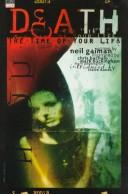
The second Death miniseries, revisiting a character from The Doll's House; read after High Cost of Living to complete Gaiman's Death stories in order.
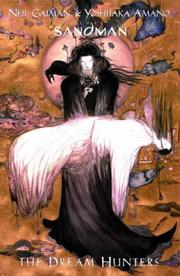
A standalone prose novella (also available in illustrated form) set in feudal Japan — a quieter, fable-like story that shows the global reach of Morpheus's domain.
Critical Context & Deep Dive
ExpertGain scholarly and creative context for The Sandman's literary sources, cultural impact, and place in comics history.
▸ Study plan for this stage
Pace: 3–4 weeks, ~20–25 pages/day; The Sandman Papers is a dense academic essay collection, so allow extra time to annotate, re-read difficult passages, and cross-reference with the primary Sandman text
- Intertextuality and literary allusion — how The Sandman weaves mythology, folklore, Shakespeare, Chaucer, and other canonical texts into its narrative fabric
- Comics as literature — the scholarly arguments Sanders's contributors make for elevating sequential art to the status of serious literary and cultural study
- Gaiman's authorial mythology — the construction of Dream/Morpheus as an archetype and how Gaiman positions the Endless within world mythological traditions
- Gender, identity, and the body — critical essays examining how The Sandman represents femininity, queerness, and fluid identity in ways unusual for mainstream comics of its era
- Postmodernism and metafiction — the series' self-aware storytelling, its stories-within-stories structure, and its commentary on the act of narrative itself
- Cultural and historical reception — how The Sandman reshaped the comics industry, expanded its readership demographics, and influenced the 'mature readers' movement
- The Vertigo context — understanding The Sandman's role in launching and defining DC's Vertigo imprint and its broader impact on alternative/literary comics
- Mythopoeic world-building — the scholarly analysis of how Gaiman constructs a coherent cosmology that synthesizes disparate cultural traditions
- According to the essays in The Sandman Papers, what are the strongest scholarly arguments for treating The Sandman as a work of literary merit rather than mere popular entertainment?
- How do the contributors analyze Gaiman's use of intertextuality — which specific literary, mythological, or historical sources receive the most critical attention, and why?
- What do the essays reveal about The Sandman's treatment of gender and identity, and how does this compare to mainstream superhero comics of the same period?
- How do the contributors situate The Sandman within postmodern literary theory — what narrative techniques are identified as distinctly postmodern, and how are they argued to function?
- What picture of The Sandman's cultural impact and legacy emerges from the collection as a whole — how did it change comics readership, critical perception, and the industry?
- Which essays in The Sandman Papers do you find most or least persuasive, and what evidence or methodology drives your assessment?
- Annotated essay map: After reading each essay, write a 3–5 sentence summary of its central argument, the theoretical framework used (e.g., feminist theory, narratology, myth criticism), and one point you agree or disagree with — compile these into a master reference document.
- Source-tracking exercise: Choose two essays that discuss specific literary allusions (e.g., to Shakespeare or Chaucer) and go back to the relevant Sandman volumes to locate those allusions yourself; write a short paragraph on whether the critic's reading feels supported by the text.
- Comparative argument essay: Select two contributors from The Sandman Papers who appear to disagree or take different angles on the same aspect of the series (e.g., its feminism, its mythology), and write a 500-word synthesis explaining how both views can coexist or where one is stronger.
- Cultural impact timeline: Using evidence from the essays, construct a timeline of The Sandman's real-world milestones (awards, Vertigo launch, demographic shifts, critical recognition) and annotate each entry with a quote or argument from the book that contextualizes its significance.
- Personal critical response: Write a 600–800 word academic-style response to one essay, using proper citation, in which you extend, challenge, or apply the contributor's argument to a specific Sandman story arc not discussed in that essay.
- Reading group or self-debate: Formulate three 'devil's advocate' counterarguments to the book's overall thesis that The Sandman deserves serious scholarly attention, then write rebuttals to each using specific evidence from the essays — this sharpens critical thinking and prepares for deeper discourse.
Next up: Mastering the scholarly frameworks and critical vocabulary from The Sandman Papers equips the reader to engage independently with primary texts, adaptations, or further academic work — moving from guided critical analysis to original, self-directed interpretation of Gaiman's broader body of work and its legacy.

An academic essay collection examining The Sandman's genre, gender, mythology, and narrative structure; provides the deepest critical framework for readers who want to understand why the series matters.
Discussion
Keep reading
Paths that share books, cover the same subject, or open a related topic.