The new science of psychedelics
This curriculum moves from vivid personal and cultural narrative into rigorous clinical science, and finally into the open philosophical and policy frontiers of the psychedelic renaissance. Each stage builds the vocabulary, historical context, and scientific literacy needed to fully absorb the next, taking a beginner from curious outsider to genuinely informed reader on psilocybin, MDMA, and the broader field.
Foundations: Story & Cultural History
BeginnerUnderstand what psychedelics are, how they entered Western culture, and why scientists and therapists are revisiting them — told through compelling narrative before any technical detail.
▸ Study plan for this stage
Pace: 10–12 weeks total, reading ~25–35 pages per day on weekdays with lighter reading on weekends. Week 1–5: "How to Change Your Mind" (~480 pages; use Pollan's own chapter structure as natural stopping points — one chapter per 2–3 days). Week 6–7: "The Doors of Perception" (~100 pages combined with "Hea
- Definition and taxonomy of psychedelics: what distinguishes classic psychedelics (LSD, psilocybin, mescaline, DMT) from other mind-altering substances, and why the term 'psychedelic' (mind-manifesting) was coined
- The Default Mode Network (DMN) and ego dissolution: Pollan's accessible introduction to how psychedelics quiet the brain's self-referential hub and what that means for consciousness and mental health
- The Renaissance of psychedelic research: how Johns Hopkins, NYU, and Imperial College London revived clinical trials after decades of prohibition, and what early results suggest for depression, addiction, and end-of-life anxiety
- Aldous Huxley's mescaline experience as a philosophical lens: his concepts of the 'reducing valve' of ordinary perception, the 'Mind at Large,' and what art and mysticism share with the psychedelic state
- The Beat/counterculture pipeline: how psychedelics moved from indigenous ceremony → CIA labs (MK-Ultra) → academic research (Timothy Leary, Richard Alpert) → mass youth culture in the 1960s, as chronicled in Acid Dreams
- Government suppression and Schedule I classification: the political and social forces — not scientific evidence — that drove the Controlled Substances Act of 1970 and shut down legitimate research for a generation
- Indigenous and shamanic origins: the long pre-Western history of plant medicines (peyote, psilocybin mushrooms, ayahuasca) that contextualizes modern use and raises questions of cultural appropriation
- The 'set and setting' principle: how mindset and physical/social environment shape the psychedelic experience, a concept that runs as a thread through all three books
- According to Pollan, what personal motivations led him to try psychedelics, and how does his outsider-journalist perspective shape the way he presents the science and the experience?
- How does Huxley's 'reducing valve' metaphor explain ordinary consciousness, and what does he believe mescaline reveals about the latent capacity of the human mind?
- What role did the CIA's MK-Ultra program play in the early spread of LSD, and how did covert government interest ultimately contribute to the drug's uncontrolled proliferation into the counterculture, as detailed in Acid Dreams?
- What specific patient populations have shown the most promising responses in the modern clinical trials described by Pollan, and what methodological challenges make psychedelic research uniquely difficult?
- How did Timothy Leary's public evangelism — as portrayed across Pollan and Acid Dreams — both accelerate psychedelic adoption and trigger the political backlash that led to prohibition?
- Across all three books, how is 'set and setting' illustrated through real examples, and why do researchers today treat it as a clinical variable rather than mere folk wisdom?
- Timeline wall: After finishing Acid Dreams, create a visual timeline (paper or digital) spanning 1938–present, pinning key events from all three books — Hofmann's synthesis, Huxley's experiment, MK-Ultra, Leary's Harvard dismissal, the Controlled Substances Act, and the Johns Hopkins psilocybin trials. Color-code by theme (science / politics / culture).
- Dialectical reading journal: While reading The Doors of Perception, write a one-page response to each major Huxley claim (e.g., the reducing valve, the value of visionary experience). Then revisit those pages after finishing Pollan and note where modern neuroscience supports, complicates, or refutes Huxley's intuitions.
- Character motivation map: For at least five key figures across the three books (e.g., Albert Hofmann, Huxley, Leary, a modern researcher from Pollan, a CIA operative from Acid Dreams), write a 3-sentence profile: Who are they? What did they want from psychedelics? What were the consequences?
- Concept definition glossary: Build a personal glossary of 15–20 terms encountered across the books (psychedelic, entheogen, set and setting, ego dissolution, Default Mode Network, Schedule I, MK-Ultra, mystical experience, etc.), writing each definition in your own words without copying text.
- Comparative reflection essay (500–700 words): Compare how each of the three authors frames the central question 'Are psychedelics dangerous or beneficial?' — noting the genre each uses (memoir/journalism, philosophical essay, investigative history) and how genre shapes argument.
- Discussion or study-group session: Formulate three open-ended debate questions drawn from the books (e.g., 'Was Leary a hero or a saboteur for the cause of psychedelic research?') and discuss them with at least one other reader, or write out both sides of the argument solo.
Next up: ">Having absorbed the human stories, cultural forces, and intuitive frameworks behind psychedelics, the reader is now primed to move from narrative into mechanism — ready to ask not just 'what happened?' but 'how and why does it happen in the brain?', which is precisely what the next stage's more technical texts will answer.
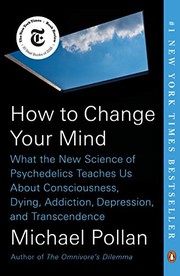
The ideal entry point: a skeptical journalist investigates modern psychedelic science and history from scratch, mirroring the beginner's own journey and introducing all the key figures, substances, and concepts in plain language.

A short, foundational first-person account of a mescaline experience that established the core vocabulary — 'Mind at Large,' ego dissolution, mystical states — still used by researchers today. Read it here while the ideas are fresh from Pollan.
Provides the essential political and cultural history of LSD from the 1950s CIA experiments through the counterculture to the crackdown, explaining exactly why research was shut down for decades — critical context before diving into the clinical revival.
The Clinical Renaissance: Psilocybin & MDMA Therapy
IntermediateUnderstand the actual clinical research: trial designs, therapeutic protocols, mechanisms of action, and the specific evidence base for psilocybin in depression/end-of-life care and MDMA in PTSD treatment.
▸ Study plan for this stage
Pace: 8–10 weeks total. Week 1–3: "The Psychedelic Explorer's Guide" (~25–30 pages/day, focusing on the guided-session protocols and microdosing chapters). Week 4–6: "Good Chemistry" (~20–25 pages/day, pausing to annotate passages on oxytocin, MDMA pharmacology, and relational neuroscience). Week 7–10: "T
- Fadiman's three-phase session protocol (preparation, guided session, integration) and why set & setting are clinical variables, not just cultural ones
- The distinction between psycholytic (low-dose, repeated) and psychedelic (high-dose, single or few sessions) therapeutic models as outlined by Fadiman
- Microdosing sub-perceptual dosing rationale, self-blinding limitations, and the difference between anecdotal reports and RCT evidence
- Holland's 'good chemistry' thesis: how MDMA's prosocial effects (oxytocin release, amygdala dampening, increased trust) create a unique therapeutic window for trauma processing
- The neurobiological basis of PTSD as explained by van der Kolk — hyperactive amygdala, impaired prefrontal regulation, disrupted interoception — and why talk therapy alone often fails
- How MDMA-assisted therapy targets the fear-extinction bottleneck in PTSD: reduced defensiveness + retained memory access = reprocessing without re-traumatization
- Psilocybin's proposed mechanism in depression: default mode network (DMN) disruption, increased neuroplasticity, and the 'REBUS' (relaxed beliefs under psychedelics) model of loosening rigid cognitive patterns
- The role of the therapeutic relationship (therapeutic alliance) as an active ingredient in both MDMA and psilocybin trials, not merely a delivery vehicle
- According to Fadiman, what are the essential responsibilities of a guide during a high-dose psilocybin session, and how do these map onto the roles therapists play in formal clinical trials?
- Holland argues that MDMA produces a specific neurochemical state that is uniquely suited to trauma therapy — what are the key pharmacological mechanisms she identifies, and what distinguishes this from the action of SSRIs or benzodiazepines?
- Van der Kolk describes trauma as fundamentally a disorder of body and nervous system regulation, not just of memory or cognition. How does this framing reframe what 'successful' MDMA or psilocybin therapy would need to accomplish?
- How do the therapeutic protocols described by Fadiman (non-directive guidance, music, eye shades) compare to the structured MAPS MDMA-assisted therapy protocol implied in Holland's discussion of clinical research?
- What are the key limitations or open questions in the current evidence base for psilocybin in depression and end-of-life anxiety, based on what these three books collectively reveal about trial design and patient selection?
- How does van der Kolk's concept of the 'window of tolerance' help explain why MDMA — by simultaneously reducing amygdala reactivity and maintaining conscious access to traumatic memory — may be more effective for PTSD than exposure-based therapies alone?
- Protocol Comparison Chart: Create a side-by-side table comparing Fadiman's guided-session protocol with the MDMA-assisted therapy framework described in Holland. Columns should include: dose strategy, number of sessions, therapist role, integration support, and contraindications. Note where the books agree, conflict, or leave gaps.
- Mechanism of Action Diagram: Draw a single annotated diagram showing the brain regions van der Kolk identifies as dysregulated in PTSD (amygdala, prefrontal cortex, insula, hippocampus), then annotate each region with how psilocybin OR MDMA is theorized to act on it, drawing evidence from all three books.
- Critical Appraisal Journal: After finishing each book, write a one-page 'evidence audit' — list every specific clinical study, trial, or dataset the author cites. Note sample size, population, controls, and any conflicts of interest. Compare the rigor across the three authors.
- Therapeutic Persona Exercise: Using Fadiman's guide principles and Holland's relational neuroscience, write a 300-word 'therapeutic stance' document as if you were a therapist preparing for a psilocybin session with a patient with treatment-resistant depression. What would you prioritize and why?
- Van der Kolk Reading Response: Select one patient case study from 'The Body Keeps the Score' and write a 400-word analysis of how that patient's symptom profile might (or might not) make them a candidate for MDMA-assisted therapy, using Holland's pharmacological framework as your evaluative lens.
- Socratic Discussion Prompt: Host or simulate a debate (with a study partner, or in writing) on this question: 'Is the therapeutic benefit of psilocybin and MDMA primarily pharmacological, primarily relational, or inseparable from both?' Use specific passages from all three books to support each position.
Next up: Mastering the clinical protocols and neuroscience of psilocybin and MDMA therapy here equips the reader to critically engage with the broader regulatory, ethical, and societal questions — drug scheduling, access equity, medicalization vs. decriminalization — that the next stage of the curriculum addresses.

Bridges narrative and science by systematically covering set, setting, dosing, and session structure — the practical framework that underlies every clinical protocol you will read about next.

A psychiatrist's deep dive into MDMA's pharmacology, its unique oxytocin-and-serotonin mechanism, and the MAPS PTSD trial program — the most accessible clinical account of MDMA-assisted therapy available.
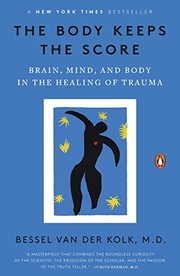
Not about psychedelics directly, but essential here: establishes the neuroscience and psychology of trauma that makes MDMA therapy comprehensible, and van der Kolk is himself a vocal supporter of the research.
Neuroscience & Pharmacology: How They Work
IntermediateUnderstand the neuroscientific mechanisms — serotonin receptors, the default mode network, neuroplasticity, and altered states — that explain why these compounds produce therapeutic effects.
▸ Study plan for this stage
Pace: 3–4 weeks, ~20–25 pages/day — Strassman's book is 320 pages and blends dense pharmacology with clinical narrative, so a measured pace allows time to pause on the science-heavy chapters (especially Parts II and III) without losing the human thread of the volunteer sessions.
- The role of the 5-HT2A serotonin receptor as the primary binding target of classic psychedelics, and how DMT's agonism at this receptor drives its profound perceptual effects
- DMT's endogenous status — its natural biosynthesis in the human body via the INMT enzyme pathway, and the 'spirit molecule' hypothesis about its possible role in dreaming, near-death experiences, and mystical states
- The pineal gland's proposed (and contested) role as a site of endogenous DMT synthesis, and how Strassman uses this to bridge neuroscience with consciousness theory
- Pharmacokinetics of DMT: its extremely short duration of action when smoked/injected (5–30 minutes), rapid MAO metabolism, and why oral activity requires an MAO inhibitor (as in ayahuasca)
- Dose-response relationships documented in Strassman's UNM clinical trials — threshold, psychedelic, and 'high' doses and their distinct phenomenological and physiological signatures
- The concept of 'set and context' (set = mindset, context = environment/setting) as a modulator of the neurochemical experience — how the same receptor activation produces radically different subjective outcomes
- Altered states of consciousness as measurable neurobiological events: changes in autonomic nervous system activity (heart rate, blood pressure, pupil dilation, cortisol) observed in the clinical trials as proxies for CNS arousal
- Neuroplasticity as an implicit framework: how repeated or intense receptor activation may reorganize perception and meaning-making, laying groundwork for therapeutic change
- What is the 5-HT2A receptor, where is it densely expressed in the brain, and why is its activation considered the pharmacological 'key' to the psychedelic experience described in Strassman's volunteers?
- How does Strassman justify the hypothesis that DMT is produced endogenously, and what are the strongest scientific criticisms of the pineal-gland-as-DMT-source theory?
- What physiological measurements did Strassman's team collect during the UNM trials, and what do those biomarkers tell us about DMT's effects on the autonomic nervous system and stress-response axis?
- Why is DMT inactive when taken orally without an MAO inhibitor, and how does this pharmacokinetic fact connect to the traditional preparation of ayahuasca?
- How did dose level systematically alter the nature of volunteers' experiences, and what does this dose-response curve imply about the relationship between receptor occupancy and subjective intensity?
- In what ways does Strassman's clinical methodology (controlled setting, medical monitoring, structured interviews) attempt to isolate neurochemical variables from psychological and contextual ones — and where does he acknowledge the limits of that separation?
- **Receptor Mapping Sketch:** Draw a simplified diagram of a serotonergic synapse. Label the 5-HT2A receptor, serotonin, DMT, and MAO. Annotate what happens at each point when DMT is introduced — use Strassman's pharmacology chapters as your source.
- **Dose-Response Table:** Create a table from Strassman's trial data with columns for dose level (mg/kg), key physiological changes (HR, BP, cortisol), and representative phenomenological descriptors from volunteers. Look for patterns across the rows.
- **Endogenous DMT Evidence Audit:** List every piece of evidence Strassman cites for endogenous DMT production in humans. Then, using his own caveats, write a one-paragraph 'steelman' of the skeptical counter-position. This sharpens critical reading of primary neuroscience claims.
- **Set & Context Journal:** After reading the volunteer session narratives, select three sessions with notably different outcomes. Write a short analysis (one paragraph each) attributing the differences to pharmacological factors vs. psychological/contextual factors — practice distinguishing mechanism from modulation.
- **Glossary Sprint:** Compile a personal glossary of 15–20 technical terms from the book (e.g., tryptamine, INMT, serotonergic, agonist, half-life, autonomic nervous system). Write each definition in your own words, then use it in a sentence drawn from the book's content.
- **Pineal Debate Card:** Prepare a two-sided index card — one side summarizing Strassman's case FOR the pineal gland as a DMT source, the other side listing the neuroanatomical and biochemical reasons scientists remain skeptical. Use this as a template for evaluating speculative neuroscience claims in future reading.
Next up: Strassman's receptor-level and pharmacokinetic foundation gives you the molecular 'why' behind psychedelic effects, which directly prepares you to understand how those same mechanisms — particularly 5-HT2A activation and downstream network disruption — are now being harnessed in controlled clinical settings to treat depression, PTSD, and addiction in the next stage of the curriculum.

The first modern clinical psychedelic trial (DMT at UNM) told from the inside; introduces receptor pharmacology, endogenous psychedelics, and the ethics of human research in an accessible, narrative-driven way.
Risks, Ethics & Open Questions
IntermediateCritically evaluate the risks (psychological, cardiovascular, abuse potential), ethical pitfalls (therapist misconduct, hype cycles), and the genuinely unresolved scientific and policy questions facing the field.
▸ Study plan for this stage
Pace: 5–6 weeks total: Weeks 1–3 cover "Psychedelic Psychiatry" by Erika Dyck (~25–30 pages/day, including re-reading key chapters on LSD trials and regulatory collapse); Weeks 4–6 cover "Drug Use for Grown-Ups" by Carl L. Hart (~25–30 pages/day, with deliberate pauses after each chapter to journal reacti
- Historical risk construction: How Dyck's account of 1950s–70s Saskatchewan LSD trials reveals that 'risk' is partly a social and political construct, not purely a pharmacological fact
- Therapeutic context vs. recreational context: Dyck's case studies show that set, setting, and clinical oversight dramatically alter adverse-event profiles — a concept Hart extends to all drug use
- Hype-and-backlash cycles: Dyck traces how overclaiming by early psychedelic researchers contributed directly to the political prohibition that ended legitimate research for decades — a cautionary pattern still visible today
- Therapist power dynamics and misconduct: Dyck documents boundary violations and paternalism in early psychedelic-assisted therapy, raising informed-consent and dual-relationship ethics that remain unresolved
- Pharmacological vs. policy-driven risk: Hart systematically separates the actual physiological harm profile of substances (including psychedelics) from the harms manufactured by criminalization, incarceration, and stigma
- Racial and socioeconomic inequity in drug policy: Hart's lived experience and data expose how drug laws are enforced asymmetrically, making 'risk' a racialized concept — a dimension almost entirely absent from Dyck's clinical history
- Autonomy as an ethical principle: Hart's central argument — that competent adults have a right to alter their own consciousness — directly challenges the paternalistic framing embedded in much psychedelic research and regulation
- Genuinely open scientific questions: Abuse potential of classic psychedelics vs. MDMA, long-term neurological effects, reproducibility of trial results, and the unresolved question of whether mystical experience is a necessary therapeutic mechanism
- According to Dyck, what specific institutional and political failures caused the collapse of psychedelic research in the 1960s–70s, and which of those failure modes are detectable in the current renaissance?
- How does Dyck's historical record of therapist misconduct in early LSD-assisted sessions inform the ethical frameworks (or lack thereof) being debated in contemporary clinical trials?
- Hart argues that most drug-related harm is a product of prohibition rather than pharmacology — what evidence does he marshal for this claim, and where does it apply most and least convincingly to psychedelics specifically?
- Where do Dyck and Hart implicitly agree and explicitly diverge on the question of who should control access to psychedelics — clinicians, the state, or individuals?
- What cardiovascular, psychological (e.g., HPPD, prolonged psychosis), and abuse-potential risks does the combined reading suggest are genuinely pharmacological, and which are context- or policy-amplified?
- What does Hart's critique of research incentives and media hype add to Dyck's historical warning about overclaiming — and what would a more epistemically honest public communication of psychedelic science look like?
- Dual-lens annotation: As you read each book, keep a two-column running log — 'Pharmacological/clinical risk' vs. 'Socially/politically constructed risk.' After finishing both books, review the log and write a 300-word synthesis of which column is fuller and why.
- Ethics case reconstruction: Using Dyck's documented cases of therapist misconduct, draft a one-page modern informed-consent checklist for a hypothetical psychedelic-assisted therapy session that directly addresses each historical failure she identifies.
- Steel-man debate prep: Write a 200-word argument FOR strict clinical gatekeeping of psychedelics (drawing on Dyck), then a 200-word argument FOR decriminalized adult autonomy (drawing on Hart). Then write a 150-word paragraph identifying the single strongest point of tension between the two positions.
- Hype-cycle mapping: Find three recent mainstream news headlines about psychedelic research. Using Dyck's historical analysis as a template, annotate each headline for signs of overclaiming, missing context, or echoes of the 1960s hype-and-backlash pattern.
- Open-questions inventory: Compile a personal list of 8–10 scientific or policy questions that neither book fully resolves (e.g., long-term neuroplasticity effects, equitable access models). Rank them by urgency and note what kind of evidence — RCT, longitudinal study, policy pilot — would be needed to answer each.
- Cross-author dialogue exercise: Select one specific claim Hart makes about drug policy and one specific historical episode Dyck recounts. Write a one-page imagined dialogue in which the two authors interrogate each other's blind spots — Hart's relative inattention to clinical safety data and Dyck's relative inattention to racial equity.
Next up: By rigorously mapping both the real and constructed risks of psychedelics and stress-testing the ethical and policy frameworks through Dyck and Hart, the reader is now equipped to engage the next stage's forward-looking material — emerging research, novel compounds, and therapeutic models — with the critical skepticism and equity awareness needed to evaluate new claims rather than simply absorb th

A historian of medicine examines the first wave of psychedelic research in Saskatchewan in the 1950s–60s, revealing both the genuine promise and the methodological and ethical failures — an essential corrective to uncritical enthusiasm.

A Columbia neuroscientist and drug researcher challenges the risk narrative head-on with data, forcing the reader to distinguish evidence-based harms from moral panic — sharpens critical thinking about all psychoactive substances.
Advanced Synthesis: Philosophy, Policy & the Future
ExpertIntegrate everything — neuroscience, clinical evidence, history, and ethics — into a sophisticated view of consciousness, the regulatory path forward, and the deepest open questions about mind and healing.
▸ Study plan for this stage
Pace: 10–12 weeks total: ~3–4 weeks per book. "The Varieties of Religious Experience" (~500 pp): ~20 pages/day with journaling pauses. "Stealing Fire" (~250 pp): ~15 pages/day, reading alongside supplementary note-taking on case studies. "This Is Your Mind on Plants" (~270 pp): ~20 pages/day, with policy
- William James's four marks of mystical experience (ineffability, noetic quality, transiency, passivity) and their direct applicability to psychedelic states
- The 'noetic quality' problem: whether altered states can yield genuine knowledge or merely the feeling of knowledge — the central philosophical tension of the field
- Ecstasis and flow as secular, performance-oriented framings of non-ordinary states (Kotler), and how this reframes psychedelics beyond therapy into human optimization
- The SEAL/Silicon Valley/athlete use cases in 'Stealing Fire' as evidence of a parallel, unregulated adoption curve running alongside clinical trials
- Michael Pollan's 'plant's-eye view' and the political economy of prohibition — how caffeine, mescaline/peyote, and opium each reveal a different axis of state power over consciousness
- Sovereignty of consciousness as an ethical and political principle: who owns the right to alter one's own mind, and what historical forces have contested that right
- Regulatory pathway literacy: Schedule I status, the FDA Breakthrough Therapy designation, and the gap between clinical evidence and legal access
- Synthesis across all three books: the convergence of mystical philosophy (James), peak-performance science (Kotler), and narrative journalism (Pollan) as triangulating evidence for a unified theory of non-ordinary states
- According to William James, what distinguishes a genuine mystical experience from mere emotion or delusion, and how do his four marks map onto what modern neuroscience describes as the psychedelic 'mystical-type experience'?
- Kotler argues in 'Stealing Fire' that ecstatic states share a common neurobiological signature across SEAL teams, Burning Man, and boardrooms. What are the implications of this democratization of altered states for how we regulate psychedelics?
- Pollan uses three very different plants — caffeine, peyote/mescaline, and opium — to make a broader argument. What is that argument, and how does it challenge the assumption that current drug policy is scientifically or morally coherent?
- How do the ethical frameworks implied by James (religious/experiential authority), Kotler (performance and collective benefit), and Pollan (individual sovereignty and historical contingency) agree and conflict with one another?
- What is the strongest philosophical objection to using psychedelic-induced mystical experiences as evidence for claims about consciousness or spirituality, and how would each of the three authors likely respond?
- If you were advising a regulatory body today, what synthesis of arguments from all three books would you use to make the case for — or against — broader legal access to psychedelic substances?
- Mystical Experience Mapping: After finishing James, create a two-column table — one column for his four marks of mystical experience, one column for a specific clinical psychedelic trial outcome (e.g., the Johns Hopkins psilocybin studies). Score how well each mark is operationalized in modern research and write a one-page reflection on what is lost or gained in the translation.
- Ecstasis Audit (Stealing Fire): Identify three legal, accessible activities in your own life that Kotler would classify as ecstatic or flow-inducing (e.g., intense exercise, meditation, music). Keep a 2-week log tracking your subjective state, and then write a 500-word comparison between your experiences and the altered states described across all three books.
- Policy Brief Draft: Using Pollan's three-plant framework as a structural model, write a 1,000-word mock policy brief addressed to a legislative committee. Argue for a specific regulatory change (e.g., rescheduling psilocybin, expanding DEA research licenses), drawing on historical precedent from Pollan, neurobiological evidence implied by Kotler, and philosophical legitimacy from James.
- Socratic Dialogue Exercise: Write a structured 2-page imagined dialogue between William James (1902) and Michael Pollan (2021) on the question: 'Is the chemically induced mystical experience spiritually authentic?' Force each author to use only arguments consistent with their actual texts.
- Contradiction Hunting: Identify one major internal tension within each book (e.g., Kotler celebrates military use of ecstasis while also critiquing institutional control; Pollan advocates sovereignty but expresses personal ambivalence about addiction). Write a paragraph per book explaining whether the tension is a flaw or a productive complexity.
- Future Scenarios Map: Draw or diagram three plausible 10-year futures for psychedelic policy and culture — one pessimistic, one status-quo, one optimistic — annotating each with specific evidence or arguments drawn from James, Kotler, and Pollan. Present or discuss this map with a study partner or reading group.
Next up: This stage crystallizes the reader's ability to hold neuroscience, history, ethics, and philosophy simultaneously, building the integrative, critical voice needed to engage primary research literature, emerging clinical protocols, or original philosophical writing on consciousness as an independent, sophisticated thinker.
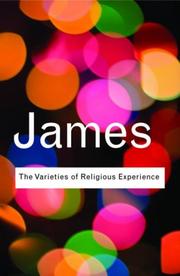
James's 1902 framework for mystical states is the philosophical bedrock that modern researchers (Griffiths, Carhart-Harris) explicitly cite when measuring 'mystical experience' in psilocybin trials — reading it now reveals why those outcome measures are designed the way they are.

Synthesizes altered states research across neuroscience, military, tech, and therapy into a broader theory of ecstasis and optimal performance, helping the reader place psychedelic science within the larger science of consciousness and human potential.
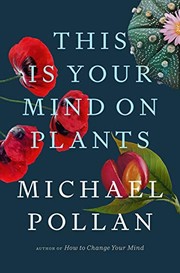
Pollan's focused follow-up examines mescaline, opium, and caffeine through legal, cultural, and pharmacological lenses — a capstone that reinforces comparative thinking about why societies permit some mind-altering substances and prohibit others.
Discussion
Keep reading
Paths that share books, cover the same subject, or open a related topic.