Medieval Art and Illuminated Manuscripts: The Best Books to Read, in Order
Medieval images were made to be used — prayed with, processed past, sworn on — and this path teaches you to read them on those terms rather than as early attempts at painting. It begins with a survey and the physical facts of the manuscript, moves through the great illuminated books and the workshop practices behind them, and ends with the interpretive scholarship on Gothic architecture and on what medieval artists put in the margins.
The shape of the field
IntermediateGet a working chronology from late antiquity to the fifteenth century, and learn the categories — reliquary, panel, portal, psalter — that organize everything else.
▸ Study plan for this stage
Pace: About 3 weeks. Sekules's Medieval Art (228 pages) and Nees's Early Medieval Art (272) are both Oxford History of Art paperbacks: compact, densely illustrated, written for undergraduates, and not to be read without looking at every plate. Read Sekules first for the thematic frame, Nees second for the
- Function before style: a reliquary, an altarpiece, a portal and a psalter are categories of use, not of taste
- Patronage and donation as the engine of production, and the donor's presence inside the work
- The period sequence from late antique through insular, Carolingian and Ottonian to Romanesque and Gothic
- The medieval hierarchy of media, in which goldsmithing and textiles outranked wall painting
- Material as meaning: gold, ivory, lapis and relics valued for what they were as much as for what was made of them
- Sekules's argument that medieval art is organised by devotion, ceremony and rank rather than by artistic development
- The manuscript as the dominant surviving art form of the early Middle Ages, which is why the next stage is about books
- Why does Sekules organise by function rather than chronology, and what does that ordering make visible that a stylistic survey hides?
- What is a reliquary for, and how does its form serve that purpose rather than merely decorate it?
- What distinguishes insular ornament from Carolingian classicism, and what does each look back to?
- Where did a medieval patron's money actually go in commissioning a work, and what does that tell you about value?
- What did art mean in a culture that had no word corresponding to our artist, and how should that change your descriptions?
- Build a one-page timeline with three dated works per period from the two books, pinning each to a place as well as a date
- Take one object (the Lindisfarne Gospels, the Gero Crucifix, or the chalice of Abbot Suger) and write 300 words on function, patron, material and audience using only Sekules's categories
- Browse an online collection (the Metropolitan Museum, or the British Library's Catalogue of Illuminated Manuscripts) and classify twenty objects by function before reading any label, then check yourself
- For any three works Nees illustrates, write down what a nineteenth-century stylistic survey would have said about them and what Sekules would say instead
Next up: You have the chronology and the categories; the next stage takes the single most important category apart down to the skin it was written on.
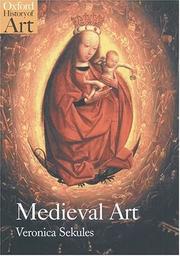
A thematic rather than chronological survey, organized around function, patronage and devotion, which is exactly the habit of mind the rest of the path needs. Short enough to read in a week and the right first book.
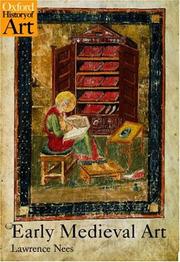
Covers the centuries Sekules moves through quickly — the insular, Carolingian and Ottonian material where manuscript illumination first becomes the dominant art form. Read second to supply the deep background for the Book of Kells later on.
The manuscript itself
IntermediateUnderstand a codex as a made object: parchment, ruling, quires, scripts, pigments, gold leaf, and the division of labour between scribe and illuminator.
▸ Study plan for this stage
Pace: Eight to ten weeks, and the four books serve four different purposes. De Hamel's Meetings with Remarkable Manuscripts is 640 pages but is twelve self-contained visits: one chapter a week is exactly right, and each should be read with the manuscript open in a digital facsimile. Brown's Understanding
- Parchment preparation, hair side and flesh side, and Gregory's rule governing how sheets face each other
- Codicology: bifolium, quire, collation, signatures and catchwords, and what each tells a cataloguer
- Pricking and ruling as the invisible armature of every page
- The script sequence: uncial, Caroline minuscule, gothic textualis, humanist, and their datable features
- The division of labour between scribe, rubricator, illuminator and binder, and the order of operations
- Pigments and their cost: ultramarine from lapis, vermilion, verdigris, and the difference between leaf gold and shell gold
- The decorative vocabulary: historiated and inhabited initials, bas-de-page scenes, miniatures, borders
- The shift from monastic scriptorium to commercial Parisian workshop and the mass-produced Book of Hours
- How do you tell hair side from flesh side on a page, and why does Gregory's rule change how an opening looks?
- Trace the full sequence of operations from an animal skin to a finished illuminated leaf, naming who performs each step
- What does a catchword do, and what can a modern cataloguer reconstruct from it that the text alone will not give?
- What did ultramarine cost relative to gold, and what does its presence in a manuscript tell you about the patron?
- Given an undated manuscript, how would you date and localise it from script and decoration alone, and what is your confidence?
- Take one of de Hamel's twelve chapters and read it with the manuscript open in a digital facsimile (the Book of Kells at Trinity College Dublin, the Hours of Jeanne de Navarre, and the Codex Amiatinus are all online), checking every claim against the folio he cites
- Collate a booklet by hand: fold and nest four bifolia, prick and rule them, and write on both sides, to feel which constraints are physical and which are conventional
- Write a full codicological description of one digitised opening using Brown's vocabulary, then compare yours against the holding library's own catalogue entry and account for the differences
- Identify the pigments visible in a high-resolution folio and, using Scribes and Illuminators, estimate what each cost and where it came from
- Reconstruct the workshop sequence for one decorated initial: what was drawn first, where the gold went, and what the illuminator could no longer change
Next up: With the physical book understood, you can look closely at individual masterpieces and at the one book type that nearly every literate lay person owned.

Twelve visits to twelve of the greatest surviving manuscripts, described by someone who has handled them. The most seductive book in the path and the reason to start this stage here rather than with a textbook.
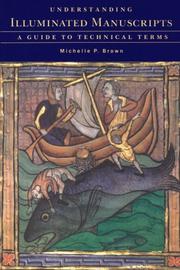
A compact illustrated glossary of terms and techniques — historiated initial, bas-de-page, catchword, burnished gold. Keep it beside you for everything that follows.
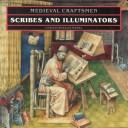
De Hamel's short account of medieval book production as a trade: who did what, in what order, for how much. This is the workshop practice that Brown's vocabulary describes.
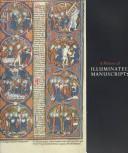
The standard one-volume history, organized by the kind of person a book was made for — monk, student, aristocrat, priest. Read last in this stage, once you can picture how the books were made.
Books in close-up
IntermediateStudy individual masterworks and the single most popular book type of the later Middle Ages in enough detail to describe their programmes.
▸ Study plan for this stage
Pace: Two to three weeks. Meehan's The Book of Kells (95 pages) and Wieck's Painted Prayers (144) are short illustrated books written to be read beside images rather than instead of them; neither is technically demanding, but both are useless read away from the plates or a screen. Read Meehan first for th
- Insular ornament: interlace, spiral, zoomorphic forms, and the carpet page as a full-page non-textual statement
- Evangelist symbols, canon tables and the apparatus that organises a gospel book
- Deliberate variation and error in Kells, and Meehan's argument about what those inconsistencies mean
- The structure of a Book of Hours: calendar, Hours of the Virgin, Penitential Psalms, Office of the Dead, suffrages
- The standard miniature cycle and why particular images sit at particular hours
- Personalisation: donor portraits, local saints in the calendar, and heraldry as evidence of ownership
- Devotional use rather than reading: what an owner actually did with the book, and how often
- What does a carpet page do, given that it carries no text and cannot be read?
- Why do the Kells decorators introduce inconsistencies into repeated ornament, and how strong is Meehan's explanation?
- What are the eight canonical hours, and what was a lay owner of a Book of Hours supposed to do at each?
- Why is the Annunciation almost always the miniature at Matins, and what does that tell you about how the cycle was designed?
- What can you learn about a Book of Hours's first owner from its calendar and its suffrages alone?
- Open the Book of Kells digital facsimile at the Chi-Rho page and identify every motif Meehan names, including the moths and the cats and mice, marking each on a printed reproduction
- Take any digitised Book of Hours from the Morgan Library or the Bibliotheque nationale and reconstruct its contents in order against Wieck's template, noting what is missing, added or out of sequence
- Compare two Books of Hours from different regions and try to localise each from the saints in its calendar before checking the catalogue description
- Write 400 words on one opening of Kells describing only what is physically there, then a second 400 words interpreting it, and note how much of the first paragraph was already interpretation
Next up: Having read individual books closely, you can now take on the classic scholarly arguments about medieval form, which were fought out largely over buildings.

By the keeper of the manuscript at Trinity College Dublin, and the best guided reading of the most famous insular book — carpet pages, evangelist symbols, and the deliberate errors.
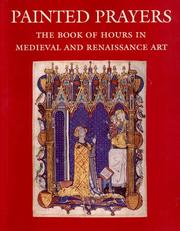
The Book of Hours was the medieval bestseller, and Wieck explains what is in one and why each miniature sits where it does. Read after Kells to move from the monastic to the lay devotional book.
Building and image
IntermediateFollow the classic scholarly arguments about Romanesque and Gothic form, and about the cathedral as a total work in which sculpture, glass and light are one programme.
▸ Study plan for this stage
Pace: About 8 weeks, and this stage is genuine scholarship rather than survey. Schapiro's Romanesque Art (368 pages) is a collection of essays at full art-historical strength: read the Silos essay and On the Aesthetic Attitude in Romanesque Art first. Camille's Gothic Art (192 pages) is a short thematic s
- Schapiro's claim that Romanesque artists had aesthetic attitudes of their own, evidenced from the works and from contemporary complaint
- Bernard of Clairvaux's Apologia against cloister sculpture as testimony to the imagery's power
- Gothic structure: rib vault, pointed arch, flying buttress, and the enlargement of the window
- Suger at Saint-Denis and the Pseudo-Dionysian theology of light
- Von Simson's thesis that Gothic proportion and light were deliberate theology rather than engineering consequence
- Panofsky's manifestatio and concordantia, and the mental habit argument linking the summa to the cathedral plan
- Camille's insistence that a Gothic work be read through its audience and use rather than through a style label
- What exactly does Schapiro claim about Romanesque artists' self-consciousness, and what evidence carries the claim?
- What did Bernard object to in the cloister, and what does the vehemence of the objection prove about how the imagery worked?
- State von Simson's thesis in a single sentence, then state the strongest objection to it that you can construct
- Is Panofsky's parallel between the scholastic summa and the cathedral causal, analogical, or merely suggestive? What would settle it?
- How does Camille's approach make the von Simson and Panofsky debate look dated, and what does it lose in the process?
- Read Suger's own De Administratione and De Consecratione, short and translated by Panofsky himself, alongside von Simson's chapter on Saint-Denis, and check whether Suger says what von Simson needs him to say
- Read Bernard's Apologia on cloister sculpture next to Schapiro's Silos essay, and write a page on what each takes the grotesques to be doing
- Take a measured plan of Chartres or Amiens and try to map Panofsky's articulation by division onto it, then write down precisely where the mapping strains
- Write a 1,000-word adjudication of the Panofsky and von Simson debate that reaches a conclusion on evidence rather than on which prose you prefer
- Photograph or find images of one local Gothic building and describe it twice: once in von Simson's theological register and once in Camille's use-and-audience register
Next up: Those arguments treat the medieval image as a coherent programme; the final stage reads what medieval image-makers put in the places the programme did not govern.
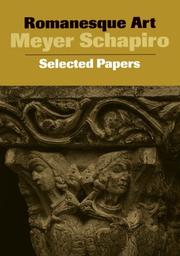
Schapiro's collected essays, including the famous work on Silos and on the aesthetic attitudes of Romanesque sculptors. The first sustained argument in the path that medieval artists had a theory.
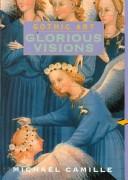
Camille reframes Gothic as glorious visions produced for specific audiences and uses, not as a style label. The bridge from Schapiro's formal analysis to the interpretive scholarship that follows.
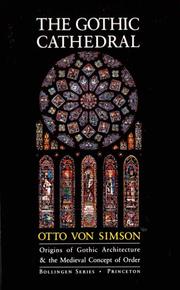
The classic case that Gothic light and proportion were a deliberate theology, built around Suger at Saint-Denis and Chartres. Contested, but you have to know the argument.
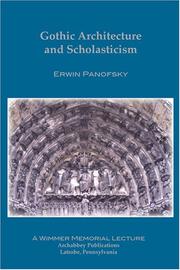
Panofsky's short, famous claim that cathedral design and scholastic argument share a habit of mind. Read directly after von Simson — the two are the standing debate about whether medieval buildings think.
The margins
IntermediateTake on the revisionist scholarship on marginal imagery, idolatry and the anxieties medieval image-makers reveal at the edges of the page.
▸ Study plan for this stage
Pace: About 5 weeks. Camille's Image on the Edge is only 176 pages but is dense and allusive: read it slowly, a chapter at a sitting, with manuscripts open. The Gothic Idol is a full scholarly monograph of 424 pages with substantial apparatus, and the notes are part of the argument; give it four weeks and
- The margin as commentary on the text rather than decoration around it
- Centre and periphery as a medieval structuring principle, in books, buildings and society
- The babewyn and the grotesque, and the presence of obscenity in sacred books
- Image anxiety: the second commandment, iconoclasm, and a Christian culture uneasy about its own pictures
- The depicted idolater: Jews, Muslims and pagans represented as image-worshippers, and the work that representation does
- The making of the outsider through image theory rather than through doctrine alone
- Camille's relation to iconography: what his method claims to see that Panofsky's could not
- What does Camille claim marginal images are doing, and what kind of evidence could confirm or refute a reading of a single grotesque?
- Does his interpretation of a particular margin survive being asked for its evidence, or is it an interpretive performance? Test one case.
- Why does Gothic art depict idolatry so obsessively when it is itself an image culture, and what does Camille think the obsession displaces?
- How does The Gothic Idol's account of Jewish representation change the way you read the devotional books from the third stage?
- What would Schapiro or Panofsky say in reply to Camille, and what would Camille say back?
- Take a margin-rich digitised manuscript such as the Luttrell Psalter or the Rutland Psalter, both online at the British Library, and read the margins of ten openings against the text they surround, deciding for each whether Camille's commentary thesis holds
- Find a depicted idol in a Gothic manuscript or portal and analyse it using The Gothic Idol's framework, then say what an iconographic reading would have concluded instead
- Write a 1,500-word essay setting Camille's method against Panofsky's on one single object, and be explicit about which questions each method cannot ask
- Go back to the Book of Kells or the Book of Hours you studied earlier and write down what you now notice at the edges of the page that you passed over the first time
Next up: This is the end of the path: with the survey, the codicology, the close readings and both the classic and the revisionist scholarship behind you, the next step is an actual reading room and a manuscript in front of you.
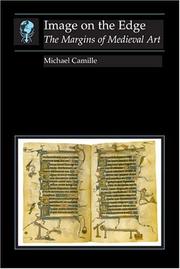
The book that made the medieval margin a serious subject — the grotesques, obscenities and jokes crawling around sacred text, read as commentary rather than decoration.
Camille on medieval anxiety about images themselves: idolatry, Jews and Muslims as depicted image-worshippers, and the theological unease behind a culture of pictures. The hardest and best endpoint for the path.
Discussion
Keep reading
Paths that share books, cover the same subject, or open a related topic.