Art Nouveau Design: The Best Books to Read, in Order
Art Nouveau lasted barely twenty years and touched everything: buildings, jewellery, posters, glass, typefaces, staircases and Metro entrances. This path is built for someone starting cold, so it opens with two heavily illustrated surveys, defines the style and its relationship to the Arts and Crafts movement, then works through the individual designers city by city before ending with the scholarly account of where the style came from and the Art Deco that replaced it.
Look before you read
BeginnerRecognise the whiplash line and the movement's national variants on sight, and know the difference between Jugendstil, Secession, Modernisme and Art Nouveau proper
▸ Study plan for this stage
Pace: 2 weeks, spent mostly with the plates. Sembach's Taschen Art Nouveau is 240 pages arranged country by country and can be gone through in two or three sittings. Fahr-Becker's Art Nouveau is 428 large-format pages covering furniture, glass, ceramics, graphics and architecture together - do not read it
- The whiplash line - asymmetrical, plant-derived, structurally expressive - as the one visual signature the whole movement shares
- The national names for the same impulse: Art Nouveau in France and Belgium, Jugendstil in Germany, Sezessionsstil in Vienna, Modernisme in Catalonia, Stile Liberty in Italy
- Total design: the ambition that a building, its furniture, its glass, its ironwork and its typeface belong to one scheme
- Which media carry the style best - glass, jewellery, poster graphics, wrought iron, ceramics - and why furniture and architecture were harder
- The compressed chronology, roughly 1890 to 1910, and how abruptly it starts and stops
- Japonisme and botanical illustration as the two visual sources most often behind a given ornament
- Shown an unlabelled object, can you place it in Nancy, Brussels, Glasgow, Vienna or Barcelona from its ornament alone?
- What distinguishes Viennese Secession work from French Art Nouveau at a glance, and is the difference one of line or of geometry?
- Which media does the style suit and which does it strain, on the evidence of Fahr-Becker's plates?
- Where in these two books can you see a direct borrowing from Japanese prints, and what has been changed in the borrowing?
- How would you date an unlabelled Art Nouveau object to within five years?
- Take fifty images from Fahr-Becker and sort them into national schools with the captions covered, then check; keep a list of the objects you misassigned and what misled you.
- Trace ten ornaments by hand from the Sembach plates - a Guimard railing, a Horta stair balustrade, a Galle vase profile, a Mucha border - until the whiplash line is something your hand knows rather than something you recognise.
- Browse the Victoria and Albert Museum and Musee d'Orsay online collections for Art Nouveau glass and jewellery and build a folder of twenty objects, writing one line on each about which of Fahr-Becker's chapters it belongs to.
- Make a one-page glossary matching each national term - Jugendstil, Secession, Modernisme, Stile Liberty - to a specific named object you can picture.
Next up: Once the style is something you recognise on sight, Tschudi Madsen's attempt to define it historically has real objects to attach itself to.
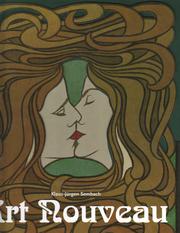
Sembach's Taschen volume is the cheapest good way to get several hundred images of the style in front of you, arranged by country. Start here, because Art Nouveau is a visual argument before it is anything else.
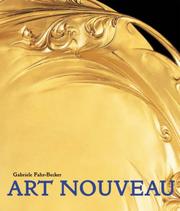
A much larger and more lavishly illustrated survey with the same title, covering furniture, glass, ceramics, graphics and architecture together. Read it second as the reference album you keep returning to as later books name objects.
The style defined, and what it grew out of
BeginnerExplain what makes an object Art Nouveau rather than merely decorative, and place the movement against the British Arts and Crafts tradition it partly descends from
▸ Study plan for this stage
Pace: 5-6 weeks. Tschudi Madsen's The Art Nouveau Style is 488 pages of the classic historical definition - it is scholarly, sometimes dry, and worth about a month at 20 pages a day with the picture books open beside it. Cumming and Kaplan's The Arts and Crafts Movement is a 216-page World of Art survey a
- Tschudi Madsen's genealogy of the ornamental line - through Rococo, Celtic and Gothic revival, Blake and the Pre-Raphaelites - and what it explains that a purely 1890s account cannot
- The criteria that make an object Art Nouveau rather than merely decorative: structural ornament, organic derivation, and the refusal of historical quotation
- Morris, the guilds and the doctrine of honest craft, and the socialist politics attached to them
- The contradiction Art Nouveau inherits and breaks: handcraft ideals pursued through commercial and sometimes industrial production
- Arts and Crafts flatness and rectilinearity against Art Nouveau's curve - the same reform impulse producing opposite forms
- The distinction between a style defined by motif and a style defined by principle, and which definition Tschudi Madsen is actually offering
- State Tschudi Madsen's definition of the style in a sentence, then find an object in Fahr-Becker that it excludes but that everyone calls Art Nouveau.
- What does Art Nouveau take from Morris and the guilds, and where does it violate what it took?
- Why did the British Arts and Crafts movement not produce a Guimard or a Horta?
- Which of Tschudi Madsen's proposed sources for the ornamental line is best evidenced, and which is closest to speculation?
- Was Art Nouveau a reform movement, a commercial style, or both - and what evidence would settle it?
- Apply Tschudi Madsen's criteria literally to fifteen objects from stage one and record which ones fail; the failures are the argument's real edges.
- Put a Morris and Co. textile beside a Horta interior detail and write 500 words on what the two share and what separates them.
- Build a source-tracing sheet for five ornaments: for each, name the botanical or historical model Tschudi Madsen proposes and find an image of that model to check the resemblance yourself.
- Write a two-paragraph museum label for one object, once as an Arts and Crafts curator would and once as an Art Nouveau curator would, and note which facts each label has to suppress.
Next up: With the style defined and its ancestry mapped, individual designers stop being names attached to pictures and become people making choices within a shared problem.
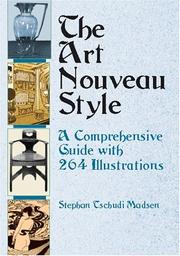
The classic attempt to define the style historically rather than just illustrate it, tracing the ornamental line back through its sources. Read it once you can already recognise the style, so the definitions have something to attach to.

Art Nouveau is unintelligible without Morris, the guilds and the doctrine of honest craft it both inherited and violated. This short survey supplies that background efficiently.
The makers
IntermediateKnow four of the movement's central figures well enough to attribute unfamiliar work, and to see how differently each interpreted the same style
▸ Study plan for this stage
Pace: 6-8 weeks. These are illustrated monographs, so the page counts are misleading - the reading is fast, the looking is slow. Sarah Mucha's Alphonse Mucha is 159 pages and takes a few evenings. Zerbst's Antoni Gaudi is a 240-page Taschen complete-works volume, best worked through one building at a time
- Mucha's poster grammar - the halo arch, the framing border, the flattened figure, the limited palette - and how much of the movement's popular image comes from it
- Gaudi's organic vocabulary pushed into structure: catenary arches, funicular models, trencadis surfaces, and the difference between ornament and engineering
- Mackintosh's geometry as the counter-case within the same movement, and Crawford's unsentimental account of how few commissions he actually completed
- Tiffany's technical inventions - favrile glass, the leaded shade, opalescent glazes - and the workshop and the women who executed the designs
- The gap between what a designer draws and what a workshop makes, which is the practical reality behind every object in this path
- How the same style yields a poster, a cathedral, a chair and a lampshade, and what that says about total design as a programme
- What are the recurring compositional devices in a Mucha poster, and could you identify an unattributed one from them?
- Which of Gaudi's forms are structural solutions and which are applied ornament, and how do you tell from a photograph?
- Why does Crawford think Mackintosh built so little, and is the explanation about Mackintosh or about Glasgow?
- How is a Tiffany lamp actually made, and what does the process require that a single designer could not supply?
- Placing these four side by side, is Art Nouveau one style or a family resemblance?
- Copy the composition of two Mucha posters as a simple line diagram - frame, arch, figure axis, text block - and then use those diagrams to predict the layout of a third before looking at it.
- Take Zerbst's plates for Casa Batllo and the Sagrada Familia and mark, on printouts or in notes, which elements carry load and which do not; check against the structural discussion in the text.
- Find the Hill House and the Glasgow School of Art in the online photographic archives, and write 500 words on what a Mackintosh interior does with the same reform ambition that produces a Horta interior.
- Look at twenty Tiffany objects in the Metropolitan Museum and Corning Museum of Glass online collections and sort them into leaded, blown and mosaic techniques from the images alone.
- For each of the four makers, write down one object you would call the best argument for the style and one you would call the strongest evidence against it.
Next up: Knowing four individual careers gives you the comparison you need when the next stage looks at two cities where the style became a public rather than a private matter.

The family-authorised monograph, and the most widely available introduction to the poster designer whose work has become shorthand for the whole movement. Start with Mucha because his graphics are the most legible entry to the style's logic.

The standard illustrated survey of Gaudi's complete works, building by building; the catalogue record displays it as Antoni Gaudi. Read it after Mucha to see the same organic vocabulary pushed into structural engineering.
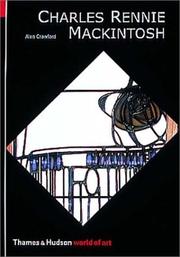
Glasgow's contribution, and the sharp geometric counter-case to Gaudi's curves. Crawford is unsentimental about how little Mackintosh actually built and why.
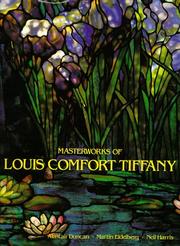
Duncan is the leading authority on Tiffany and this is the best-illustrated survey of the glass. The catalogue record displays it as Masterworks of Louis Comfort Tiffany, so it is strongest on the objects themselves rather than the biography, which is what you want here.
Vienna and Paris
IntermediateUnderstand the two cities where Art Nouveau became a public style, and read a Metro entrance and a Secession painting as products of the same moment
▸ Study plan for this stage
Pace: 5-6 weeks. Whitford's Gustav Klimt in the Artists in Context series is 160 pages and takes a week. Brandstatter's Vienna 1900 is 400 large-format pages across architecture, design, fashion and the Wiener Werkstatte - a reference album to work through over two or three weeks rather than read. Vigne's
- The Vienna Secession as an institutional break - a building, an exhibition programme and a journal, not only a style
- Klimt's gold-ground surfaces read against the design workshops and interiors around him, rather than as a decorative brand
- The Wiener Werkstatte's move from Art Nouveau curve toward grid and square, and what that shift anticipates
- Guimard's Metro entrances as prefabricated cast iron - a mass-produced system rather than a set of unique objects
- Art Nouveau as public infrastructure: what changes when the style has to serve a transport network and a municipal client
- The saturation of a single city by one design idiom, and why Vienna is the clearest case anywhere
- What does Whitford's contextual reading of Klimt add that a monograph on the paintings alone would miss?
- How does Wiener Werkstatte work differ from French Art Nouveau, and is the difference stylistic or ideological?
- How were the Guimard Metro entrances manufactured, and what does the answer do to the handcraft argument of stage two?
- Why did the Paris entrances become the most reproduced Art Nouveau objects in the world?
- In what sense was Vienna 1900 a total environment rather than a collection of individual works?
- Look at Klimt's Beethoven Frieze in the Secession Building's own online documentation and write a paragraph connecting its surface treatment to a specific Wiener Werkstatte object in Brandstatter.
- Find photographs of the surviving Guimard Metro entrances, identify the repeated cast components across three different stations, and list which parts vary and which do not.
- Use Vienna 1900 to build a one-page map of who worked with whom - Klimt, Hoffmann, Moser, Wagner, Olbrich - and mark the shared commissions.
- Put a Guimard railing and a Hoffmann grid object side by side and write 500 words on how two designers in the same decade arrived at opposite formal answers to the same brief.
Next up: Two cities studied in depth give you the local evidence that the final stage's large explanatory claims have to survive.
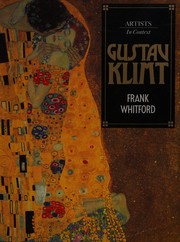
The Vienna Secession's most famous painter, treated in context rather than as a decorative brand. Whitford's Artists in Context volume connects Klimt's gold surfaces to the Viennese design workshops around him.
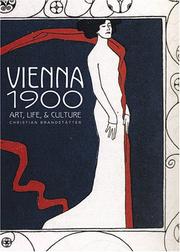
A large survey of the whole Viennese moment across architecture, design, fashion and the Wiener Werkstatte. Read it after Klimt to see how completely the style saturated one city.

The monograph on the architect of the Paris Metro entrances, the single most reproduced Art Nouveau objects in the world. It closes the loop between the survey images you started with and a documented career.
Where it came from and where it went
BeginnerEvaluate the scholarly explanations for the style's sudden appearance and equally sudden collapse, and trace the line into Art Deco
▸ Study plan for this stage
Pace: 8-10 weeks, and the difficulty jumps here. Silverman's Art Nouveau in Fin-de-Siecle France is 415 pages of dense academic cultural history with a real argument to follow - allow a month at 15-20 pages a day. Howard's Art Nouveau is 270 pages of scholarly comparative survey and takes two to three wee
- Silverman's thesis: Art Nouveau in France as a product of psychology, nervous-system theory, aristocratic revival and nationalist craft politics rather than of design theory
- The rappel a l'ordre against foreign competition - the style as an economic and patriotic project as well as an aesthetic one
- Howard's comparative correction: a France-centred story misdescribes the movement in Central and Eastern Europe and Scandinavia
- Why the style collapsed so quickly - cost, association with luxury, the war, and the shift in taste toward the machine
- Art Deco as continuity and repudiation at once: the same total-design ambition, the organic line replaced by geometry and mass production
- The methodological question of how a social explanation of a style is tested against the objects
- What is Silverman's evidence that fin-de-siecle French psychology shaped the style, and what would count against it?
- Which of Howard's national cases most damages the French-centred account?
- Why did Art Nouveau end so abruptly, and how much of the answer is economic rather than aesthetic?
- What does Art Deco keep from Art Nouveau, and what does it deliberately discard?
- Having read all three, would you now define Art Nouveau by its forms, its ideology, or its production conditions?
- Take five objects Silverman discusses, find images of them, and reconstruct her argument from the objects before re-reading her chapter; note where the object does not obviously support the claim.
- Use Howard to pick three national variants outside France and Belgium - Hungarian, Russian, Nordic - and find ten objects each in online museum collections, writing a paragraph on what a French-centred account would get wrong about them.
- Put a Galle or Majorelle piece next to a Ruhlmann or Lalique piece from Duncan's Art Deco and write 500 words on exactly which features changed and which survived.
- Write a 1,000-word account of the style's rise and fall using only evidence from objects you have looked at during this path, then mark every sentence where you have silently borrowed a claim from Silverman or Howard.
Next up: You finish able to date, place and explain an Art Nouveau object, and to argue about why the style existed at all - which is what makes the wider decorative arts literature readable without a guide.

The major scholarly argument, connecting the style to French psychology, nationalism and the aristocratic revival rather than to design theory. It is the most demanding book here and needs everything above it.
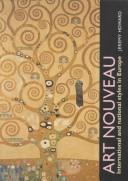
A scholarly comparative survey of the national variants across Europe, published in an academic series. It shares a title with the two picture books in stage one but is a different kind of book entirely, and it is the right corrective to a France-centred reading.
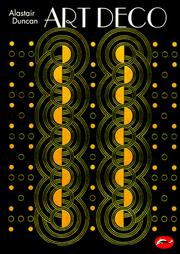
The style that replaced Art Nouveau within a decade, keeping the ambition for total design while abandoning the organic line. Ending here makes the collapse legible instead of mysterious.
Discussion
Keep reading
Paths that share books, cover the same subject, or open a related topic.