Dada is the hardest modern movement to read your way into, for a reason that is entirely in character: a substantial part of its literature is itself Dada. The manifestos are performances that refuse to explain, the founding diary is a spiritual document, and the standard early history was written by a participant who was settling scores. None of that is a flaw. It does mean that if you start with the primary material you will get an experience rather than an understanding.
There is also a genuine scholarly disagreement running through the shelf about what Dada was: a nihilist joke, a serious anti-war response to industrialised slaughter, a proto-conceptual attack on the institution of art, or the seedbed of Surrealism. Different books here take different sides, so meeting them in order lets you hear the argument instead of absorbing one position by accident.
Get the outline first
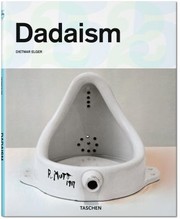
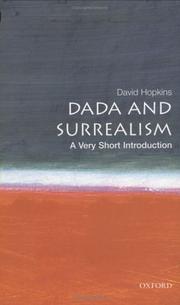
Start with Dada and Surrealism by David Hopkins, the Very Short Introduction. It is roughly 150 small pages, covers Zurich, Berlin, Hanover, Cologne, Paris and New York, and — crucially — treats Dada and Surrealism as a continuous story with a real break in it. It is a better opening than the participant histories precisely because Hopkins has no dog in the fight. Dadaism by Dietmar Elger is the Taschen introduction: slim, illustrated, useful for seeing the collages and readymades reproduced, light on argument.
Then Dada: art and anti-art by Hans Richter. This is the famous early history from 1965 and it is also a memoir — Richter was in Zurich from the beginning. It is vivid, funny and unreliable in the ordinary way of memoirs, favouring the people he liked and the cities he was in. Read it as testimony rather than as the account.
The primary documents
These are the movement speaking, and they read nothing like the surveys.
Flight out of time is Hugo Ball's diary. Ball founded the Cabaret Voltaire, invented the sound poem, and left Dada within about a year for Catholic mysticism, all of which is in the book. It is the closest thing to knowing what it felt like from inside. Seven Dada Manifestos and Lampisteries collects Tristan Tzara's manifestos, which are not explanations of Dada — they are Dada, contradictory by design, and you should not expect to extract a programme from them.
The Dada painters and poets, edited by Robert Motherwell in 1951, is the anthology that made the movement legible to English-speaking readers; it collects manifestos, memoirs and essays and is still the standard document collection. The DADA Reader edited by Dawn Ades is the modern complement, assembling the periodicals themselves in translation so you see what the little magazines actually looked like.
Duchamp, catalogues and theory
Marcel Duchamp is the figure the whole argument runs through, and Calvin Tomkins wrote the essential books. Duchamp is the full biography, patient and clear about a man who cultivated obscurity. Marcel Duchamp: The Afternoon Interviews is a short 1964 conversation, published decades later, and the plainest Duchamp ever was about his own work. The bride and the bachelors extends the story forward into Cage, Rauschenberg and Tinguely, showing how the readymade seeded post-war art.
Dada edited by Leah Dickerman is the catalogue of the major 2005 National Gallery of Art and Centre Pompidou exhibition, organised city by city with substantial scholarly essays. It is the best single illustrated scholarly volume on the movement, and being a catalogue it reproduces a great deal of material that is otherwise hard to see. Dada and surrealist art by William Rubin is the older museum survey, magisterial and firmly committed to reading Dada as the prologue to Surrealism — a framing later scholarship pushes back on. Photomontage by Dawn Ades is the technique-focused book, and photomontage is the one Dada invention with the longest afterlife in political graphics.
Finish with Theory of the avant-garde by Peter Bürger, which is genuinely difficult Frankfurt School theory arguing that Dada's attack on the institution of art failed and was absorbed. It is short, dense and worth the effort only once you know the material it is theorising.
Take the full path in sequence and the manifestos land as evidence rather than as noise.
Follow the full ordered path here: Dada and Anti-Art: What Order to Read the Books In.