Art Nouveau is a style that happened simultaneously in Paris, Brussels, Glasgow, Vienna, Barcelona, Munich and Nancy, under six different names, across furniture, glass, ironwork, posters, jewellery, buildings and books. That breadth is why the publishing is dominated by big illustrated volumes: you genuinely need to see a Guimard Metro entrance, a Tiffany lamp and a Mucha poster side by side before any argument about the style will land.
The consequence is that most of the shelf is survey and monograph, and the small number of books doing historical explanation are easy to miss. It also means two different books here are titled Art nouveau by different authors, and they are opposite kinds of thing — one a compact illustrated introduction, the other an academic country-by-country study.
Start with the pictures, deliberately
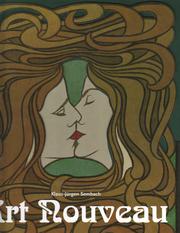
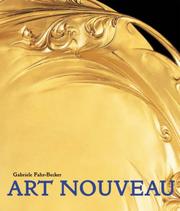
Begin with Art nouveau by Klaus-Jürgen Sembach — the Taschen volume. It is affordable, well printed, covers all the media, and its short text is more argued than these books usually are. If you want scale rather than portability, Art Nouveau by Gabriele Fahr-Becker is the large-format alternative: far more plates, organised by country and medium, and the better reference to keep on the shelf. They cover much the same ground, so pick by format and budget rather than buying both.
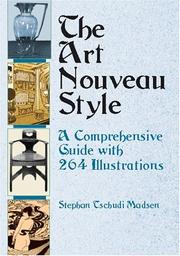
Then read The Art Nouveau Style by Stephan Tschudi Madsen, which is the scholarly foundation the picture books quietly rest on. It is a study of where the style came from — Gothic revival, Japanese prints, the English book and textile designers — and it is the first serious attempt to define the thing. The arts and crafts movement by Elizabeth Cumming and Wendy Kaplan is the necessary sibling volume, because Arts and Crafts is the movement Art Nouveau grew out of and then argued with over machines and ornament.
The monographs, chosen by what you want to look at
These are single-artist books, mostly image-led, and you should read the ones matching what drew you here rather than all of them.
Alphonse Mucha is the posters and decorative panels, the images most people picture when the style is named. Antoni Gaudi by Rainer Zerbst is the Taschen building-by-building monograph, and it is the right one if the architecture is the draw. Charles Rennie Mackintosh by Alan Crawford covers Glasgow — the austere, rectilinear version of the style that looks almost nothing like Paris. Masterworks of Louis Comfort Tiffany by Alastair Duncan is the American glass. Hector Guimard by Georges Vigne is the fullest treatment of the Paris Metro architect, including the work beyond those entrances.
For Vienna, Gustav Klimt by Frank Whitford is a compact contextual monograph, and Vienna 1900 by Christian Brandstätter is the large survey of the whole Viennese moment — Secession, Wiener Werkstätte, interiors, fashion, graphics — which is the best way to see that the Vienna version was a design programme, not a painting style.
The books that explain rather than illustrate
Save these for last, because they argue with the surveys.
Art nouveau in fin-de-siècle France by Debora Silverman is the serious scholarly case: that French Art Nouveau grew out of specific political anxieties after 1871, a revival of rococo craft nationalism, and contemporary psychology of the nervous interior. It is dense, footnoted and completely changes how the objects look. Art nouveau by Jeremy Howard is the academic survey organised by nation, and it is the corrective to treating the style as one thing — it shows how differently Finland, Russia, Catalonia and Hungary used it.
Finish with Art deco by Alastair Duncan, which is what came next and was in part a reaction: geometry and machine finish where Art Nouveau had tendrils and handwork.
The full path keeps this sequence, so the argument arrives after you have seen enough to test it.
Follow the full ordered path here: The Best Art Nouveau Books to Read, and in What Order.