Dada and Anti-Art: The Best Books to Read, in Order
Dada is the rare movement whose participants insisted it was not a movement, produced a manifesto explaining that manifestos were absurd, and then turned out to have invented most of what the next century called contemporary art. This path starts with two short modern surveys, moves to the memoirs of people who were actually in the Cabaret Voltaire, spends a stage in the primary documents because Dada is unusually readable in the original, then takes Duchamp on his own before ending with the scholarship that explains why the nonsense mattered.
Dada in outline
BeginnerPlace Zurich, Berlin, Hannover, Cologne, New York and Paris on a timeline, and distinguish Dada's aims from Surrealism's
▸ Study plan for this stage
Pace: 1-2 weeks. Elger's Dadaism is a 96-page Taschen survey and can be read in an evening, though the plates deserve longer. Hopkins's Dada and Surrealism is a 164-page Very Short Introduction, dense for its length - give it a week at 25 pages a day. Read both with the MoMA, Centre Pompidou and Kunsthaus
- The six centres and their different characters: Zurich (performance and sound poetry), Berlin (political photomontage), Hannover (Schwitters and Merz), Cologne (Ernst and Baargeld), New York (Duchamp, Picabia, Man Ray), Paris (the handover to Surrealism)
- Chance, collage and the readymade as three distinct procedures, not three names for the same gesture
- Anti-art as a positive programme - an attack on the institution of art rather than an absence of craft
- How Dada becomes Surrealism, and Hopkins's account of where the two genuinely differ on the unconscious, politics and the image
- The First World War as the movement's precipitating cause, and how directly each centre connects to it
- Why the objects survive better than the events, and what that does to the historical record
- Place Zurich, Berlin, Hannover, Cologne, New York and Paris on a timeline with dates, and say what each centre did that the others did not.
- What is the difference between a chance procedure, a collage and a readymade as artistic decisions?
- On Hopkins's account, where do Dada and Surrealism actually diverge, and where is the continuity strongest?
- If Dada was against art, what does it mean that its works are in museums - and did the Dadaists foresee that?
- Which Dada works in Elger's plates are visually beautiful, and does that undermine the anti-art claim?
- Build a one-page timeline 1916-1924 with the six centres in parallel columns and at least three dated events in each, using Elger and Hopkins together.
- Find images of Hoch's Cut with the Kitchen Knife, Schwitters's Merzbild constructions and Duchamp's Fountain, and write one paragraph on each about what specific artistic convention it attacks.
- Make a Tzara-style cut-up poem from a newspaper page, then write a short note on what the exercise taught you about chance as a procedure rather than as a slogan.
- List every Dada work in Elger you find genuinely funny and every one you find only conceptually interesting, and write two sentences on what the split says about the movement's methods.
Next up: Once you can place the centres and name the procedures, the participants' memoirs read as competing accounts of events you can already locate rather than as a first introduction.
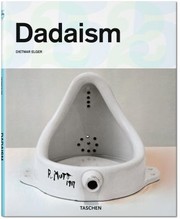
The Taschen survey: short, cheap, and illustrated enough that you finally see the objects rather than only reading about them. Start here, because Dada's reputation for pure negation dissolves the moment you look at the collages.
Hopkins's Very Short Introduction is the most efficient account of how Dada became Surrealism and where the two genuinely differ. Read it second so you can already picture the work his argument is about.
The people who were there
IntermediateHear the movement described by participants, and notice how much of the standard story comes from two or three insiders writing decades later
▸ Study plan for this stage
Pace: 3-4 weeks. Richter's Dada: Art and Anti-Art is 246 pages of well-illustrated insider history and reads quickly - about ten days. Ball's Flight Out of Time is 274 pages of diaries and is much harder going: fragmentary, mystical in its later sections, and best taken in short entries over two to three
- Richter's thesis - Dada as a spiritual and creative liberation rather than mere destruction - and how that thesis selects his evidence
- The insider-history problem: the standard account of Dada comes from two or three participants writing decades later
- Ball's founding of the Cabaret Voltaire in February 1916, the sound poems, and the cardboard costume
- Ball's departure from Dada into Catholic mysticism, and what it suggests about the movement's spiritual rather than nihilistic motivation
- Diary against memoir as historical evidence - what each form is good and bad at
- The gap between Zurich Dada as performance and Zurich Dada as the surviving printed and painted record
- What is Richter's argument about what Dada was for, and which episodes does he have to underplay to sustain it?
- Where does Ball's diary contradict Richter's account, on facts or on tone?
- Why does Ball's turn to Catholicism matter for reading the sound poems he wrote at the Cabaret Voltaire?
- What can you learn about a performance-based movement from documents written years afterwards, and what is simply lost?
- Which of these two writers would you trust on a disputed date, and why?
- Keep a two-column log through both books: Richter's claim on the left, Ball's diary entry on the same episode on the right, with dates - the rows that fail to line up are your list of contested history.
- Read Ball's Karawane aloud, twice, once trying to make sense of it and once not, and write a paragraph on what changed.
- Find the surviving photographs of the Cabaret Voltaire and of Ball in the cubist costume, and write 500 words reconstructing one evening from the images plus the two texts, marking every point where you are inferring.
- Write down the three claims about Dada you now believe that rest entirely on Richter's word, and keep the list for the primary-documents stage.
Next up: Holding the insiders' version in mind is exactly what makes the primary documents useful, because you can now check the memoirs against what Dada published at the time.
Richter was a Zurich Dadaist and this 1965 book is still the most quoted history of the movement, written from inside it. Read it knowing it is a memoir with a thesis, not a neutral chronicle.

The diaries of the man who founded the Cabaret Voltaire and performed the sound poems in a cardboard costume, then left Dada for Catholic mysticism. It is the closest you can get to the founding moment, and it complicates Richter's account considerably.
The primary documents
IntermediateRead the manifestos, poems and statements directly, and be able to quote what Dada actually claimed for itself rather than what was later claimed for it
▸ Study plan for this stage
Pace: 6-8 weeks. Motherwell's The Dada Painters and Poets is a 413-page anthology - read it in sections rather than straight through, roughly three weeks. Tzara's Seven Dada Manifestos and Lampisteries is 118 pages and takes two or three sittings, though it repays re-reading. Ades's The DADA Reader is 320
- What Dada actually claimed for itself, in its own words, as against what has been claimed for it since
- Motherwell's 1951 anthology as an event in its own right - the book that made Dada available in English and shaped how American artists received it
- Tzara's manifesto form: self-cancelling, performative, and the source of the instructions for making a poem from cut-up newspaper
- The Dada periodicals - Cabaret Voltaire, Dada, 391, Der Dada, Merz - as the movement's real infrastructure
- How an editor's selection and framing constructs a movement, and where Ades corrects Motherwell
- Manifesto as literary genre rather than as statement of policy
- Quote what Dada claimed for itself, from a specific manifesto, and say how it differs from Richter's later summary.
- What does Motherwell include, and what does Ades show he left out or reframed?
- How does Tzara's manifesto form defeat the purpose of a manifesto, and is that a joke or an argument?
- What do the periodicals reveal about how the six centres communicated with each other?
- After reading the documents directly, which parts of the standard story from the previous stage no longer hold?
- Take three claims you logged in the previous stage as resting only on Richter's word and try to verify each against Motherwell or Ades; record which survive.
- Read Tzara's 1918 manifesto twice and write a one-page paraphrase in flat, unrhetorical prose, then say what the paraphrase destroys.
- Follow the instructions in Tzara's cut-up recipe exactly, then compare your result with a Dada sound poem printed in Ades and write a paragraph on what the procedure controls and what it does not.
- Compare Motherwell's and Ades's tables of contents item by item and write 500 words on how the two selections construct different movements.
- Pick one periodical - 391 or Der Dada - and use Ades's apparatus to write a short account of who its readers were and what it was actually for.
Next up: With the documents read, Duchamp stops being a name in the anthologies and becomes a career whose specific refusals can be traced.

Motherwell's 1951 anthology is the book that made Dada available in English and shaped how American artists received it. It is the single most important document collection here, so read it before the other anthologies.

Tzara's own manifestos, including the instructions for making a poem out of cut-up newspaper. Short, and best read directly after Motherwell to see one voice at length rather than in extract.
A more recent critical anthology drawing on the Dada periodicals themselves, with Ades's scholarly apparatus. It fills the gaps Motherwell left and corrects some of his editorial framing.
Duchamp and the readymade
IntermediateUnderstand the readymade as an argument rather than a joke, and trace how one artist's refusals became the founding gesture of conceptual art
▸ Study plan for this stage
Pace: 6-7 weeks. Tomkins's Duchamp is 550 pages of standard biography, readable at 40-50 pages an evening - about three weeks. Marcel Duchamp: The Afternoon Interviews is 110 pages of conversation and takes an evening, but read it immediately after the biography so you can hear what he is dodging. The Bri
- The readymade as an argument about who confers the status of art, rather than as a prank
- The 1917 Fountain episode and the Society of Independent Artists jury - what actually happened, and what has been added since
- The Large Glass and the notes in the Green Box as a work that requires reading, not only looking
- Duchamp's retirement into chess and the twenty-year secret work on Etant donnes - refusal as a career strategy
- The transmission line from Duchamp to Cage, Rauschenberg and Tinguely, and from there to conceptual art
- Tomkins's proximity to his subject, and how a friendly biographer's judgement differs from a hostile one
- What exactly is the argument a readymade makes, and who is it addressed to?
- What is documented about the Fountain episode, and which parts of the familiar version are later embellishment?
- In the Afternoon Interviews, where is Duchamp being evasive, and does the evasion itself tell you something?
- How did Duchamp's influence actually reach the 1960s, on Tomkins's account in The Bride and the Bachelors?
- Is Duchamp best understood as a Dadaist, or as someone Dada happened to run alongside?
- Make a chronology of the readymades from 1913 to 1917 with what each object was, where it was shown and what happened to the original; most no longer exist, so record the replica history too.
- Read the Fountain section of Tomkins's biography, then find the Stieglitz photograph and the surviving contemporary printed references, and write 500 words separating what is documented from what is repeated.
- Read the Afternoon Interviews with a pen and mark every question Duchamp answers with a joke; write a paragraph on the pattern in what he refuses to discuss.
- Take one Rauschenberg combine and one Cage score, find them online, and write a paragraph on each identifying the specific Duchampian move it depends on.
- Write your own 300-word defence of Fountain as an argument, using no word from the standard vocabulary of art appreciation.
Next up: Understanding one artist's refusals in detail is the precondition for the last stage, which asks whether the whole movement's attack on the institution of art was its real content.
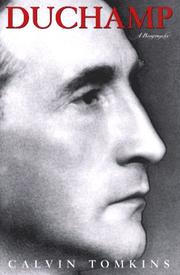
Catalogued simply as Duchamp. Tomkins knew his subject personally and wrote the standard life; it is the anchor of this stage because everything else about Duchamp is an argument with the facts assembled here.

The 1964 conversations behind the biography, published only decades later, in which Duchamp explains himself in plain, unhelpful, extremely revealing language. Short, and best read straight after the biography.
Duchamp read alongside Cage, Rauschenberg and Tinguely, which is how his influence actually travelled. It is the pivot from Dada as history to Dada as the source of postwar art.
The scholarship, and why anti-art mattered
IntermediateEvaluate the scholarly case that Dada's attack on the institution of art was its real content, and follow photomontage as its most durable technical invention
▸ Study plan for this stage
Pace: 8-10 weeks, and the difficulty is uneven. Dickerman's Dada is a 519-page exhibition catalogue with specialist essays city by city - work through it a chapter at a time over a month, and use it as the best available body of reproductions. Ades's Photomontage is 176 pages and takes a week. Rubin's Dad
- Dickerman's city-by-city organisation as the current scholarly baseline, and what it corrects in the older single-narrative accounts
- Photomontage as Dada's most durable technical invention, from Heartfield and Hausmann and Hoch into political propaganda and advertising
- Rubin's formalist framing, and how visibly a 1968 survey reads as a period document today
- Burger's central thesis: the historical avant-garde attacked the institution of art itself, and its failure is what made its gestures permanent
- The difference between attacking artworks and attacking the institution that assigns them value
- Why an anti-art movement ends up as the foundation of conceptual art - and whether that outcome counts as defeat
- What does Dickerman's city-by-city structure show that a single chronological narrative obscures?
- How does photomontage work as an argument, and why did it transfer so easily to propaganda and advertising?
- What are Rubin's implicit criteria for quality, and where do they lead him to underrate a Dada work?
- State Burger's thesis in your own words, and say what evidence from this path supports it and what resists it.
- Did Dada fail? Give the strongest version of both answers, using specific works.
- After the whole path, is anti-art a coherent position or a self-defeating one?
- Use Dickerman's plates to build a comparison of one work from each of the six centres, and write a paragraph on each explaining what makes it specifically Zurich, Berlin, Hannover, Cologne, New York or Paris.
- Take three Heartfield montages from Ades, find the source photographs where she identifies them, and write out the argument each montage is making step by step.
- Read Rubin's treatment of a work Dickerman also discusses and write 500 words on how the field moved between 1968 and 2005.
- Work through Burger's opening chapter with a pen, writing a one-sentence summary of each section, then apply his thesis to Fountain, to a Hoch montage and to Schwitters's Merzbau in turn.
- Write a 1,000-word answer to the question of whether Dada's absorption into museums proves Burger right or wrong, citing only works you have looked at in this path.
Next up: Finishing here leaves you able to argue about Dada at the level the scholarship actually operates on, and to read postwar conceptual art as the continuation of an argument rather than as a fashion.
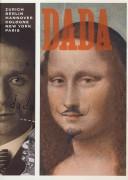
The catalogue of the major Centre Pompidou, National Gallery and MoMA exhibition, organised city by city with essays by the leading specialists. It is the current scholarly baseline and the best-reproduced body of images available.

The standard history of the technique Heartfield, Hausmann and Hoch invented out of Dada, and of its afterlife in political propaganda and advertising. Read it here because it shows Dada's clearest concrete legacy.
Rubin's large formalist survey, long the standard reference, and useful now as much for what it argues as for what it documents. Read it after Dickerman so you can see how far the field has moved.
The theoretical account of why Dada matters: the avant-garde attacked the institution of art itself, and failed in a way that made it permanent. The hardest book here, and the right ending, because it needs everything above it to make sense.
Discussion
Keep reading
Paths that share books, cover the same subject, or open a related topic.