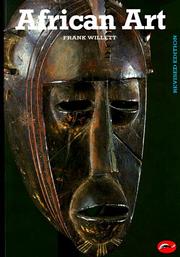
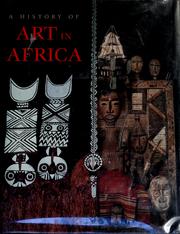
If you want one book, read African art by Frank Willett — the Thames and Hudson World of Art volume, paperback length, illustrated, and a genuine scholarly introduction rather than a picture book. If you want the full survey and are prepared for a textbook, read A History of Art in Africa instead: it is a multi-author university survey led by Monica Blackmun Visonà, organised region by region across the whole continent, and it is the book a course would set.
Before either, a caution about the category. "African art" is a shelf label, not a tradition. It spans a continent, several thousand years and hundreds of distinct systems of making, and the books that exist are heavily weighted toward the West and Central African sculpture that ended up in European and American collections. That bias is a fact about the literature, not about African art, and the best books on this list say so themselves.
Surveys, then catalogues
After a survey, the next useful thing is an exhibition catalogue, because catalogues are where the objects are photographed properly and discussed one at a time. Africa, the Art of a Continent edited by Tom Phillips is the catalogue of the 1995 Royal Academy exhibition — enormous, object-by-object, and still the single best photographic reference here. Icons by Herbert M. Cole is a Smithsonian catalogue organised thematically rather than by region: it groups works by the ideas they carry. Yoruba, edited by Henry John Drewal, is the catalogue of a landmark exhibition covering nine centuries of Yoruba art and thought, and it is the point where a general reader stops looking at a continent and starts looking at one tradition in depth.
African textiles by John Picton and John Mack is a British Museum book on the material most surveys shortchange — cloth, which in much of the continent carries more meaning and more expense than carved wood.
Two regional deep dives
African Vodun by Suzanne Preston Blier is a scholarly monograph, not an introduction: a sustained study of the bocio figures of Benin and Togo that reads them through history, memory and the psychology of power. Art and Risk in Ancient Yoruba, also by Blier, is a Cambridge academic monograph on Ife around 1300, and it is where the argument gets technical about dating, patronage and politics. Both assume you already know the general shape of the field.
Looting and restitution
Two books cover the 1897 British punitive expedition against Benin City and what followed, and they are different kinds of book. The art of Benin by Nigel Barley is a short British Museum introduction to the objects themselves. Loot by Barnaby Phillips is reported narrative journalism, tracing the bronzes from the raid to the museums to the current negotiations, and it takes seriously the complications on all sides. The Brutish Museums by Dan Hicks is a polemic by a serving Oxford curator, arguing that museums holding these objects are institutions of ongoing colonial violence and should return them.
The violence of the 1897 expedition is not in dispute and is documented in all three. What is disputed is what museums should do now, and how much weight to give claims from present-day states, communities and descendants. Hicks argues one position forcefully; Phillips reports the argument. Reading both is the point.
The contemporary scene
Contemporary African Art by Sidney Littlefield Kasfir is the World of Art survey for living artists, and it is where the categories from the earlier books start to break down usefully. African Art And Agency In The Workshop, an academic essay collection edited by Kasfir with Till Förster, looks at how work is actually made — workshops, apprentices, assistants and markets — which quietly undermines the lone-genius model. Reading the contemporary, edited by Olu Oguibe and Okwui Enwezor, is a theory and criticism anthology: essays by artists, curators and critics on how African art gets framed, exhibited and sold.
Follow the full reading path in order and each book arrives when you can actually use it.
Follow the full ordered path here: How to Read About African Art, in Order.