Mass extinction is a field where the popular account has settled well ahead of the science. Most people can name one cause — an asteroid — and that answer is correct for exactly one of the five great extinction events. What killed the other four is genuinely disputed, and the dispute is the most interesting thing in the subject.
The reading order below starts in the present, because that is where most readers arrive from, then goes deep into geological time, then works through the events themselves, and finishes with the two books that argue hardest about mechanism.
Start with now, then step back
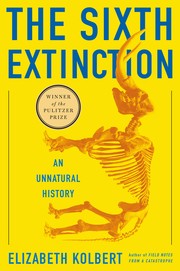
The Sixth Extinction by Elizabeth Kolbert is the entry point almost everyone should take. It moves between field sites and the history of extinction as a scientific idea, and it is the clearest available explanation of why current species loss is being compared to events in the fossil record. It is worth knowing that the comparison itself is contested: some palaeontologists argue that present losses, while severe, have not yet reached the magnitude the term implies, and that the rates involved are hard to compare across such different kinds of evidence. Kolbert engages with this rather than ignoring it.
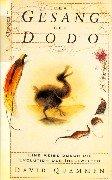
The Song of the Dodo by David Quammen is older and, for many readers, better. It explains island biogeography — the science of why isolated populations wink out — and in doing so explains habitat fragmentation, which is the actual mechanism behind most modern extinctions. It is one of the finest pieces of science writing of its era.
Deep time, so the events have a scale
A Brief History of Earth by Andrew Knoll compresses four and a half billion years into a short, authoritative account by a working palaeontologist. Read it for the scale: without it, the intervals between mass extinctions are just numbers.
The ends of the world by Peter Brannen is the best single book on the Big Five, and if you only read one thing here it should probably be this. Brannen reports from outcrops with the scientists who work them and is unusually good at conveying how much of the reconstruction is inference from thin evidence. Otherlands by Thomas Halliday does something different and remarkable — it reconstructs sixteen past ecosystems as places, moving backwards in time, and it makes the world before each extinction feel inhabited rather than statistical.
The individual events
When Life Nearly Died by Michael Benton covers the end-Permian, the largest extinction in the record, in which the overwhelming majority of marine species disappeared. Benton is a palaeontologist writing for general readers, and he is careful to distinguish what is established from what is argued.
T. Rex and the Crater of Doom by Walter Alvarez is a first-person account of the impact hypothesis by one of the people who proposed it. It is short, it is a genuinely thrilling piece of detective work, and reading the proponent's own version is instructive — the resistance the idea met from geologists for over a decade is part of the story.
The argument about mechanism
Here is where the field is openly divided. Under a Green Sky by Peter Ward argues that impacts are the exception, and that most mass extinctions were driven by massive volcanism, greenhouse warming, ocean anoxia and hydrogen sulfide poisoning. Extinction by Douglas Erwin focuses on the end-Permian and is more cautious, weighing multiple candidate causes and declining to settle on one where the evidence does not force it.
Read both. The impact case for the end-Cretaceous is now very strong; whether the Deccan volcanism contributed materially to the same event is still argued, and for the earlier extinctions the volcanic and climatic explanations are where most current work sits. A reading list that presented this as settled would be misleading you.
The book to read last, and why
Wonderful Life by Stephen Jay Gould — our catalogue stores the title in truncated form, and it was published as Wonderful Life: The Burgess Shale and the Nature of History — is about the Cambrian rather than an extinction, and it argues that the history of life is radically contingent. It is a beautifully written book whose central technical claim has not held up: later work reinterpreted many of the Burgess Shale animals Gould treated as failed experiments as members of known lineages, which weakens the disparity argument the philosophy rests on. Read it last, and read it as an argument that lost, made superbly.
Follow the full reading path in order to keep the events in sequence.
Follow the full ordered path here: The Best Books on Mass Extinctions, in Reading Order.