Best Books on Paleoclimatology and Earth's Past Climates
Almost everything we know about climate predates thermometers, and this path is about how that knowledge is manufactured — from ice cores, ocean sediment, tree rings and fossil chemistry. It opens with the discovery of the ice ages and the cores that resolved them, moves through the human-scale climate history of the Holocene, then to the orbital and carbon-cycle theory, and ends with the technical methods references.
The ice ages and the cores that proved them
BeginnerUnderstand how geologists established that Earth has repeatedly frozen, and how ice cores turned that into a year-by-year record.
▸ Study plan for this stage
Pace: Three to four weeks. All three are written for general readers, but not at the same level: Imbrie and Imbrie's Ice Ages (224 pages, 1979) walks the reader through real spectral analysis of core data and is dated in its final chapters, so slow down through its middle; Macdougall's Frozen Earth (278)
- The nineteenth-century establishment of glaciation from moraines, erratics and striations, before any dating method existed
- Milankovitch's astronomical theory, its rejection, and its later confirmation
- Oxygen isotope ratios in benthic foraminifera as a global ice-volume proxy
- The deep-sea core revolution and the statistical demonstration that orbital frequencies are present in the record
- Marine isotope stages as the shared chronology of the Quaternary
- Annual layer counting in Greenland ice and the resolution it buys over marine cores
- Abrupt change: the Younger Dryas and Dansgaard-Oeschger events, which orbital pacing alone cannot produce
- How did geologists establish that ice sheets had covered northern Europe when no absolute dating method existed?
- Why does a benthic foraminiferal oxygen isotope record track global ice volume rather than local water temperature?
- What precisely did the 1976 pacemaker paper demonstrate, and by what statistical method?
- How does Alley identify an annual layer in an ice core, and at what depth does that method fail and why?
- What is the difference between a record's resolution and its dating accuracy, and which limits the claims you can make about abrupt change?
- Read Hays, Imbrie and Shackleton, Variations in the Earth's Orbit: Pacemaker of the Ice Ages (Science, 1976), with Imbrie's own chapter beside it, and identify the three spectral peaks and the confidence they claim for each
- Download the LR04 benthic stack from a public archive and count marine isotope stages back to stage 11 yourself, marking the terminations
- Sketch the seasonal signature (dust, isotopes, conductivity) that Alley uses to count a year in ice, and explain what destroys that signature with depth
- Write a paragraph distinguishing the evidence for glaciation from the evidence for its cause, and note which of the three books conflates them
Next up: The orbital record is a story about tens of thousands of years; the next stage asks what the same methods say about the interval humans actually lived through.
The classic account of how the astronomical theory of the ice ages was proposed, discarded and then confirmed by deep-sea cores. It is the origin story of the whole discipline and belongs first.

A geologist's survey of glacial epochs across the whole of Earth history, which widens Imbrie's Quaternary focus and gives you the deep-time frame.
Written by one of the GISP2 ice-core scientists, this is the best explanation of how a proxy record is actually read — layer counting, isotopes, and the shock of abrupt climate change. Read it third, once you know what question the cores were drilled to answer.
Climate on a human timescale
BeginnerSee what the reconstructed record says about the last fifteen thousand years, and how climate shifts intersect with human history without determining it.
▸ Study plan for this stage
Pace: About 3 weeks. Fagan's The Long Summer (284 pages) and The Little Ice Age (259) are trade narrative history at 40 pages a day, with no technical demands. Read The Long Summer first for the whole Holocene, then The Little Ice Age as the zoomed-in case where documentary records and proxies can be chec
- The Holocene as an unusually stable interval compared with the preceding glacial
- The 8.2 kiloyear event as the clearest Holocene abrupt cooling and how it is dated
- The Medieval Climate Anomaly and the Little Ice Age as regionally variable intervals, not globally synchronous states
- Documentary proxies: harvest dates, wine records, sea-ice reports, glacier advance, and how they are calibrated
- Climate as an amplifier of existing social vulnerability rather than as a determinant of outcomes
- The standing methodological risk of climatic determinism, and what a falsifiable climate-and-society claim would look like
- What makes the Holocene unusual compared with the preceding glacial period, and how would you demonstrate that from the record?
- What evidence dates the 8.2 kiloyear event, and what mechanism is invoked to explain it?
- Was the Little Ice Age a single global event? What do the proxies actually support, and what do they not?
- Where does Fagan slide from correlation to causation, and how would you falsify a claim of the form drought caused the collapse of X?
- How are documentary proxies calibrated against instrumental records, and what does that calibration assume about the past?
- Pick one of Fagan's case studies, find the primary climate reconstruction he leans on, and check whether its dating precision supports the causal story he tells
- Compare a documentary series such as the published Burgundy grape harvest dates with a tree-ring temperature reconstruction for the same region and period, and note where they agree and diverge
- Write a paragraph stating the strongest non-climatic explanation for one collapse Fagan attributes to climate, and say what evidence would decide between them
- Locate the 8.2 kiloyear event in a Greenland isotope record and in a European speleothem record, and compare the two dates and their stated uncertainties
Next up: You have seen what the reconstructions say; the next stage covers the physical machinery that produces those changes and introduces the field's standard textbook.
Fagan on the unusually stable Holocene and how agriculture and cities arose inside it. The most readable demonstration of why paleoclimate matters outside geology.

A single well-documented cool interval examined closely, where documentary records and proxies can be checked against each other. Read after The Long Summer for the zoomed-in case.
Orbits, carbon and the machinery
IntermediateLearn the actual mechanisms — Milankovitch forcing, greenhouse feedbacks, ocean circulation — and meet the standard textbook.
▸ Study plan for this stage
Pace: Four to five months, and the pace changes sharply here. Ruddiman's Earth's Climate is a genuine undergraduate textbook of 465 pages, assuming comfort with graphs, radiative-balance arithmetic and basic chemistry: a chapter a week with the end-of-chapter questions worked, and it is the spine of the w
- Radiative balance, forcing and climate sensitivity as the basic bookkeeping
- The three orbital cycles and how each redistributes insolation by latitude and season
- The carbon cycle on fast and slow timescales, and the silicate weathering thermostat
- Carbon dioxide as a feedback amplifier within glacial cycles and as the forcing today, and why both can be true
- Thermohaline circulation, North Atlantic Deep Water formation, and the conveyor's sensitivity to freshwater
- Ruddiman's early anthropogenic hypothesis and the predictions that make it testable
- Lead-lag analysis: why carbon dioxide lagging temperature at terminations does not make it a passenger
- State the silicate weathering thermostat and the timescale on which it regulates climate
- How do you reconcile the observation that carbon dioxide lags temperature by centuries at deglaciation with its role as a driver of warming?
- What does Ruddiman's early anthropogenic hypothesis predict that a standard interglacial trajectory does not, and what evidence has been brought against it?
- What physically shuts down the ocean conveyor, and what evidence indicates it has happened before?
- Why does obliquity matter most at high latitudes and precession most at low ones?
- Work Ruddiman's end-of-chapter problems on insolation and radiative balance, including at least one full climate-sensitivity calculation
- Plot the EPICA or Vostok carbon dioxide and temperature records together from the public data and measure the lead-lag at Termination I yourself, then compare your number to the published estimates
- Take Ruddiman's early anthropogenic prediction, check it against the published Holocene carbon dioxide record, and write down explicitly what observation would falsify it
- Trace the ocean conveyor on a blank world map from Broecker's description, marking where deep water forms and where it upwells, then compare with a published overturning schematic
Next up: With the mechanisms in hand you can extend the record into deep time, where the climate states are alien and the carbon-cycle perturbations are the closest analogues to the present one.

The standard undergraduate paleoclimate textbook, which Open Library displays under the bare title Earth's Climate. It is the single most important book here and the spine of the whole path.
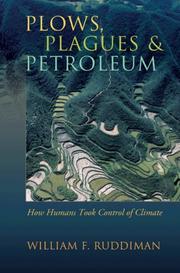
Ruddiman's own contested early-anthropogenic hypothesis, that farming altered the climate thousands of years ago. Read it after the textbook so you can judge the argument against the evidence base he taught you.

Broecker on the thermohaline circulation and the discovery of abrupt change, from the person who named the conveyor. The mechanism behind the surprises in Alley's ice cores.
Deep time and mass extinction
IntermediateExtend the record back hundreds of millions of years, where the climate states are alien and the carbon-cycle perturbations are the closest analogues to the present one.
▸ Study plan for this stage
Pace: Four to five weeks. Walker's Snowball Earth (288 pages), Ward's Under a Green Sky (242) and Brannen's The Ends of the World (321) are all narrative trade science at 35 to 40 pages a day, requiring the previous stage but no mathematics. Read Walker first for the icehouse extreme, Ward second for the
- Neoproterozoic global glaciation and the cap carbonate evidence sitting directly on glacial deposits
- The ice-albedo runaway and the volcanic carbon dioxide accumulation that escapes it
- The five major mass extinctions and the current best case for the cause of each
- The end-Permian as a volcanic carbon release from the Siberian Traps
- Ocean anoxia and euxinia, and Ward's green sky hypothesis linking them to extinction
- The Palaeocene-Eocene Thermal Maximum as the closest analogue to modern carbon release, and how its rate differs
- Negative carbon isotope excursions as the tracer of a light-carbon injection into the ocean-atmosphere system
- What does a cap carbonate lying directly on a glacial deposit imply about atmospheric carbon dioxide at deglaciation?
- What alternatives to a hard Snowball exist, and what evidence divides them?
- What is the evidence that end-Permian oceans were euxinic, and how direct is it?
- How does the PETM's carbon release rate compare with the modern one, and what does that comparison license you to say and not say?
- Why is a negative carbon isotope excursion the signature of a light-carbon injection, and what sources produce isotopically light carbon?
- Draw the Snowball feedback loop and its escape route with rough numbers, estimating how long volcanic outgassing needs to accumulate enough carbon dioxide to melt a frozen planet
- Take a published PETM carbon isotope record and estimate the injected carbon mass with a simple isotope mass balance, then compare it to cumulative anthropogenic emissions to date
- Write 500 words assessing whether Ward's greenhouse-extinction thesis is well supported for all five extinctions or only for some, naming the weakest case
- Compare Brannen's account of one extinction with Ward's and note where the newer reporting has revised the older argument
Next up: Every claim so far has come out of a proxy; the final stage is the methods literature that tells you how much any of those proxies can actually bear.
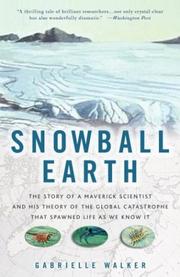
The Neoproterozoic global glaciation hypothesis told through the fieldwork and the fight over it — a good model of how a paleoclimate claim gets tested.
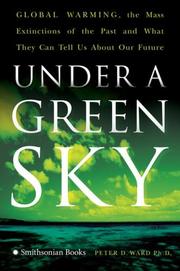
Ward's case that most mass extinctions were greenhouse events with anoxic oceans, not impacts. Read second here, as the extinction counterpart to the icehouse story.
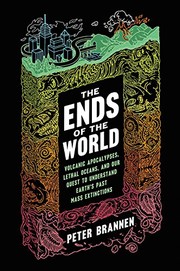
The most current and best-reported survey of the five mass extinctions, including the PETM as the nearest thing the record holds to a rapid carbon release. The natural closing narrative before the methods books.
The methods references
BeginnerLearn the proxies themselves — isotopes, foraminifera, pollen, speleothems, dendrochronology — and the dating and calibration problems behind every published curve.
▸ Study plan for this stage
Pace: Six to nine months, and none of these three is a narrative. Cronin's Paleoclimates (441 pages) is the most readable and can be worked as a book. Bradley's Paleoclimatology (613 pages) is organised proxy by proxy and should be taken one archive at a time. Lowe and Walker's Reconstructing Quaternary E
- The proxy chain: sensor, archive, observation, calibration, and the uncertainty introduced at each link
- Oxygen and carbon isotopes in carbonate, and the temperature versus ice-volume ambiguity
- Magnesium-to-calcium palaeothermometry and alkenone indices as independent temperature proxies
- Foraminiferal transfer functions and modern analogue techniques
- Pollen analysis, speleothems with uranium-thorium dating, and dendrochronology with crossdating
- The divergence problem in tree-ring temperature reconstructions and why it matters for the most recent century
- Radiocarbon calibration, marine reservoir corrections, and the plateaus that make some intervals nearly undatable
- Age-depth models, and the fact that much of a published error bar is chronological rather than analytical
- For a given foraminiferal oxygen isotope value, what three things could have changed, and how do you disentangle them?
- What does magnesium-to-calcium add that oxygen isotopes alone cannot give, and what are its own confounders?
- Why does a radiocarbon date require calibration, and what is a marine reservoir correction correcting for?
- What is the divergence problem, and what does it imply for splicing tree-ring reconstructions onto instrumental records?
- In a typical published reconstruction, how much of the stated uncertainty is chronological rather than proxy uncertainty?
- Take one published reconstruction curve and rebuild its entire chain: archive, proxy, calibration equation, dating method, and the stated uncertainty at each step
- Calibrate a set of raw radiocarbon ages with OxCal or CALIB, both free, build an age-depth model, and re-plot a proxy series on your new chronology to see how far it moves
- Work Bradley's chapter on a proxy you have never used and write a one-page sampling and analysis protocol for it
- Read a recent Nature or Science paleoclimate paper and, using Lowe and Walker, list every methodological assumption the paper does not state explicitly
- Reproduce a simple transfer-function reconstruction from a published modern calibration dataset and a downcore assemblage
Next up: This is the end of the path: with Bradley and Lowe and Walker on the shelf you can read any paleoclimate paper and interrogate its chronology before you accept its conclusion.

Cronin's graduate survey of paleoclimate archives and the intervals they cover. Start the technical stage here; it is the most readable of the three.
The standard methods reference — a proxy-by-proxy account of what each archive records, at what resolution, with what uncertainty. This is the book working paleoclimatologists cite.

Lowe and Walker on Quaternary field and laboratory technique, including stratigraphy and chronology. The right final book, because dating is where most reconstructions actually fail.
Discussion
Keep reading
Paths that share books, cover the same subject, or open a related topic.