Mary Renault Reading Order: Where to Start
Renault wrote eight novels set in ancient Greece, and they fall into three self-contained groups rather than one long series — so the question is which group to enter through, not which book is first. Start with the two Theseus novels, which are the most propulsive and require no background; move to the classical Athens books; then read the Alexander trilogy, which is her masterpiece and rewards everything you have learned about her method by then. Her contemporary novels come last, as a coda that explains why she wrote about Greece at all.
Start Here: Theseus
BeginnerLearn Renault's central trick — a myth retold as though it were reported history — on the two most gripping books she wrote.
▸ Study plan for this stage
Pace: 4 weeks. The King Must Die is 371 pages and The Bull from the Sea 304, and they are the fastest-reading books in this path — 25 to 30 pages a day is comfortable and most readers go faster once Theseus reaches Crete. Read them back to back with no gap; the second opens moments after the first ends an
- Renault's central technique, and the reason to start here: a myth retold as though it were reported history. Every miracle in the Theseus story is given a plausible physical mechanism, and the narrator never signals that he is doing it
- Theseus narrates in the first person and believes in his gods completely. The gap between what he says happened and what you can see happened is the whole pleasure, and Renault never steps in to explain the difference
- Watch what she does with the Minotaur and the labyrinth. The bull court at Knossos is her invention out of the Cretan bull-leaping frescoes, and it is the most exciting sustained sequence she ever wrote
- Earthquakes recur, and Theseus's ability to sense them is the clearest case of a supernatural gift with a naturalistic floor under it — he calls it the god, and you can call it whatever you like
- The King Must Die of the title is the idea of the sacrificial king who dies for the land, an anthropological theory Renault took seriously and built the two books around; it is what makes the ending of the second book inevitable rather than tragic-by-accident
- The Bull from the Sea is markedly darker: Theseus as an ageing king, Hippolyta, and the destruction of his own son. It is the second half of one book, not a sequel in the modern sense
- No prior Greek history is needed for either. This is deliberately the entry point — the classical books later will assume things these do not
- Renault was English, trained as a nurse, and lived in South Africa from the late 1940s until her death; the Greek novels were all written from there, at a distance from the country she came from
- Pick three moments where Theseus says a god acted. What actually happened, on the evidence the narration gives you, and how does Renault make both readings available at once?
- What is the bull court, and what did Renault build it out of? Why is a dangerous athletic ritual a better answer to the Minotaur than a monster?
- What does 'the king must die' mean in this book, and who in the two novels dies under that logic?
- The Bull from the Sea is much bleaker than the first novel. What has changed in Theseus, and does Renault present it as his fault?
- Theseus is a small man in a world of large ones, and Renault mentions it constantly. What work is that doing?
- Keep a two-column note for the first hundred pages: what Theseus believes on the left, what you think happened on the right. After a hundred pages you will be doing it automatically and can stop.
- Look up an image of the Knossos bull-leaping fresco before you reach Crete. Seeing the one piece of evidence she built a whole institution on is the fastest way to grasp her method.
- Mark the passage where Theseus first senses an earthquake, then mark the last one. The change in how he explains it to himself is a quiet character arc.
- Write down the version of the Theseus myth you knew before starting — the thread, the sail, Ariadne — and note where Renault keeps it, where she reinterprets it, and where she simply drops it.
Next up: Having watched her make myth behave like history, the next group does the harder thing: making documented history behave like a lived-in world.

Theseus tells his own story from boyhood to the bull court at Knossos, with every miracle given a plausible mechanism. The best possible first Renault: no prior Greek history needed, and the Crete section is the most exciting writing in her career.
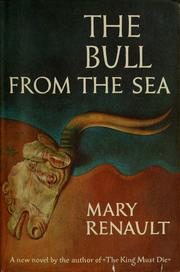
The direct sequel — Theseus as king, the Amazon Hippolyta, and the ruin of his son. Read it immediately; it is the second half of one book and much darker than the first.
Classical Athens and Sicily
IntermediateMove from myth into documented history, and learn to read Renault's Greece as a real political world rather than a legendary one.
▸ Study plan for this stage
Pace: 6 weeks. The Last of the Wine (388 pages) and The Mask of Apollo (371) each want about two and a half weeks at 25 pages a day; The Praise Singer (288) is lighter and takes a fortnight. Read them in this order. The Last of the Wine is the hardest opening of the three because it drops you into the lat
- This stage moves from myth into documented history, and Renault's assumptions change with it. She now expects you to accept that Athens is a real political community with factions, elections, exiles and a war going badly
- The Last of the Wine is her first Greek novel and follows two young Athenians, Alexias and Lysis, in love during the Peloponnesian War, with Socrates at the edge of the frame rather than at the centre
- It is the book that establishes how she writes about love between men — plainly, as the ordinary emotional centre of a life, with neither coyness nor special pleading. That she was doing this in the 1950s, when homosexual acts between men were still criminal in Britain and would remain so until 1967
- Her chosen ground is the ancient world, where such relationships were socially structured and unremarkable, and part of the argument is simply that the arrangement of any given society is not a law of nature
- The Athenian version she depicts is specific and unequal — an older lover and a younger one, with expectations on both sides — and Renault renders the conventions rather than modernising them, which is worth knowing before you judge the relationships by present-day terms
- The Mask of Apollo follows a working actor in the fourth century BC and takes in Plato and the tyrants of Syracuse; it assumes you now know what a citizen's world looks like, and it quietly sets up the Macedonian books to come
- The theatre material is the strongest thing in it: masks, touring, patronage, what an actor's voice had to do in an open-air space seating thousands
- The Praise Singer narrates the poet Simonides in an older, rougher archaic Greece — the slightest of her Greek novels, and placed third here as a deliberate change of pace before the trilogy
- What does the Peloponnesian War do to Alexias and Lysis, and how does Renault convey a city losing a war without ever narrating a strategic overview?
- Socrates is present but not central in The Last of the Wine. What does keeping him at the edge of the frame achieve that a Socrates novel would not?
- Describe the conventions governing the relationship between Alexias and Lysis. What does Athenian society expect of each of them, and where does the novel show the convention failing a real feeling?
- In The Mask of Apollo, what does Nikeratos understand about power from having spent his life in the theatre? Renault clearly thinks acting and politics are the same skill — is she right?
- What does The Praise Singer's archaic Greece have that classical Athens has lost, and does Simonides think the trade was worth it?
- Before starting The Last of the Wine, spend fifteen minutes on a summary of the Peloponnesian War's final phase. Renault will not orient you and this small preparation changes the reading experience entirely.
- In The Mask of Apollo, note every mention of Macedon. They are sparse and deliberate, and they are the hinge between this stage and the next.
- List the practical details of a fourth-century actor's working life as the novel gives them — masks, travel, money, rehearsal, audience. It is the most sustained piece of research in the book.
- After all three, write one paragraph on what Renault thinks a good life consists of. The same answer is being argued from three different centuries and it becomes visible when you state it once.
Next up: The Athenian books teach you to read her Greece as a political world, which is exactly what the Alexander trilogy needs from you before it can work.

Two young Athenians in love during the Peloponnesian War, with Socrates on the edge of the frame. Her first Greek novel and the one that establishes how she writes about love between men — plainly, without either coyness or special pleading.

An actor's life in the fourth century, taking in Plato and the tyrants of Syracuse. Read it after The Last of the Wine: it assumes you now know what an Athenian citizen's world looked like, and it quietly sets up the Macedonian books to come.

The poet Simonides in the archaic age, narrating an older, rougher Greece. The slightest of the Greek novels and the right one to read third, as a change of pace before the trilogy.
The Alexander Trilogy
IntermediateRead the three novels of Alexander's life and afterlife in their correct internal order, and see Renault at full strength.
▸ Study plan for this stage
Pace: 8 to 9 weeks and worth every one. Fire from Heaven 390 pages, The Persian Boy 424, Funeral Games 334 — roughly three weeks each at 25 pages a day. Read them in this order without substituting. The most common mistake is starting with The Persian Boy because it is the famous one; it depends entirely
- Fire from Heaven covers Alexander from childhood to the assassination of his father Philip — the poisonous marriage of Philip and Olympias, Aristotle as a tutor, Bucephalas, and the arrival of Hephaistion
- The whole trilogy turns on Alexander and Hephaistion, and Renault treats the relationship as the settled emotional fact of his life rather than as a revelation to be worked toward
- The boy explains the king. Nearly everything the later books show Alexander doing at the head of an army is planted in the first two hundred pages of the first
- The Persian Boy is narrated by Bagoas, a Persian eunuch who was castrated as a child, sold, given to Darius and then to Alexander. The perspective is the entire point: the conquest of Persia is told by one of the conquered, who loves the conqueror
- Bagoas is an unreliable narrator in the most human way — devoted, jealous, and consistently unfair to Hephaistion — and Renault never corrects him. Reading around his bias is the skill the book demands
- The last third, as Alexander's court turns Persian and his Macedonians resent it, is the political heart of the trilogy and the material Renault handles best
- Funeral Games is the successors tearing the empire apart over Alexander's unburied corpse. It is crowded, bleak and deliberately unlovable — there is no protagonist to attach to, which is the argument
- Read as a set, the three books make one claim: that what Alexander held together was held by him personally and by nothing else, and that the proof is what happened the moment he stopped breathing
- What in the childhood of Fire from Heaven produces the man in The Persian Boy? Name three specific inheritances — from Olympias, from Philip, from Aristotle.
- Bagoas is jealous of Hephaistion throughout. Reconstruct what Hephaistion is actually like from a narration determined to underrate him.
- Why do the Macedonians resent Alexander adopting Persian court practice? State the case against him as strongly as his officers would have.
- Bagoas has been enslaved and mutilated and loves the man who now owns his loyalty. How does Renault ask you to hold that, and does the novel ever acknowledge the coercion in it?
- Funeral Games has no sympathetic centre. What does refusing the reader a protagonist do to the argument about what Alexander was holding together?
- Where in the trilogy is Renault plainly taking a side in a contested historical question rather than reporting one?
- Keep a list of names from Fire from Heaven onward — Ptolemy, Perdikkas, Eumenes, Roxane, Kassandros. Funeral Games assumes all of them and is genuinely hard to follow otherwise; this is the single most useful thing you can do for the third book.
- Every time Bagoas judges someone, write down what he says and what you can independently see. By the end of The Persian Boy you will have a second, corrected novel in the margin.
- Trace Bucephalas from first appearance to death across the trilogy. Renault uses the horse as a clock and it is a good way to feel the years passing.
- After Funeral Games, go back and reread the last chapter of The Persian Boy. It is a different book once you know what happens next.
- Note the point at which you stopped being on Alexander's side, if you did. Renault's control of that turn is deliberate and readers put it in quite different places.
Next up: With the trilogy finished, the last two books show what Renault was actually doing with antiquity — one by removing the historical setting entirely, the other by showing her working.

Alexander from childhood to his father's assassination — Philip, Olympias, Aristotle, and the arrival of Hephaistion. Start the trilogy here rather than with the more famous middle volume; the boy explains the king.

The conquest of Persia narrated by Bagoas, the eunuch who became Alexander's lover. Her most celebrated book and the emotional centre of the trilogy — but it depends completely on knowing the Alexander of Fire from Heaven.

The successors tear the empire apart over Alexander's corpse. Bleak, crowded and deliberately unlovable; it is the argument the first two books were building toward and should be read last.
Beyond the Greek Novels
IntermediateRead the modern novel and the history book that show what Renault was actually doing with antiquity.
▸ Study plan for this stage
Pace: 4 weeks. The Charioteer is 352 pages and should be read first, over about two weeks; it is a contemporary novel and the change of register from ancient Greece is abrupt. The Nature of Alexander is 276 pages of NON-FICTION with source discussion, so read it slowly, a chapter a sitting, over the remai
- The Charioteer is a contemporary novel, not a historical one: a wounded soldier in an English hospital during the Second World War, in a country where sex between men was a criminal offence and would remain so for another decade and a half
- It is one of the first serious English novels about gay men to end without punishment — no suicide, no disgrace, no death — and in the period that ending was itself the radical act
- The title comes from the chariot image in Plato's Phaedrus, and the Phaedrus circulates inside the novel as an object characters lend each other. Renault is making the ancient world do work inside a modern story
- Read after the Greek novels, the argument is unmistakable: the same case she makes with the safety of a historical setting, made here with no safety at all. The books are two halves of one position
- Its publication history is part of the record — it appeared in Britain years before it appeared in the United States — and the delay tells you what the risk actually was
- The Nature of Alexander is her non-fiction life of Alexander, written between the novels of the trilogy, and it is the best possible finish because it shows her working
- It marks out precisely where she followed the ancient sources, where they disagree, and where she chose to invent — so you can go back through the trilogy and separate the evidence from the reconstruction
- It is also openly partisan. Renault admired Alexander and argues with historians who did not, so read it as an advocate's brief rather than a neutral survey — which is a useful last lesson about all eight of the novels
- How does The Charioteer end, and why was that ending significant in the year it was published rather than merely satisfying?
- The Phaedrus is passed between characters as a physical book. What does using Plato inside a 1940s hospital novel let Renault say that direct statement could not?
- Set Laurie's world beside Alexias's in The Last of the Wine. What has the modern setting cost the characters, and what does that comparison amount to as an argument?
- In The Nature of Alexander, find three places where Renault says the sources conflict. Which version did the novels use, and does she say why?
- Where is she most obviously arguing for Alexander rather than describing him? Does knowing that change your view of the trilogy?
- Having read all of it, what was Renault using ancient Greece FOR? Answer in one sentence you would defend.
- Read The Charioteer immediately after Funeral Games rather than leaving a gap. The jolt between the two is the most direct way to feel the continuity of argument under the change of setting.
- While reading The Nature of Alexander, keep the trilogy to hand and check three scenes you remember vividly against her account of the evidence. At least one will turn out to be invented.
- List the ancient sources she names — Arrian, Plutarch, Curtius, Diodorus — with a note on how much later than Alexander each was writing. The trilogy rests on this handful of texts.
- Write a paragraph on what Renault could say in 1950s South Africa about ancient Greece that she could not have said about her own country, and check it against The Charioteer, which tries anyway.
Next up: That is Renault entire — myth, classical history, the Alexander books and the modern novel underneath them — and it is enough to read any historical novelist and tell at once whether they have done the work she did.

A wounded soldier in a wartime English hospital, and one of the first serious English novels about gay men to end without punishment. Read it after the Greek books to see the same argument made without the safety of a historical setting.

Her non-fiction life of Alexander, written between the novels. It shows exactly where she followed the sources and where she chose to invent, which is the best possible finish to the trilogy.
Discussion
Keep reading
Paths that share books, cover the same subject, or open a related topic.