Ancient Greek and Roman Art: The Best Books to Read, in Order
Classical art is the one art-historical field where the objects are famous and the arguments about them are almost invisible to outsiders: everyone knows the Parthenon, almost nobody knows why the sculptures on it are dated the way they are. This path builds from two short surveys to the standard Greek and Roman textbooks, keeps Greek and Roman material in separate stages because they ask different questions, and ends with architecture and the interpretive books that treat classical images as political instruments.
Two surveys to get oriented
BeginnerKnow the periods, the major media and the standard chronology well enough to place any classical object roughly in time
▸ Study plan for this stage
Pace: 2-3 weeks. Beard and Henderson's Classical Art is 298 pocket-sized pages and is an argument, not a survey - read it slowly, about 20 pages a day, because it is dismantling assumptions you have not made yet. Boardman's Greek Art is a 252-page World of Art volume and can be read in a week if you look
- The standard periodisation - Geometric, Orientalising, Archaic, Classical, Hellenistic, Republican, Imperial, Late Antique - and roughly what dates attach to each
- How much of classical art is reconstruction: Roman marble copies of lost Greek bronzes, heavily restored fragments, polychromy stripped off by time and by taste
- Beard and Henderson's central move - treating the reception of classical art as part of the object rather than as something that happened to it afterwards
- The major media and what survives of each: monumental sculpture, bronze, vase painting, wall painting, mosaic, coins, gems
- Boardman's stylistic chronology and why the field still argues with it
- Why a date on a museum label is usually an inference from style, not a record
- Given an unlabelled classical object, what features let you place it within a century?
- What proportion of famous Greek sculpture survives only as Roman copies, and what does that do to any argument about Greek style?
- What is Beard and Henderson's objection to the standard textbook narrative, and does Boardman commit the error they describe?
- How were the conventional dates for the Parthenon sculptures arrived at?
- What did classical sculpture and architecture actually look like in colour, and why does the white-marble image persist?
- Take twenty objects from the British Museum and Met online collections with the dates hidden, place each in a period from the image alone, then check; keep a tally of which periods you consistently confuse.
- Pick one famous work that exists only in Roman copies - the Doryphoros or the Discobolus - and find three different copies online; list every point on which they disagree.
- Read Beard and Henderson's treatment of a single object, then find that object's museum catalogue entry and mark where the catalogue writes as neutral description what they show to be interpretation.
- Sketch the Boardman chronology as a one-page timeline with three or four named works per period, and keep it beside you for the rest of the path.
Next up: With a working chronology and a healthy suspicion of the textbook voice, you can read Neer's full course as an argument rather than absorbing it as a list of facts.

Short, sceptical and unusually good at explaining how much of what we call classical art is a modern reconstruction. Read it first because it inoculates you against treating the textbooks that follow as neutral description.
Boardman's World of Art volume is the compact standard survey, and Boardman is the figure whose chronologies most of the field still argues with. It gives you the archaic-to-classical-to-Hellenistic spine in a single short book.
Greek art in depth
IntermediateRead a kouros, a classical statue and a red-figure vase, and follow the argument about what changed between the archaic and classical styles
▸ Study plan for this stage
Pace: 3-4 months. Neer's Greek Art and Archaeology is a 404-page large-format university textbook - work it chapter by chapter, roughly one a week, and do not try to read it like prose. Spivey's Understanding Greek Sculpture is 240 readable pages and can run alongside Neer over two or three weeks. Stewart
- The kouros and kore as a system - frontality, the Archaic smile, the standard proportions - and what changes when contrapposto arrives around 480 BC
- The Severe Style as the actual hinge between Archaic and Classical, and the small number of works the whole argument rests on
- Neer's contextual method: objects as sanctuary dedications, grave markers and civic monuments before they are works of art
- Spivey's different question - what statues were for, in athletics, religion, commemoration and politics - and why answering it changes what counts as evidence
- Attribution: the Beazley method, hands and workshops, and how far a connoisseur's eye can honestly be trusted
- Red-figure technique and its relation to black-figure, and why vase chronology anchors dating for everything else
- The sources problem: Pliny, Pausanias and the literary tradition on lost works
- Describe the visual differences between a kouros of 560 BC and the Kritios Boy, and say what each of those differences implies about how the figure is imagined to stand.
- What does Neer's archaeological framing show about a votive statue that a purely stylistic account misses?
- What was a Greek statue actually for, on Spivey's account, and which of his cases is the weakest?
- How does Beazley's attribution method work, and what would count as evidence that a given attribution is wrong?
- Why does red-figure vase chronology carry so much of the dating weight for the fifth century?
- Where do Neer and Stewart disagree on the dating or interpretation of a specific monument, and how would you decide between them?
- Work through the Metropolitan Museum's Greek galleries online and, for ten kouroi and korai, place each on the Archaic-to-Severe sequence by eye; then check against Neer's chronology and write down which visual cue misled you.
- Take Boardman's Athenian Red Figure Vases plate section and attribute twenty vases to painter or workshop by eye before reading the captions; record your hit rate honestly, because a low one is the point.
- Pick a single Parthenon metope or a slab of the frieze, find high-resolution images from the British Museum and the Acropolis Museum, and write out the visual argument for its conventional date using Neer, Stewart and Boardman in turn.
- Read Spivey on athletic statuary, then find three victor statues or their Roman copies and write a paragraph on each about what the statue was doing in its original sanctuary setting.
- Use Stewart's catalogue apparatus to chase down the ancient literary sources for one lost bronze, and write a paragraph on how much of what we say about it comes from text rather than from any object.
Next up: Having built the Greek material properly, you can meet Roman art on its own terms instead of scoring it against a Greek standard, which is the mistake the next stage exists to break.
The modern comprehensive textbook, and the one that most consistently treats objects in their archaeological and ritual context rather than as a parade of masterpieces. This is the backbone of the Greek half of the path.
Spivey asks what Greek statues were for, which is a different question from how they developed, and answers it with athletics, religion and politics. Read it alongside Neer as the interpretive counterweight.

The standard scholarly handbook on Greek sculpture, with the sources and the catalogue apparatus the shorter books leave out. Placed third because it is a reference to work through, not a book to read straight.
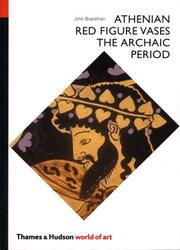
Vases carry most of what survives of Greek painting, and Boardman's handbooks are how the attributions and workshops are actually learned. Finish the Greek stage here, since vase chronology underpins everything else you have just read.
Roman art in depth
IntermediateUnderstand Roman copying, portraiture and state relief, and stop reading Roman art as a degraded version of Greek art
▸ Study plan for this stage
Pace: 2-3 months. Ramage and Ramage's Roman Art is a 360-page undergraduate survey - one chapter a week gives the chronological skeleton. Zanker's Roman Art is 224 pages but is an interpretive essay by a major scholar, so read it slowly over two weeks after Ramage, not before. Kleiner's A History of Roman
- Roman copying as a practice with its own aims - the copy as a statement about ownership, culture and status rather than as a failed original
- Veristic portraiture and the ancestral imago tradition, and the shift to the idealised Augustan portrait type
- State relief as narrative: the Ara Pacis, the Column of Trajan, the arches, and how a viewer was expected to read them
- The four Pompeian styles of wall painting and what domestic decoration reveals about how a Roman house was meant to be walked through
- Zanker's interpretive frame - visual culture as social communication - against Ramage's chronological survey frame
- Provincial and non-elite art, funerary reliefs and sarcophagi, as evidence about people the literary sources ignore
- Why the Greek-decline model of Roman art is a modern judgement rather than an ancient one
- What did a Roman patron think they were getting from a copy of a Greek statue?
- How does a veristic Republican portrait differ from an Augustan one, and what political work is each doing?
- How is the Column of Trajan actually legible to a viewer standing on the ground, and what does the answer imply about its purpose?
- What does Zanker's method let him say about a wall painting that Ramage's survey cannot?
- What can a freedman's funerary relief tell you that no literary source will?
- Walk the Ara Pacis through the online reconstructions panel by panel and write your own reading of the procession, then compare it to Ramage's and Zanker's and note where you were guided by later art rather than by the object.
- Use Kleiner's plates to identify the four Pompeian styles in ten rooms from the Pompeii archaeological park's online photographs, before checking the attributions.
- Take a single Roman copy - the Prima Porta Augustus is well documented - and write 500 words on what is Greek about it, what is Roman about it, and what the distinction is doing in your own sentence.
- Read Zanker's essay and then re-read the corresponding Ramage chapter, writing a list of the facts Zanker rearranges rather than disputes.
Next up: With Greek and Roman material both in hand as objects, the final stage can treat buildings and images as instruments of politics without the argument collapsing into assertion.

The standard undergraduate survey, running from Romulus to Constantine with good coverage of wall painting and domestic decoration. Read it first in this stage for the chronological framework.

A different and much shorter book with the same title, by the leading German scholar of Roman visual culture; it is an interpretive essay rather than a survey. Read it after Ramage so you have the facts his argument is rearranging.
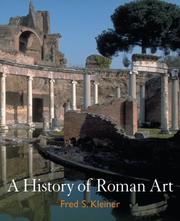
The most thoroughly illustrated of the Roman textbooks, strongest on architecture and on the provinces. Use it as the reference to check anything Ramage or Zanker passed over quickly.
Buildings, monuments and what images were for
IntermediateRead classical architecture as a system, and evaluate the argument that classical art was primarily political communication
▸ Study plan for this stage
Pace: 4-5 months, and this is the hardest stage. Lawrence and Tomlinson's Greek Architecture is 340 pages of Pelican History of Art - dense, plan-heavy and worth a month. Sear's Roman Architecture is 288 pages and reads faster, about three weeks. Beard's The Parthenon is 209 pages of lively single-monumen
- The orders as a structural and proportional system, not a decorative menu - and the optical refinements that show how self-conscious that system was
- The Greek temple as a body of solutions to a small set of problems, from the Bronze Age megaron to Hellenistic town planning
- Concrete, the arch and the vault as the technologies that let Roman architecture enclose space in ways Greek architecture could not
- The Parthenon's afterlives - temple, church, mosque, ruin, national symbol - and the Elgin Marbles dispute as part of the object's history
- Zanker's thesis: Augustan visual culture as a coherent programme of persuasion diffused through public and private objects alike
- The methodological question of intention - how you show that a visual programme was designed rather than merely coherent in retrospect
- Elsner's account of late antiquity as a deliberate abandonment of classical naturalism rather than an inability to sustain it
- What problem does each element of the Doric order solve, and what do the Parthenon's optical refinements tell you about the builders' priorities?
- Which specific Roman buildings are impossible in Greek structural terms, and why?
- What does Beard's account of the Parthenon's later lives change about how you would write its museum label?
- What is Zanker's evidence that the Augustan imagery was a programme, and what would falsify that claim?
- Is the late antique change Elsner describes a loss of skill, a change of purpose, or a change in what counted as a good image - and how would you tell?
- Taking the path as a whole, how far can classical art be explained as political communication before the explanation stops explaining anything?
- Draw the plan and elevation of a Doric temple from Lawrence and Tomlinson without copying, label every member, then check; repeat for the Pantheon using Sear.
- Visit the Parthenon sculptures in the British Museum's online collection alongside the Acropolis Museum's, read Beard on the dispute, and write a one-page position on where they belong that engages the strongest argument on the other side.
- Take five objects Zanker uses - a coin type, a relief, a domestic lamp or wall painting, a portrait, a public monument - find images of each, and reconstruct his argument from the objects alone before re-reading his chapter.
- Choose one Roman monument you have already met in Ramage or Kleiner and rewrite its entry three times: as Sear would, as Zanker would, and as Elsner would.
- Read Elsner on a fourth-century work alongside a classical predecessor and write 500 words arguing that the change is deliberate, using only visual evidence.
Next up: Finishing here leaves you able to read any classical object as a dated artefact, an archaeological find and a political instrument at once, which is the position from which the scholarly literature becomes navigable on your own.
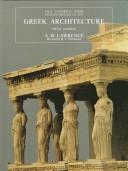
The long-standing Pelican History of Art volume on Greek building, from Bronze Age megara to Hellenistic town planning. Start the architecture stage here because Roman building is largely a response to it.
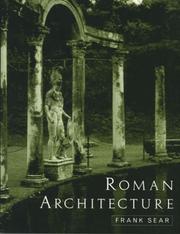
The counterpart survey, and the clearest account of concrete, the arch and the vault as the technologies that let Roman architecture do what Greek architecture could not. Read straight after Lawrence to see the break.
One building, its sculptures, its conversions into church and mosque, and the Elgin Marbles dispute. A case study in why classical monuments are never only ancient, and the natural pivot from architecture to politics.
The most influential book in the field: Augustan visual culture as a coherent programme of political persuasion. It needs everything before it, which is why it sits near the end.
Carries the story from the second century into late antiquity and the Christian empire, where the classical style is deliberately abandoned. The right closing book, because it shows what the tradition looked like from the far side.
Discussion
Keep reading
Paths that share books, cover the same subject, or open a related topic.