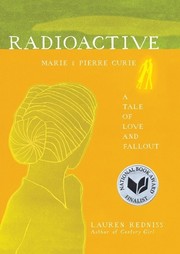
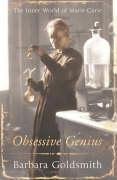
Start with two short books that do very different things. Radioactive is Lauren Redniss's illustrated account, printed in cyanotype, which tells the Curies' story in image and fragment and reads in an evening. Obsessive Genius is Barbara Goldsmith's brisk modern biography of around 250 pages, drawing on the family papers. Between them you get the strangeness of radium and the shape of the life, and either is enough on its own for many readers.
The reason this subject needs an order is that Marie Curie is one of the most written-about scientists there is, and the books are not interchangeable. One is a devoted daughter's memoir that is the source of nearly every anecdote in circulation. Several are modern biographies covering the same ground with different access. And a large part of the literature is not about her at all but about what radium did to the people who handled it. Reading them in the sequence below means each one corrects the last.
The life, told several ways
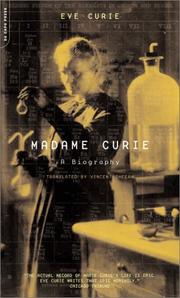
Madame Curie is Eve Curie's 1937 biography of her mother, and it should be read as a primary document rather than as history: it is devoted, selective and openly building a reputation. Knowing that is far more useful than avoiding the book, because almost every story you have heard about Marie Curie starts here.
Marie Curie by Susan Quinn is the standard modern biography and the one to read directly afterwards. It was the first written with access to the Polish and French archives and the family's private papers, and it restores what Eve Curie left out — the affair with Paul Langevin, the press campaign that followed, and the physical toll of the work. Marie Curie by Marilyn Bailey Ogilvie is a shorter scholarly life by a historian of women in science, framed around Curie's position as an outsider on two counts; note that several different books here display under the plain title Marie Curie, so check the author. Marie Curie and her daughters is Shelley Emling picking up where most biographies lose interest: the American fundraising tours, the wartime radiology units, Irene's own Nobel, Eve's journalism.
The science itself
Pierre Curie is Marie Curie's own short biography of her husband with an autobiographical sketch attached — the closest thing to her account of the work in her own voice, and worth reading directly against Eve Curie's version of the same events. Radioactivity is Marjorie Malley's history of the science rather than the scientists: what people thought radioactivity was between 1896 and the 1930s, how the concept of the atom changed, and how fast the phenomenon went from laboratory curiosity to industry. It assumes no physics and it is the book that makes the Nobel citations make sense. Elements of Marie Curie is Dava Sobel's 2024 book, which takes an angle nobody else does — Curie's laboratory as a training ground and the more than forty women who worked in it. Read it last of the three, because it presumes you know the standard story it is reframing.
What radium did next
Marie Curie died in 1934 of aplastic anaemia caused by long-term exposure to radiation. Her laboratory notebooks are still radioactive, kept in lead-lined boxes and consulted under a waiver; radium-226 has a half-life of about 1,600 years, so they will remain so for centuries. That fact sits underneath this last stage.
The radium girls is Kate Moore's narrative history of the dial painters who licked their brushes to a point and of the litigation that followed. It is deliberately hard reading in places and it is the necessary counterweight to any account of radium as a wonder. The Age of Radiance is Craig Nelson's sweeping popular history of the atomic era from Becquerel to Fukushima, with the Curies as the opening chapter — uneven and enthusiastic, useful here as connective tissue. The making of the atomic bomb closes the path: Richard Rhodes's 886-page account is the definitive one, and it is the endpoint of a story that began with pitchblende in a Paris shed. It assumes a reader who already knows who the Curies were, which by then you will.
Follow the full ordered path here: Marie Curie and Radioactivity: The Best Books, in Reading Order.
Ready to learn something deeply?
Build a reading path — free