Best Malcolm Gladwell Books, in Reading Order
Gladwell's books are independent — there is no continuity to protect — so the only real question is which one earns your trust first and which ones repay it. Publication order happens to work well here, because the ideas genuinely accumulate: the early books establish the method of hanging a big claim on a run of vivid case studies, the middle ones apply it to success and disadvantage, and the later ones are increasingly about the method's own limits. Read them in this order and you also read, unintentionally, the story of how popular social science got taken apart.
Start Here: The Two That Set the Formula
BeginnerLearn the Gladwell move — a counter-intuitive thesis, three unrelated anecdotes, a psychology paper — and decide early how much of it you believe.
▸ Study plan for this stage
Pace: About two weeks for both. Each runs 250-300 pages of deliberately frictionless prose and most people finish one in two or three sittings - which is the hazard. These books read considerably faster than their claims deserve, so slow yourself down artificially: one chapter a sitting, and stop at the e
- The Gladwell paragraph has three separable parts - an arresting anecdote, a named academic, and a generalisation wider than the study supports. Learning to see the seam between the second and third parts is the single most useful skill for the whole path
- Connectors, mavens and salesmen: the Tipping Point vocabulary escaped the book into ordinary business language, which is itself a demonstration of the book's own thesis about how ideas spread
- The New York crime-drop chapter and Broken Windows policing - the most contested empirical claim in The Tipping Point, and one that later research attributes to many overlapping causes rather than to policing style
- Thin-slicing in Blink: the claim that rapid, unconscious judgement can outperform deliberate analysis, and the specific conditions under which it does
- The Warren Harding error and the Amadou Diallo shooting - Gladwell's own counter-examples, where snap judgement is prejudice. Blink is much less one-sided than its reputation, and noticing that matters before you read the criticism
- Gladwell is a journalist, not a researcher. He reports other people's studies, so the useful question at every claim is whose work this is and what they themselves said it showed
- Popularisation as a genre with its own incentives: a book needs a thesis that covers unrelated cases, and that structural pressure - not carelessness - is where over-simplification comes from
- What three types of person does The Tipping Point argue an epidemic needs, and can you name a spread you have watched that the framework does not fit?
- Which chapter of The Tipping Point rests most heavily on one contested empirical claim, and what would it take to check it?
- Blink argues both that snap judgement is expert and that it is prejudiced. How does Gladwell reconcile those, and does the reconciliation hold?
- Take any one study cited in either book: what did the researcher claim, and what does Gladwell claim on top of it?
- After both books, state the Gladwell formula in two sentences of your own.
- Take one chapter of The Tipping Point and list, in order, every empirical claim and every anecdote. Count how many claims are carried by anecdote alone
- Look up the brief-exposure teacher-evaluation research behind thin-slicing and compare what it measured with what Blink says it shows
- Read the crime-drop chapter, then read one critique of Broken Windows policing, and write down which you find more persuasive and on what grounds
- Before opening Outliers, write a paragraph predicting how Gladwell will build its argument. The formula is stable enough to predict, and checking your prediction is more informative than reading passively
Next up: You now know the formula well enough to watch it stretch, which is exactly what the middle books do.
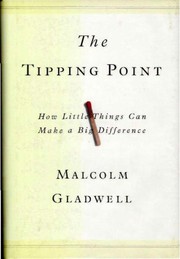
The first book and still the best entry point: why ideas, crimes and shoes spread like epidemics. Connectors, mavens and salesmen entered ordinary business vocabulary from these pages, so you already half know it.
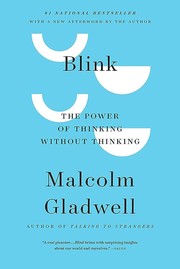
Snap judgement — when instant expert intuition beats analysis and when it catastrophically does not. Read it second because it is the same method turned inward, on how we decide rather than on how things spread.
The Big Middle
BeginnerFollow the run of books about success, advantage and disadvantage, and learn to check the research behind a good story.
▸ Study plan for this stage
Pace: About four weeks. Outliers and David and Goliath are roughly 300 pages each and go quickly - read them back to back, because David and Goliath argues almost the opposite direction about advantage and the pair is more informative than either alone. What the Dog Saw is a different animal: 400-plus pag
- The ten-thousand-hour rule, and the fact that Anders Ericsson, whose research it draws on, publicly disputed Gladwell's version of it. This is the standard example of the over-simplification criticism and it is worth reading both accounts rather than taking either on trust
- Accumulated advantage and the relative-age effect - Canadian hockey birth months are the strongest empirical leg Outliers stands on, and notably the one nobody attacks
- Cultural legacy as explanation: Korean cockpit culture, rice paddies and mathematics. The most criticised chapters, and worth noticing how close the argument comes to national character
- The essay-versus-book asymmetry. What the Dog Saw shows that thesis-stretching is a book-length problem rather than a Gladwell problem - at six thousand words the reporting is enough on its own and no unifying claim is required
- Desirable difficulty and the inverted-U curve in David and Goliath, and the awkward fact that a book arguing disadvantage can help sits directly after one arguing advantage explains success
- Timing: these books predate the replication crisis becoming public, and several psychology findings Gladwell popularised were later contested or failed to replicate. That is context, not an accusation
- Selection effects. Several chapters describe successful people with a trait and conclude the trait helped, which is the same pattern a survivorship bias would produce
- What exactly does the ten-thousand-hour rule claim, what did Ericsson's research find, and where precisely do the two diverge?
- Outliers says success is largely circumstantial and David and Goliath says disadvantage can be an advantage. Are those compatible, or does one undercut the other?
- Which piece in What the Dog Saw is the best reporting, and what does it do that the book-length arguments do not?
- Name one Outliers chapter you would defend and one you would not, and say what distinguishes them
- What evidence would falsify the cultural-legacy argument? If you cannot name any, what does that tell you about it?
- Read the hockey birth-month chapter, then check whether the relative-age effect shows up in a sport, school year or league you actually know
- Find Ericsson's own published response to the ten-thousand-hour rule and read it directly alongside the Outliers chapter
- Read the David and Goliath chapter on dyslexia and successful entrepreneurs, then list every selection effect that could produce the same pattern with no causal story at all
- Keep a running list of every named researcher across the three books. At the end, look up two of them and see whether they endorse how their work was used
- Read three essays from What the Dog Saw and one chapter of Outliers on the same day and note which felt better supported by its own evidence
Next up: Having watched the formula work and then overreach, you are ready for the later books, where Gladwell is partly answering that criticism himself.
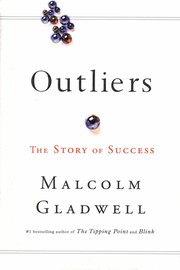
His most influential and most contested book — the ten-thousand-hour rule, Canadian hockey birthdays, Korean cockpit culture. Worth reading precisely because the pushback against it is now as well known as the claims; the original argument is more careful than its slogan.

Collected New Yorker pieces, and the best demonstration of what he is actually good at. Read it after Outliers as a palate cleanser: at essay length the thesis-stretching problem simply disappears.
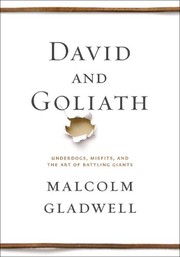
Underdogs, and why apparent disadvantages sometimes are not. It inverts the Outliers argument, which is why it belongs immediately after it — the two books make more sense read as a pair than apart.
The Later Books
IntermediateRead the three recent books, where the subjects get darker and Gladwell starts answering his own critics.
▸ Study plan for this stage
Pace: About three weeks, and the reading gets heavier rather than harder. Talking to Strangers is around 350 pages but is built on a death and reads slowly for that reason - do not treat it as an airport book. The Bomber Mafia is short, roughly 200 pages, and works best in two sittings. Revenge of the Tip
- Default to truth and the transparency assumption - the claim that humans are built to believe others and to misread strangers' faces, drawn from Tim Levine's deception research
- The Sandra Bland traffic stop as frame: Talking to Strangers opens and closes on it, and this is the first Gladwell book where the stakes are somebody's death rather than a business insight. The tone change is deliberate
- Coupling - the argument that behaviour is tied to specific places and circumstances rather than travelling with the person, applied to suicide and to crime
- The Bomber Mafia as a control experiment on Gladwell himself: one story told straight, no thesis stretched across unrelated cases. It shows what his reporting is worth without the formula
- Precision bombing doctrine against the firebombing of Tokyo, and a moral question he largely declines to settle
- Revenge of the Tipping Point revisits the original twenty-five years on - overstories, superspreaders, epidemics engineered on purpose - and concedes ground on the first book while defending its core
- The question worth holding across all three: has the criticism changed his method, or only his subject matter?
- What does default to truth claim, and how does Gladwell use one idea to explain both Bernie Madoff's investors and a police officer misreading Sandra Bland?
- Does the Sandra Bland frame carry the book's argument, or does the argument sit uneasily on a real death?
- The Bomber Mafia has one narrative and no cross-case thesis. Is it a better book for that, or a slighter one?
- In Revenge of the Tipping Point, what does Gladwell concede about the original book, and what does he still defend?
- After eight books, has the over-simplification criticism changed how he argues, or only what he argues about?
- Read the opening and closing Sandra Bland chapters of Talking to Strangers consecutively before reading the middle, and note what the frame is being asked to do
- Put The Tipping Point's account of how epidemics start beside Revenge of the Tipping Point's and list the specific revisions
- Read The Bomber Mafia in a single sitting, then write two sentences stating what argument, if any, it makes
- Pick one published criticism of Outliers and check whether Talking to Strangers or Revenge of the Tipping Point actually answers it
Next up: You have read the full run and, with it, a decade of public argument about how far popular social science can be pushed - the useful next step is not another Gladwell but one of the primary researchers he keeps sending you to.
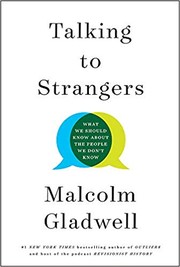
Why we are so bad at reading people we do not know, built around Sandra Bland, Amanda Knox and Bernie Madoff. His most serious book and the one where the case studies carry real moral weight.

A short, single-narrative book about precision bombing doctrine and the firebombing of Tokyo. A useful change of gear: one story told straight, with no thesis to stretch.

He returns to his first book twenty-five years on and revises it, this time about epidemics engineered on purpose. Read it last — it is explicitly a sequel and it will spoil the original's arguments if taken out of order.
Discussion
Keep reading
Paths that share books, cover the same subject, or open a related topic.