Learn Mandarin Chinese: a realistic roadmap
This curriculum takes an adult beginner from zero Mandarin to genuine, literate fluency across four carefully sequenced stages. Each stage builds on the last: you first wire in tones and sounds correctly, then acquire core vocabulary and characters through proven methods, then deepen reading and grammar systematically, and finally confront the long game of advanced fluency with honest, expert guidance.
Foundations: Tones, Sounds & the Learning Mindset
BeginnerUnderstand how Mandarin tones and pronunciation work, adopt a realistic adult-learner mindset, and avoid the most common beginner mistakes before touching a textbook.
▸ Study plan for this stage
Pace: 4–5 weeks total. Week 1–2: Read "Mandarin Chinese" by Charles N. Li (~20–25 pages/day), focusing on phonology and tonal grammar chapters. Week 3–4: Read "Fluent Forever" by Gabriel Wyner (~25–30 pages/day), focusing on the pronunciation and memory-system chapters. Week 5: Review, consolidate notes,
- The four tones (plus the neutral/fifth tone) of Mandarin and how tone is a grammatical and semantic feature, not just a stylistic one — as grounded in Li's structural analysis of Mandarin phonology
- Pinyin as a romanization system: its spelling conventions differ from English phonics, and mastering it accurately from the start (per Li) prevents fossilized mispronunciation
- The concept of initials and finals: Mandarin syllables are built from a limited, learnable inventory of sounds described in Li's phonological overview
- Tone sandhi rules — particularly the third-tone sandhi — showing that tones interact and change in connected speech, not just in isolation
- Wyner's 'pronunciation first' principle: achieving near-native pronunciation early creates a strong phonetic foundation that accelerates all future vocabulary and listening work
- The Minimal Pair training method from Wyner: training your ear to distinguish sounds (and tones) you cannot yet hear by using targeted listening drills before memorizing words
- Spaced Repetition Systems (SRS) as introduced by Wyner: how memory works (forgetting curve, active recall) and why flashcard timing matters more than sheer repetition
- Adult-learner mindset reframing from Wyner: adults have cognitive advantages (pattern recognition, motivation, metacognition) and should resist the myth that children are inherently better language learners
- After reading Li, can you describe — without looking — what distinguishes each of the four tones in terms of pitch contour, and give one minimal-pair example (e.g., mā/má/mǎ/mà)?
- What is tone sandhi, and what happens to a third tone when it is followed by another third tone? Where does Li illustrate this in the phonology section?
- According to Wyner, why should a learner tackle pronunciation and ear-training before building vocabulary, and how does this contradict the approach of most traditional textbooks?
- How does Wyner's Spaced Repetition System differ from traditional flashcard review, and what does the 'forgetting curve' tell us about when to review a card?
- What are the key differences between Pinyin spelling conventions and English phonics that Li warns could mislead a beginner (e.g., 'x', 'q', 'zh', 'c')?
- Based on both books together, what are the three most dangerous beginner habits — one phonological (from Li) and two motivational/methodological (from Wyner) — that this stage is designed to help you avoid?
- Tone mapping drill (Li-based): Write out all four tones over the same syllable (e.g., 'ma') and record yourself saying each one. Compare your recording to a native-speaker audio source. Repeat daily for one week until your pitch contours match.
- Pinyin decoding chart (Li-based): Create a personal reference table of every Mandarin initial and final from Li's phonology chapters. Color-code the ones whose Pinyin spelling is deceptive for English speakers (e.g., 'x' = /ɕ/, 'c' = /ts/). Quiz yourself until you can decode any syllable in under 3 seconds.
- Minimal pair ear-training (Wyner-based): Using a free tool like Anki or Forvo, build a minimal-pair deck of 20–30 tone pairs (e.g., mǎ vs. mà, shī vs. shí). Run one 10-minute listening session per day for two weeks, marking which pairs you consistently mishear.
- SRS flashcard system setup (Wyner-based): Install Anki and configure a new deck following Wyner's recommended settings (steps, graduating interval, easy bonus). Add the 30 most common Mandarin syllables with audio and tone marks — no English translations yet, only sound-to-Pinyin recognition.
- Third-tone sandhi journaling: Find 10 common two-syllable words where both syllables are third tone (e.g., 你好 nǐ hǎo). Write out the underlying tones and the spoken tones side by side. Practice saying each word aloud and note where your instinct was wrong.
- Mindset audit (Wyner-based): Write a one-page personal 'learning contract' that addresses: (a) your realistic weekly study hours, (b) one myth about adult language learning you are discarding after reading Wyner, and (c) your personal pronunciation benchmark — what 'good enough to move on' sounds like for you at the end of this stage.
Next up: ">Mastering tones, Pinyin, and an SRS workflow in this stage means the next stage — introducing core grammar and vocabulary through a structured textbook — can be absorbed with accurate pronunciation habits and an efficient memorization system already in place, so no time is lost unlearning bad habits.
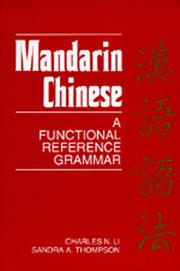
A foundational reference that explains how Mandarin actually works as a language — its tonal system, grammar logic, and structure — giving beginners a conceptual map before drilling vocabulary.

Teaches a scientifically grounded method (spaced repetition, pronunciation-first learning) that is especially powerful for a tonal language like Mandarin; read this early to build the right study habits from day one.
Core Acquisition: Characters, Vocabulary & Structured Input
BeginnerLearn to read and write Chinese characters using a logical, memorable system, build a working vocabulary of the most frequent words, and establish a daily study routine.
▸ Study plan for this stage
Pace: 16–20 weeks total. Week 1–6: Remembering Simplified Hanzi — work through ~30 characters/day, completing the first 1,000 characters (roughly 500 pages of keyword-story work). Week 7–12: New Practical Chinese Reader Vol. 1 — cover 2 lessons/week (~8–10 pages of text, dialogues, and drills per session,
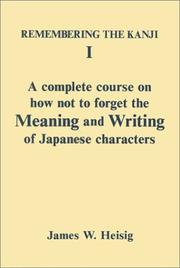
- Heisig's keyword-story method: assigning a unique English keyword to each character and building a vivid imaginative story from its component primitives/radicals to encode long-term visual memory
- Stroke order and radical decomposition: understanding that every simplified character is built from a finite set of recurring graphic primitives, and that correct stroke order reinforces muscle memory and aids recognition
- Pinyin romanization and the four tones (plus neutral tone): the phonetic scaffold used throughout New Practical Chinese Reader and Integrated Chinese to link written characters to spoken Mandarin
- High-frequency vocabulary acquisition: the ~300–600 most common Mandarin words introduced across the dialogues and vocabulary lists of New Practical Chinese Reader Vol. 1 and Integrated Chinese Vol. 1
- Core grammar patterns of beginner Mandarin: sentence-final particles (吗, 呢, 了), the 是…的 construction, measure words (量词), topic-comment sentence structure, and basic verb-object compounds as systematically presented in Integrated Chinese
- Spaced-repetition review (SRS): building a daily Anki or flashcard deck keyed to Heisig keywords, then expanding it with vocabulary and example sentences from New Practical Chinese Reader and Integrated Chinese
- Listening-reading integration: using the audio components bundled with New Practical Chinese Reader and Integrated Chinese to connect the written character forms you learned via Heisig to real spoken input
- Establishing a sustainable daily study routine: balancing new character learning, SRS review, textbook reading, and listening practice within a fixed daily time block
- Given any of the first 1,000 simplified characters from Remembering Simplified Hanzi, can you recall its English keyword and reconstruct the imaginative story that distinguishes it from visually similar characters?
- How does Heisig's primitive/radical decomposition system differ from traditional radical lookup, and why does that difference matter for a beginner trying to memorize character forms before mastering pronunciation?
- After completing New Practical Chinese Reader Vol. 1, can you read and perform all 14 core dialogues aloud with correct tones, and identify the grammatical role of each word in those dialogues?
- What are the key sentence-final particles introduced in Integrated Chinese Vol. 1, what pragmatic function does each serve, and can you produce original example sentences for each?
- How do measure words (量词) work in Mandarin noun phrases, and can you correctly pair at least 15 common nouns from Integrated Chinese Vol. 1 with their appropriate measure words?
- What daily study routine did you establish across this stage, and how did you balance new learning (characters, vocabulary, grammar) with spaced-repetition review?
- Heisig story-writing sprints: For every 50 new characters in Remembering Simplified Hanzi, write out your own imaginative story (in your own words, not just the book's) in a dedicated notebook, then sketch the character from memory 24 hours later without looking at the book.
- Build and maintain a living Anki deck: Create one card per Heisig character (keyword → character), then add a second card type per New Practical Chinese Reader and Integrated Chinese vocabulary item (character + pinyin → English meaning + an example sentence from the textbook dialogue).
- Dialogue shadowing sessions: For each lesson in New Practical Chinese Reader Vol. 1, listen to the audio track three times, then shadow (speak simultaneously with the recording) until you can reproduce the entire dialogue at natural speed with correct tones.
- Character writing grids: For every new character introduced in New Practical Chinese Reader and Integrated Chinese, fill one row of a Chinese character practice grid (田字格) following correct stroke order, then cover the model and write the character five more times from memory.
- Grammar substitution drills: Take each core grammar pattern highlighted in Integrated Chinese Vol. 1 (e.g., 是…的, verb + 过, 把-sentences if reached) and write 5 original sentences substituting different vocabulary from your Anki deck, then read them aloud and record yourself.
- Weekly self-dictation (听写): At the end of each week, have a study partner (or use the audio files) read 20 vocabulary words aloud; write the characters from memory, then self-correct against the textbook word lists from New Practical Chinese Reader or Integrated Chinese to track retention gaps.
Next up: Completing this stage gives you a recognized visual form for ~1,000 characters, a spoken-and-written vocabulary of ~600 high-frequency words, and internalized beginner grammar patterns — the exact foundation needed to move into intermediate reading of authentic graded texts, expanded grammar study, and sustained listening/speaking practice in the next stage.

Uses imaginative stories tied to character components to make hundreds of characters stick; starting here prevents the rote-memorization trap that burns out most beginners.

The most widely used university-level Mandarin textbook series; after Heisig's character foundation, this provides structured dialogues, grammar patterns, and graded vocabulary in a proven sequence.

A complementary structured course used across North American universities; its clear grammar explanations and exercises reinforce and expand what New Practical Chinese Reader introduces, solidifying intermediate grammar.
Going Deeper: Grammar, Reading & Listening
IntermediateMove beyond textbook sentences to real grammar mastery, understand how native speakers actually use the language, and begin consuming authentic Mandarin material.
▸ Study plan for this stage
Pace: 2–3 weeks, ~20–25 pages/day (the book is ~220 pages); read in two sittings per day — one in the morning for comprehension, one in the evening for reflection and note-taking
- Tones as meaning-carriers: how Mandarin's four tones (plus neutral tone) are not decorative but grammatically and semantically load-bearing, and how mishearing or mispronouncing a tone changes meaning entirely
- The social grammar of language: how Mandarin encodes relationships, hierarchy, and face (面子, miànzi) directly into word choice, address forms, and conversational structure
- Measure words (量词, liàngcí) as a grammatical system: understanding why every noun requires a specific classifier and how native speakers internalize these pairings naturally
- Topic-prominence over subject-prominence: Mandarin sentences are organized around what is being talked about (the topic), not who is doing the action — a fundamental structural shift from English
- Chengyu (成语) and idiomatic density: four-character classical idioms are embedded in everyday speech and writing, carrying compressed cultural and historical meaning that cannot be decoded word-by-word
- The relationship between written and spoken Mandarin: how the script is not phonetic, how characters carry meaning across dialects, and why literacy and speaking are learned as partially separate skills
- Language as a cultural lens: how the vocabulary Mandarin has (and lacks) reveals Chinese assumptions about time, family, direction, and community that differ fundamentally from English
- Listening as an active grammatical skill: how context, tone, and rhythm work together in real spoken Mandarin, and why textbook audio rarely prepares learners for authentic speech
- Fallows describes a moment of confusion caused by tones in everyday life — what does this reveal about how tones function differently from stress or intonation in English, and what does it mean for your own speaking practice?
- How does Mandarin's system of address terms and kinship vocabulary reflect social structures that have no direct English equivalent, and how should this change the way you approach conversation practice?
- Fallows is a linguist observing Mandarin from the outside — where does her outsider perspective illuminate something about the language's grammar that a native speaker might take for granted?
- What does the existence of chengyu tell you about the relationship between classical written Chinese and modern spoken Mandarin, and how should you approach encountering them in authentic material?
- Based on Fallows' observations, what are the two or three biggest structural differences between Mandarin and English that cause the most persistent misunderstandings for English-speaking learners?
- How does Fallows' experience of 'dreaming in Chinese' serve as a metaphor for the intermediate learner's goal — and what practical milestones does it suggest you should be working toward?
- Tone journal: Each day while reading, pick 5 words Fallows discusses or implies (e.g., 买/卖 mǎi/mài). Write each word in pinyin with tone marks, the character, the meaning, and one minimal pair that changes meaning with a different tone. Review aloud every morning.
- Measure word mapping: Build a running personal reference list of every measure word (量词) encountered in your broader Mandarin study this week. For each, write the measure word, 3 nouns it pairs with, and a full example sentence. Aim for 20 entries by end of stage.
- Chengyu deep-dive: Choose 5 chengyu that Fallows references or that you encounter in parallel study. For each, find the classical story behind it, write the literal character-by-character meaning, the figurative meaning, and use it in a written sentence.
- Topic-comment sentence rewriting: Take 10 simple English sentences and rewrite them first in standard English subject-verb-object order, then restructure them as Mandarin topic-comment sentences in both pinyin and characters. Notice where the emphasis shifts.
- Authentic listening challenge: Find one short (3–5 minute) piece of authentic Mandarin audio — a podcast clip, a YouTube vlog, or a news segment. Listen three times: first for overall gist, second to identify tones on key words, third to transcribe 3–5 sentences and look up any unknown grammar patterns.
- Reflection essay (200–300 characters or a bilingual journal entry): After finishing the book, write a short reflection in Mandarin (supported by English notes) on one moment from Fallows' book that changed how you think about the language. Focus on using correct measure words, at least one topic-comment structure, and accurate tones in your pinyin annotation.
Next up: Fallows builds the cultural and structural intuition needed to stop translating from English and start thinking in Mandarin's own logic — the essential mental shift that makes the grammar-intensive and authentic-material work of the next stage feel purposeful rather than mechanical.

A journalist's memoir of learning Mandarin as an adult in China; reads like a story while illuminating cultural and linguistic subtleties that grammar books miss, keeping motivation high at the intermediate plateau.
The Long Road: Advanced Fluency & Cultural Depth
ExpertUnderstand what genuine Mandarin fluency demands, develop strategies for the advanced plateau, and engage with the language as a living cultural system rather than a set of rules to memorize.
▸ Study plan for this stage
Pace: 8–10 weeks total: ~3 weeks on "The Art of Language Invention" (~20–25 pages/day, reading analytically with notes on phonology, morphology, and syntax chapters as they relate to Mandarin's own design logic); ~5–6 weeks on "Outliers" (~15–20 pages/day, reading reflectively with a dedicated journal for
- Language as a designed system: Peterson's deconstruction of how phonology, morphology, syntax, and writing systems are deliberately constructed illuminates WHY Mandarin's tonal system, classifier grammar, and character logic are structured the way they are — not arbitrary, but deeply principled.
- The 'insider's eye' on linguistic architecture: Reading Peterson trains you to analyze Mandarin not as a learner following rules but as someone who understands the systemic choices behind those rules, unlocking deeper intuition for advanced grammar and register.
- Tones and phonology as a design space: Peterson's treatment of sound systems reframes Mandarin's four tones (plus neutral) as one elegant solution among many possible phonological systems, helping advanced learners appreciate and internalize tonal nuance rather than fight it.
- The 10,000-Hour Rule and deliberate practice: Gladwell's central thesis in Outliers — that world-class mastery requires roughly 10,000 hours of focused practice — reframes the 'advanced plateau' as an expected, necessary phase rather than a sign of failure.
- The role of opportunity, timing, and cultural context: Gladwell argues that outliers succeed not from talent alone but from unique cultural legacies, historical timing, and accumulated advantages — prompting you to audit your own Mandarin learning environment, resources, and habits for hidden levera
- Cultural legacy shapes cognition and communication: Gladwell's chapters on cultural legacy (e.g., rice-paddy work ethics, power-distance index) directly illuminate why Mandarin communication norms, indirectness, hierarchy in address, and persistence in study differ structurally from Western defaults
- The 'Matthew Effect' and compounding input: Small early advantages compound dramatically over time; for advanced Mandarin learners this means maximizing high-quality, authentic input (native media, literature, conversation) now to accelerate the compounding effect.
- Fluency as cultural membership, not rule completion: Synthesizing both books, the stage's core insight is that advanced fluency means engaging with Mandarin as a living cultural system — its idioms, humor, historical allusions, and social registers — not merely achieving grammatical correctness.
- After reading Peterson, can you explain three specific structural 'design choices' in Mandarin — such as its isolating morphology, measure-word system, or topic-prominence — and articulate why each choice creates the communicative effects it does?
- How does Peterson's framework for analyzing phonological systems change the way you think about Mandarin tones, tone sandhi, and the neutral tone? Can you describe tones as a system rather than a list of rules?
- Gladwell argues that 10,000 hours of practice is necessary but not sufficient — opportunity and cultural context matter equally. What specific 'opportunities' in your current life could you be leveraging more deliberately to accelerate your Mandarin development?
- Gladwell's chapter on cultural legacy suggests that deeply ingrained cultural scripts shape behavior in ways people are often unaware of. Can you identify at least two Mandarin communication norms (e.g., face-saving, implicit context, hierarchical address) that reflect a cultural legacy, and describe how you will adapt your speaking and listening strategies accordingly?
- What is the 'advanced plateau' in language learning, and using Gladwell's concept of deliberate practice, what does a concrete weekly practice plan look like for pushing through it in Mandarin?
- Synthesizing both books: how would you articulate the difference between 'knowing Mandarin' (rules, vocabulary, grammar) and 'living in Mandarin' (cultural fluency, intuition, identity)? What does the latter require that the former does not?
- 'Mandarin Autopsy' (Peterson-inspired): Choose one advanced Mandarin grammar structure you find difficult — e.g., 把 (bǎ) constructions, resultative verb complements, or classical 文言文 phrases in modern usage. Write a 1–2 page analysis of it as if you were a language inventor: What communicative problem does it solve? What would be lost without it? This forces you to understand structure, not just m
- Phonological System Map (Peterson-inspired): Draw a full phonological map of Mandarin — initials, finals, tones, tone sandhi rules — as Peterson would diagram a constructed language's sound system. Annotate it with at least five 'why' notes explaining the logic behind patterns (e.g., why certain initial-final combinations don't exist). Display it somewhere visible.
- 10,000-Hour Audit (Gladwell-inspired): Estimate your total deliberate Mandarin practice hours to date. Break them down by type: passive listening, active speaking, reading, writing, formal study. Identify which category is most underdeveloped and design a 4-week micro-sprint (daily schedule, specific resources) to address that gap.
- Cultural Legacy Field Journal (Gladwell-inspired): Over two weeks, keep a journal of every moment you notice a cultural assumption clashing with or illuminating a Mandarin interaction — in native TV shows, podcasts, news, or real conversations. Write at least one entry per day. At the end, identify three recurring patterns and research their historical or social roots in Chinese culture.
- 'Outlier Modeling' Interview Project: Identify one person in your life or community (or via online language-learning communities) who has achieved genuine advanced Mandarin fluency as a non-native speaker. Conduct a structured interview (in Mandarin if possible) asking about their practice habits, cultural immersion strategies, and how they broke through plateaus. Write up your findings and extrac
- Register & Style Switching Drill (Synthesis exercise): Take a single Mandarin topic — e.g., describing your hometown — and write or record it four times: (1) casual spoken vernacular, (2) formal written prose, (3) using at least three 成语 (chéngyǔ, idioms), and (4) in the style of a news broadcast. Compare the versions and annotate the structural and cultural differences Peterson's framework would
Next up: By internalizing both the architectural logic of language as a system (Peterson) and the long-game mindset of deliberate, culturally-embedded practice (Gladwell), the reader is now equipped to move from studying Mandarin about culture to immersing directly in authentic Chinese cultural and literary texts — the natural next frontier of advanced fluency.

Provides a deep linguistic framework for understanding how tonal and logographic languages function at a structural level, giving advanced learners the metalinguistic insight to analyze and internalize complex Mandarin patterns.
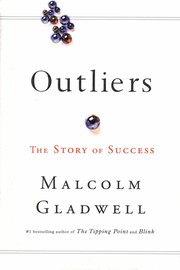
While not a language book, its evidence-based argument about deliberate practice and the 10,000-hour principle reframes the advanced learner's long-term commitment to Mandarin fluency as a structured, achievable project rather than an endless grind.
Discussion
Keep reading
Paths that share books, cover the same subject, or open a related topic.