Best Books on Literary Criticism, in Reading Order
This curriculum builds from the craft of close reading through the major schools of literary theory and into the practice of criticism as a literary art form in its own right. Starting at an intermediate level, each stage deepens the reader's analytical vocabulary, historical awareness, and critical sensibility, culminating in an encounter with the greatest critic-writers who demonstrate what the form can achieve at its highest.
The Art of Close Reading
IntermediateMaster the foundational practice of slow, attentive reading — learning to hear language, track ambiguity, and build an argument from the text itself.
▸ Study plan for this stage
Pace: 8–10 weeks, ~25–30 pages/day, with 2–3 days per week reserved for close reading practice and written reflection
- The practice of practical criticism: suspending judgment and recording immediate impressions before interpretation, as Richards demonstrates
- Levels of reading: elementary, inspectional, analytical, and syntopical reading as frameworks for engaging texts with increasing depth
- The role of ambiguity, paradox, and tension in literary meaning—how apparent contradictions create richness rather than confusion
- The New Critical method: reading the poem as a self-contained verbal object, independent of authorial intention or historical context
- How to build textual arguments: moving from specific observations about language, imagery, and structure to coherent interpretations
- The distinction between paraphrase and interpretation: why restating content misses the work's actual meaning
- Attention to diction, syntax, tone, and form as carriers of meaning—the inseparability of how something is said from what is said
- What does Richards mean by 'practical criticism,' and how does the method of recording initial impressions before analysis differ from traditional literary study?
- How do Adler's four levels of reading apply to literary texts, and when should a reader move from one level to the next?
- Why does Brooks argue that paradox and apparent contradiction are central to poetic meaning rather than flaws to be resolved?
- How would you distinguish between paraphrasing a poem's content and actually interpreting its meaning, using a specific example from your reading?
- What is the relationship between a poem's formal properties (meter, rhyme, syntax, imagery) and its thematic or emotional effect?
- How do you build a defensible argument about a literary text based on close attention to language, rather than on external biographical or historical information?
- Complete Richards's practical criticism exercise: read a poem cold, write down your immediate impressions and emotional responses without consulting any notes or secondary sources, then revisit your notes and identify where your first instincts were accurate or misleading
- Apply Adler's four reading levels to a single poem: first read it quickly for overall impression (elementary), then identify its structure and argument (inspectional), then analyze it in depth (analytical), then compare it to related poems or traditions (syntopical)
- Select a short poem and write two versions: one that paraphrases its content in prose, and one that interprets its meaning by attending to specific word choices, line breaks, and formal features—then reflect on what the second version reveals that the first missed
- Identify a moment of paradox or ambiguity in one of the texts you're reading, and write a paragraph explaining how this contradiction deepens rather than undermines the work's meaning
- Annotate a poem densely: mark every instance of imagery, diction choice, syntactic inversion, or tonal shift, then write a short essay arguing how these formal elements work together to create a unified effect
- Practice the 'close reading essay': choose a 10–15 line passage from one of your assigned texts and write a 3–4 page essay that builds an argument about its meaning entirely from textual evidence, without reference to the author's biography or historical context
Next up: By mastering the discipline of slow, attentive reading and learning to build arguments from textual evidence alone, you will be prepared to engage with more complex frameworks—such as historical context, authorial intention, and literary theory—knowing how to integrate these perspectives without losing sight of the text itself.

The founding document of close reading: Richards strips away author names and dates, forcing attention to the words on the page. It establishes the discipline's core habit of mind and is the right starting point for any serious student of criticism.
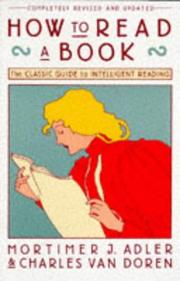
A systematic guide to active, analytical reading that gives the learner a practical framework — levels of reading, syntopical reading — before theory complicates the picture.

The masterwork of New Criticism, showing close reading applied to a sequence of poems with sustained rigor. Reading it after Richards reveals what the method looks like fully realized.
The Major Schools and Their Arguments
IntermediateUnderstand the landscape of twentieth-century literary theory — structuralism, psychoanalysis, Marxism, feminism, deconstruction — and be able to place any critical essay within it.
▸ Study plan for this stage
Pace: 8–10 weeks, ~40–50 pages/day (Eagleton first: 2–3 weeks; Norton Anthology selections: 5–7 weeks)
- Structuralism: the idea that meaning emerges from systems of differences and relationships rather than inherent properties
- Psychoanalytic criticism: how unconscious desires, repression, and the Oedipal complex shape literary meaning and reader response
- Marxist criticism: literature as a product of material conditions and ideology; the relationship between base and superstructure
- Feminist criticism: how gender is constructed through literature and how canonical texts perpetuate patriarchal ideology
- Deconstruction: the instability of meaning, binary oppositions, and how texts undermine their own claims
- The historical emergence of these schools: why each arose as a response to previous critical limitations
- How to identify the theoretical framework underlying a critical essay and trace its assumptions
- The relationship between theory and textual analysis: how different schools read the same text differently
- What are the core premises of structuralism, and how does it differ from earlier formalist approaches to literature?
- How do psychoanalytic critics use concepts like the unconscious, repression, and desire to interpret literary texts?
- What does Marxist criticism mean by 'ideology,' and how does it analyze the relationship between literature and economic systems?
- How do feminist critics challenge the canon, and what do they reveal about gender representation in canonical texts?
- What is deconstruction, and how does it challenge the stability of meaning that earlier theories assumed?
- Given a critical essay, can you identify which school(s) of thought it belongs to and explain its underlying assumptions?
- Read Eagleton's introduction and first chapters, then write a one-page summary of each major school (structuralism, psychoanalysis, Marxism, feminism, deconstruction) in your own words
- Select one short story or poem you know well. Write three separate 1–2 page analyses of it using three different theoretical frameworks from the Norton Anthology selections, noting how each lens reveals different meanings
- Create a comparison chart mapping the key figures, core texts, and central arguments of each school using the Norton Anthology's selections as your primary source
- Choose a critical essay from the Norton Anthology. Annotate it to identify: (a) which school(s) it belongs to, (b) its key assumptions about meaning and literature, (c) how it differs from essays representing other schools
- Write a 2–3 page essay analyzing how two different critical schools would interpret the same passage from a canonical text (use examples from the Norton Anthology)
- Create a timeline or visual diagram showing how each theoretical school emerged, what problems it was responding to, and how later schools built on or rejected its ideas
Next up: This stage equips you with a conceptual map of twentieth-century criticism, enabling you to recognize and apply these frameworks in the next stage, where you will engage in close reading and sustained analysis using specific critical methods.
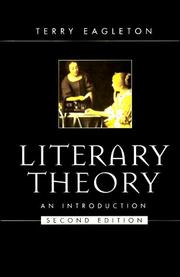
The clearest, wittiest survey of the field from New Criticism through post-structuralism. Eagleton's polemical energy makes abstract schools feel consequential, and his Marxist perspective keeps the stakes visible.

The essential primary-source companion: reading Eagleton's survey alongside the actual texts of Saussure, Freud, Derrida, and hooks grounds the learner in the real arguments rather than summaries.
The Great Critics at Work
IntermediateExperience literary criticism written as literature — essays of such precision, wit, and force that they change how you read the works they discuss.
▸ Study plan for this stage
Pace: 8–10 weeks, ~40–50 pages/day. Trilling (4 weeks), Auden (3 weeks), Sontag (2–3 weeks). Read essays in full rather than skipping; reread difficult passages.
- Criticism as moral and intellectual force: how Trilling's essays model the critic as guardian of cultural values and psychological complexity
- The critic's style as inseparable from argument: Auden's wit, digression, and erudition as tools of persuasion, not ornament
- Interpretation versus sensibility: Sontag's challenge to the hermeneutic tradition and her call for an 'erotics of art' rather than a hermeneutics
- Close reading as ethical practice: how all three critics use precise textual analysis to reveal moral and philosophical stakes
- The essay form as literary art: recognizing how these critics write with the same care and ambition as the novelists and poets they discuss
- Taste, judgment, and canon formation: how critical essays shape which works matter and why
- The critic's persona: how voice, tone, and personality become arguments in themselves
- How does Trilling use the concept of 'the liberal imagination' to argue for literature's role in moral and psychological development? What does he mean by 'variousness' and why does he value it?
- What is Auden's relationship to Romanticism in *The Dyer's Hand*? How does his critical method—mixing biography, textual analysis, and personal reflection—differ from more systematic approaches?
- What does Sontag mean by 'against interpretation,' and what does she propose instead? How does her critique of depth-seeking apply to the works she discusses?
- Compare how Trilling, Auden, and Sontag each use their own prose style to make their critical arguments. What does their writing teach you about the connection between form and content in criticism?
- How do these three critics differ in their view of the critic's role: as moral educator (Trilling), as learned companion (Auden), or as liberator from false meanings (Sontag)?
- Choose one essay from each book and explain how the critic's argument about a specific work changes how you would read that work yourself.
- Read Trilling's 'On the Teaching of Modern Literature' and 'Manners, Morals, and the Novel' back-to-back; write a 2–3 page reflection on how his concern with moral seriousness shapes his reading of individual works.
- Select one Auden essay (e.g., 'The Quest Hero' or his essay on Yeats) and annotate it for: (a) moments where his personality/voice makes an argument, (b) surprising digressions, (c) how he moves from biography to textual analysis.
- Read Sontag's essays on Sartre and Artaud; write a comparative note on how her method of 'against interpretation' actually works in practice—what does she do instead of interpret?
- Choose a poem or novel you know well and write two short critical paragraphs about it: one in Trilling's moral-psychological mode, one in Sontag's sensibility-focused mode. Notice what each approach reveals and conceals.
- Track one recurring concern across all three books (e.g., authenticity, the role of the artist, the relationship between life and art). Collect 3–4 passages from each author and write a synthesis essay on how they differ.
- Reread one Auden essay twice: first for argument, second for style and voice. Write a page on how Auden's digressions, humor, and erudition are not separate from his critical claims but central to them.
Next up: This stage equips you with models of criticism as a literary and intellectual art form, preparing you to engage with more specialized critical schools (formalism, psychoanalysis, postcolonialism, etc.) by first showing you how great critics think, argue, and persuade through prose itself.

Trilling's essays on Keats, Huckleberry Finn, and the novel demonstrate how moral seriousness and elegant prose can coexist in criticism. He models the critic as a cultural intelligence, not merely a technician.
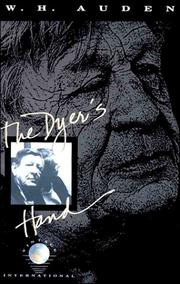
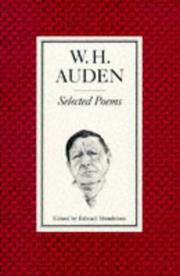
A poet's criticism: aphoristic, surprising, and deeply personal. Auden shows that the best critics bring a whole sensibility to bear, and reading him after Trilling reveals how different great critics can be from one another.
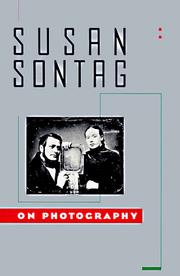
Sontag's polemical essays challenge the hermeneutic assumptions built up in earlier stages, arguing for an erotics rather than a hermeneutics of art. She represents the critic as provocateur and cultural force.
Criticism as an Art Form
ExpertUnderstand criticism's deepest ambitions — as a form of self-knowledge, as creative writing, and as a philosophical practice — and develop a personal critical voice.
▸ Study plan for this stage
Pace: 8–10 weeks, ~40–50 pages/day. Begin with *The Western Canon* (4–5 weeks, prioritizing the introduction and chapters on canonical authors), then move to *Mimesis* (4–5 weeks, reading more slowly due to its density and historical scope). Allocate 1–2 weeks for synthesis and personal critical writing.
- The anxiety of influence and the struggle for literary greatness: how writers internalize and resist their predecessors (Bloom's central thesis)
- Canonicity as a form of power and aesthetic judgment: what makes certain works 'canonical' and who decides
- Representation and mimesis as the core problem of literary history: how literature imitates reality across different historical periods and styles (Auerbach's framework)
- The historical specificity of realism: understanding how different eras conceptualize 'realistic' representation differently
- Criticism as creative interpretation: the critic as a maker of meaning, not merely a judge or explainer
- Personal critical voice: developing your own aesthetic criteria and argumentative stance independent of established schools
- The relationship between literary form and historical consciousness: how narrative techniques reflect and shape how societies understand themselves
- What does Bloom mean by 'the anxiety of influence,' and how does this concept reshape your understanding of literary creation and literary history?
- According to Bloom, what is the relationship between aesthetic greatness and canonical status? Do you agree with his criteria for inclusion in the Western canon?
- How does Auerbach's concept of mimesis differ from simple 'realism'? What does he mean by the 'historical specificity' of representation?
- Trace Auerbach's argument about how the representation of reality changed from Homer through the modern period. What historical forces drove these changes?
- How would you characterize your own critical voice after reading these works? What aesthetic values and interpretive methods matter most to you?
- Can criticism itself be a creative or philosophical act, as opposed to merely evaluative? What evidence from Bloom and Auerbach supports this view?
- Write a 3–4 page essay applying Bloom's concept of anxiety of influence to a specific author or work you know well. Identify their 'strong precursor' and analyze how they wrestle with that influence.
- Select a canonical work that Bloom discusses (e.g., Shakespeare, Milton, Austen) and write a counter-argument: make a case for why it should or should not be considered central to the Western canon, using your own aesthetic criteria.
- Choose two texts from different historical periods (e.g., Homer and Flaubert, or Cervantes and Woolf) and write a comparative analysis using Auerbach's framework of mimesis. How do their narrative techniques reflect different historical understandings of reality?
- Read a chapter from *Mimesis* closely (e.g., the Odyssey chapter, the Dante chapter, the modern realism chapter) and write a 2–3 page response that extends or challenges Auerbach's historical argument with your own examples.
- Conduct a 'critical dialogue': write two opposing critical interpretations of the same literary work—one influenced by Bloom's aesthetic priorities, one by Auerbach's historical-representational concerns. Then write a third piece synthesizing or adjudicating between them.
- Develop a personal critical manifesto (1–2 pages): articulate your own critical values, your view of what makes literature matter, and how you would judge literary greatness. Ground this in insights from both Bloom and Auerbach, but make it distinctly your own.
Next up: This stage establishes criticism as a self-aware, philosophically grounded practice rooted in aesthetic judgment and historical understanding; the next stage will likely apply these critical frameworks to specific literary movements, genres, or contemporary texts, moving from theory to practice.

Bloom's grand, contentious argument about literary greatness and influence forces the reader to take a position. Its sweep and confidence model what it looks like when a critic builds a complete vision of literature.
The supreme demonstration of what criticism can achieve: Auerbach reads a single passage from Homer to Virginia Woolf and reconstructs the entire history of Western literary representation. A monument of the form.
Discussion
Keep reading
Paths that share books, cover the same subject, or open a related topic.