Susan Sontag Reading Order: Where to Start
This curriculum moves through Sontag's work in roughly the order she developed her ideas, letting each stage build the conceptual vocabulary needed for the next. Starting with her most accessible and celebrated essays, the path deepens into her harder theoretical criticism, then her fiction and autobiographical writing, and finally her late masterworks and the intimate journals that reveal the mind behind it all.
The Essential Sontag — Landmark Essays
IntermediateGrasp Sontag's core critical sensibility: her style, her major arguments about art, interpretation, and culture, and the ideas (Camp, Notes, Against Interpretation) that made her famous.
▸ Study plan for this stage
Pace: 8–10 weeks total: Weeks 1–5 for "Against Interpretation" (~25–30 pages/day, reading each essay slowly and taking marginal notes); Weeks 6–10 for "Styles of Radical Will" (~20–25 pages/day, given its denser, more sustained arguments). Plan one dedicated "reflection day" per week with no new reading —
- Against Interpretation: Sontag's argument that over-intellectualizing art through content-based interpretation suffocates its sensory and experiential power
- The 'erotics of art' as an alternative critical mode — criticism that describes, evokes, and responds rather than decodes
- Camp sensibility: the love of artifice, exaggeration, and 'failed seriousness'; Camp as a way of seeing rather than a set of objects
- The distinction between 'high' and 'low' culture and Sontag's deliberate refusal to honor that boundary
- Form as content: how style IS meaning in Sontag's aesthetic philosophy, not a vehicle for it
- The aesthetics of silence (from Styles of Radical Will): the avant-garde artist's drive toward zero — negation, withdrawal, and the limits of expression
- Sontag's engagement with film as a serious art form (her film essays in Against Interpretation) and what that reveals about her cross-disciplinary critical method
- The political and ethical stakes of aesthetics: how Sontag links questions of taste and perception to broader cultural and moral consciousness
- In 'Against Interpretation,' what specific historical and cultural conditions does Sontag blame for the tyranny of interpretation, and why does she see it as a form of revenge on art?
- What does Sontag mean by an 'erotics of art,' and how does this proposed alternative actually function in her own critical writing within these two books?
- How does the 'Notes on Camp' essay define Camp, and why does Sontag insist on presenting it as 'notes' rather than a formal argument? What does that formal choice itself signal?
- In 'Styles of Radical Will,' how does Sontag's essay 'The Aesthetics of Silence' extend or complicate the arguments she made in 'Against Interpretation'? Are they consistent?
- Across both books, how does Sontag use the essay form itself — its rhythm, its assertiveness, its aphoristic style — to enact her critical values rather than merely describe them?
- Which specific films, artworks, or cultural objects does Sontag analyze in these two books, and what do her choices of subject reveal about the cultural moment of the 1960s she was responding to?
- 'Notes on Camp' imitation exercise: Choose a contemporary cultural phenomenon (a TV show, a fashion trend, a meme aesthetic) and write your own 'notes' — numbered, aphoristic, deliberately incomplete — modeled on Sontag's form in 'Notes on Camp.' Aim for 20–30 numbered entries.
- Close-reading log: For every essay in 'Against Interpretation,' write one paragraph summarizing the argument and one paragraph describing Sontag's prose style — her sentence rhythms, her use of assertion vs. qualification, her rhetorical moves. Track how style and argument interrelate.
- Counter-interpretation exercise: Pick a film, painting, or novel you know well. First, write a traditional content/meaning-based interpretation of it (2 paragraphs). Then, write a response in Sontag's spirit — focused purely on form, sensation, and surface (2 paragraphs). Reflect on what each approach reveals and conceals.
- Silence mapping: After reading 'The Aesthetics of Silence' in 'Styles of Radical Will,' find one example each from music, visual art, and literature where an artist uses absence, negation, or silence as a primary expressive strategy. Write a short paragraph on each, applying Sontag's framework.
- Debate prompt — journal entry: Sontag argues that interpretation is harmful to art. Write a structured journal entry (500–700 words) steelmanning the opposing view — that interpretation is necessary and enriching — and then write Sontag's likely rebuttal using evidence from both books.
- Comparative essay map: Create a one-page visual or outline map showing how the central arguments of 'Against Interpretation' evolve, shift, or deepen in 'Styles of Radical Will.' Note where Sontag contradicts herself and where she builds on earlier ideas.
Next up: Mastering Sontag's foundational aesthetic and critical vocabulary in these two essay collections equips the reader to track how her thinking transforms under the pressure of real-world catastrophe — war, illness, and political crisis — in her later, more ethically urgent work.
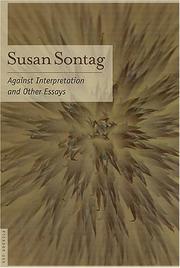
Her debut essay collection and the ideal entry point — it contains 'Against Interpretation,' 'Notes on Camp,' and her early film and theater criticism, establishing the vocabulary and combative tone that defines all her later work.
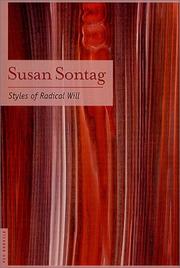
The natural sequel, pushing her ideas further into silence, pornography, and political aesthetics; reading it immediately after Against Interpretation shows how her thinking evolved and deepened in just a few years.
Photography, Illness, and the Image — Major Critical Works
IntermediateEngage with Sontag's two most influential book-length arguments — about photographic representation and about the language of illness — and understand how she builds a sustained thesis across a full essay.
▸ Study plan for this stage
Pace: 6–8 weeks total: Weeks 1–4 for "On Photography" (~20–25 pages/day, reading one essay at a time and pausing to reflect before moving on); Weeks 5–7 for "Illness as Metaphor" (~15–20 pages/day, a slower pace to track the rhetorical argument carefully); Week 8 reserved for comparative review, re-readin
- The photograph as a surrogate reality and collector's object — Sontag's argument in 'On Photography' that images replace rather than simply record experience
- The ethics of image consumption: how photography democratizes and simultaneously aestheticizes suffering, violence, and the exotic
- Photographic surrealism and the 'heroism of vision' — the camera as a tool that flattens moral distinctions by making everything equally available as an image
- The ecology of images: Sontag's concern that the proliferation of photographs numbs emotional and political response
- The metaphor as a weapon: in 'Illness as Metaphor,' Sontag's central thesis that military and moral metaphors attached to diseases (TB, cancer) harm patients by implying guilt and weakness
- The cultural history of illness narratives — how tuberculosis was romanticized in the 19th century while cancer became a stigmatized, shameful secret in the 20th
- Sontag's method of sustained critical argument: how she builds a book-length thesis through accumulated historical examples, literary quotations, and rhetorical analysis rather than personal testimony
- The relationship between representation and power: both books examine how images and language shape — and distort — how we understand reality, bodies, and suffering
- According to Sontag in 'On Photography,' in what ways does the photograph create a false relationship between the viewer and reality, and why does she consider this ethically troubling?
- How does Sontag argue that photography both democratizes and exploits its subjects? Use at least one specific example from the book to support your answer.
- What is Sontag's core claim in 'Illness as Metaphor,' and why does she insist that illness should be understood as 'just an illness' rather than through metaphorical frameworks?
- How does Sontag trace the shift in cultural metaphors from tuberculosis to cancer, and what does this shift reveal about changing social anxieties?
- Both 'On Photography' and 'Illness as Metaphor' are concerned with the distorting power of representation. What structural or argumentative similarities do you notice in how Sontag builds her case in each book?
- How does Sontag use literary and historical sources (novels, medical texts, cultural criticism) as evidence? What does this method reveal about her approach to criticism?
- Close-reading journal: After each essay in 'On Photography,' write a one-paragraph summary of Sontag's central claim for that essay, then write one sentence of your own agreement or pushback — this trains you to track her argument's evolution across the book.
- Image audit: Select 5–10 photographs from a newspaper, magazine, or social media feed and apply Sontag's framework from 'On Photography.' Ask: Does this image aestheticize its subject? Does it replace or deepen understanding? Write a short analysis (200–300 words) for at least two of them.
- Metaphor mapping for 'Illness as Metaphor': As you read, keep a running list of every illness metaphor Sontag identifies (military, moral, psychological, etc.) and note the historical period and source she associates with each. Review the list at the end to see the full scope of her argument.
- Comparative thesis statement: After finishing both books, write a single paragraph (150–200 words) articulating the one overarching concern that unites Sontag's arguments in both works. Revise it at least once after sleeping on it.
- Rewrite a passage: Choose one dense or difficult paragraph from either book and rewrite it in plain language as if explaining it to a friend. Then re-read Sontag's original and note what is lost or gained in your version — this reveals her deliberate stylistic choices.
- Debate preparation: Formulate the strongest possible counterargument to Sontag's thesis in 'Illness as Metaphor' (e.g., that metaphor can be empowering for patients). Write out both Sontag's likely rebuttal and your own verdict, using evidence from the text.
Next up: Mastering how Sontag constructs a sustained, book-length critical argument in these two works equips the reader to engage with her later, more self-questioning return to the photography debate — and to recognize the evolution in her thinking — when advancing to more advanced or retrospective stages of the curriculum.
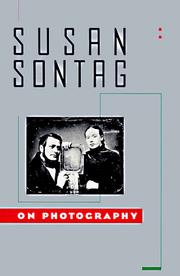
Her first book-length critical work and one of the most important books ever written about images; it should be read before Illness as Metaphor because it shows her method of building a cultural argument from close observation.
Written out of her own cancer diagnosis, this short masterpiece applies her critical method to language itself; pairing it with On Photography reveals her consistent concern with how representation distorts reality.
Fiction — The Novelist Sontag
IntermediateEncounter Sontag as a novelist and see how her critical preoccupations — history, aesthetics, consciousness, performance — are translated into narrative form.
▸ Study plan for this stage
Pace: 8–10 weeks total: Weeks 1–5 for The Volcano Lover (~25–30 pages/day, including pauses for the novel's essayistic digressions), Weeks 6–10 for In America (~20–25 pages/day, with slower reading during the metafictional opening and the theatrical centerpiece chapters).
- The historical novel as critical essay: how Sontag embeds aesthetic and philosophical argument directly into narrative prose, blurring the boundary between fiction and criticism
- The Collector as consciousness: in The Volcano Lover, the Cavaliere's obsessive collecting becomes a lens for examining aestheticism, detachment, and the limits of connoisseurship
- Performance and self-invention: both novels center characters (Emma Hamilton in The Volcano Lover; Maryna Zalenska in In America) who construct public selves through theatrical performance, raising questions about authenticity and identity
- History as irony: Sontag uses dramatic irony and anachronistic narrative intrusions to position the reader above the characters, exposing the gap between how historical actors understood their moment and what we know in retrospect
- The narrator as provocateur: both novels feature intrusive, self-aware narrators who address the reader directly, foregrounding the act of storytelling and refusing the illusion of transparent realism
- Consciousness and interiority: Sontag's fiction maps the inner lives of passionate, ambitious people — desire, ambition, disillusionment — as a continuation of her critical interest in how we experience art and the world
- America as idea and destination: In America treats the United States not merely as a setting but as a utopian projection, an imagined space onto which European longing is mapped
- Gender, power, and erasure: both novels interrogate how women (Emma, Maryna) are celebrated, instrumentalized, and ultimately written out of the histories their male contemporaries dominate
- In The Volcano Lover, what does the Cavaliere's compulsive collecting reveal about the relationship between aesthetic appreciation and emotional or moral detachment — and how does Sontag use this to critique a certain kind of connoisseurship?
- How does Sontag deploy the intrusive, essayistic narrator in both novels, and what effect does this narrative strategy have on the reader's relationship to the historical characters and events depicted?
- In In America, Maryna Zalenska abandons her theatrical fame in Poland to pursue an idealistic commune in California. What does the failure of that utopian project, and her return to the stage, suggest about Sontag's view of performance, idealism, and self-reinvention?
- Both Emma Hamilton and Maryna Zalenska are women of extraordinary talent who are simultaneously celebrated and marginalized by the men around them. How does each novel frame the tension between a woman's self-authored identity and the identity imposed on her by history?
- How does Sontag's treatment of 'America' in In America function as both a literal immigrant narrative and a philosophical meditation on utopia, freedom, and disillusionment?
- Taken together, how do The Volcano Lover and In America demonstrate that Sontag's critical preoccupations — aesthetics, consciousness, history, performance — are not abandoned in fiction but are instead given new expressive form through character, plot, and narrative voice?
- Close-reading journal: Each week, select one passage (2–3 pages) where the narrator steps outside the story to editorialize or philosophize. Write a one-page analysis of what argument Sontag is making and how the intrusion affects narrative momentum — track how this technique evolves across both novels.
- Character dossier: After finishing each novel, write a one-to-two page 'critical biography' of the central figure (the Cavaliere for The Volcano Lover; Maryna for In America) that distinguishes between how the character understands themselves and how Sontag's narrator frames them — note every place the two diverge.
- Essay-to-fiction translation exercise: Choose one short passage from Sontag's critical essays (e.g., from Against Interpretation or On Photography, if previously read) and write a one-paragraph fictional scene that dramatizes the same idea. Then compare your attempt to a moment in either novel where Sontag does something similar.
- Dramatic irony map: As you read, keep a running list of moments where the reader knows something the characters do not (historical outcomes, the fate of Naples, the arc of Maryna's career). At the end of each novel, write a short reflection on how this irony shapes your emotional and intellectual response.
- Comparative essay (500–700 words): Argue whether The Volcano Lover or In America more successfully integrates Sontag's critical intelligence with novelistic storytelling. Use specific scenes, passages, and narrative choices as evidence — avoid plot summary.
- Performance audit: Identify three scenes in each novel where a character is explicitly 'performing' for an audience (social, theatrical, or political). Annotate each scene with notes on what the performance conceals, what it reveals, and what Sontag seems to be saying about the relationship between self and spectacle.
Next up: Seeing how Sontag's critical ideas about aesthetics, history, and consciousness take shape in narrative form prepares the reader to return to her nonfiction with a richer sense of the unified sensibility behind all her work — recognizing that her essays, like her novels, are performances of a restless, morally serious mind.
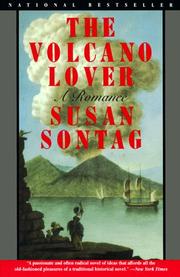
Her most celebrated novel and the best place to start her fiction; its meditation on collecting, passion, and historical violence directly dramatizes the ideas in her essays and is far more accessible than her earlier experimental novels.
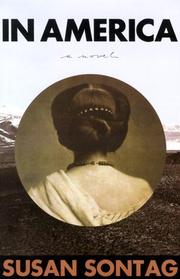
Her final novel, winner of the National Book Award, deepens the historical-fiction mode of The Volcano Lover; reading it second lets you see her novelistic ambitions mature and her themes of self-reinvention come to the fore.
Late Criticism — War, Suffering, and the Ethical Gaze
ExpertEngage with Sontag's late, more ethically urgent critical writing, where she revisits and complicates her earlier positions on photography and representation in the context of war and atrocity.
▸ Study plan for this stage
Pace: 4–5 weeks total: Week 1–2 — AIDS and Its Metaphors (~20–25 pages/day, including re-reading dense argumentative passages); Week 3–5 — Regarding the Pain of Others (~15–20 pages/day with slower, more reflective reading to engage with Sontag's ethical arguments and visual case studies)
- The politics of illness metaphor: how militaristic and punitive language shapes public perception of disease (AIDS and Its Metaphors)
- Stigma and othering: how metaphor-laden discourse scapegoats patients and marginalizes communities
- Self-revision and intellectual honesty: Sontag's return to and complication of her own earlier arguments from On Photography
- The limits of photographic empathy: whether images of suffering produce genuine moral response or merely aesthetic consumption
- Compassion fatigue and the numbing effect of repeated exposure to atrocity imagery
- The ethics of spectatorship: the moral responsibilities of those who view — versus those who produce — images of war and pain
- Narrative vs. image: the comparative power of written testimony and photographic documentation in bearing witness
- The 'anti-war' photograph as contested object: Sontag's argument that no image is inherently anti-war
- How does Sontag argue that metaphors attached to AIDS — military, plague, otherness — cause concrete harm to patients, and what remedy does she propose?
- In what specific ways does Regarding the Pain of Others revise or contradict the positions Sontag staked out in On Photography, and what does this self-correction reveal about her critical method?
- What is Sontag's position on whether photographs of atrocity can, by themselves, generate political will or ethical action?
- How does Sontag distinguish between 'shock' and genuine moral understanding in the context of war photography, and why does she find shock insufficient?
- What does Sontag mean when she argues that 'we' — the comfortable, distant spectator — is a problematic and ideologically loaded construction?
- Taken together, how do these two books form a coherent late-career ethical project around representation, responsibility, and the language we use to frame suffering?
- Metaphor audit: Choose a current news cycle around a disease or public health crisis and catalogue the metaphors used. Evaluate them against Sontag's criteria in AIDS and Its Metaphors — which are militaristic, which stigmatize, and what alternatives might be used?
- Close-reading comparison: Select one passage from AIDS and Its Metaphors where Sontag critiques a specific metaphor, and one passage from Regarding the Pain of Others where she critiques a specific photograph or photographer. Write a 500-word comparative analysis of her argumentative method in each.
- Self-revision essay: Identify a position you have previously held about media, images, or public discourse. Write a 1-page Sontag-style self-critique in which you complicate or retract that position using her framework of ethical spectatorship.
- Image and text pairing: Select a well-known war photograph (e.g., by Don McCullin, Nick Ut, or Sebastião Salgado — all discussed or invoked in Regarding the Pain of Others) and write two responses: one treating it as Sontag's 'naive' viewer might, and one applying her skeptical ethical gaze.
- Debate preparation: Prepare a structured argument both for and against the proposition 'Photographs of atrocity are morally necessary.' Draw exclusively on evidence and reasoning from Regarding the Pain of Others to support both sides.
- Reading journal synthesis: After finishing both books, write a 1–2 page journal entry tracing the single thread of 'the ethics of representation' across both texts — noting where Sontag's thinking evolves, hardens, or opens into unresolved questions.
Next up: By working through Sontag's late ethical turn — her critique of metaphor, her skepticism toward images, and her insistence on the viewer's moral responsibility — the reader is now equipped to engage with broader critical and theoretical conversations about witnessing, memory, and justice that extend beyond Sontag's own corpus into contemporary visual culture studies and political philosophy.

A direct companion and extension of Illness as Metaphor, applying her framework to the AIDS crisis; reading it here, after the novels, shows how her moral seriousness intensified over time.
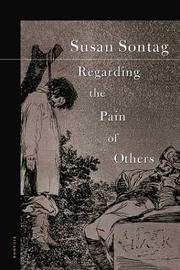
Her most important late work and a direct revisitation of On Photography; it should be read last among the critical books because it is most powerful when you can feel her arguing with her own earlier self.
Discussion
Keep reading
Paths that share books, cover the same subject, or open a related topic.