W.H. Auden Reading Order: Where to Start
Auden wrote for forty-five years, revised and disowned his own work continually, and left an oeuvre that no single volume represents well — which is why the first decision is which book to buy. This path starts with the Mendelson-edited Selected Poems, moves to the individual collections and the long sequences that a selection cannot show whole, then to the prose, which is where Auden explains himself better than any critic does. The last stage is for readers who want the disowned early work and the complete texts.
Which Book First
IntermediateGet a working map of the whole career in one volume, and identify which decade of Auden you actually want.
▸ Study plan for this stage
Pace: 6–8 weeks with 358 pages, which is deliberately slow — poetry is not read at prose speed and Auden punishes skimming more than most. Five to ten pages an evening, three or four poems at a time, and read every one aloud at least once. Auden wrote for the ear: the metre is doing argumentative work, an
- Auden's career divides roughly into the 1930s English poet of public crisis, the American convert and moralist of the 1940s, and the domestic, formal, sceptical late poet — and a good selection lets you hear all three
- He revised continually and suppressed poems he judged untruthful, so the text you read is an editorial decision and not a neutral fact
- Mendelson's selection prints original versions of the early poems, which is why it is the right first purchase and why it will differ from anthology texts you may already know
- Auden is a formal virtuoso: sonnets, villanelles, sestinas, syllabics, alliterative metre and light verse all appear, and noticing the form is usually the fastest route into the poem
- The famous poems — 'Musée des Beaux Arts', 'In Memory of W. B. Yeats', 'Lullaby', 'The Shield of Achilles', 'As I Walked Out One Evening' — are famous for good reasons, but they are not representative of the range
- The 1930s poems assume a reader who knows the political situation, the landscape of industrial northern England, and often Auden's own friends; annotation is not optional for these
- Auden's central subject across all four decades is love — erotic, civic and eventually theological — and what human beings owe each other in its absence
- Which decade of Auden do you actually respond to, and what specifically distinguishes it from the others?
- What does 'In Memory of W. B. Yeats' claim poetry can and cannot do, and does the poem's own form support the claim?
- How does 'Musée des Beaux Arts' use the Brueghel painting — as illustration, as evidence, or as argument?
- What changes in Auden's diction and syntax between the early English poems and the American ones?
- Why might a poet decide a poem of his own was untruthful, and what would that judgement mean in practice?
- Where does Auden's formal skill do argumentative work rather than decorative work? Name a poem and a specific effect.
- Read every poem aloud once, and the ones you like twice. This is the single most effective habit for reading Auden and it is not optional advice.
- Cap yourself at three or four poems a sitting. A book of poems read at the pace of a novel produces almost no retention, and a selected poems is a decade of work per fifty pages.
- Keep a list of poems you want to return to, with one line on why. By the end of the volume it is your own map of the career, and it determines which collections you buy next.
- Read Mendelson's notes for any 1930s poem that feels opaque before rereading the poem. Most of the difficulty is reference, not obscurity.
- Copy out one poem by hand. Auden's line-breaks and stanza shapes are precise and copying reveals decisions that reading past will not.
- Find one poem you know in an anthology and compare its text with the version here. The differences are the whole editorial story in miniature.
Next up: With a map of the career and a sense of which decade you want, you can read the books as Auden actually assembled them — which is the only way to encounter the long sequences a selection has to leave out.
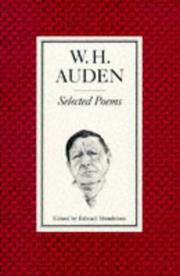
Edward Mendelson's selection, and the correct first purchase. It prints early poems in their original versions rather than Auden's later revisions, covers all four decades, and is annotated — which matters, because Auden's 1930s poems are full of private and topical reference.
The Individual Collections
IntermediateRead the books as Auden assembled them, and follow the turn from 1930s England to postwar America.
▸ Study plan for this stage
Pace: 10–14 weeks for four short books totalling around 450 pages. Do not be misled by the page counts: The Sea and the Mirror is 106 pages and will take longer than a 400-page novel. Read a few pages a night, aloud, and expect to reread. The Age of Anxiety in particular should be read in sections with br
- Another Time, published in 1940, holds the densest concentration of famous Auden in any single volume — 'Musée des Beaux Arts', 'September 1, 1939' and the Yeats elegy among them
- Another Time sits exactly on the hinge between the English and American careers, which is why it is the right collection to read first
- 'September 1, 1939' is the poem Auden later disowned; he first changed its most quoted line and then removed the poem altogether, and knowing that changes how you read it
- The Sea and the Mirror is a commentary on The Tempest in which every character speaks in a different verse form, and Caliban's closing address is in an elaborate Jamesian prose — it is the most technically astonishing thing Auden wrote
- The Sea and the Mirror is unreadable in extract, which is precisely why no selection can serve for it and why the individual volume is necessary
- The Age of Anxiety puts four strangers in a New York bar during the war and has them talk in alliterative Anglo-Saxon metre; it won the Pulitzer and gave the era its name
- The Shield of Achilles is mature Auden — quieter, more formal, more theological — and its Bucolics sequence and title poem make it the best single volume of the late career
- Why do you think Auden came to consider 'September 1, 1939' dishonest, and does the poem give you grounds for the judgement?
- In The Sea and the Mirror, what does assigning each character a different verse form let Auden say about them that description could not?
- Why is Caliban's speech in prose, and why in that particular prose?
- What does the alliterative metre of The Age of Anxiety do to the four speakers, and why choose an Anglo-Saxon form for wartime New York?
- How does 'The Shield of Achilles' set the classical ecphrasis against the twentieth century, and where exactly does the poem turn?
- What has changed in Auden's idea of what a poem is for between Another Time and The Shield of Achilles?
- Read The Sea and the Mirror straight through once without stopping to understand it, then again slowly. It is a sequence with a shape, and the shape is invisible if you only ever read parts.
- Read Caliban's address aloud in sections. It is the hardest prose Auden wrote and it is far more navigable spoken than silent.
- Identify the verse form of each speaker in The Sea and the Mirror and note it in the margin. Doing this converts a bewildering sequence into a legible design.
- Read the two versions of 'September 1, 1939' — original and revised line — side by side. It is the clearest single instance of what Auden's revising did to his own meaning.
- Take The Age of Anxiety in four or five sittings, one part at a time. Attempting it in one go is the most common reason readers report bouncing off it.
- Read 'The Shield of Achilles' immediately after the Yeats elegy. Fifteen years apart, both are about what art does in the face of atrocity, and the difference in answer is the late Auden in one comparison.
Next up: Having met the poems at full length, you can read Auden's criticism as what it is — the same mind explaining its own principles, and doing it better than any critic has managed since.
The 1940 collection containing Musee des Beaux Arts, September 1, 1939 and the Yeats elegy — the densest concentration of famous Auden in any single volume. Read it first among the collections because it sits exactly on the hinge between his English and American careers.

A commentary on The Tempest in which every character speaks in a different verse form, and Caliban's closing address is in Jamesian prose. The most technically astonishing thing Auden wrote, and unreadable in extract, which is why a selection cannot serve for it.
The Pulitzer-winning long poem: four strangers in a New York bar during the war, talking in alliterative Anglo-Saxon metre. It gave the era its name and is the most demanding of the long works, so read it after The Sea and the Mirror.
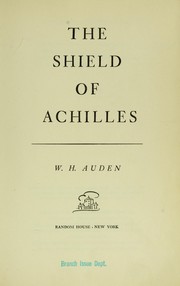
The 1955 collection, containing the title poem and the Bucolics sequence. This is mature Auden — quieter, more formal, more theological — and the best single volume of the late career.
The Prose
IntermediateRead Auden as a critic, and use his own criticism to make sense of the poems.
▸ Study plan for this stage
Pace: 12–16 weeks for around 1,500 pages across three books, but this is the easiest reading in the path — Auden's prose is lucid, funny and can be read in ordinary hours. The Dyer's Hand and Forewords and Afterwords are both essay collections and are best read a piece at a time over months rather than co
- The Dyer's Hand is Auden's major collection of criticism — Shakespeare, opera, detective stories, the difference between art and magic — and one of the finest books of criticism by any poet
- It is where his aesthetic principles are stated plainly, including the distinction between poetry that discloses and poetry that casts a spell, which is the key to his own revisions and suppressions
- The essays on Falstaff, on Iago and on the detective story are the most quoted and the most useful for reading the poems
- Forewords and Afterwords collects the occasional prose — introductions, reviews, memorial pieces — and is often better than The Dyer's Hand because Auden writing to order tended to say what he actually thought
- A Certain World is a commonplace book arranged alphabetically by topic, offered by Auden as a substitute for the autobiography he refused to write
- Reading A Certain World last gives you the closest available portrait of his mind in his own arrangement, made of other people's sentences
- The criticism explains the poetry's central preoccupations — form as an ethical discipline, the danger of rhetoric, the poet's limited authority — more clearly than the poems themselves do
- What is Auden's distinction between art and magic, and how does it explain his decision to suppress some of his own most rhetorically effective poems?
- What does he think the detective story is for, and why does a poet write a serious essay about it?
- How does his reading of Falstaff differ from the standard one, and what does it tell you about his idea of grace?
- Which of the occasional pieces in Forewords and Afterwords made you want to read a book you had not heard of? That reaction is the point of the volume.
- What kind of self-portrait does A Certain World produce, and what does it deliberately leave out?
- Having read the criticism, which of Auden's own poems now look like the ones he would have defended?
- Read the essay on art and magic in The Dyer's Hand, then reread 'September 1, 1939'. This pairing explains the suppression more convincingly than any biography.
- Read one essay a sitting and stop. These are collections, not arguments, and consuming them in blocks flattens the differences between the pieces.
- Use Forewords and Afterwords as a reading list: note every writer he sends you to. It is one of the best curated introductions to European literature ever assembled by accident.
- Open A Certain World at three random entries and read the poem nearest to hand afterwards. The commonplace book works by juxtaposition and reading it systematically defeats it.
- Write a paragraph on what Auden thought poetry could not do. It is a more precise and more interesting position than what he thought it could.
Next up: With the principles stated in his own words, the last stage reaches the work those principles led him to suppress, the collaborations that sit outside the main line, and the texts as he finally wanted them left.
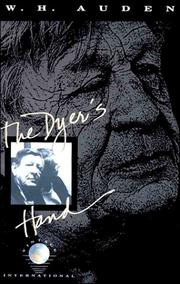
His major collection of criticism — Shakespeare, opera, detective stories, the difference between art and magic. One of the finest books of criticism by any poet, and the place his aesthetic principles are stated plainly.

The occasional prose: introductions, reviews, memorial pieces. Looser than The Dyer's Hand and often better, because Auden writing to order tended to say what he actually thought.
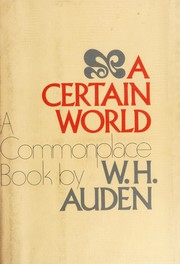
A commonplace book arranged alphabetically by topic, which Auden offered as a substitute for an autobiography. Read last of the prose: it is the closest thing to a portrait of his mind in his own arrangement.
The Completist Tail
IntermediateReach the work Auden suppressed, the collaborations, and the complete texts.
▸ Study plan for this stage
Pace: 8–10 weeks for 102, 268 and 351 pages. The Orators is short and hard and can absorb a month on its own; Letters from Iceland is a genuine pleasure and reads quickly; Collected Shorter Poems is a comparison volume rather than a fresh read, and is best used against the Selected you began with. Read in
- The Orators is the strange, half-private 1932 experiment in prose and verse that Auden later described as the work of someone becoming a fascist — his own harshest verdict on any of his books
- It is almost never anthologised and is essential if you want the difficult early Auden rather than the anthology pieces; its obscurity is deliberate and partly coterie
- Letters from Iceland, written with Louis MacNeice in 1937, is a travel book in mixed prose and verse containing 'Letter to Lord Byron' — light verse of a quality nobody else in the century managed
- The light verse matters: Auden thought seriousness and lightness were compatible, and 'Letter to Lord Byron' is the best demonstration in English
- Collected Shorter Poems 1927–1957 gives the poems as Auden wanted them left, in his own final revisions, and its texts differ from the versions you learned in the Mendelson selection
- Buying it only now is deliberate: the differences are worth arguing with, and you can only argue with them if you learned the originals first
- Comparing the two volumes is the practical end of this path — it makes concrete the fact that with Auden there is no single authoritative text, only editorial positions
- What is The Orators actually doing formally, and why does it resist paraphrase so completely?
- What did Auden mean when he judged The Orators the work of someone becoming a fascist, and is the charge fair to the book?
- What does 'Letter to Lord Byron' achieve in light verse that his serious poems cannot?
- How do the collaborative sections of Letters from Iceland differ from the solo ones, and can you tell MacNeice from Auden?
- Take three poems you know well and compare the Selected and the Collected Shorter texts. What did the revisions consistently remove?
- Having seen both, which Auden do you prefer — the original or the revised — and what does your preference say about what you want from a poem?
- Read The Orators once at speed without trying to decode it, then return to individual sections. It rewards familiarity more than analysis and defeats a first careful reading.
- Read 'Letter to Lord Byron' aloud in long stretches. Light verse depends entirely on pace, and it is the only thing in this path that genuinely improves at speed.
- Do a systematic comparison of at least five poems across the Selected and the Collected Shorter, noting the changes. This is the exercise the whole path has been building towards.
- Write down which poems you would put in your own selected Auden, and in which versions. Having read four decades and two editorial positions, you are now qualified to have that opinion.
- Return to the list you started in the first stage and see how it has changed. The poems that survive months of rereading are the ones that will stay with you.
Next up: This is the end of the path: you have the career in a good selection, the major sequences whole, the criticism that explains them, and the suppressed and revised texts to argue with — so the natural next step is Mendelson's biography and critical studies, or MacNeice and the other poets Auden worked beside.
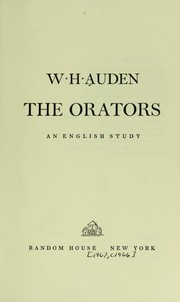
The strange, half-private 1932 experiment in prose and verse that Auden later called the work of someone becoming a fascist. Almost never anthologised, and essential if you want the difficult early Auden rather than the anthology pieces.

The 1937 travel book written with Louis MacNeice, containing the Letter to Lord Byron — light verse of a quality nobody else in the century managed. Delightful, and a useful corrective to the solemn Auden.
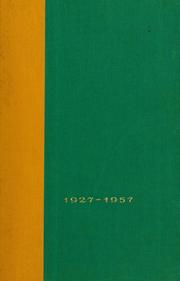
The final stop: the poems as Auden wanted them left, in his own last revisions. Buy it only after the Selected, because the revised texts differ from the versions you will have learned first, and the differences are worth arguing with.
Discussion
Keep reading
Paths that share books, cover the same subject, or open a related topic.