Literary criticism has a reputation problem that is mostly a sequencing problem. The typical first encounter is a theory anthology or a seminar reading list, where poststructuralism, Marxist criticism, and psychoanalysis arrive simultaneously in dense prose. Readers conclude the field is jargon. What they have actually done is start in the middle of a two-hundred-year argument.
The argument makes sense from its beginning. Criticism starts with a practical question — what happens when a competent reader attends closely to a text? — and theory arrives later as a set of objections to the assumptions buried in that question. Read the close readers first, watch the objections accumulate, and theory becomes a series of positions you can evaluate rather than a wall of terms.
Learn to read closely
Practical criticism by I. A. Richards is the ideal opening because it is an experiment rather than a manifesto. Richards handed Cambridge undergraduates poems with the authors' names removed and collected their responses, then analysed the failures — sentimentality, stock response, doctrinal preconception. It is funny, humbling, and it demonstrates rather than asserts that reading is a skill.
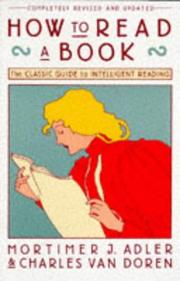
How to Read a Book by Mortimer J. Adler sits alongside it as a method for systematic reading, with its four levels from elementary through syntopical. Be honest about what it is: a reading methodology, not literary criticism proper, and heavily oriented toward expository prose. If you already read analytically, skim it or skip it and spend the time on Richards.
The New Critics
The well wrought urn by Cleanth Brooks is the fullest demonstration of New Critical practice: ten poems read intensively, with the argument that a poem's meaning is inseparable from its structure and cannot be paraphrased. Whether or not you end up agreeing, this is the method every later school defines itself against, and Brooks's readings are still models of attention.
Now the theory
Literary theory by Terry Eagleton is the standard introduction and remains the best one — lucid, opinionated, and structured historically so you see phenomenology giving way to structuralism giving way to poststructuralism as responses to each other. Eagleton is a Marxist critic and does not pretend otherwise, which is more useful than false neutrality because you can locate his position and argue with it.
The Norton anthology of theory and criticism edited by Vincent B. Leitch is the primary-source companion, running from Plato to the present with headnotes on each figure. Do not read it through. Use Eagleton as the map and the Norton as the place you go to read the actual passage once you know why it matters.
The essayists
Three writers show that criticism can be literature. The liberal imagination by Lionel Trilling connects literature to politics and moral life in a way almost no one manages now. The Dyer's Hand and Other Essays is Auden's prose — a working poet on craft, Shakespeare, and reading, endlessly quotable. Against Interpretation by Susan Sontag is the counterblast, arguing that the reflex to decode a work for hidden meaning impoverishes the encounter with it. Read Sontag directly after Brooks and the collision is instructive.
The canon fight and the capstone
The Western canon by Harold Bloom is a defence of aesthetic value against what he called the School of Resentment, and it is genuinely contested — Eagleton and Bloom disagree about what criticism is for, not merely about which books are good. Read both and hold the disagreement open rather than resolving it early.
End with Mimesis by Erich Auerbach, written in exile in Istanbul without a research library: twenty chapters, each opening with a passage from Homer to Woolf, tracing how Western literature represents reality. It is the book that shows what criticism can be at its best.
Read in this order and the field stops being jargon and becomes a conversation. The related subject hubs point at the literatures these methods were built on.
Follow the full ordered path here: Best Books on Literary Criticism, in Reading Order.