Michelangelo: The Best Books to Read, in Order
Michelangelo is unusually well documented for a Renaissance artist: two biographies were published in his own lifetime, hundreds of his letters survive, and so do the account books of the men who paid him. That makes the literature unusually good, and it also means the sources argue with each other — Condivi's authorised life was written partly to contradict Vasari's. This path starts with two narrative books built around single commissions, moves to the modern biographies, then to the sixteenth-century sources and his own poetry, then to looking properly at sculpture, painting and architecture, and closes with the Renaissance world he worked inside. Be warned that several excellent books here are all catalogued simply as Michelangelo; the notes say which is which.
Start here
BeginnerGet inside one commission at a time — the Sistine ceiling from scaffolding to unveiling — and learn how Michelangelo actually worked, who paid, and what went wrong.
▸ Study plan for this stage
Pace: Three weeks. Ross King's Michelangelo and the Pope's Ceiling is 379 pages of narrative history for general readers and reads like a novel — ten days is plenty. Graham-Dixon's Michelangelo and the Sistine Chapel is 207 pages and is denser per page because it is doing interpretation rather than storyt
- The commission itself: four years, an artist who insisted he was a sculptor and not a painter, and a pope who would not let him stop. The reluctance is documented rather than legendary.
- Fresco as a physical process with unforgiving constraints — the giornata, the intonaco, cartoons and pouncing, and the fact that a day's plaster must be painted while wet or cut out and redone.
- The scaffold. King is excellent on the engineering: Michelangelo's cantilevered design, why Bramante's proposal was rejected, and the practical consequence that he painted standing rather than lying down, which is the correction to the most persistent myth about the project.
- The workshop question. King shows assistants present and working, against the solitary-genius account, and this anticipates Wallace's archival argument in stage 2.
- Mould, damp and the near-disaster of the first section, which had to be scraped off — the kind of practical failure the myth does not include.
- The programme's content as Graham-Dixon reads it: Genesis, the prophets and sibyls, the ancestors of Christ, and the ignudi, arranged as a theological argument rather than as illustration.
- Neoplatonism and the Florentine intellectual context Michelangelo absorbed in the Medici household, and how it shapes the relation between body, beauty and the divine on the ceiling.
- The existing decorative scheme. The chapel already had fifteenth-century wall frescoes by Perugino, Botticelli and others, and Graham-Dixon reads the ceiling as a response to what was already there.
- Why did Michelangelo not want the commission, and what did he want instead?
- Describe the giornata system. How would you identify the day joins on the ceiling from a good photograph?
- What was wrong with the first section painted, and what did fixing it change about the rest of the project?
- How did Michelangelo actually stand or lie while painting, and where does the wrong version of this story come from?
- Set out Graham-Dixon's account of the ceiling's theological programme in your own words. What holds it together?
- How does the ceiling respond to the fifteenth-century frescoes already on the chapel walls?
- Find a high-resolution image of the ceiling and identify the giornate on one panel by looking for the plaster seams. Then compare your count with what King says about the pace of work.
- Chart the nine Genesis panels in the order Michelangelo painted them, which is not the order they are read in, and note where the figures get larger and the handling looser.
- Build a diagram of the whole programme — Genesis, prophets, sibyls, ancestors, ignudi, the corner spandrels — and label what each zone contributes to Graham-Dixon's reading.
- Take one prophet or sibyl and describe it in writing for ten minutes without looking at any commentary. Then read what Graham-Dixon says about it and note what you missed.
- List the practical failures the project survived — mould, scaffold, funding, the pope's absences — and write a paragraph on how the finished work's reputation erases all of them.
Next up: One commission is not a life, and the next stage supplies three biographers who disagree about what kind of man produced it.
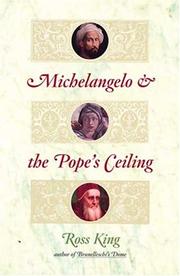
Four years, an artist who insisted he was a sculptor not a painter, and a pope who would not let him stop. King writes narrative history for general readers and is excellent on the physical practice — fresco technique, mould, the scaffold design, the arguments about money. The best possible first book on the subject.
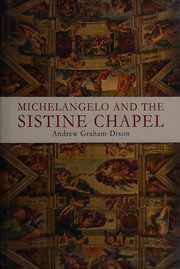
Covers the same commission with more attention to what the ceiling means — its theology, its Neoplatonism, its place in the chapel's existing decorative scheme. Read it second: King tells you how it was made, Graham-Dixon tells you what it is saying.
The life
BeginnerGet the full biography from three different angles — the archival scholar, the classic art-historical study and the restorer — and see how sharply the interpretations differ.
▸ Study plan for this stage
Pace: Two to three months. Wallace's Michelangelo is 268 pages, Hibbard's Michelangelo 347 and Forcellino's Michelangelo: A Tormented Life 300 — three to four weeks each. Read Wallace first for the documented life, then Hibbard for the work-in-relation-to-the-life, then Forcellino for technique and religi
- The documented life against the myth. Wallace's archival method — payment records, contracts, letters, account books — produces a Michelangelo who was an employer, a negotiator and a property owner, and it dismantles the solitary-genius account at the level of evidence.
- The workshop as a business: assistants, subcontractors, quarry contracts at Carrara, and the logistics of moving marble, all of which occupied a great deal of the artist's actual time.
- The Julius tomb as the career's defining failure — commissioned in 1505, renegotiated repeatedly across four decades, and finished in a drastically reduced form. Michelangelo called it his tragedy and it explains much of his working life.
- The major works in sequence: the Pietà, the David, the Sistine ceiling, the Medici Chapel and Laurentian Library, the Last Judgment, the Pauline Chapel frescoes, and St Peter's, which occupied his last decades.
- Michelangelo as architect, which readers who come for the sculpture and painting consistently underrate, and which is where his last twenty years went.
- Forcellino's restorer's eye — material damage, technique, unfinished surfaces, and what the physical objects reveal about how they were made.
- The non finito. A substantial number of the sculptures are unfinished, and whether that is circumstance, method or intention is genuinely contested among these three authors.
- The religious crisis of the later years, Michelangelo's involvement with the reform-minded circle around Vittoria Colonna, and his relationship with Tommaso de' Cavalieri — Forcellino is the most direct of the three on both.
- What does Wallace's account-book evidence actually show about how Michelangelo worked, and what myth does it displace?
- Trace the Julius tomb from commission to final installation. How many contracts, and what was lost at each renegotiation?
- Which of the three biographers gives the most convincing account of the unfinished sculptures, and what is their evidence?
- What does Forcellino's experience as a restorer let him see that Wallace's archives and Hibbard's connoisseurship do not?
- How do the three handle Michelangelo's relationships with Colonna and Cavalieri? Where do they differ in emphasis rather than in fact?
- Michelangelo spent his last decades on architecture. Why does that period get the least attention from general readers?
- Build a single chronology of Michelangelo's life with three columns: works begun, works completed, and works abandoned. The third column is longer than you expect and it is the argument of the stage.
- Reconstruct the Julius tomb's successive designs from the biographers' descriptions, sketching each version and the number of figures it called for.
- Take one specific work — the Medici Chapel, say — and read all three authors on it consecutively, then write a page on what each discipline (archives, art history, restoration) contributed.
- Make a list of every unfinished sculpture with the reason each author gives for its state, and mark where they disagree.
- Test Wallace's workshop argument by picking one project and listing every named collaborator, assistant and contractor involved. Compare the length of that list with the popular image.
Next up: Both the myth and its corrections trace back to two books written in Michelangelo's own lifetime, and the next stage is those books plus the poems.
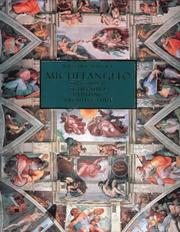
Wallace is the leading modern Michelangelo scholar and made his name proving, from account books, that Michelangelo ran a large and well-organised workshop rather than working alone as the myth insists. This is the biography to read for the documented life. Its catalogue record displays as simply 'Michelangelo'.
The classic single-volume art-historical study from 1974, still in print and still the most efficient account of the work in relation to the life. Shorter and more analytical than Wallace; read it as the compact counterpart. This is a different book from the Wallace biography above despite the identical display title, so buy by author.

Written by an art restorer who has physically worked on Michelangelo's sculpture, which gives it an unusual grasp of technique and material damage. Forcellino is also the most direct of the three on Michelangelo's religious crisis and his relationships with Vittoria Colonna and Tommaso de' Cavalieri.
The sixteenth-century sources
IntermediateRead the two contemporary biographies against each other, and then read Michelangelo himself, which is the only place his interior life is available first-hand.
▸ Study plan for this stage
Pace: Six to eight weeks. Vasari's Lives of the Artists is 320 pages in the widely available selections — read the Michelangelo life first, then Leonardo and Raphael for comparison, which is about a week. Condivi's The Life of Michelangelo is 156 pages and reads in two sittings; read it immediately after
- Vasari as the founding text of art history: the biographical model, the idea of progress from Cimabue to Michelangelo, and the invention of the artist's life as a genre.
- Vasari's two editions, 1550 and 1568, and the fact that the second was revised after Michelangelo's death and after Condivi's corrections — the text you read is already a response to a response.
- Condivi's specific corrections: the apprenticeship to Ghirlandaio, which Michelangelo wanted downplayed, the account of the Julius tomb, and the general project of presenting a self-taught genius answerable to nobody.
- Reputation management as a documented practice. Comparing the two lives is the best available lesson in how an artist shapes his own record while alive.
- The anecdotes that became the myth — the David's nose, the terribilità, the quarrels with popes — and the ability to trace each to its source and see whether it has one.
- Michelangelo as a serious poet rather than an artist who dabbled: over three hundred surviving poems, mostly sonnets and madrigals, in a difficult and compressed Italian.
- The Cavalieri sonnets, addressed to Tommaso de' Cavalieri, and the fact that Michelangelo's grand-nephew altered pronouns when he first published them in 1623 — a piece of editorial history that shaped four centuries of reading.
- Neoplatonic vocabulary in the poems — the figure already inside the marble, the ascent from physical to divine beauty — and its direct relation to the sculpture and to the ceiling's programme.
- Name three specific points where Condivi contradicts Vasari. What does Michelangelo gain from each correction?
- Vasari revised his Michelangelo life for the 1568 edition. What changed, and why?
- Condivi's book was dictated in effect by its subject. Does that make it more reliable or less, and about what?
- Take one famous anecdote about Michelangelo and trace it to its earliest source. Is it in Vasari, in Condivi, or in neither?
- The Cavalieri sonnets had their pronouns changed on first publication. What does the alteration tell you about the reception history, and what does restoring them change?
- Where do the poems say something about a specific sculpture that no biography does? Give an example.
- Read the Vasari and Condivi accounts of the same episode — the Ghirlandaio apprenticeship, or the Julius tomb — side by side, and produce a two-column comparison marking every factual and emphatic difference.
- Read Vasari's lives of Leonardo and Raphael after his Michelangelo. Write a page on what Vasari's scheme requires each of them to be.
- Take five poems from Saslow, read the Italian aloud alongside the translation, and choose one to analyse against a specific sculpture it relates to.
- Find the poems that use the image of the figure released from the block, and set them beside a photograph of one of the unfinished slaves. Write what each explains about the other.
- Build a short list of Michelangelo anecdotes you believed before this stage, and mark each as documented, sourced to Vasari or Condivi only, or untraceable.
Next up: You now know how the story was constructed; the next stage puts the story aside and looks systematically at the objects.
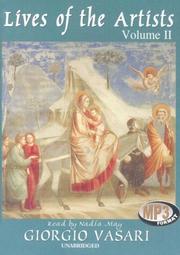
The founding text of art history, by a painter who knew Michelangelo and treated him as the summit of the whole story. Read the Michelangelo life, plus Leonardo and Raphael for comparison. Widely available as a selection rather than the complete work — the Oxford and Penguin editions both abridge, which is what the catalogue record here reflects.

The authorised life, dictated in effect by Michelangelo to a pupil in 1553, and published specifically to correct Vasari's version. Read it immediately after Vasari: the disagreements are the point, and comparing them is the best available lesson in how an artist manages his own reputation.

Over three hundred poems in Saslow's annotated translation, with the Italian facing. Michelangelo was a serious poet, and the sonnets to Cavalieri and the late religious poems say things about desire, ageing and salvation that no biographer can supply. The most intimate item on this path.
Looking at the work
IntermediateMove from the life to sustained analysis of the art itself — the body as his subject, the Last Judgement, and the sculpture and architecture the ceiling tends to overshadow.
▸ Study plan for this stage
Pace: Two months. Hughes' Michelangelo, the Phaidon Art and Ideas volume, is 352 pages, large-format and generously illustrated — it is the survey to have physically open beside you while reading anything else on this path, and should be worked through over three or four weeks. Hall's Michelangelo and the
- Hughes as the reference survey: the complete work in one illustrated volume, written by a scholar rather than a populariser, and the best value for money on the path.
- The sculpture in sequence — the Pietà, the David, the Moses, the Medici Chapel figures, the slaves, the late Pietàs — and the change in handling from the polished early marbles to the broken late ones.
- Hall's thesis, which is a real argument to be tested rather than a summary: that Michelangelo's treatment of the body broke deliberately with the classical tradition he is assumed to be continuing, and that proportion, gesture and left-right asymmetry are where the break is visible.
- Anatomy, dissection and the sixteenth-century knowledge Michelangelo actually had — where he is accurate, where he is deliberately not, and what the exaggeration is for.
- The Last Judgment as a single work unpacked completely: its programme, its post-Tridentine reception, the accusation of indecency, and the braghettoni added by Daniele da Volterra after Michelangelo's death.
- Partridge's method as the model for the stage — how one painting can be read historically, theologically and politically at once, and how much a monograph on a single object can hold.
- The 1980s and 1990s cleaning controversy over the Sistine frescoes, which changed what the ceiling and the Last Judgment look like and which is still argued about among conservators.
- The change in Michelangelo's late style — rougher surfaces, distorted proportion, an abandonment of finish — and the competing explanations of it as age, as religious feeling, or as deliberate development.
- State Hall's thesis in one sentence, then find one work that supports it strongly and one that resists it.
- How does Michelangelo's handling of marble change from the Pietà to the Rondanini Pietà? Describe the difference in physical terms, not in emotional ones.
- What exactly was objected to in the Last Judgment, by whom, and when? Separate the sixteenth-century objections from the modern reputation of the episode.
- What did the cleaning of the Sistine frescoes reveal, and what do its critics say was lost?
- Where is Michelangelo anatomically wrong on purpose? Name a specific figure and say what the distortion achieves.
- Partridge devotes a book to one fresco. What does that scale of attention find that a survey chapter cannot?
- Using Hughes' plates, arrange ten works in chronological order and write one sentence per work on how the treatment of the body has changed since the previous one.
- Test Hall's thesis directly: choose one classical sculpture Michelangelo knew — the Laocoön, the Belvedere Torso — and compare it in detail with a specific Michelangelo figure, listing every deliberate departure.
- Take Partridge's reading of the Last Judgment and reconstruct the fresco's zones on a labelled diagram, marking which figures drew objections and which were overpainted.
- Find before-and-after images of the Sistine cleaning and write down, from your own looking, what changed. Then read what each side claims.
- Choose one unfinished slave and write two paragraphs: one describing only the physical evidence of tool marks and stages of work, the other on what that evidence suggests about how Michelangelo carved.
Next up: Michelangelo did not work alone or in a vacuum, and the last stage puts him back among his competitors, his patrons and finally the novel that turned him into a myth.
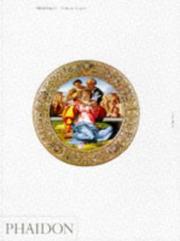
The Phaidon Art and Ideas volume, catalogued as 'Michelangelo A&I (Art and Ideas)': large-format, generously illustrated, and written by a scholar rather than a populariser. The best value survey of the complete work, and the one to have open beside you while reading anything else here. A third distinct book on this path filed under the name Michelangelo — buy by author.
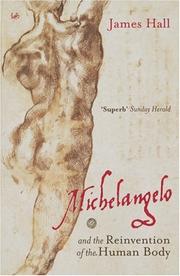
An argument rather than a survey — that Michelangelo's treatment of the body broke deliberately with the classical tradition he is assumed to be continuing. Read after Hughes, once you know the works well enough to test the claim.
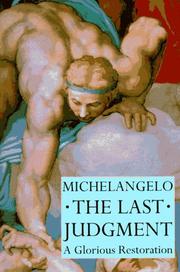
A focused study of the single most controversial work — the fresco that got its nudes painted over and its artist accused of indecency. Read it as the model for how a single painting can be unpacked historically, theologically and politically. Catalogued as 'Michelangelo--the Last Judgment'.
The world around him
IntermediatePlace Michelangelo among his rivals and inside the Renaissance art system — patrons, competition, workshops — and finish with the novel that shaped the popular image of him.
▸ Study plan for this stage
Pace: Two to three months. Goffen's Renaissance Rivals is 521 pages of scholarly argument — read it first, over about a month, because it changes how everything you have already read looks. Paoletti and Radke's Art in Renaissance Italy is 544 pages and is a standard survey textbook organised by city and p
- Competition as a working condition rather than a personality clash. Goffen reads Michelangelo, Leonardo, Raphael and Titian as rivals who watched and undercut each other, with the ancient artists as their other competitors.
- The Battle of Cascina and the Battle of Anghiari — Michelangelo and Leonardo commissioned for facing walls of the same room in Florence, neither finished, and an episode that makes no sense outside a competitive frame.
- Paragone, the formal debate over the relative merits of painting and sculpture, and Michelangelo's position in it, which is not incidental to his refusal to be called a painter.
- Raphael in the Stanze, painting in the Vatican at the same time as the Sistine ceiling was going up next door, and the traffic of influence between them.
- Patronage as the actual engine: popes, the Medici, guilds and confraternities, and the commissioning process — contract, price, materials specified, deadlines and penalties. Paoletti and Radke are unusually good on this.
- The economics of art: what a commission cost, who paid, what marble cost to quarry and move, and what an artist's social position actually was.
- The Agony and the Ecstasy as a documented influence on the popular image, and the specific things it invents — interior monologue, motives, relationships — presented in a form that reads as biography.
- The full arc of the path: a novel invented the myth, Vasari and Condivi seeded it, and Wallace's account books, Goffen's rivalries and Paoletti's patronage structures dismantle it. Reading Stone last is what makes that visible.
- What does Goffen's rivalry frame explain about the Cascina and Anghiari commissions that a single-artist biography cannot?
- How did Michelangelo and Raphael's simultaneous Vatican work affect each other? What is the evidence, as opposed to the anecdote?
- What is the paragone, and where does Michelangelo state his position on it? Check the poems and the letters, not just the biographies.
- Using Paoletti and Radke, describe what a typical major commission's contract specified. What did the patron control?
- Pick three things The Agony and the Ecstasy asserts and check each against Wallace, Hibbard and Forcellino. What proportion holds up?
- After the whole path, which single source did most to construct the Michelangelo you had in your head before you started?
- Build a timeline placing Michelangelo, Leonardo, Raphael and Titian in the same years and cities, marking every point where two of them were competing for the same patron or the same room.
- Take one commission — the Sistine ceiling, the David, the Medici Chapel — and reconstruct its patronage story from Paoletti and Radke: who commissioned it, why then, what it cost, what the contract required.
- Read Goffen on the Cascina and Anghiari episode, then look at the surviving copies and studies for both, and write a page on what the room would have been.
- Read one chapter of The Agony and the Ecstasy and annotate it against Wallace's documented life, marking every invented scene, motive or conversation.
- Write a final two-page account of Michelangelo as you now understand him, and then note explicitly which stage of this path supplied each element of it.
- Choose one work you have looked at throughout and write about it a final time, drawing on the practice from stage 1, the biography from stage 2, the sources from stage 3, the visual analysis from stage 4 and the context from stage 5.
Next up: The path closes here: with the myth and its dismantling both in view, the natural continuations are the primary letters and contracts in translation, the scholarship on Michelangelo's architecture and St Peter's, and monographs on the rivals Goffen introduces.
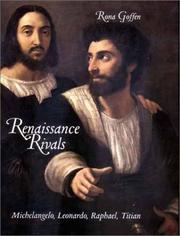
Michelangelo, Leonardo, Raphael and Titian read as competitors who watched and undercut each other, with the ancient artists as their other rivals. The best corrective to reading Michelangelo alone, and it explains commissions — the Battle of Cascina, the Stanze — that make no sense without the competition.
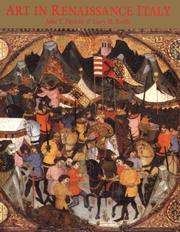
Paoletti and Radke's standard survey textbook, organised by city and period, and unusually good on patronage, guilds and the economics of commissions. Use it as the reference framework for everything above.

The 1961 biographical novel that is where most people's mental image of Michelangelo comes from. Read it last and knowingly: it is fiction, it invents dialogue and motives freely, and its lonely tormented genius is precisely the myth Wallace's archival work dismantles. Enjoyable on those terms, misleading on any other.
Discussion
Keep reading
Paths that share books, cover the same subject, or open a related topic.