Leo Tolstoy Reading Order: Where to Start
This curriculum moves through Tolstoy's major phases in roughly the order he wrote them, letting each stage build the reader's feel for his style, moral vision, and spiritual evolution. Starting from the intermediate level, we begin with the short fiction — where Tolstoy's craft is most concentrated — before ascending to the two great novels, and finally arriving at the late religious and philosophical writings that consumed the last decades of his life.
The Short Fiction: Tolstoy's Art in Miniature
IntermediateDevelop fluency with Tolstoy's narrative voice, moral preoccupations, and psychological realism through his most accessible and concentrated works before tackling the novels.
▸ Study plan for this stage
Pace: 8–10 weeks total: Weeks 1–3 for "The Death of Ivan Ilyich and The Devil" (~20–25 pages/day, including re-reading key passages); Weeks 4–6 for "The Kreutzer Sonata Variations" (~25 pages/day, alternating primary text with Katz's critical apparatus); Weeks 7–10 for "Hadji Murat" (~20 pages/day with sl
- Tolstoy's psychological realism: the interior monologue and moment-by-moment rendering of consciousness, especially in Ivan Ilyich's dying mind
- The 'death as mirror' device — how Tolstoy uses mortality to strip away social pretense and reveal authentic selfhood (Ivan Ilyich, The Devil)
- Moral dualism and the war between flesh and spirit: carnal temptation versus spiritual redemption as dramatized in The Devil and The Kreutzer Sonata
- Narrative frame and unreliable narration: how Katz's critical edition of The Kreutzer Sonata exposes Pozdnyshev as a self-deceiving, ideologically possessed narrator
- Tolstoy's late-period didacticism and the tension between artistic beauty and moral preaching — the reader must hold both in view simultaneously
- The epic miniature in Hadji Murat: how Tolstoy achieves the scope and moral complexity of a novel within a novella through mosaic-style chapter structure
- Otherness and empire: Tolstoy's sympathetic but unflinching portrayal of Chechen culture and Russian imperial violence in Hadji Murat
- Compression as craft: how the short form forces Tolstoy to make every scene, image, and dialogue exchange carry maximum thematic weight
- In 'The Death of Ivan Ilyich,' what is the significance of Gerasim's peasant simplicity compared to the behavior of Ivan's family and colleagues — and what does this contrast reveal about Tolstoy's moral philosophy?
- How does 'The Devil' complicate a straightforward moral reading? Is Evgeny Irtenev a victim of circumstance, a weak-willed sinner, or something more ambiguous — and how do the two alternate endings change your answer?
- Using Katz's critical apparatus in 'The Kreutzer Sonata Variations,' how do the manuscript variants and critical essays alter or deepen your reading of Pozdnyshev's confession? Is his account of marriage and jealousy meant to be taken at face value?
- What narrative technique does Tolstoy use in 'Hadji Murat' to prevent any single character — Russian or Chechen — from monopolizing the reader's sympathy, and why is this politically and artistically significant?
- Across all three books, how does Tolstoy use the moment of death or the prospect of death as a narrative and philosophical instrument?
- How does reading these three works in sequence reveal an evolution — or a consistency — in Tolstoy's preoccupations with authenticity, self-deception, and the good life?
- Close-reading journal: After finishing 'The Death of Ivan Ilyich,' write a 400–600 word analysis of a single scene (e.g., the black sack passage, or Gerasim holding Ivan's legs) — identify every narrative technique Tolstoy uses and explain how it serves the story's moral argument.
- Dual-ending comparison for 'The Devil': Write a one-page comparative note on both endings Tolstoy drafted. Argue which ending is artistically stronger and which is morally more honest — then consider whether those are the same thing.
- Unreliable narrator exercise using 'The Kreutzer Sonata Variations': Re-read Pozdnyshev's account of the night of the murder, then write a brief 'counter-testimony' from the perspective of his wife — using only evidence already present in the text. Use Katz's critical essays to check your assumptions.
- Mosaic mapping of 'Hadji Murat': Create a chapter-by-chapter diagram tracking which character or group each chapter follows (Hadji Murat, Russian officers, Tsar Nicholas, Chechen villagers, etc.). Annotate each node with its dominant tone and moral implication, then write a paragraph on what the structure itself argues.
- Comparative thematic essay (500–800 words): Choose one theme — self-deception, sexual desire, loyalty, or the fear of death — and trace it across all three books, using specific textual evidence from each. This synthesizes the whole stage.
- Imitation exercise: Write a 1–2 page scene in Tolstoy's style — third-person close narration, present-tense interiority, a morally charged everyday situation — then annotate your own draft to identify where you succeeded or struggled to replicate his technique.
Next up: Mastering Tolstoy's narrative voice, moral architecture, and psychological interiority in these concentrated short works gives the reader the interpretive stamina and stylistic fluency needed to sustain those same analytical skills across the vast canvases of the major novels.
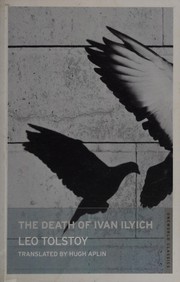
The perfect entry point: a short, devastating masterpiece that introduces Tolstoy's central themes — the falseness of bourgeois life, the terror of death, and the possibility of spiritual redemption. Reading this first gives you the emotional and thematic key to everything that follows.

A fierce, uncomfortable novella on marriage, desire, and moral hypocrisy. It deepens your sense of Tolstoy's increasingly radical moral voice and prepares you to read Anna Karenina's treatment of love and society with greater critical awareness.

Written near the end of his life but set in the Caucasus of his youth, this novella is widely considered his most perfectly crafted narrative. It bridges his early epic storytelling and his late moral severity, and is essential reading before War and Peace.
The First Great Novel: Society, Love, and Moral Reckoning
IntermediateRead Anna Karenina with full appreciation of Tolstoy's dual narrative structure, his critique of Russian society, and the spiritual arc of Levin — the character who most directly anticipates Tolstoy's later religious turn.
▸ Study plan for this stage
Pace: 8–10 weeks, ~25–30 pages/day (the novel is ~850 pages in most translations). Read one Part per week (there are 8 Parts), allowing extra time in weeks 7–8 for Parts VII and VIII, which are the most philosophically dense. Reserve the final week for review, re-reading key passages, and completing exerc
- Dual narrative structure: the Anna plot and the Levin plot run in deliberate counterpoint — track how Tolstoy interweaves them to create moral and thematic contrast rather than mere variety
- Critique of Russian high society: the novel exposes the hypocrisy, artificiality, and moral bankruptcy of Petersburg aristocratic life, contrasted with the more grounded rhythms of rural, agrarian Russia
- The 'fallen woman' and social determinism: Anna's tragedy is shaped as much by rigid social codes and the double standard applied to women as by her own passion — examine how Tolstoy both sympathizes with and judges her
- Levin as spiritual seeker: Levin's arc — from social awkwardness and romantic longing through agricultural philosophy to his climactic spiritual awakening in Part VIII — is the novel's moral backbone and anticipates Tolstoy's later religious crisis
- Oblonsky and moral levity: Stiva functions as a comic foil who glides through the same social world that destroys Anna, illustrating how privilege and charm insulate men from consequences
- The train as symbol: the railway appears at Anna's first meeting with Vronsky, at the death of a worker (an omen), and finally as the instrument of Anna's suicide — track this motif as Tolstoy's emblem of modernity's destructive force
- Jealousy, possession, and erotic love: Tolstoy dissects romantic passion as a form of ego-driven possession in both the Anna–Vronsky relationship and, more gently, in Levin's courtship of Kitty
- Epigraph and moral judgment: 'Vengeance is mine; I will repay' (Romans 12:19) — the novel's epigraph frames the entire work; consider who is being judged, by whom, and whether Tolstoy's own moral stance is consistent or contradictory
- How does Tolstoy use the structural alternation between Anna's story and Levin's story to build a moral argument? What would be lost if either narrative were removed?
- In what specific ways does Russian high society (particularly Petersburg society) function as a destructive force in the novel, and how does Tolstoy distinguish it from the rural world Levin inhabits?
- Trace the railway/train motif from the novel's opening to its conclusion. What does Tolstoy seem to be saying about modernity, fate, and human agency through this recurring image?
- How does Levin's spiritual awakening in Part VIII grow organically out of everything that precedes it — his farming philosophy, his fear of death, his marriage to Kitty, and his conversations with the peasant Fyodor?
- Is Tolstoy's treatment of Anna sympathetic, condemnatory, or genuinely ambivalent? Use specific scenes (the races, the opera, her final interior monologue) to support your reading.
- How do Oblonsky and Vronsky each represent different facets of male privilege in the novel, and why does society forgive them in ways it refuses to forgive Anna?
- Dual-narrative journal: Keep a two-column reading journal — one column for Anna/Vronsky scenes, one for Levin/Kitty scenes. After each Part, write 2–3 sentences on how the two columns 'speak to' or ironize each other in that section.
- Motif map: Create a visual timeline of every appearance of trains, railways, and railway workers in the novel. Annotate each entry with the emotional context and what narrative event it precedes or follows. Write a short paragraph interpreting the pattern.
- Character moral ledger: For Anna, Vronsky, Levin, Kitty, Oblonsky, and Karenin, build a simple 'ledger' of morally significant actions and their social consequences. Use this to evaluate whether the novel's moral universe is fair, consistent, or deliberately ironic.
- Epigraph essay: Write a 400–600 word response to the question: 'Who or what enacts vengeance in Anna Karenina, and does Tolstoy endorse, question, or complicate the epigraph's implied moral framework?'
- Levin's awakening close-read: Re-read the final chapters of Part VIII (from Levin's conversation with the peasant Fyodor through the novel's last page). Annotate the text for every idea that reappears in Tolstoy's later non-fiction worldview (goodness, living for others, rejection of reason as the sole guide). Write a one-page reflection on how this ending functions as a hinge between the 'novelis
- Societal double-standard analysis: Select three scenes in which a character's transgression is either punished or forgiven by society. Write a comparative paragraph for each, identifying the gender, class, and social capital of the character involved. Conclude with a thesis about what Tolstoy's social critique ultimately argues.
Next up: Levin's unresolved spiritual hunger at the close of Anna Karenina — his sense that rational thought cannot answer life's deepest questions — is precisely the crisis Tolstoy himself lived through in the late 1870s, making the next stage's focus on his confessional and religious writings a direct continuation of the journey the reader has already begun inside the novel.

Having absorbed Tolstoy's moral and psychological concerns through the short fiction, you are now ready for this novel's full complexity. Pay particular attention to Levin's subplot, which is the spiritual and autobiographical heart of the book and the direct precursor to the late religious writings.
The Epic: History, Free Will, and the Human Swarm
ExpertEngage with War and Peace as both a supreme work of fiction and a philosophical argument about history, determinism, and how individuals find meaning within vast, impersonal forces.
▸ Study plan for this stage
Pace: 10–12 weeks, ~25–35 pages/day (accounting for the novel's ~1,300 pages across four volumes plus the two epilogues); plan for slower reading during the major battle sequences and the Second Epilogue's dense philosophical essays, and schedule at least two full "pause weeks" — one after Volume II and o
- Tolstoy's philosophy of history: the 'swarm theory' of human action, in which great events are driven not by great men but by the cumulative, unconscious will of millions
- The illusion of individual agency vs. determinism: how Napoleon and Kutuzov serve as contrasting symbols — Napoleon as the self-deceived 'great man,' Kutuzov as the leader who understands his own powerlessness and yields to the flow of events
- The Second Epilogue as philosophical treatise: Tolstoy's direct argument that historians falsify causation by attributing mass events to individual 'commands,' and his unresolved tension between determinism and moral responsibility
- Spiritual and existential transformation: the recurring arc of Pierre, Andrei, and Natasha as characters who must be shattered by history before they can find authentic meaning — death, captivity, illness, and war as crucibles of selfhood
- The domestic vs. the epic: how Tolstoy uses the Rostov and Bolkonsky households to ground vast historical forces in intimate, sensory, human-scale experience, arguing that 'real life' happens in the margins of history books
- Free indirect discourse and narrative omniscience: Tolstoy's technique of moving seamlessly between a character's inner voice and an ironic authorial perspective, creating simultaneous empathy and critical distance
- The nature of war itself: Tolstoy's relentless demythologization of battle — fog, chaos, accident, and fear replacing heroic narrative — anticipating later literary realism and modernism
- Moral simplicity vs. intellectual complexity: the contrast between characters who 'know' too much (Andrei's cold rationalism, Napoleon's strategic ego) and those who feel rightly (Natasha's spontaneity, Platon Karataev's peasant acceptance)
- How does Tolstoy use the contrasting figures of Napoleon and Kutuzov to dramatize his argument that historical outcomes cannot be controlled by individual will, and what narrative techniques make this argument felt rather than merely stated?
- Trace Pierre Bezukhov's spiritual journey from dissolute aristocrat to Freemason to prisoner to husband: what does each crisis teach him, and how does his final state of 'joyful calm' relate to Tolstoy's deterministic philosophy?
- What is the function of the Second Epilogue within the novel as a whole — is it a flaw, a necessary culmination, or something else — and how does Tolstoy's argument there both clarify and complicate the fiction that precedes it?
- How does Tolstoy represent the Battle of Borodino through multiple perspectives (Andrei, Pierre, Napoleon, Kutuzov, anonymous soldiers), and what cumulative picture of war does this mosaic technique produce?
- In what ways do the domestic scenes — the Rostov hunt, Natasha's first ball, the death of old Prince Bolkonsky — carry philosophical weight equal to the battlefield chapters, and what does this structural choice argue about where history 'really' happens?
- How does the concept of Platon Karataev function philosophically? Is he a genuine ideal for Tolstoy, a naïve foil, or an ambiguous figure, and how does Pierre's memory of him in the epilogue complicate a simple reading?
- Maintain a dual-column reading journal throughout: on the left, track plot and character; on the right, log every moment where Tolstoy's narrator steps out of the fiction to make a historical or philosophical claim — by the end you will have a map of the novel's argumentative skeleton
- After finishing each of the four volumes, write a one-page 'history from below' summary: retell the major events of that volume entirely from the perspective of a minor, unnamed character (a soldier, a servant, a provincial landowner) — this forces you to inhabit Tolstoy's swarm-theory perspective
- Read the Second Epilogue twice: first straight through as philosophy, then again annotating every claim against specific scenes from the novel that either support or contradict it — write a 600-word response arguing whether the epilogue enriches or undermines the fiction
- Select one major battle (Austerlitz, Borodino, or the retreat from Moscow) and compare Tolstoy's account against a brief historical summary of the same event; note every place Tolstoy distorts, omits, or reframes the record, and write a paragraph on what each distortion reveals about his artistic and philosophical priorities
- Choose one of the three central characters (Pierre, Andrei, or Natasha) and chart their complete arc on a single timeline, marking each turning point with the external historical event that triggers it — then write a short essay on whether the character's transformation feels self-determined or historically caused
- Stage a structured debate with yourself (or a reading partner): argue first that War and Peace is primarily a novel (the philosophy serves the characters), then argue the opposite (the characters serve the philosophy) — write up the strongest points from each side and conclude with your own synthesis
Next up: Mastering Tolstoy's argument that history overwhelms individual will — and his simultaneous insistence on the moral weight of each private life — equips the reader to engage with the later, more concentrated works (Anna Karenina, the novellas, the religious writings) where the same tension between determinism and personal responsibility is fought out on an intimate domestic scale rather than a con

Placed here — after Anna Karenina — so that Tolstoy's philosophical essays embedded in the novel feel like a natural deepening rather than an interruption. The spiritual journeys of Pierre and Natasha will resonate far more richly after you have already lived inside Tolstoy's moral world.
The Late Turn: Faith, Renunciation, and the Kingdom of God
ExpertUnderstand the radical spiritual and social philosophy Tolstoy developed after his crisis of faith in the late 1870s — the worldview that underlies all his late fiction and influenced Gandhi, Wittgenstein, and the nonviolence movement.
▸ Study plan for this stage
Pace: 8–10 weeks total: Week 1–2 — A Confession and What I Believe (Tolstoy's personal crisis and first doctrinal statement, ~20–25 pages/day, re-reading key passages twice); Week 3–4 — What I Believe (Лев Толстой edition, close reading of the five commandments and gospel reinterpretation, ~15–20 pages/da
- The existential crisis of the late 1870s: Tolstoy's confrontation with death, meaninglessness, and the failure of rational philosophy to provide answers — as narrated in A Confession
- Tolstoy's rejection of institutional Christianity (Orthodox Church, state religion) in favor of a stripped-down, rational reading of the Gospels focused solely on Christ's ethical teachings
- The Five Commandments distilled in What I Believe: non-resistance to evil by force, no oath-taking, no lust, no divorce, love of enemies — each treated as a literal, actionable rule
- Non-resistance to evil (ahimsa avant la lettre): the cornerstone doctrine drawn from Matthew 5:39, its philosophical grounding, and why Tolstoy saw all state violence as its direct negation
- The Kingdom of God as an inner, present, social reality — not an afterlife reward — achievable through collective moral transformation rather than institutional reform
- The critique of the State, the Church, and the Army as a mutually reinforcing triangle of coercion that perpetuates violence and prevents the Kingdom of God from being realized
- Conscience vs. coercion: Tolstoy's argument in The Kingdom of God Is Within You that every individual's moral awakening, multiplied, is more powerful than any political revolution
- Tolstoy's influence pathway: how these three texts directly shaped Gandhi's concept of Satyagraha, informed Wittgenstein's ethical notebooks, and seeded twentieth-century nonviolent resistance movements
- In A Confession, what specific intellectual and emotional stages does Tolstoy describe in his crisis, and why does he conclude that neither science nor philosophy — only a certain kind of faith — can answer the question 'Why live?'
- How does Tolstoy's reading of the Sermon on the Mount in What I Believe differ from standard Orthodox interpretation, and what textual and logical moves does he make to arrive at his five literal commandments?
- What is Tolstoy's precise argument in The Kingdom of God Is Within You against the claim that some violence is justified to prevent greater violence — and how does he answer the 'necessary evil' objection?
- How do the three books form a logical progression — from personal confession, to doctrinal statement, to social-political manifesto — and what tensions or contradictions, if any, appear across them?
- According to The Kingdom of God Is Within You, what role does 'public opinion' play in the eventual abolition of violence, and why does Tolstoy believe it is more decisive than legislation or revolution?
- In what ways do the ideas in these three texts contradict or complicate the worldview expressed in Tolstoy's earlier fiction (Anna Karenina, War and Peace), and what continuities can also be traced?
- Confession mapping: After reading A Confession, draw a timeline of Tolstoy's spiritual crisis with labeled phases (despair, inquiry, rejection of science, turn to peasant faith). Annotate each phase with a direct quotation from the text and a one-sentence explanation of what moved him to the next stage.
- Commandment close-reading: For each of the five commandments in What I Believe, write a half-page exegesis: (1) the Gospel verse Tolstoy cites, (2) the standard interpretation he rejects, (3) his alternative reading, and (4) one real-world scenario where applying the commandment would be most difficult.
- Steelman-and-rebut: Select the strongest counter-argument Tolstoy addresses in The Kingdom of God Is Within You (e.g., 'non-resistance enables tyranny'). Write a 400-word dialogue in which an imagined opponent presents the objection and Tolstoy responds using only arguments and evidence from the text.
- Influence tracing: Research (outside the texts) one documented instance of Gandhi's or Wittgenstein's direct engagement with Tolstoy's ideas. Write a one-page note explaining which specific concept from these three books appears in the other thinker's work and how it was transformed.
- Cross-book synthesis essay: Write a 600–800 word essay arguing either that the three books form a coherent, unified philosophy or that they contain irresolvable tensions. Use at least one specific passage from each book as evidence.
- Personal application journal: After finishing all three books, spend one week writing a daily 10-minute journal entry asking: 'Where in my own life does coercion — internal or external — substitute for conscience?' Use Tolstoy's vocabulary (non-resistance, kingdom within, moral awakening) deliberately.
Next up: Mastering Tolstoy's late philosophical system — its rejection of violence, institutional religion, and state power — provides the essential interpretive lens for reading his late fiction (The Death of Ivan Ilyich, Master and Man, Resurrection, Hadji Murat), where these doctrines are dramatized, tested, and sometimes quietly questioned through character and narrative rather than argument.

Read this first among the late writings: it is Tolstoy's own account of his spiritual breakdown and rebirth, written with the same narrative power as his fiction. It makes every subsequent religious text legible and urgent.
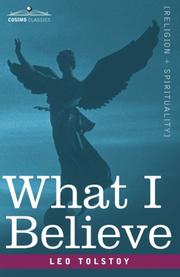
A systematic statement of Tolstoy's reinterpreted Christianity — nonviolence, rejection of the state and church, and the primacy of the Sermon on the Mount. It is the doctrinal companion to A Confession and the foundation for The Kingdom of God Is Within You.
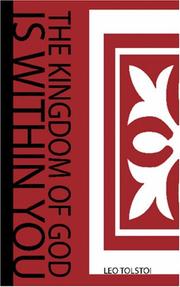
Tolstoy's most fully developed and historically influential work of religious philosophy. Reading it last in the curriculum, after the fiction and the earlier confessional writings, reveals how every thread of his life's work — moral, artistic, and spiritual — converges here.
Discussion
Keep reading
Paths that share books, cover the same subject, or open a related topic.