Kinesiology is the science of human movement, and it collapses into memorization if you learn it out of order. You cannot reason about how a joint moves until you know what crosses it; you cannot program training until you understand energy systems and motor control. So the sequence runs from structure to mechanics to physiology to skill, and each layer makes the next intelligible.
This path is useful for students, coaches, and rehab-minded readers alike, with one honest caveat: these books build knowledge of how bodies move, not a license to diagnose or treat. Clinical decisions belong to qualified professionals.
Learn the map first
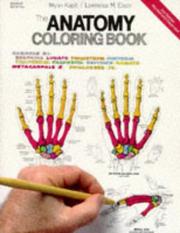
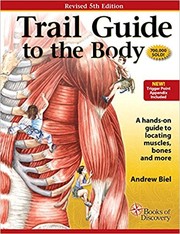
Start with The anatomy coloring book, which sounds humble but is one of the most effective ways to actually retain musculoskeletal anatomy. Then move to Trail guide to the body, a palpation-focused guide that teaches you to find muscles, bones, and landmarks by touch, and The Concise Book of Muscles for a clean reference on each muscle's origin, insertion, and action. This trio gives you the vocabulary of movement.
The mechanics of motion
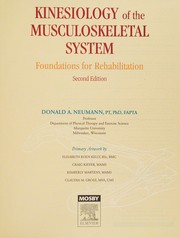
With the anatomy in hand, learn how it all moves. Kinesiology of the musculoskeletal system is the definitive text linking anatomy to joint mechanics and function, and it anchors the path. Biomechanics of human motion adds the quantitative, physics-based view of forces, levers, and torque. Together they turn a static map into a moving system you can analyze.
Performance, control, and integration
The final layer is about producing and improving movement. Essentials of Strength Training and Conditioning is the field standard for exercise science and program design, and Exercise physiology : nutrition, energy, and human performance is the comprehensive reference on how the body fuels and adapts to effort. Motor learning and performance explains how skills are actually acquired and retained, which is what coaching really trades in. Movement, Functional Movement Systems offers a widely used framework for screening movement quality, and Anatomy trains closes with the fascial, whole-body perspective that reframes muscles as parts of continuous lines of tension.
Read in this order, kinesiology becomes a connected science rather than a list of Latin names. Follow the full path from anatomy to applied performance, and leave diagnosis to the clinicians.
Follow the full reading path →
Ready to learn something deeply?
Build a reading path — free