Physical therapy careers: healing hands, secure future
This curriculum takes a beginner from zero background all the way to clinical readiness for a PT, PTA, or aide role. It starts with the "why" and career landscape, builds essential movement science and anatomy, then develops patient care and rehabilitation skills — each stage assuming the vocabulary and concepts locked in by the previous one.
Career Foundations & the PT World
BeginnerUnderstand what physical therapists, PTAs, and aides actually do day-to-day, what education paths exist, and whether this career is the right fit — before investing in science coursework.
▸ Study plan for this stage
Pace: 4–5 weeks, ~20–25 pages/day (the book is ~300 pages); read Mon–Fri and use weekends for review, reflection, and exercises
- The scope of physical therapy practice: what PTs, PTAs, and aides each do, and where their roles legally and ethically begin and end
- The history and evolution of the PT profession — from post-WWI reconstruction aides to today's doctoral-level clinicians
- Educational pathways: the Doctor of Physical Therapy (DPT) degree, PTA associate programs, and the role of clinical education hours
- Practice settings and patient populations: hospitals, outpatient clinics, schools, home health, sports, pediatrics, geriatrics, and more
- The PT patient/client management model: examination, evaluation, diagnosis, prognosis, intervention, and outcomes
- Professional organizations, licensure, and credentialing (APTA, state boards, the NPTE)
- Core professional values: evidence-based practice, patient-centered care, cultural competence, and ethical responsibility
- Self-assessment for career fit: physical demands, interpersonal requirements, job outlook, and salary realities
- In your own words, what is the legal and practical difference between a PT, a PTA, and a PT aide — and why does that distinction matter for patient safety?
- What historical events (e.g., WWI, polio epidemics, Medicare legislation) most significantly shaped the PT profession, and how do their effects show up in modern practice?
- Walk through the six elements of the patient/client management model as described by Pagliarulo. What happens at each step?
- Which practice settings interest you most, and what does Pagliarulo say about the typical caseload, pace, and skill demands of those settings?
- What are the minimum educational and licensure requirements to practice as a PT vs. a PTA in the United States, and what does the path to the DPT look like?
- After reading this book, what specific aspects of PT work excite you, and what challenges do you feel least prepared for — and why?
- Shadow or interview: Arrange at least one in-person or virtual informational interview with a PT AND a PTA. Use Pagliarulo's role descriptions as a checklist — ask them to confirm, contradict, or add nuance to what the book says.
- Settings map: Draw or build a simple chart listing every practice setting Pagliarulo describes. For each, note the typical patient population, the PT's primary role, and one skill or personality trait the book implies is essential there. Use this to rank your top three settings.
- Patient management model walkthrough: Find a publicly available PT case study online (many APTA resources are free). Map the case onto Pagliarulo's six-element model — identify where examination ends and evaluation begins, what the stated prognosis is, etc.
- Career-fit self-audit: After finishing the book, write a one-page honest reflection answering: (1) What physical and emotional demands does Pagliarulo describe? (2) Do I meet them today? (3) What do I need to develop? Keep this document — you'll revisit it at the end of the full curriculum.
- Licensure research sprint: Using your state's physical therapy board website alongside Pagliarulo's overview, document the exact prerequisites, application steps, and fees required for PT licensure in your state. Note any discrepancies with what the book describes.
- Vocabulary flashcard deck: As you read, flag every bolded or defined term in Pagliarulo. Build a flashcard deck (physical or digital, e.g., Anki) of at least 40 terms. Quiz yourself at the end of each week — this deck will grow throughout the entire curriculum.
Next up: Pagliarulo establishes what PTs do and why the profession exists; the next stage builds on that foundation by introducing the biological sciences (anatomy, physiology, kinesiology) that make it possible to actually do it — turning career curiosity into scientific competency.

The single most widely used career-overview text in PT programs; covers the profession's history, scope of practice, roles of PT vs. PTA vs. aide, and education requirements — the perfect starting map.
Movement Science Fundamentals
BeginnerBuild a working knowledge of human anatomy, kinesiology, and how the musculoskeletal system produces and controls movement — the scientific language every PT course assumes you speak.
▸ Study plan for this stage
Pace: 10–13 weeks total. Weeks 1–4: The Anatomy Coloring Book by Wynn Kapit — work through ~8–10 plates per sitting, 4–5 sessions per week, coloring and labeling actively rather than just reading. Weeks 5–13: Kinesiology of the Musculoskeletal System by Donald A. Neumann — ~25–30 pages per day, 4 days per
- Anatomical terminology and directional language (proximal/distal, origin/insertion, planes of motion, axes of rotation) as introduced through Kapit's systematic plate organization
- Skeletal architecture: bone classifications, joint types (synarthrosis, amphiarthrosis, diarthrosis), and articular surface geometry as the structural foundation Neumann builds upon
- Muscle architecture and force production: fiber arrangement (pennate vs. parallel), physiological cross-sectional area, and the length-tension relationship detailed in Neumann's foundational chapters
- Osteokinematics vs. arthrokinematics: Neumann's distinction between gross limb motion and the roll-slide-spin mechanics occurring at joint surfaces — a cornerstone concept for understanding PT interventions
- Torque, moment arms, and mechanical advantage: how Neumann applies free-body diagram analysis to muscles and joints to explain why certain postures and movements are injurious or protective
- The line of pull and muscle action: how a muscle's anatomical position relative to a joint's axis determines whether it acts as a mover, stabilizer, or both — revisited in every regional chapter of Neumann
- Regional musculoskeletal interdependence: how Kapit's regional plates (shoulder girdle, lumbopelvic region, lower extremity) map directly onto Neumann's regional biomechanical analyses, reinforcing that no joint acts in isolation
- Neuromuscular control basics: Neumann's coverage of muscle activation patterns, co-contraction for joint stability, and the role of proprioception in movement regulation
- After completing Kapit's plates on the shoulder complex, can you name the four rotator cuff muscles, identify their origins and insertions, and predict their actions based solely on their line of pull relative to the glenohumeral joint axis?
- Using Neumann's framework, what is the difference between osteokinematics and arthrokinematics, and why does a PT need to understand both when assessing a patient with limited knee flexion?
- How does Neumann's concept of a 'moment arm' explain why a slight change in joint angle can dramatically increase or decrease the compressive load on the lumbar spine during lifting?
- Kapit dedicates plates to both the bony pelvis and the hip musculature — how do the bony landmarks you colored (ASIS, greater trochanter, ischial tuberosity) serve as attachment sites that determine the torque-producing capacity of the gluteal muscles as described by Neumann?
- What is the 'close-packed position' of a joint as defined by Neumann, and why is this concept clinically relevant for understanding injury risk and joint mobilization?
- How do Neumann's principles of muscle force couples (e.g., in scapular upward rotation or lumbo-pelvic rhythm) demonstrate that functional movement requires coordinated action across multiple muscles rather than isolated contractions?
- Active coloring with self-quizzing: After completing each Kapit plate, close the book and redraw the structure from memory on blank paper, labeling origins, insertions, and bony landmarks — then reopen and self-correct in a different color.
- Joint motion mapping: For each major joint covered in Neumann (glenohumeral, hip, knee, ankle, lumbar spine), create a one-page reference card listing: joint type, degrees of freedom, close- and open-packed positions, primary movers, and stabilizers — cross-referenced to the matching Kapit plate numbers.
- Moment arm sketching: When Neumann introduces a muscle's action at a joint, sketch a simple free-body diagram showing the joint axis, the muscle's line of pull, and the resulting moment arm. Annotate whether the muscle produces flexion/extension/rotation torque and under what joint angle the moment arm is longest.
- Palpation + movement journal: Using the bony landmarks and muscle locations from Kapit as a guide, palpate each structure on your own body (or a partner's). Record in a journal: what you feel, the overlying muscle, and what active movement makes the muscle contract or relax — linking anatomy directly to kinesiology.
- Arthrokinematic prediction drill: Before reading Neumann's arthrokinematic description of a joint, use the concave-convex rule he introduces early in the text to predict the direction of joint surface glide during a given osteokinematic motion. Then read the chapter to verify or correct your prediction.
- Regional integration quiz: At the end of each of Neumann's major regional sections (upper extremity, spine, lower extremity), revisit the corresponding Kapit plates and write a 1-paragraph clinical narrative — e.g., 'A patient cannot fully abduct their shoulder; using Kapit's rotator cuff plates and Neumann's glenohumeral biomechanics, the likely structural contributors are…' — to practice transla
Next up: ">Mastering the anatomical vocabulary and biomechanical principles in Kapit and Neumann gives you the structural and mechanical lens through which all subsequent PT coursework — pathology, assessment, and intervention — is interpreted, making the next stage's clinical or pathological content immediately meaningful rather than abstract.
Active, visual learning of anatomical structures through coloring accelerates retention; doing this first gives you the vocabulary (bones, muscles, nerves) needed for every book that follows.
The gold-standard kinesiology text used in PT and PTA programs; after learning anatomy, this book explains how structures work together to create movement — essential before studying pathology or rehab.
Patient Care Skills & Clinical Basics
IntermediateLearn the hands-on, bedside competencies — patient handling, vital signs, documentation, and therapeutic exercise — that aides and PTA students must master and that PT students build upon.
▸ Study plan for this stage
Pace: 14–16 weeks total, reading ~25–35 pages/day, 5 days/week. Week 1–5: "Clinical Kinesiology and Anatomy" by Lynn Lippert (~30 pages/day, focusing on one body region per week — spine → upper extremity → lower extremity → special topics). Week 6–10: "Pierson and Fairchild's Principles and Techniques of
- Musculoskeletal anatomy in motion: joint structure, muscle origin/insertion, and line of pull as presented in Lippert's Clinical Kinesiology — understanding WHY a muscle produces a specific movement, not just WHAT it does
- Biomechanical principles from Lippert: osteokinematics vs. arthrokinematics, open vs. closed kinetic chain, torque, and leverage — the mechanical vocabulary underlying every PT intervention
- Safe patient handling from Pierson & Fairchild: body mechanics, guarding techniques, transfer and gait-assist methods (sit-to-stand, pivot transfers, ambulation with assistive devices), and fall-prevention protocols
- Vital signs measurement and interpretation per Pierson & Fairchild: resting and exertional norms for heart rate, blood pressure, respiratory rate, SpO2, and pain scale — and the red-flag values that require stopping treatment
- Clinical documentation fundamentals from Pierson & Fairchild: SOAP note structure, functional outcome language, goal-writing (short-term vs. long-term), and legal/ethical charting standards
- Foundations of therapeutic exercise from Kisner: the overload principle, FITT variables (frequency, intensity, time, type), specificity of training, and how these principles guide program design across diagnoses
- Resistance training continuum from Kisner: isometric → isotonic (concentric/eccentric) → isokinetic exercise, manual resistance, and the clinical rationale for choosing each mode at different stages of healing
- Flexibility and mobility interventions from Kisner: stretching classifications (static, dynamic, PNF), indications/contraindications, and how ROM deficits are addressed progressively in a plan of care
- After reading Lippert, can you trace the kinematic chain of a squat — naming the joints involved, their arthrokinematic motion, the primary muscles acting concentrically and eccentrically, and the torques produced at each joint?
- Using Pierson & Fairchild as your reference, walk through a complete sit-to-stand transfer for a patient with left-sided weakness: what verbal cues do you give, where do you position yourself, and what guarding hand placements do you use?
- What vital sign thresholds from Pierson & Fairchild would cause you to defer or immediately stop a therapeutic exercise session, and what is your documentation responsibility when that occurs?
- Applying Kisner's FITT framework, design a 4-week progressive strengthening program for a post-operative knee patient in weeks 3–6 post-ACL reconstruction — justify your choice of exercise mode (isometric vs. isotonic) at each phase.
- How do the arthrokinematic principles described in Lippert directly inform the stretching and joint mobilization decisions outlined in Kisner's therapeutic exercise chapters?
- What are the key elements of a legally defensible SOAP note per Pierson & Fairchild, and how would you document a patient's adverse response to exercise within that structure?
- Anatomy mapping lab (Lippert): For each major joint covered (shoulder, hip, knee, spine), draw a blank body diagram and fill in origin, insertion, action, and innervation from memory — then check against Lippert's tables. Repeat weekly until recall is automatic.
- Kinesiology movement analysis (Lippert): Video yourself or a partner performing 5 functional movements (stair climbing, reaching overhead, sit-to-stand, walking, lifting). Pause at key moments and label the joint positions, muscle groups active, and kinetic chain status using Lippert's terminology.
- Patient handling simulation lab (Pierson & Fairchild): Practice every transfer technique in the book with a partner acting as the patient — pivot transfer, dependent lift, gait belt guarding on stairs, and ambulation with a walker, cane, and crutches. Have a third person observe and grade you against Fairchild's step-by-step checklists.
- Vital signs drill (Pierson & Fairchild): Take and record resting, post-exercise, and recovery vital signs on 3 different volunteers across 3 sessions. Compare your readings to Fairchild's normal ranges and write a one-paragraph clinical note for each session in SOAP format.
- SOAP note writing sprint (Pierson & Fairchild): Using 5 case vignettes (self-created or from a classmate), write a full SOAP note for each within 15 minutes. Peer-review each other's notes for completeness, functional language, and measurable goal criteria.
- Exercise prescription lab (Kisner): Design and personally perform a 3-week mini-program using only the exercises described in Kisner — one isometric phase, one isotonic phase, and one flexibility/PNF phase. Log sets, reps, intensity, and your subjective response daily, then write a progress note at the end of each week as if you were the treating clinician.
Next up: ">Mastering the hands-on patient care skills, anatomical reasoning, and basic exercise science in this stage gives the reader the clinical vocabulary and procedural confidence needed to engage with pathology-specific rehabilitation — the next stage will build directly on these foundations by applying them to specific musculoskeletal, neurological, and cardiopulmonary diagnoses.

Bridges pure kinesiology into applied clinical reasoning; its approachable style makes it the ideal first step into 'how do I assess and move a patient' thinking.

The definitive patient-care skills text for PT and PTA students; covers transfers, gait training, wheelchair management, and vital signs — the procedural playbook for hands-on clinical work.
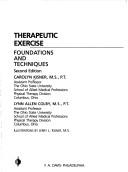
The canonical therapeutic exercise reference; after learning how to handle patients, this book teaches why and how to prescribe movement as medicine — a core PTA and PT competency.
Rehabilitation Science & Pathology
IntermediateUnderstand common injuries and conditions treated in PT, how the body heals, and evidence-based rehabilitation strategies across orthopedic, neurological, and cardiopulmonary settings.
▸ Study plan for this stage
Pace: 10–13 weeks total. Week 1–6: Goodman's "Pathology" — aim for ~25–35 pages/day, focusing on systems-based chapters (musculoskeletal, neurological, cardiopulmonary, oncology, and healing/inflammation units). Week 7–13: Magee's "Orthopedic Physical Assessment" — aim for ~20–30 pages/day, reading each j
- Tissue healing phases (hemostasis, inflammation, proliferation, remodeling) and how pathology disrupts each phase — as detailed in Goodman's foundational chapters
- Systemic vs. local pathology: how diseases of the cardiovascular, pulmonary, neurological, and musculoskeletal systems present with signs/symptoms relevant to PT screening (Goodman)
- Red flags and medical screening: distinguishing conditions that require physician referral from those appropriate for PT intervention, per Goodman's screening framework
- Orthopedic special tests: the purpose, procedure, sensitivity, and specificity of joint-specific tests across the spine, shoulder, elbow, wrist, hip, knee, and ankle as catalogued by Magee
- Postural analysis and observation as a systematic clinical skill — Magee's structured approach to standing, sitting, and dynamic posture assessment
- Active, passive, and resisted range-of-motion testing: interpreting end-feel, pain arcs, and capsular patterns to generate a differential diagnosis (Magee)
- Neurological integrity testing within orthopedic assessment: dermatomes, myotomes, and reflexes integrated into Magee's joint-by-joint examination sequences
- Evidence-based rehabilitation principles: load management, tissue-specific progressions, and outcome measures tied to the pathological conditions described across both books
- According to Goodman's 'Pathology,' what are the hallmark signs of each phase of tissue healing, and how do conditions like diabetes or corticosteroid use impair the remodeling phase?
- How does Goodman's medical screening model help a PT determine whether a patient's shoulder pain is of musculoskeletal origin versus referred pain from a cardiac or pulmonary source?
- Using Magee's framework, walk through a complete orthopedic assessment of the knee: what observation findings, ROM measurements, special tests (e.g., Lachman, McMurray, valgus/varus stress), and neurological checks would you perform, and what does each finding implicate?
- What is a capsular pattern, as defined by Magee, and how does identifying one help differentiate osteoarthritis from a non-capsular restriction such as a meniscal lesion or ligamentous injury?
- How do the pathological mechanisms of a rotator cuff tear (described in Goodman) align with the specific special tests Magee recommends for impingement and rotator cuff integrity, and what does a positive finding on each test tell you?
- What neurological red flags does Goodman identify for spinal pathology (e.g., cauda equina syndrome, myelopathy), and how do Magee's cervical and lumbar spine assessment chapters operationalize the screening for these conditions?
- Joint-by-joint assessment logs: After reading each of Magee's joint chapters, perform a mock assessment on a partner or yourself — document posture observations, ROM with end-feel descriptions, and results of at least five special tests, then compare your findings to Magee's interpretation tables.
- Pathology-to-assessment mapping: Create a two-column reference chart linking each major condition in Goodman (e.g., ACL sprain, rotator cuff tear, lumbar disc herniation, CVA, COPD) to the corresponding Magee special tests, red flags, and expected examination findings.
- Tissue healing timeline cards: Using Goodman's healing chapters, build flashcards for each healing phase that include: timeframe, dominant cell types, tissue tensile strength, and one clinical implication for PT intervention timing (e.g., when to begin loading).
- Medical screening case scenarios: Write five fictional patient vignettes with mixed musculoskeletal and systemic symptoms drawn from Goodman's red-flag chapters; practice applying the screening decision-making model to decide: treat, refer, or treat and refer.
- Special test sensitivity/specificity drill: Using Magee's evidence tables, select 15 high-yield special tests and create a quiz-style study sheet listing test name, target structure, positive sign, sensitivity, and specificity — then quiz yourself weekly until recall is automatic.
- Integrated SOAP note practice: After completing both books, write three full SOAP notes for hypothetical patients (one orthopedic, one neurological, one cardiopulmonary) that incorporate Goodman's pathological reasoning in the subjective/assessment sections and Magee's objective examination findings in the objective section.
Next up: Mastering how the body breaks down (Goodman) and how to systematically examine it (Magee) provides the essential clinical reasoning foundation needed to next study therapeutic interventions — understanding what you are treating and why is the prerequisite for learning how to treat it through exercise prescription, manual therapy, and modality selection.
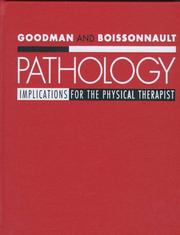
The most widely used pathology text in PT education; teaches how diseases and injuries affect body systems and what that means for rehab — critical context before studying condition-specific treatment.
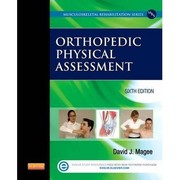
The definitive clinical assessment reference for the musculoskeletal system; reading this after pathology connects 'what is wrong' to 'how do I find it' through systematic examination techniques.
Professional Practice & Licensure Readiness
ExpertSynthesize clinical knowledge with ethics, communication, evidence-based practice, and exam preparation — ready to sit for the NPTE (PT) or NPTE-PTA and enter supervised clinical practice.
▸ Study plan for this stage
Pace: 12–16 weeks, ~25–35 pages/day (5 days/week); O'Sullivan's "Physical Rehabilitation" is a dense, encyclopedic text (~1,500+ pages), so pace by system/unit rather than raw page count — plan roughly 2–3 chapters per week, reserving the final 2 weeks for full review, practice questions, and mock NPTE si
- Comprehensive patient/client management model (examination → evaluation → diagnosis → prognosis → intervention → outcomes) as the unifying clinical framework throughout O'Sullivan
- Neuromuscular and musculoskeletal rehabilitation principles — motor control, motor learning, neuroplasticity, and task-oriented training applied across patient populations (stroke, TBI, SCI, Parkinson's, MS, etc.)
- Cardiopulmonary and integumentary system management — aerobic capacity, ventilatory dysfunction, wound healing stages, and PT's role in ICU and acute care settings
- Evidence-based practice (EBP) integration — critically appraising outcome measures, standardized tests (Berg Balance Scale, FIM, 6MWT, Tinetti, etc.), and selecting interventions with demonstrated efficacy
- Functional mobility and gait analysis — normal and pathological gait deviations, assistive device prescription, prosthetics and orthotics fitting and training
- Pain science and management — biopsychosocial model, chronic pain neuroscience, and multimodal PT interventions aligned with current evidence
- Professional, ethical, and legal responsibilities — APTA Code of Ethics, Standards of Practice, scope of practice, informed consent, documentation standards (SOAP/DAP notes, defensible documentation), and mandatory reporting obligations
- NPTE exam strategy — content outline weighting (system-based and non-system domains), clinical decision-making item formats, time management across 250 items, and targeted remediation using O'Sullivan chapters as primary reference
- Using O'Sullivan's patient/client management model, how would you structure the full episode of care for a patient with acute ischemic stroke — from initial examination through discharge planning, including appropriate outcome measures at each phase?
- O'Sullivan details gait deviations across multiple pathologies. For a patient with hemiplegia demonstrating circumduction and foot drop, what are the underlying impairments, and which interventions and orthotic options does the text support?
- How does O'Sullivan differentiate the rehabilitation approaches for a patient with COPD versus one with heart failure in the cardiopulmonary chapter, and what precautions govern exercise prescription for each?
- What standardized outcome measures does O'Sullivan recommend for balance and fall-risk assessment in older adults, and how do sensitivity/specificity data inform your clinical selection of one measure over another?
- Describe the ethical decision-making process a PT must follow when a patient refuses a recommended intervention — referencing professional standards of practice, informed consent principles, and documentation requirements as presented in O'Sullivan.
- How would you design a 6-week evidence-based home exercise program for a patient with Parkinson's disease (Hoehn & Yahr Stage II–III), justifying each component with the motor learning and neuroplasticity principles outlined in O'Sullivan?
- NPTE Blueprint Mapping: Print the current FSBPT content outline and color-code each O'Sullivan chapter to its corresponding exam domain (e.g., neuromuscular, musculoskeletal, cardiopulmonary, non-systems). Use this map to weight your daily reading — spend proportionally more time on high-percentage domains.
- Weekly Case Simulations: After finishing each major system unit in O'Sullivan, write a full SOAP note for a self-generated or textbook-derived patient case. Include subjective history, objective findings with at least two standardized outcome measures from the chapter, assessment with PT diagnosis and prognosis, and a 4-week plan of care with measurable goals.
- Outcome Measure Flashcard Deck: Create a two-sided flashcard for every standardized test mentioned in O'Sullivan (Berg, FIM, MDS, 6MWT, MMSE, Ashworth Scale, etc.) — front: name and population; back: MDC/MCID values, sensitivity/specificity, and administration time. Quiz yourself weekly.
- Gait Deviation Lab: Using a smartphone camera, record yourself or a peer walking normally, then simulating 5 pathological gait patterns described in O'Sullivan (e.g., Trendelenburg, antalgic, steppage, scissor, parkinsonian). Analyze the footage against the text's deviation-cause-correction framework and write a brief clinical rationale for each.
- Ethics & Documentation Drill: Select three clinical scenarios (e.g., patient noncompliance, suspected abuse, billing dispute) and write a structured ethical analysis for each using the APTA Code of Ethics steps outlined in O'Sullivan — identify the dilemma, stakeholders, applicable standards, options, and chosen course of action with documentation language.
- Timed NPTE Mock Blocks: In weeks 13–16, complete 4 full 250-item timed practice exams (using FSBPT sample questions or reputable NPTE prep banks). After each block, return to the relevant O'Sullivan chapter for every missed item, annotate the page, and write a one-sentence 'lesson learned' — building a personalized error log to guide final review.
Next up: Mastering O'Sullivan's synthesis of clinical systems, professional standards, and evidence-based decision-making equips the reader with the foundational competency framework needed to transition from exam readiness into supervised clinical practice — where real-time patient management, interprofessional collaboration, and reflective professional identity development become the new frontier of lear
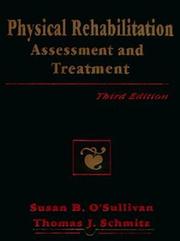
The comprehensive, advanced clinical text used in final-year PT programs; integrates neurological, orthopedic, and cardiopulmonary rehab into a unified framework — the capstone of the science curriculum.
Discussion
Keep reading
Paths that share books, cover the same subject, or open a related topic.