The Best Functional Analysis Books, in Order
This curriculum is designed for an expert-level learner who already has strong mathematical maturity and aims to achieve a deep, research-grade mastery of functional analysis. The path moves from rigorous classical foundations through the core theory of Banach and Hilbert spaces, then into advanced operator theory and spectral theory, culminating in modern topics and applications that connect functional analysis to broader mathematics.
Classical Foundations & Measure-Theoretic Backbone
ExpertSolidify the measure theory, topology, and real analysis underpinnings that functional analysis rests on, ensuring no gaps when abstract arguments appear later.
▸ Study plan for this stage
Pace: 12–14 weeks, ~40–50 pages/day (Rudin first 4–5 weeks, then Munkres 4–5 weeks, with 3–4 weeks for integration and review)
- Lebesgue measure and integration: construction via outer measure, measurable sets, Lebesgue integral, convergence theorems (MCT, DCT, Fatou)
- Lp spaces: definition, completeness, duality, Hölder and Minkowski inequalities
- Signed and complex measures: Radon–Nikodym theorem, absolute continuity, decomposition theorems
- Topological spaces: open/closed sets, continuity, compactness, connectedness, and separation axioms (T1, T2, regularity, normality)
- Metric spaces and metrizability: completeness, compactness in metric spaces, uniform continuity, equicontinuity
- Product and quotient topologies: behavior of compactness and connectedness under products and quotients
- Fundamental duality: how measure-theoretic and topological structures interact (Riesz representation, regular measures)
- Completeness and density: dense subsets, completion of metric spaces, separability, and Baire category theorem
- State and prove the Radon–Nikodym theorem; explain when one measure is absolutely continuous with respect to another.
- Define Lebesgue measure rigorously via outer measure and measurable sets; prove that the Lebesgue integral of a monotone increasing sequence of functions equals the limit of the integrals.
- Prove that Lp spaces are complete normed vector spaces and establish the Hölder inequality; explain the relationship between Lp and Lq via duality.
- Define compactness in topological spaces and prove the Heine–Borel theorem in Euclidean space; explain why compactness is preserved under continuous images.
- Distinguish between metric and topological properties; prove that a metric space is compact if and only if it is sequentially compact (when applicable).
- State the Riesz representation theorem for Borel measures on compact Hausdorff spaces; explain how it connects linear functionals on C(K) to measures.
- Prove the Baire category theorem and explain its role in establishing that certain sets are 'large' in a topological sense.
- Define product and quotient topologies; prove that the product of compact spaces is compact and that quotients of connected spaces are connected.
- Construct Lebesgue measure from scratch using outer measure; verify that the Cantor set is measurable and compute its measure.
- Prove the monotone convergence theorem and dominated convergence theorem from Rudin; apply DCT to compute limits of integrals of explicit sequences of functions.
- Work through Rudin's proofs that Lp spaces are complete; compute the dual space (Lq) for specific values of p and verify Hölder's inequality with concrete functions.
- Prove the Radon–Nikodym theorem following Rudin's approach; construct examples of singular measures and absolutely continuous measures.
- From Munkres, prove that a product of compact spaces is compact using the Tychonoff theorem; verify compactness of specific product spaces.
- Prove the Heine–Borel theorem; show that closed and bounded subsets of Euclidean space are compact, and construct a non-compact closed bounded set in an infinite-dimensional space.
- Prove the Riesz representation theorem for C(K) where K is compact Hausdorff; apply it to identify the dual of C[a,b].
- Work through Munkres' treatment of quotient topologies; construct quotient maps and verify that quotients preserve connectedness but not always Hausdorffness.
Next up: This stage equips you with the rigorous measure-theoretic and topological foundations—particularly Lebesgue integration, Lp spaces, compactness, and the Riesz representation theorem—that are essential for the next stage's treatment of Banach spaces, linear operators, and the abstract theory of functional analysis.

Rudin's 'Big Rudin' is the canonical bridge from real analysis to functional analysis, covering measure theory, Lp spaces, and the Hahn-Banach theorem in a tightly argued style that sets the standard of rigor for everything that follows.
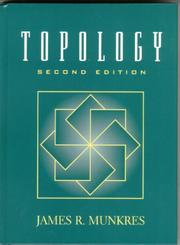
A thorough command of point-set and basic algebraic topology is assumed throughout functional analysis; Munkres provides the clearest, most complete reference to fill or confirm any topological prerequisites before diving into normed spaces.
Core Functional Analysis — Banach & Hilbert Spaces
ExpertMaster the fundamental theorems of functional analysis — Hahn-Banach, open mapping, closed graph, uniform boundedness — and develop deep intuition for Banach and Hilbert space geometry.
▸ Study plan for this stage
Pace: 10–12 weeks, ~40–50 pages/day (Kreyszig: weeks 1–6, ~35 pages/day; Rudin: weeks 7–12, ~50 pages/day)
- Normed vector spaces, Banach spaces, and completeness: definition, examples (ℓ^p, L^p, C[a,b]), and why completeness matters
- Inner products, orthogonality, and Hilbert space geometry: projections, orthonormal bases, Parseval's identity
- Linear functionals and the dual space: the Hahn-Banach theorem and its geometric interpretation (extension of bounded linear functionals)
- Bounded linear operators and operator norms: continuity, composition, and the space B(X,Y) of bounded operators
- The Uniform Boundedness Principle (Banach-Steinhaus): pointwise boundedness implies uniform boundedness for families of operators
- Open Mapping and Closed Graph theorems: conditions for surjectivity and when graph-closedness implies continuity
- Weak convergence vs. strong convergence: the distinction in infinite dimensions and implications for compactness
- Spectral theory foundations: eigenvalues, spectrum, and resolvent for bounded operators (preparation for spectral decomposition)
- State the Hahn-Banach theorem and explain why it guarantees that the dual space of a Banach space is non-trivial. Give a concrete application.
- What is the difference between a normed space and a Banach space? Provide an example of each and explain why completeness is essential in functional analysis.
- Prove or explain: if {x_n} converges weakly to x in a Hilbert space and ||x_n|| → ||x||, then x_n → x strongly. Why does this fail in general Banach spaces?
- State the Uniform Boundedness Principle and give a concrete example of how it applies to a sequence of operators. Why is pointwise boundedness alone insufficient without completeness?
- Explain the Open Mapping theorem: when is a bounded linear operator between Banach spaces an open map? How does this relate to the Closed Graph theorem?
- Describe the geometry of orthogonal projections in a Hilbert space. How does the Riesz Representation theorem connect functionals to inner products?
- Verify that ℓ^p (p ≥ 1) is a Banach space by checking completeness directly; contrast with c₀ (sequences converging to zero) and show both are complete.
- Construct a bounded linear functional on C[0,1] using the Hahn-Banach theorem; explicitly extend a functional defined on a subspace and compute its norm.
- For a sequence of operators T_n: ℓ² → ℓ² (e.g., diagonal operators with eigenvalues λ_n(k)), verify pointwise boundedness and apply the Uniform Boundedness Principle to conclude uniform boundedness.
- Prove the Closed Graph theorem for a concrete operator (e.g., differentiation on a suitable Banach space) and verify that graph-closedness implies continuity.
- In a Hilbert space, compute the orthogonal projection of a vector onto a closed subspace; verify the projection formula and Pythagorean theorem.
- Analyze weak vs. strong convergence in ℓ²: show a sequence converging weakly but not strongly, and explain why the Banach-Alaoglu theorem (weak compactness) is essential.
Next up: This stage establishes the structural and topological foundations—Banach and Hilbert space geometry, duality, and the fundamental theorems—that are essential for advancing to spectral theory, operator algebras, and applications to PDEs and quantum mechanics.
Despite its title, Kreyszig is substantive and highly readable at the expert level; it builds Banach and Hilbert space theory from scratch with exceptional clarity, making it the ideal first dedicated functional analysis text to establish shared language and intuition.
Rudin's 'Little Functional Analysis' is the definitive concise treatment of the four pillars of the subject, locally convex spaces, and distributions; reading it after Kreyszig reveals the full abstract power of the theory with minimal overhead.
Operator Theory & Spectral Theory
ExpertDevelop a thorough understanding of bounded and unbounded operators on Hilbert and Banach spaces, spectral theory, and the spectral theorem in its full generality.
▸ Study plan for this stage
Pace: 12–14 weeks, ~40–50 pages/day (focusing on Chapters 8–12 of Conway)
- Bounded linear operators on Hilbert and Banach spaces: definition, properties, operator norms, and the space of bounded operators B(X,Y)
- Spectrum and resolvent: spectral sets, point spectrum, continuous spectrum, residual spectrum, and resolvent operators
- Spectral radius and the spectral radius formula: relationship between operator norm and spectral properties
- Compact operators: definition, properties, and the Riesz–Schauder theory for compact operators on Banach spaces
- Self-adjoint and normal operators on Hilbert spaces: characterization and their role in spectral decomposition
- The spectral theorem: statement and proof for bounded self-adjoint operators, and extension to normal operators
- Functional calculus: defining functions of operators via spectral measures and its applications
- Unbounded operators: domains, closed operators, adjoint operators, and essential self-adjointness
- What is the spectrum of a bounded operator, and how does it differ from the point spectrum? Give examples for specific operators.
- State and explain the spectral theorem for bounded self-adjoint operators. Why is the assumption of self-adjointness essential?
- What are compact operators and what does the Riesz–Schauder theorem tell us about their spectra?
- How does the functional calculus allow us to define f(T) for a bounded self-adjoint operator T and a measurable function f?
- What is the relationship between an unbounded operator and its adjoint? When is an unbounded operator essentially self-adjoint?
- Explain the spectral radius formula and its significance for understanding operator growth.
- Compute the spectrum and spectral radius of concrete operators (e.g., multiplication operators, shift operators, differential operators on appropriate domains).
- Prove that a bounded self-adjoint operator on a Hilbert space has real spectrum and that its spectral radius equals its operator norm.
- Work through the proof of the spectral theorem for bounded self-adjoint operators, paying careful attention to the construction of the spectral measure.
- Apply the functional calculus to compute f(T) for specific functions f and operators T (e.g., square roots, exponentials of self-adjoint operators).
- Verify that given operators are compact and apply the Riesz–Schauder theorem to describe their spectral properties.
- For unbounded operators (e.g., differentiation on L²), determine the domain, compute the adjoint, and check essential self-adjointness using deficiency indices.
Next up: This stage establishes the foundational spectral machinery needed to extend operator theory to unbounded operators and to apply spectral theory to differential equations, quantum mechanics, and functional differential equations in subsequent stages.
Reed and Simon is the gold standard for operator theory and spectral analysis, covering self-adjoint operators, the spectral theorem, and unbounded operators with both mathematical rigor and physical motivation that no other text matches.
Conway provides an exceptionally well-organized treatment of operator theory on Hilbert spaces, Banach algebras, and C*-algebras; it deepens spectral theory and introduces the operator-algebraic perspective essential for modern research.
Banach Space Theory & Geometry
ExpertUnderstand the deep geometric structure of Banach spaces — bases, type and cotype, duality, and isomorphic theory — going well beyond the standard curriculum.
▸ Study plan for this stage
Pace: 8–10 weeks, ~40–50 pages/day (alternating between Lindenstrauss and Megginson for complementary perspectives)
- Schauder bases and their properties: completeness, minimality, and biorthogonal functionals in Banach spaces
- Type and cotype of Banach spaces: quantitative measures of how well a space embeds into Lp spaces and their implications for geometry
- Duality theory: dual spaces, weak topologies, reflexivity, and the relationship between a space and its bidual
- Isomorphic classification and structure: when and why Banach spaces are isomorphic, and the role of invariants like type, cotype, and basis structure
- Classical Banach spaces: concrete examples (c₀, ℓp, Lp, C(K)) and their geometric properties as models for understanding general theory
- Complemented subspaces and projections: the structure of closed subspaces and when they split as direct summands
- Rademacher and Gaussian sequences: probabilistic tools for studying type, cotype, and geometric properties
- James' theorem and characterizations of reflexivity: deep structural results connecting weak compactness, basis properties, and reflexivity
- What is a Schauder basis, and how do biorthogonal functionals characterize basis properties? Why is the existence of a basis a strong structural assumption?
- Define type and cotype for a Banach space. How do these concepts quantify the geometry of a space, and what do they tell you about embeddings into Lp?
- State and explain the relationship between reflexivity, weak compactness, and basis structure. How does James' theorem connect these ideas?
- What is the dual space of a Banach space, and how does duality relate to isomorphic classification? When is a space isomorphic to its bidual?
- Compare and contrast the geometric structures of c₀, ℓp, Lp, and C(K). Why are these classical spaces important as test cases for general theory?
- How do Rademacher and Gaussian sequences provide tools for studying type and cotype? What probabilistic inequalities are central to this analysis?
- What does it mean for a subspace to be complemented, and why is complementation a rigid property? Give examples of complemented and non-complemented subspaces.
- Explain the isomorphic theory of Banach spaces: what invariants determine when two spaces are isomorphic, and what role do type, cotype, and basis structure play?
- Work through the construction and properties of Schauder bases in c₀ and ℓp (Lindenstrauss, Ch. 1–2). Verify biorthogonality and compute basis constants.
- Compute the type and cotype of classical spaces: ℓp, Lp, c₀, and C[0,1]. Use Rademacher sequences to establish lower bounds and Gaussian sequences for upper bounds.
- Prove that ℓ² is isomorphic to its dual, and that c₀ is not reflexive by analyzing weak compactness of the unit ball (Megginson, Ch. 5–6).
- Study the dual of Lp and ℓp spaces explicitly. Verify the duality pairing and compute the norm of dual functionals (Lindenstrauss, Ch. 3).
- Construct examples of complemented and non-complemented subspaces. Show that c₀ is not complemented in ℓ∞ using projection arguments.
- Work through James' theorem: prove that a Banach space is reflexive if and only if every continuous linear functional attains its norm on the unit ball (Megginson, Ch. 7).
- Analyze the structure of bases in classical spaces: prove that ℓp has an unconditional basis, while C[0,1] does not have a basis (Lindenstrauss, Ch. 2).
- Study type and cotype via probabilistic inequalities: prove Khintchine's inequality and use it to establish type bounds for Gaussian random variables (Lindenstrauss, Ch. 4).
Next up: Mastery of Banach space geometry, duality, and isomorphic classification provides the foundational toolkit for studying operator theory, spectral theory, and functional calculus—where the geometric structure of spaces directly determines the behavior of linear operators acting on them.
Lindenstrauss and Tzafriri's landmark work on sequence spaces and function spaces is the entry point into the isomorphic theory of Banach spaces, a perspective unavailable in general functional analysis texts.
Megginson offers a comprehensive and modern treatment of Banach space geometry — weak topologies, reflexivity, convexity, and bases — that consolidates and extends the geometric intuition built in prior stages.
Advanced Topics — Distributions, Sobolev Spaces & Modern Analysis
ExpertConnect functional analysis to its most powerful modern applications in PDE theory, harmonic analysis, and nonlinear analysis, reaching the frontier of the subject.
▸ Study plan for this stage
Pace: 8–10 weeks, ~40–50 pages/day (with 2–3 days per week for problem-solving and reflection)
- Distributions as generalized functions: weak derivatives, test functions, and the distributional framework for PDEs
- Sobolev spaces (W^{k,p}, H^s): definitions, embeddings, trace theorems, and compactness results
- Weak solutions to PDEs: existence and uniqueness via Lax–Milgram, Galerkin methods, and variational formulations
- Elliptic regularity: smoothness of weak solutions and bootstrap arguments
- Harmonic analysis tools: Fourier transform, convolution, mollifiers, and their role in modern PDE theory
- Nonlinear analysis: monotone operators, fixed-point theorems, and applications to semilinear/quasilinear equations
- Compactness and duality: Rellich–Kondrachov theorem, reflexivity, and weak convergence in Sobolev spaces
- What is a distribution, and how does the concept of weak derivative extend classical differentiation to non-smooth functions?
- State and prove the Lax–Milgram theorem, and explain how it guarantees existence and uniqueness of weak solutions to elliptic PDEs.
- What are Sobolev spaces, and what do the Sobolev embedding and trace theorems tell us about the regularity of functions in these spaces?
- How does the Galerkin method construct approximate solutions, and under what conditions does it converge to the true weak solution?
- Explain the role of mollifiers and convolution in proving density results and regularization of weak solutions.
- What is elliptic regularity, and how do bootstrap arguments show that weak solutions to elliptic equations are smooth?
- Compute weak derivatives of non-smooth functions (e.g., |x|, max(x,0)) and verify they satisfy the distributional definition.
- Prove that a given bilinear form satisfies the conditions of Lax–Milgram and apply it to solve a specific elliptic boundary value problem.
- Verify membership in Sobolev spaces W^{k,p}(Ω) for concrete functions; compute norms and check embedding properties.
- Implement the Galerkin method for a 1D or 2D elliptic problem using finite-dimensional subspaces; compare numerical approximations to exact solutions.
- Use mollifiers to regularize a weak solution and verify convergence in appropriate Sobolev norms.
- Work through an elliptic regularity proof for a model equation (e.g., −Δu + u = f) using difference quotients and bootstrap arguments.
Next up: Mastery of distributions, Sobolev spaces, and weak solutions equips you to tackle parabolic and hyperbolic PDEs, nonlinear analysis on function spaces, and specialized topics in harmonic analysis—the natural next frontier in advanced functional analysis.
Brezis is the definitive modern text unifying functional analysis with Sobolev space theory and PDE applications; it synthesizes everything from prior stages into a coherent framework used by researchers across analysis.
Folland's treatment of abstract harmonic analysis, distributions, and Fourier analysis on locally compact groups provides the broadest and most rigorous capstone, showing how functional analysis permeates all of modern analysis.
Discussion
Keep reading
Paths that share books, cover the same subject, or open a related topic.