The Best Books on Juggling, in Order
This curriculum takes a complete beginner from their very first three-ball cascade all the way through clubs, rings, diabolo, and crowd-pleasing performance skills. Each stage builds on the last — mastering core throws and patterns before adding props, then layering in the showmanship and body-awareness that separates a hobbyist from a circus performer.
Foundations: Your First Juggling Steps
BeginnerLearn the three-ball cascade and core juggling vocabulary, develop hand-eye coordination, and understand the basic physics and rhythm that underpin all juggling.
▸ Study plan for this stage
Pace: 4–5 weeks, ~20–30 pages/day with 3–4 practice sessions per week (30–45 minutes each)
- The three-ball cascade as the foundational juggling pattern and its mechanical structure
- Hand-eye coordination development through repetitive, progressive throwing and catching
- Juggling vocabulary: throw, catch, peak, dwell time, hand dominance, and exchange
- The physics of juggling: gravity, trajectory, timing, and the relationship between throw height and catch window
- Rhythm and timing as the core of consistent juggling rather than speed
- The role of the non-dominant hand in establishing reliable patterns
- How to diagnose and correct common beginner mistakes (uneven throws, poor hand positioning)
- The progression from two-ball exchanges to three-ball cascade as a learning pathway
- What is the three-ball cascade and why is it considered the foundation of all juggling patterns?
- How do throw height and dwell time relate to successful juggling, and why does rhythm matter more than speed?
- What are the key differences between the dominant and non-dominant hand, and how should a beginner train each?
- What does 'hand-eye coordination' mean in the context of juggling, and how does it develop through practice?
- What are the most common beginner mistakes when learning the cascade, and how do you correct them?
- How does the physics of gravity and trajectory affect the throws and catches in a three-ball cascade?
- Two-ball exchange drill: practice throwing and catching with one ball in each hand for 10 minutes daily to build hand independence
- Single-ball throws: toss one ball from dominant hand to non-dominant hand at consistent height (eye level) for 5 minutes, focusing on accuracy over speed
- Three-ball cascade in slow motion: attempt the full cascade at a deliberately slow rhythm (1 throw per second) for 10–15 minutes per session
- Catch-only practice: have a partner or video toss balls to you in cascade rhythm while you focus solely on catching with proper hand position
- Mirror work: practice the cascade in front of a mirror to observe hand positioning, arm movement, and symmetry
- Rhythm drills: use a metronome or juggling app set to 60–80 BPM and practice throws synchronized to the beat
- Throw-height consistency check: mark a target height on a wall and practice throwing to that exact height repeatedly with each hand
Next up: This stage equips you with the mechanical skill and vocabulary to move into intermediate patterns—once the three-ball cascade becomes automatic, you'll be ready to learn variations like the reverse cascade, columns, and four-ball patterns that build on the same physics and timing principles.
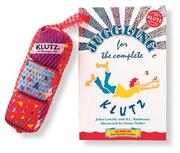
The single most iconic starter book in juggling — it ships with three bean bags and uses clear, humorous step-by-step illustrations. Reading it first gives beginners immediate, low-frustration success with the cascade.

A classic short text that explains the mental and physical principles behind juggling patterns, reinforcing why the cascade works and preparing the reader to think systematically about new tricks.
Building the Toolkit: Balls, Patterns & Siteswap
BeginnerExpand beyond the cascade to multiplex throws, columns, and shower patterns with balls, and gain a working understanding of siteswap notation to self-direct further learning.
▸ Study plan for this stage
Pace: 4–5 weeks, ~20–25 pages/day with 2–3 practice sessions per week
- Multiplex throws: throwing multiple balls from one hand simultaneously and how they differ from singles
- Column patterns: vertical stacking of throws in dedicated hand lanes and their mechanical advantages
- Shower patterns: asymmetrical throws that create a circular flow, requiring different hand coordination than cascades
- Siteswap notation: the mathematical language for encoding juggling patterns using throw heights and timing
- Throw height and timing relationships: how siteswap numbers map to physical execution and pattern sustainability
- Transitioning between patterns: techniques for moving fluidly from cascade to multiplex, columns, and showers
- Self-directed pattern exploration: using siteswap to decode, invent, and troubleshoot new patterns independently
- What is a multiplex throw, and how does throwing two balls simultaneously from one hand change the rhythm compared to a cascade?
- Explain the mechanics of a column pattern: why do balls stay in vertical lanes, and what hand movements make this possible?
- How does a shower pattern differ from a cascade in terms of throw direction and hand coordination?
- What does a siteswap number represent, and how do you read a siteswap sequence to understand when and how high to throw?
- Given a siteswap pattern like '51' or '333', can you predict whether it is valid and explain why or why not?
- How would you use siteswap notation to teach yourself a new pattern you've never tried before?
- Practice 3-ball multiplex throws (two balls from one hand, one from the other) until you can sustain 10+ consecutive catches without dropping
- Master the 3-ball column pattern: throw all balls straight up in two vertical lanes, alternating hands, for at least 30 seconds
- Learn and execute the 3-ball shower: throw all balls in a circular path (one hand throws high across, the other hand throws low back), sustaining for 1+ minute
- Decode and physically perform at least three siteswap patterns from the book (e.g., '51', '441', '3-ball shower') by reading the notation first, then executing
- Create your own valid 3-ball siteswap pattern using the rules from the book, write it down, and successfully juggle it
- Transition smoothly between cascade and one multiplex or column pattern 10 times in a row without stopping
Next up: Mastering siteswap notation and these foundational multiplex, column, and shower patterns equips you to systematically explore 4+ ball patterns and advanced tricks, moving from intuitive learning to pattern-driven exploration.

A thorough, methodical guide to ball juggling that systematically introduces patterns from three to five balls — the ideal next step once the cascade is solid.
New Props: Clubs, Rings & Diabolo
IntermediateTransfer juggling fundamentals to clubs and rings, learn the mechanics of the diabolo, and understand how prop-specific technique differs from ball work.
▸ Study plan for this stage
Pace: 4–5 weeks, ~25–30 pages/day (alternating between Dancey's Compendium and Strong's Diabolo book; 2 weeks on clubs, 2 weeks on diabolo, 1 week for integration)
- Club anatomy and grip: how handle, barrel, and bell differ from balls and affect throw mechanics
- Spin and rotation in club juggling: why clubs require consistent spin to catch safely and how spin relates to throw height
- Cascade, shower, and column patterns adapted for clubs: how familiar siteswap patterns translate differently with heavier, rotating props
- Diabolo mechanics: axle rotation, string tension, and the relationship between hand movements and diabolo spin
- Prop-specific catching technique: why clubs demand precision on the handle and diabolos require dynamic string control
- Transition from ball fundamentals: identifying which skills transfer directly and which require relearning
- Diabolo tricks and momentum: how body movement and string angle control diabolo trajectory and spin stability
- What is the relationship between throw height, spin rate, and safe catching in club juggling, and how does this differ from ball juggling?
- Describe the basic grip and hand position for throwing clubs, and explain why the barrel and bell matter for control.
- How do cascade and shower patterns differ when performed with clubs versus balls, and what adjustments must you make?
- What is the diabolo's axle, and how does maintaining proper axle rotation relate to string control and trick execution?
- Explain the role of string tension and hand positioning in diabolo tricks like the elevator, whip, and suicide.
- What are the key mechanical differences between diabolo and club juggling, and why can't you simply apply club technique to the diabolo?
- Single club throws: practice throwing one club with consistent spin, focusing on a vertical axis and smooth barrel-to-handle catch (10 min daily).
- Two-club exchanges: master the two-club exchange pattern to internalize the timing and spin requirements before adding a third club.
- Three-club cascade with clubs: build the cascade pattern slowly, starting at low height and increasing height as spin consistency improves.
- Club shower pattern: practice the shower (one hand throws, one hand catches) to understand how club weight and spin affect asymmetrical patterns.
- Diabolo string setup and spin: spend time learning proper string winding, axle alignment, and hand positioning to generate and maintain spin without tricks.
- Diabolo basic tricks progression: work through the elevator, whip, and suicide in sequence, pausing after each to understand how string angle and body movement control the diabolo.
- Comparative pattern practice: perform the same siteswap pattern (e.g., 3-ball cascade) with balls, then clubs, then document the mechanical differences you observe.
- Video analysis: record yourself juggling clubs and diabolo, then compare your hand paths and prop rotation to the techniques shown in Dancey's and Strong's books.
Next up: Mastery of clubs and diabolo mechanics—understanding how prop weight, spin, and string control reshape juggling technique—prepares you to learn multiprop patterns (mixing balls, clubs, and diabolos) and advanced tricks that exploit the unique properties of each prop.

The definitive English-language guide to club juggling — covers grips, spins, passing, and tricks in the same clear illustrated style as Dancey's ball encyclopaedia, making the transition from balls to clubs smooth.

A well-regarded, practical guide to the diabolo that covers everything from first throws to string tricks and multiple diabolos, broadening the learner's circus-prop repertoire.
Advanced Technique & Numbers Juggling
ExpertPush technical limits with four- and five-object patterns, passing with partners, and the discipline required for numbers juggling.
▸ Study plan for this stage
Pace: 4–5 weeks, ~40–50 pages/day with practice breaks; allocate 2–3 hours daily for reading and 1–2 hours for hands-on practice
- Four- and five-object cascade and fountain patterns as the foundation for advanced siteswap notation
- Siteswap mathematics: throw heights, beat timing, and pattern validity for complex sequences
- Passing patterns and partner synchronization: two-person and three-person exchanges with multiple objects
- Numbers juggling philosophy: the mental discipline, focus, and physical conditioning required to sustain high-object counts
- Transition techniques between patterns and the role of multiplex throws in expanding pattern vocabulary
- Performance-level consistency: repetition protocols and error recovery strategies for reliable execution
- Body mechanics and throw accuracy under fatigue: how technique scales with object count and pattern complexity
- How does siteswap notation encode throw height and timing, and how do you determine if a siteswap pattern is valid?
- What are the key differences between cascade and fountain patterns with four and five objects, and when would you use each?
- How do passing patterns work with a partner, and what is the role of synchronization and communication in multi-person juggling?
- What mental and physical strategies does Finnigan recommend for building endurance and focus in numbers juggling?
- How do multiplex throws expand your pattern vocabulary, and how do you transition smoothly between different patterns?
- What are the most common errors in advanced juggling, and how do you diagnose and correct them?
- Master the four-object cascade and fountain patterns until you can sustain each for at least 2 minutes without drops
- Learn and practice five-object cascades, focusing on consistent throw height and rhythm; record yourself to analyze throw accuracy
- Study and practice at least three siteswap patterns from Finnigan's book (e.g., 441, 531, or 55500); verify each pattern's validity using siteswap rules
- Practice passing patterns with a partner using 4–6 objects total; start with simple two-person exchanges and progress to more complex rhythms
- Perform multiplex throws (two or more objects released from the same hand in the same beat) and integrate them into a custom pattern
- Conduct a weekly endurance session: attempt to sustain a four- or five-object pattern for 5+ minutes, tracking consistency and error points
- Film yourself juggling and analyze throw height, hand position, and timing; compare against Finnigan's technical descriptions and adjust form
Next up: This stage equips you with the mathematical framework, partner coordination skills, and mental resilience to tackle even higher object counts and experimental patterns, setting the stage for mastery-level performance and creative improvisation in juggling.
Finnigan's comprehensive volume covers advanced patterns, club passing, rings, and performance preparation — a natural capstone for the technical side of the curriculum.
Performance & Circus Craft
ExpertTransform technical juggling skill into a crowd-pleasing act by learning stagecraft, character, physical comedy, and the broader context of circus performance.
▸ Study plan for this stage
Pace: 4–5 weeks, ~20–25 pages/day with frequent breaks for physical practice and reflection
- Stagecraft fundamentals: space, lighting, positioning, and audience sightlines in circus performance
- Character development and persona creation for circus acts
- Physical comedy principles: timing, exaggeration, misdirection, and audience expectation management
- Integration of technical juggling with theatrical narrative and emotional storytelling
- Circus traditions, history, and performance conventions that inform contemporary acts
- Body awareness and spatial relationships in performance contexts
- Audience psychology: reading the room, building tension, and delivering payoffs
- How do stagecraft elements (lighting, positioning, space) change the way an audience perceives a juggling trick?
- What is the relationship between character and technical skill in creating a memorable circus act?
- How can physical comedy principles like timing and misdirection enhance juggling performance?
- What role does circus tradition and history play in informing your own performance choices?
- How do you structure a juggling act to build narrative tension and emotional engagement with the audience?
- What techniques does Burgess describe for reading audience energy and adjusting your performance in real time?
- Perform a single juggling trick three different ways: once as pure technical display, once with exaggerated character, and once with physical comedy elements; record and compare
- Design a 3–5 minute juggling act with a clear character arc, written narrative outline, and specific stagecraft notes (lighting cues, positioning, costume choices)
- Practice a juggling sequence while deliberately using misdirection—direct audience attention away from the technical difficulty, then reveal the complexity
- Attend a live circus performance or watch recorded circus footage with Burgess's stagecraft principles in mind; document observations about space, lighting, character, and audience reaction
- Teach your juggling act to a small audience (friends, family, or online) and collect feedback on character clarity, entertainment value, and technical execution
- Create a 'character study' document for a circus persona: background, motivations, physical mannerisms, costume, and how these inform your juggling choices
Next up: This stage equips you to perform juggling as a complete theatrical act rather than isolated tricks, establishing the foundation for specialized performance contexts—whether that's street performance, corporate entertainment, festival circuits, or developing a signature style that distinguishes you in the circus arts community.
A foundational circus-arts text covering juggling alongside acrobatics, equilibristics, and clowning — essential for understanding how juggling fits into the full circus vocabulary.
Discussion
Keep reading
Paths that share books, cover the same subject, or open a related topic.