Carlos Fuentes Reading Order: Where to Start
Fuentes wrote for fifty years across every register from the hundred-page ghost story to the eight-hundred-page encyclopedic epic, so the wrong first book can end the acquaintance permanently. Start with the two short, ferocious novels that made his name, move out into the big Mexico City and revolution books, then take the later fiction once you can hear the recurring obsessions. The essays come last because they read as a key to everything before them.
Start Here: The Two Short Ones
BeginnerMeet Fuentes at his most concentrated and find out whether the shifting narrators and second-person address are for you, before committing to a long book.
▸ Study plan for this stage
Pace: About 3 weeks. Aura is 70 pages — read it in one sitting, then immediately reread it, which takes another evening. The Death of Artemio Cruz is roughly 300 pages but its 12 repeating cycles make it feel longer; budget 2 weeks at a cycle every day or two rather than trying to push through.
- The second person: Aura addresses its protagonist as 'you' from the first line, which is a technique, not a gimmick — it decides in advance that you cannot stand outside what happens
- Fuentes braids first, second and third person around a single consciousness; in Artemio Cruz the 'yo' is the dying man now, the 'tú' is his interrogating future, and the 'él' is the narrated past
- Time in Fuentes is simultaneous rather than sequential — the past is not remembered, it is present in the room
- The Mexican Revolution as betrayed inheritance: Cruz's fortune is built on exactly the ideals he fought for
- The double or duplicated figure (the old woman and the young woman in Aura, Cruz young and Cruz dying) as the recurring Fuentes shape
- Fuentes writes desire and history as the same appetite, which is why the erotic and the political scenes use the same prose
- At what point in Aura did you realise what Consuelo and Aura are to each other, and what in the prose gave it away before the plot did?
- In Artemio Cruz, what determines which of the three grammatical persons narrates a given section — is it chronology, or is it how much shame the memory carries?
- Cruz's twelve narrated days are not in chronological order. What does the order you get them in do that a chronological telling would not?
- Both books are about an old body being fed on by a younger past. Where is that literal and where is it figurative?
- Would Artemio Cruz have been readable to you without Aura first? What specifically did the novella teach you to expect?
- Reread Aura the same week and mark every point where the second person tells you something the narrator does not yet know
- Take one section of Artemio Cruz and write out its events in plain chronological order, then compare — that difference is the novel
- Keep a one-line timeline of Cruz's life as you read; you will need it for the revolution material in Terra Nostra and Where the Air Is Clear later
- Read the opening page of Aura aloud in whatever translation you have. Fuentes wrote for the ear and the second person only works spoken
Next up: You now trust Fuentes's shifting narrators over a hundred pages and over a lifetime, which is exactly the tolerance the long Mexico City and conquest novels assume you arrive with.

The best possible entry point: a hundred-page gothic novella told entirely in the second person, which teaches you Fuentes's whole trick of collapsing past into present in a single sitting.
His masterpiece and still the most-read Fuentes novel — a dying power broker replaying the Mexican Revolution he betrayed. Read it second because it uses the same first, second and third-person braiding as Aura, only sustained across a life.
The Big Mexico Novels
IntermediateUnderstand the project Fuentes actually set himself — writing the whole of Mexico, city by city and century by century — and how far he was willing to push form to do it.
▸ Study plan for this stage
Pace: 10–14 weeks, and do not front-load it. Where the Air Is Clear (~375 pages) takes 3 weeks because of the cast; The Old Gringo is a fast fortnight and is meant to be the breather; Terra Nostra is 780 pages and deserves 6–8 weeks at 15–20 pages a day. Trying to read Terra Nostra at novel speed is the s
- The Balzacian ambition: Where the Air Is Clear is trying to hold an entire city — class, Aztec substratum, postwar money — in one book
- Ixca Cienfuegos as the figure who is more principle than person, a Fuentes habit that recurs across the later work
- The frontier as the real subject of The Old Gringo: two Americans and a Mexican revolution, each misreading the other's country
- Terra Nostra's three-part structure (Old World, New World, The Next World) and why the sixteenth century, the twentieth and the apocalyptic future are running at once
- Historical figures used as archetypes rather than portraits — Philip II, Ambrose Bierce, Pancho Villa are all doing structural work
- The Spanish inheritance as a curse: the conquest is not a past event in these books but an ongoing condition
- Where the Air Is Clear has no protagonist in the ordinary sense. What holds it together instead?
- The Old Gringo is the most conventionally plotted book in this stage. What does Fuentes gain by writing straight, and what does he lose?
- In Terra Nostra, what is the function of the three identical young men with red crosses on their backs?
- Terra Nostra spends hundreds of pages inside the Escorial before it reaches the Americas. Why does the conquest need that much Spain first?
- Which of these three books would you now recommend to someone who has only read Aura, and why not the other two?
- Keep a running character sheet for Where the Air Is Clear — the cast is large and the novel does not reintroduce people
- Set a fixed daily page count for Terra Nostra before you start and hold it, even on the sections that resist you
- After Terra Nostra's Spanish section, write a paragraph on what you think the novel is arguing about the conquest, then revise it when you finish
- Compare the treatment of the Revolution in The Old Gringo with the version you got in The Death of Artemio Cruz — same event, opposite distance
- Note where Terra Nostra reuses the doubling and second-person address you met in Aura; it is the same machinery at fifteen times the scale
Next up: With the encyclopedic books behind you, the shorter and stranger fiction stops looking like minor work and starts reading as Fuentes testing single obsessions in isolation.

His debut and the novel that dragged Mexican fiction into the modern city: dozens of voices across postwar Mexico City. Denser than Artemio Cruz but far easier once you already trust his handling of multiple narrators.
The most approachable of the major novels — Ambrose Bierce vanishing into Pancho Villa's revolution — and a useful breather between the two most demanding books on this list.
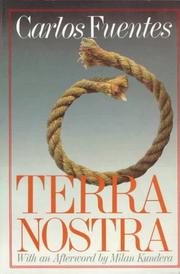
The eight-hundred-page monster that rewrites Spain and the New World across three time zones. Attempt it only here, with four Fuentes novels behind you; it is the deep end and he never wrote anything harder.
The Deeper Cuts
IntermediateSee the range beyond the anthology pieces — the border stories, the late historical sweep, and the European-set experiments most readers never reach.
▸ Study plan for this stage
Pace: 7–9 weeks. The Crystal Frontier is nine linked stories at 265 pages — read one story per sitting over 2 weeks. Distant Relations is 225 pages and should be read fast, ideally over a weekend, because its ghost logic depends on momentum. The Years with Laura Díaz is 515 pages and needs a month.
- The linked-story cycle as a form: The Crystal Frontier is not a novel and not a collection, and the border is what joins the nine parts
- Contemporary rather than mythic Mexico — maquiladoras, migrant labour, NAFTA-era money, which the big novels do not touch
- The framed oral tale in Distant Relations: a story told at a Paris club, with the teller's reliability part of the subject
- Bloodlines and inheritance as literal haunting, the Aura mechanism grown into a family across two continents
- The Years with Laura Díaz as a deliberate answer to Artemio Cruz — the same century, the same country, told through a woman who does not accumulate power
- Fuentes's twentieth century as a set of arrivals and exiles rather than a national narrative
- The Crystal Frontier's stories share characters and a company. Does that make it a novel? What does the answer change about how you read it?
- Distant Relations withholds who is telling and to whom for a long time. When you finally know, does the story become more or less frightening?
- How does Laura Díaz's relationship to Mexican history differ structurally, not just thematically, from Artemio Cruz's?
- These three books are all about crossing — a border, an ocean, a century. Which crossing does Fuentes treat as impossible?
- Having read the big novels first, what in these books would you have missed if you had started here?
- Read The Crystal Frontier's stories in the printed order first, then pick out the two that share a character and read them back to back
- After Distant Relations, write down the chain of who told what to whom — the diagram is the point
- Place Laura Díaz and Artemio Cruz on a shared timeline and mark where the two lives are witnessing the same events
- Pick one story from The Crystal Frontier and one chapter of Terra Nostra and note the difference in sentence length; the register shift is deliberate
Next up: You have now seen Fuentes dramatise Mexican identity, conquest and the border from five directions, which means the essays will read as arguments you already recognise rather than as background.

Nine linked stories along the US-Mexico border, and the best short-form Fuentes. It shows him writing contemporary rather than mythic Mexico, which is a side of him the big novels hide.
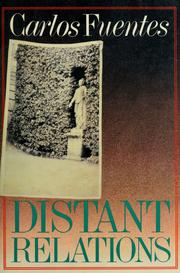
A short, strange novel of a story told at a Paris club about a French-Mexican bloodline. Placed here because its ghost logic is Aura grown up, and it rewards knowing his obsessions rather than introducing them.
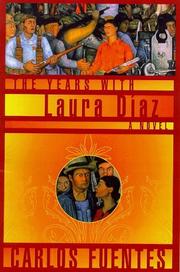
Late Fuentes attempting the twentieth century through one woman's life — effectively the female counterweight to Artemio Cruz. Read last of the fiction so you can hear the deliberate answer he was writing.
Fuentes on Mexico
IntermediateRead the arguments about Mexican identity, conquest and the Spanish inheritance that the novels dramatize, in Fuentes's own direct voice.
▸ Study plan for this stage
Pace: 5–6 weeks. The Buried Mirror is 440 pages of clear expository prose written for television, so it moves faster than its length suggests — 3 to 4 weeks. A New Time for Mexico is 215 pages of journalism and essays; take a fortnight and read it alongside a basic timeline of Mexico in the 1990s.
- The buried mirror itself: the image of a Spanish and indigenous inheritance that reflects each culture back to the other and was covered over
- Five centuries as a single argument — Fuentes reads the conquest, independence, the Revolution and the present as one unresolved sentence
- Mestizaje as cultural fact rather than slogan, and the political weight Fuentes puts on it
- The novelist as public intellectual: the shift in voice between fiction that dramatises and essays that assert
- Chiapas, the 1994 peso crisis and the end of the one-party state as the test cases where the mythmaking meets contested politics
- Why Terra Nostra needed 780 pages to say what The Buried Mirror can state in a paragraph — and what is lost in the compression
- Where does The Buried Mirror's argument become an assertion rather than a demonstration, and does that weaken it?
- Fuentes wrote The Buried Mirror for a television series. What did that audience do to the prose, for better and worse?
- In A New Time for Mexico, which of his positions has aged well and which now reads as a novelist's optimism?
- Does reading the essays make the fiction seem more coherent, or does it expose how much the novels were papering over?
- If you could keep only one of these two books, which is more useful to a reader who has finished the fiction?
- Read the Terra Nostra chapters on Philip II again beside The Buried Mirror's chapter on the same period, and note what the essay refuses to speculate about
- List three claims from The Buried Mirror that a historian might contest, and find where the novels quietly hedge on the same points
- Write a paragraph placing A New Time for Mexico against what actually followed in Mexican politics after 1994
- Build a one-page reading order recommendation of your own for the next person, and defend why you would or would not now put Aura first
Next up: This is the end of the path: with the novels and the essays both behind you, the recurring obsessions read as one fifty-year argument rather than as a shelf of separate books.
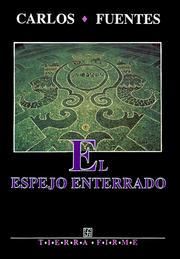
His grand essay on Spain and Spanish America across five centuries, written for a television series and therefore unusually clear. It retroactively explains what Terra Nostra was reaching for.
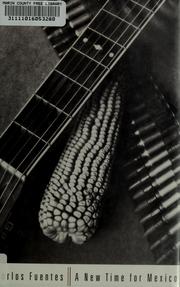
Fuentes as public intellectual on the crises of the 1990s — Chiapas, the peso, the end of one-party rule. The right closing book because it puts the novelist's mythmaking back on contested political ground.
Discussion
Keep reading
Paths that share books, cover the same subject, or open a related topic.