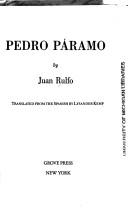
Start with Pedro Páramo, and plan to read it twice. It is around 120 pages, a man goes to a town called Comala to find his father, and it takes most readers thirty or forty pages to realise that nearly everyone speaking to him is dead. The confusion is the design, not a translation problem or a failure of attention. The second reading is where the book becomes what its reputation says it is, and because it is so short, reading it twice costs less than reading one ordinary novel once.
The alternative advice — begin with the stories to acclimate to the voices, then take on the novel — is reasonable and plenty of readers follow it. But Pedro Páramo is the reason anyone comes looking for Rulfo, and the stories read differently once you have been to Comala.
Be aware of what this path actually contains
Rulfo published very little: one novel, one book of stories, and some screenplay and photographic work. That is the entire body. This path therefore has a structure worth knowing about before you start — the first half is Rulfo, and the second half is writers standing downstream of him.
There is also a duplication in the list. The Burning Plain and Other Stories and The Plain in Flames are the same collection, El Llano en llamas, in two different English translations — the older one by George D. Schade, the newer one retitled. You need one of them, not both. The path looks longer than the bibliography really is.
The Rulfo half
Pedro Páramo first. Then the stories, in whichever translation you can find: seventeen short pieces set in the same scorched Jalisco countryside, in which violence is reported in the same flat tone as the weather. The best of them, about a father carrying his wounded son, is as good as anything in twentieth-century short fiction.
The Golden Cockerel & Other Writings collects the remaining prose, including screenplay work, and is genuinely minor — read it only if the first two books left you wanting more of the voice. Juan Rulfo's Mexico is a book of his photographs. He was a serious photographer for decades, and the images share the fiction's attention to emptiness, distance and standing figures. It is the closest thing available to seeing what he saw.
The half that is not Rulfo
The Underdogs by Mariano Azuela comes before Rulfo rather than after: a novel of the Mexican Revolution written while it was still happening, and the tradition Rulfo was working against. It explains what he was refusing to do — the collective, reportorial revolutionary novel he replaced with ghosts and silence.
One Hundred Years of Solitude is here because of a well-documented debt. García Márquez has described reading Pedro Páramo as the event that unblocked his own writing, and the family curse folded into a single haunted town is visible on every page. The catalogue record files this book under Gregory Rabassa, its translator; the novel is García Márquez's.
The death of Artemio Cruz by Carlos Fuentes completes the triangle — the same Mexico, the same betrayed revolution, handled by a cosmopolitan modernist rather than by a silence. Read together, these three books are the argument about how Mexico could be written.
Which translation
This is one of the cases where the choice genuinely matters. Pedro Páramo exists in several English versions spanning more than sixty years — the earliest by Lysander Kemp, the most recent by Douglas J. Weatherford. The book is built out of unattributed voices, so the translator's decisions about where a speaker begins and ends change how quickly a reader understands what is happening. If you can, compare the opening two pages of two editions before buying. It is not a case where any edition will do.
Where to stop
After Pedro Páramo and the stories, you have read Rulfo. Everything further on the reading path is context, and it is optional in a way the first two books are not.