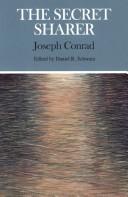
Start with The Secret Sharer. It is forty pages: a young captain on his first command hides a fugitive from another ship in his own cabin, and the whole story is the two of them and the risk. It is the cleanest, tightest thing Conrad wrote, and it teaches you his method — the doubled self, the moral test, the sea as a place where character is exposed — at a length that costs you an hour.
Then Heart of Darkness. It is the famous one, it is a hundred pages, and Marlow's journey up the Congo to find Kurtz is still one of the most disorienting things in English fiction. Do not start here, though. Conrad's prose in this novella is deliberately fogged — abstract nouns piled up, meaning withheld — and readers meeting him for the first time often mistake difficulty for obscurity. Coming to it after The Secret Sharer you already trust that he knows what he is doing.
The sea stories first
The Secret Sharer, then Youth and The shadow-line, both short, both about young men discovering what command and endurance actually cost. The shadow-line is the most autobiographical thing he wrote and the least difficult of all his major work. These three plus Heart of Darkness make a natural first quartet.
A practical note: Conrad wrote in his third language, having learned English in his twenties as a merchant sailor, and the strangeness of his sentences is partly that. It is a feature, not a fault, but it means reading him aloud helps more than it does with most writers.
The novels, in ascending difficulty
Lord Jim next. A young officer abandons a sinking ship full of pilgrims, survives, and spends the rest of his life trying to redeem one second of cowardice. Honest warning: the first half is superb, and then the novel relocates to the Malay settlement of Patusan for a long final section that a great many readers find slack after the courtroom-and-conscience material that precedes it. Push on — the ending justifies it — but know the sag is real and widely reported.
Then The Secret Agent, which is the surprise. It is a London novel, ironic and blackly comic, about an anarchist cell, a bomb plot at Greenwich, and a police inspector. It is the most accessible of the major novels, has almost no sea in it, and its portrait of terrorism as a bureaucratic and domestic phenomenon is startlingly modern.
Under Western Eyes follows: a Russian student betrays a revolutionary and flees to Geneva. It is Conrad's answer to Dostoevsky, a writer he disliked intensely, and it is colder and more controlled than anything else here.
Save Nostromo for last. It is his masterpiece and it is hard — a fictional South American republic, a silver mine, and a narrative that scrambles chronology so aggressively that the first hundred pages feel like assembling a jigsaw in the dark. Readers who give up on Conrad usually give up here. If you have read the six books above, you will have the equipment. If you have not, you will not.
Read the objection
Things Fall Apart by Chinua Achebe belongs on this path deliberately. It is the 1958 novel of Igbo life before and during the arrival of British missionaries, and it is the book that gave the colonised world the interiority Heart of Darkness denies it. Read it as a novel in its own right, not as a corrective.
Then Hopes and impediments, which contains Achebe's 1975 lecture calling Conrad a "thoroughgoing racist" and Heart of Darkness a book that reduces Africa to a backdrop for European psychological drama. That argument has been contested by Conrad scholars ever since and it is not going to be settled here. What is worth saying is that reading both makes each sharper, and that the debate is a live one rather than a historical curiosity.
The biography
Conrad by Norman Sherry is the scholarly life, tracing the real voyages, ships and people behind the fiction. It is for readers who have finished the work and want to know how much of it happened. More literary paths sit on Discover.
Follow the full ordered path here: Joseph Conrad Reading Order: Where to Start.