Chinua Achebe Reading Order: Where to Start
This curriculum takes a beginner through Chinua Achebe's world in four carefully sequenced stages: starting with his most accessible and celebrated novel, moving through the full African Trilogy, then deepening understanding through his essays and criticism, and finally tackling his later, more complex fiction. Each stage builds the cultural, historical, and literary vocabulary needed to fully appreciate the next.
The Foundation: Where It All Begins
BeginnerExperience Achebe's masterwork and gain a vivid, grounded understanding of Igbo society, colonialism's arrival, and Achebe's clear, parable-like prose style — the essential baseline for everything that follows.
▸ Study plan for this stage
Pace: 2–3 weeks, ~20–25 pages/day — Things Fall Apart is ~209 pages, so a relaxed pace of roughly 3 sittings per week allows time to pause, re-read key passages, and journal between sessions without rushing.
- Igbo society and its internal logic: clan structure, the role of the egwugwu, the Week of Peace, the Oracle of the Hills and Caves, and how communal law governs daily life in Umuofia
- Okonkwo as a tragic hero: his chi (personal god/fate), his fear of resembling his father Unoka, and how hypermasculinity and rigidity drive his downfall
- The concept of 'chi' and Igbo cosmology: the relationship between personal destiny, the gods, and human agency as Achebe presents it
- Colonialism's arrival and its mechanisms: the missionaries (Mr. Brown vs. Reverend Smith), the District Commissioner, and how colonial power dismantles Igbo institutions from within as much as from without
- The role of language and storytelling: Achebe's use of Igbo proverbs, folktales (e.g., the story of the bird Eneke), and untranslated words as acts of cultural resistance and authenticity
- Things Fall Apart as a counter-narrative: how the novel directly responds to and subverts the tradition of European 'Africa novels' (e.g., Conrad's Heart of Darkness) by centering African interiority and complexity
- The three-part structure of the novel: Part 1 (Umuofia before colonialism), Part 2 (exile in Mbanta), Part 3 (return and collapse) — and how each part shifts the balance of power
- Achebe's parable-like prose style: spare, declarative sentences, the use of repetition, and how the novel's tone mirrors the oral storytelling tradition of the culture it depicts
- How does Okonkwo's relationship with his father Unoka shape every major decision he makes, and where does this ultimately lead him?
- What specific Igbo institutions, rituals, and values does Achebe depict in Part 1, and how do they demonstrate that Umuofia is a complex, functioning society — not a 'primitive' one — before colonialism arrives?
- How do the contrasting missionary styles of Mr. Brown and Reverend Smith represent two different faces of colonial power, and what does each approach reveal about how colonialism operates?
- What is the significance of the novel's title (drawn from W.B. Yeats's poem 'The Second Coming'), and how does it reflect the dual collapse at the heart of the story — both Okonkwo's personal fall and the fall of Umuofia?
- How does Achebe use proverbs and the Igbo language throughout the novel, and what would be lost — both narratively and politically — if those elements were removed?
- The final paragraph shifts to the District Commissioner's perspective and his planned book title. What is Achebe saying about who gets to tell history, and how does this ending reframe everything the reader has just experienced?
- Proverb journal: Each time you encounter an Igbo proverb in the text (e.g., 'When the moon is shining the cripple becomes hungry for a walk'), write it down, paraphrase it in your own words, and note what it reveals about Igbo values or the scene it appears in. Aim to collect at least 10.
- Character motivation map: Draw a simple diagram with Okonkwo at the center. Draw spokes to the key forces shaping him — Unoka, his chi, Ikemefuna, Nwoye, the clan, the colonizers. For each spoke, write one sentence explaining the tension. Revisit and update it after each of the novel's three parts.
- Close-reading exercise on the final paragraph: Re-read the last page of the novel slowly. Write a one-page response to this question: 'Whose story is Things Fall Apart, and whose story does the District Commissioner think he is in?' Use specific quotes from both the ending and earlier in the novel.
- Before-and-after society sketch: After finishing Part 1, write a half-page description of Umuofia as if you were an anthropologist — its laws, values, social roles, and spiritual life. After finishing Part 3, write a second half-page on what has changed and what has been lost. Compare the two.
- Rewrite a scene from a silenced perspective: Choose a scene told from Okonkwo's point of view (e.g., the killing of Ikemefuna, or his return from exile) and rewrite a short version (1 page) from the perspective of a character who is marginalized in that moment — Nwoye, Ekwefi, or a villager who converts. This builds empathy and critical reading skills.
- Find the 'other Africa' novel: Read a 2–3 page excerpt from Joseph Conrad's Heart of Darkness (freely available online) — specifically a passage describing Africans. Write a paragraph on how Achebe's novel reads as a direct rebuttal. This contextualizes Things Fall Apart as a political as well as literary act.
Next up: Having lived inside Umuofia and felt the full weight of colonialism's arrival through Achebe's most iconic lens, the reader is now ready to move forward in Achebe's chronology and thematic ambitions — exploring how the generation after Okonkwo navigates, negotiates, and is further transformed by the colonial world that Things Fall Apart set in motion.

The indispensable starting point — Achebe's most celebrated novel introduces Okonkwo, the Igbo world, and the catastrophic collision with British colonialism. Its accessible prose and epic clarity make it the perfect entry into Achebe's universe.
The African Trilogy: Completing the Arc
BeginnerFollow the full sweep of Achebe's trilogy across three generations, tracing Nigeria's transformation from pre-colonial village life through colonial rule to the eve of independence, and develop fluency with Achebe's evolving narrative voice.
▸ Study plan for this stage
Pace: 10–12 weeks total. Week 1–3: Read Arrow of God (~300 pages, ~15 pages/day, allowing time to absorb the dense Igbo political and religious detail). Weeks 4–12: Read The African Trilogy omnibus in order — Things Fall Apart (Weeks 4–6, ~20 pages/day), No Longer at Ease (Weeks 7–9, ~15 pages/day), then
- The trilogy's chronological arc: pre-colonial Igbo society (Things Fall Apart) → colonial entrenchment (Arrow of God) → post-colonial urban disillusionment (No Longer at Ease), tracing three generations of the Okonkwo lineage
- Achebe's evolving narrative voice: the epic, proverb-rich oral style of Things Fall Apart vs. the ironic, bureaucratic tone of No Longer at Ease vs. the polyphonic, multi-perspective narration of Arrow of God
- The role of Igbo religion and cosmology — chi (personal god), the Oracle, the sacred python, and the Ulu deity in Arrow of God — as both cultural anchors and sites of colonial disruption
- Colonialism as institutional process: the District Officer system, indirect rule, and the weaponization of Christianity and Western education across all three novels
- Tragic heroism and the 'man alone' archetype: Okonkwo's rigidity in Things Fall Apart, Ezeulu's pride and isolation in Arrow of God, and Obi's moral compromise in No Longer at Ease
- The village as a living character: how Umuofia (Things Fall Apart / No Longer at Ease) and Umuaro (Arrow of God) function as collective protagonists with their own voices, disputes, and fates
- Language as resistance and loss: Achebe's deliberate use of English inflected with Igbo proverbs, syntax, and storytelling conventions to assert African narrative authority
- Generational trauma and cultural continuity: how each novel's protagonist inherits, distorts, or abandons the values of the generation before him
- How does Ezeulu's conflict with both the colonial administration and his own community in Arrow of God echo and deepen Okonkwo's downfall in Things Fall Apart — and what does the comparison reveal about the nature of tragic pride in Achebe's world?
- Trace the role of Christianity across all three novels: how does its function shift from an external, destabilizing force in Things Fall Apart, to a tool of colonial administration in Arrow of God, to an internalized but hollow identity marker in No Longer at Ease?
- In what ways does Achebe's narrative style change across the three books, and how do those stylistic choices reflect the historical moment each novel depicts?
- How do the communities of Umuaro (Arrow of God) and Umuofia (Things Fall Apart / No Longer at Ease) respond differently to colonial pressure, and what accounts for those differences?
- No Longer at Ease is set in Lagos rather than a village — how does the urban setting change what 'belonging' and 'identity' mean for Obi compared to his grandfather Okonkwo?
- By the end of the trilogy, what is Achebe's overall argument about the costs of colonialism — economic, spiritual, psychological, and cultural — for Igbo society across three generations?
- Create a three-column timeline: for each novel, list the key historical events happening in Nigeria (e.g., arrival of missionaries, Indirect Rule Act, approach of independence), the protagonist's personal crisis, and the community's collective response — then look for patterns across all three columns.
- Write a 1–2 page 'voice comparison' exercise: choose one emotionally charged scene from each of the three novels (a confrontation, a ceremony, a moment of loss) and analyze how Achebe's sentence structure, use of proverbs, and narrative distance differ — what does each style 'feel' like, and why is it appropriate to that story?
- Map the Okonkwo family tree across the trilogy (Okonkwo → Nwoye/Isaac → Obi), annotating each generation with: what they valued, what they rejected from the previous generation, and what they lost. Use this map to write a short reflection on what 'inheritance' means in Achebe's world.
- Ezeulu in Arrow of God makes a fateful decision to withhold the New Yam Festival. Re-read that section, then write a one-page 'defense' of Ezeulu's choice from his own perspective, followed by a one-page 'prosecution' from the community's perspective — then reflect on which side Achebe's narration seems to favor, and how you can tell.
- Select five Igbo proverbs spread across the three novels (at least one from each book). For each, (a) paraphrase its literal meaning, (b) explain its narrative function in context, and (c) identify what it reveals about Igbo values or worldview. Compile them into a personal 'proverb glossary.'
- After finishing the full omnibus, write a 300-word 'trilogy verdict': What is the single most important thing lost across these three generations? What, if anything, survives? Use specific evidence from all three novels to support your answer.
Next up: Completing the trilogy gives you a panoramic command of Achebe's historical imagination and narrative craft, making you ready to examine how he extended, complicated, and defended these themes in his later standalone novels, essays, and political writings.
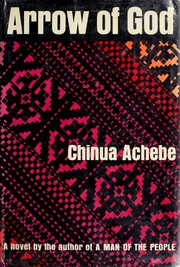
Set in the same era as Things Fall Apart but with greater complexity, this novel follows a chief priest caught between tradition and colonial power — read second to deepen your understanding of Igbo religion and the mechanics of colonial administration.

The chronological sequel, set in 1950s Lagos on the eve of Nigerian independence, follows Okonkwo's grandson navigating corruption and cultural dislocation — a natural bridge from the village world to the modern postcolonial city.
The Essayist: Achebe's Critical Voice
IntermediateUnderstand Achebe's intellectual framework — his views on the role of the African writer, his famous critique of Conrad, and his vision of literature as a tool of decolonization — which reframes everything you have already read.
▸ Study plan for this stage
Pace: 4–5 weeks total: Week 1–2 — "Morning Yet on Creation Day" (~15–20 pages/day, reading essays in the order presented and pausing after each to take notes); Week 3–5 — "Hopes and Impediments" (~12–18 pages/day, given the denser argumentative prose, allowing extra time for the Conrad essay and the Baldw
- The African writer's dual responsibility: to their art and to their society — Achebe's rejection of 'art for art's sake' as a luxury Africa cannot yet afford (Morning Yet on Creation Day)
- The politics of language: Achebe's nuanced defense of writing in English as an act of reclamation rather than capitulation, reshaping the colonizer's tongue to carry African experience (Morning Yet on Creation Day)
- The critique of Joseph Conrad's 'Heart of Darkness' as a foundational text of racist dehumanization — Achebe's argument that Conrad reduces Africa to a backdrop and Africans to props, stripping them of humanity and voice (Hopes and Impediments)
- Literature as an instrument of decolonization: the idea that storytelling restores dignity, rewrites distorted histories, and rebuilds a people's self-image shattered by colonial education (both books)
- The concept of 'chi' and Igbo cosmology as a legitimate philosophical framework — Achebe's insistence that African thought systems are coherent worldviews, not primitive superstition (Morning Yet on Creation Day)
- The role of the novelist as teacher: Achebe's famous declaration that the African writer must be a 'teacher' who helps their society regain belief in itself after colonialism (Morning Yet on Creation Day)
- Colonialist criticism and the double standard: Achebe's dissection of how Western critics evaluate African literature through a distorting Eurocentric lens (Hopes and Impediments)
- The relationship between fiction and truth: Achebe's argument that imaginative literature can carry historical and moral truths that straight history cannot — connecting his essays back to his novels
- According to Achebe in 'Morning Yet on Creation Day,' why does he choose to write in English, and how does he distinguish his use of English from simple assimilation into Western literary tradition?
- What is Achebe's central charge against Joseph Conrad in 'Hopes and Impediments,' and what specific textual evidence from 'Heart of Darkness' does he marshal to support the claim that the novel is 'an offensive and deplorable book'?
- How does Achebe define the responsibility of the African writer in 'Morning Yet on Creation Day,' and why does he believe a posture of political neutrality is not available to the African novelist?
- What does Achebe mean by 'colonialist criticism' in 'Hopes and Impediments,' and what are the mechanisms by which he argues it distorts the reception of African literature?
- How do the essays in both books reframe the novels you have already read — particularly 'Things Fall Apart' and 'Arrow of God' — as deliberate, theorized acts of cultural and political intervention rather than simply stories?
- Across both collections, how does Achebe's vision of literature's social function evolve or deepen, and where, if anywhere, do you detect tensions or contradictions within his intellectual framework?
- The Annotated Reread: Return to one chapter of 'Things Fall Apart' (read in a prior stage) armed specifically with Achebe's essay 'The Novelist as Teacher' from 'Morning Yet on Creation Day.' Annotate the chapter margin-by-margin, identifying every moment where the fiction is doing the 'teaching' work Achebe describes in the essay.
- The Conrad Counterargument: After reading Achebe's Conrad critique in 'Hopes and Impediments,' write a one-page structured response in which you steelman the strongest possible defense of Conrad — then write a second page in which you rebut that defense using only Achebe's own argumentative tools. This forces active engagement with the essay's logic rather than passive agreement.
- Concept Mapping 'Chi': Using 'Morning Yet on Creation Day' as your sole source, draw a concept map of Achebe's explanation of the Igbo notion of 'chi.' Then write three sentences connecting this cosmological concept to specific character decisions in 'Things Fall Apart' or 'Arrow of God.'
- The Language Audit: Select two passages from 'Morning Yet on Creation Day' — one where Achebe's English feels distinctly 'reclaimed' or inflected with Igbo cadence or proverb — and write a paragraph analyzing how the prose itself enacts the argument Achebe makes about reshaping the English language.
- Colonialist Criticism in Practice: Find one published review of any Achebe novel (from a newspaper archive or online) written by a Western critic. Apply Achebe's framework from 'Hopes and Impediments' to analyze whether the review exhibits the patterns of 'colonialist criticism' he identifies. Write a half-page diagnosis.
- Stage Synthesis Journal Entry: After finishing both books, write a 400–500 word journal entry answering: 'Which single idea from these two essay collections most fundamentally changes how I understand the fiction I have already read, and why?' This consolidates the reframing function of the entire stage.
Next up: Having internalized Achebe's own intellectual framework — his theory of the writer's role, his critique of colonial representation, and his vision of literature as decolonization — the reader is now equipped to encounter his later fiction and the responses of other African writers with a fully theorized critical lens, rather than reading those works in a vacuum.
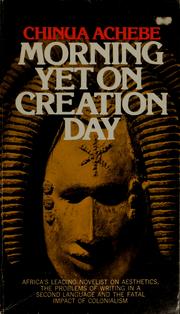
Achebe's first major essay collection lays out his foundational arguments about African literature, identity, and the writer's social responsibility — essential reading before tackling his later, more polemical criticism.
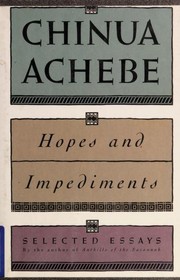
Contains Achebe's landmark essay 'An Image of Africa,' his devastating critique of Conrad's Heart of Darkness, alongside reflections on James Baldwin and the politics of representation — the capstone of his critical thought.
Later Fiction & Legacy: The Full Achebe
ExpertEngage with Achebe's more demanding later novels — shaped by the trauma of the Nigerian Civil War — and his final memoir, arriving at a complete, nuanced picture of his life's work and its enduring significance.
▸ Study plan for this stage
Pace: 8–10 weeks total: ~2 weeks for A Man of the People (~25 pages/day), ~3 weeks for Anthills of the Savannah (~20 pages/day, given its density and multiple narrators), and ~3 weeks for There Was a Country (~15–20 pages/day, pausing frequently to cross-reference historical events and reflect on memoir f
- Post-independence disillusionment and political satire: A Man of the People's savage portrait of corruption, populism, and the failure of the educated elite to redeem Nigerian democracy
- The coup as both prophecy and symptom: how A Man of the People's ending — anticipating a military takeover — situates Achebe as a political diagnostician of African governance
- Polyphonic narration and collective voice: Anthills of the Savannah's rotation among Chris, Ikem, Beatrice, and others as a formal argument that no single perspective can hold the truth of a nation
- Gender and the re-centering of women: Beatrice's emergence in Anthills as a griot-figure and moral center, challenging the male-dominated world of Achebe's earlier fiction
- The Nigerian Civil War (Biafran War) as historical trauma: There Was a Country's memoir-driven account of the war's origins, atrocities, and the near-genocide of the Igbo people
- The writer's responsibility in times of crisis: Achebe's meditation across all three books on what artists, intellectuals, and storytellers owe their communities under authoritarian and violent regimes
- Legacy, canon, and the postcolonial literary tradition: how Achebe's complete arc — from Things Fall Apart through There Was a Country — constitutes a unified, evolving argument about African identity, sovereignty, and humanity
- Memory, testimony, and the ethics of memoir: how There Was a Country navigates the tension between personal grief, historical record, and national reconciliation
- In A Man of the People, how does Chief Nanga embody the contradictions of post-independence African leadership, and what does Odili's own moral ambiguity reveal about the limits of intellectual opposition to corruption?
- How does the military coup ending of A Man of the People function simultaneously as political satire, prophecy, and authorial warning — and how did real Nigerian history validate or complicate Achebe's vision?
- In Anthills of the Savannah, what does the shift to multiple narrators and a more urban, contemporary setting signal about Achebe's evolving understanding of who tells Africa's stories and whose voices have been silenced?
- How does Beatrice's role in Anthills of the Savannah represent a significant departure from the female characters in Achebe's earlier work, and what does her naming of the child at the novel's end symbolize about hope and continuity?
- In There Was a Country, how does Achebe balance personal memoir with historical chronicle, and what are the most significant claims he makes about responsibility for the Biafran War and its humanitarian catastrophe?
- Taken together across all three books, how does Achebe's vision of the African intellectual's role evolve — from Odili's compromised idealism, to Ikem's martyred journalism, to Achebe's own act of memoir-writing as witness?
- Corruption audit: As you read A Man of the People, keep a running log of every corrupt act or moral compromise committed by both Nanga and Odili. At the end, write a one-page argument for who is ultimately more culpable — the demagogue or the idealist who joins the game.
- Narrator mapping for Anthills of the Savannah: Create a chart tracking each chapter's narrator (Chris, Ikem, Beatrice, omniscient), the key event or revelation it delivers, and the emotional register it uses. Then write a short reflection: what would be lost if the novel were told from a single point of view?
- Historical timeline cross-reference: While reading There Was a Country, build a parallel timeline — one column for events Achebe describes personally, one column for independently verified historical facts about the Biafran War (1967–1970). Note where Achebe's memoir and the historical record align, diverge, or fill each other's gaps.
- Close-reading comparison — the coup endings: Write a 500-word close reading comparing the final pages of A Man of the People (the coup announcement) with the final chapter of Anthills of the Savannah (the naming ceremony). How does each ending encode Achebe's political and moral outlook at that moment in his life?
- The writer-as-witness essay: Drawing on Ikem's editorials in Anthills and Achebe's own voice in There Was a Country, write a 600–800 word personal essay responding to the question: 'What obligations does a writer have when their nation is in crisis?' Use specific textual evidence from both books.
- Capstone synthesis: Write a 1,000-word critical essay arguing for a single, overarching theme that unifies all three books in this stage. Identify at least one passage from each book that supports your thesis, and address at least one piece of counter-evidence that complicates it.
Next up: Completing this stage gives the reader a full command of Achebe's fictional and autobiographical output, providing the critical foundation needed to engage with scholarly reception, postcolonial theory, and comparative African literature — the natural terrain of any subsequent advanced study of his legacy and influence.
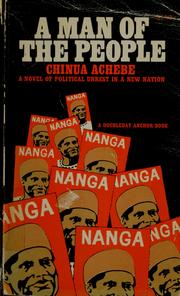
A sharp satirical novel about political corruption in post-independence Nigeria, best read after the essays because its bitter irony and disillusionment make full sense once you understand Achebe's political convictions.
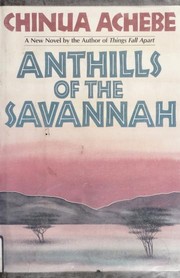
Achebe's final novel — his most formally ambitious — depicts a military coup and its human cost through multiple narrators; the complexity rewards readers who have built up through the earlier works and essays.

Achebe's personal memoir about the Biafran War, published the year before his death, provides an emotional and historical coda to the entire curriculum, connecting his fiction and essays to the lived experience that shaped them.
Discussion
Keep reading
Paths that share books, cover the same subject, or open a related topic.