John Steinbeck Reading Order: Where to Start
This curriculum moves through Steinbeck's work in a carefully sequenced arc: starting with his most accessible short novels to build familiarity with his voice, themes, and California world; then tackling his two great epic novels once that foundation is solid; and finally turning to his nonfiction to see the man and thinker behind the fiction. Each stage deepens the reader's intimacy with Steinbeck's moral vision, prose style, and social conscience.
The Short Novels — Finding Steinbeck's Voice
BeginnerGet comfortable with Steinbeck's plain yet lyrical prose, his working-class characters, and his recurring themes of friendship, dignity, and the American Dream's cruelty — all in compact, fast-moving stories.
▸ Study plan for this stage
Pace: 8–10 weeks total, reading roughly 20–25 pages per day. Suggested book-by-book pacing: "Of Mice and Men" (Week 1, ~30 pages/day — it's only ~112 pages); "Cannery Row" (Weeks 2–3, ~20 pages/day); "The Pearl" (Week 4, ~25 pages/day — ~90 pages); "Tortilla Flat" (Weeks 5–6, ~20 pages/day). Reserve Weeks
- Steinbeck's plain yet lyrical prose style — simple sentence structures that carry unexpected poetic weight, especially in nature descriptions and dialogue
- Working-class dignity — how Lennie and George in 'Of Mice and Men', the paisanos of 'Tortilla Flat', and the cannery workers of 'Cannery Row' are portrayed with humanity and complexity rather than pity
- The American Dream as a cruel illusion — the doomed farm fantasy in 'Of Mice and Men' and the corrupting pearl in 'The Pearl' both show how hope can become a trap
- Friendship and community as survival — the George-Lennie bond, Mack and the boys' brotherhood, and Danny's household all depict chosen family as a buffer against a hostile world
- Steinbeck's use of parable and allegory — 'The Pearl' is explicitly fable-like; 'Of Mice and Men' and 'Tortilla Flat' also carry allegorical weight beneath realistic surfaces
- Nature as moral mirror — Steinbeck uses landscape (the Salinas River, Monterey Bay, the Gulf of California) to reflect characters' inner states and foreshadow outcomes
- Episodic vs. linear structure — contrasting the tight, almost theatrical three-act arc of 'Of Mice and Men' with the loose, chapter-vignette structure of 'Cannery Row' and 'Tortilla Flat'
- Class, race, and marginalization — how characters like Crooks in 'Of Mice and Men', Kino in 'The Pearl', and the paisanos in 'Tortilla Flat' are positioned on the edges of mainstream American society
- In 'Of Mice and Men', what does the recurring dream of 'living off the fatta the lan'' represent for George and Lennie, and why is it ultimately unattainable given the world Steinbeck depicts?
- How does Steinbeck use the tide pool and marine imagery in 'Cannery Row' to frame the lives of Mack, the boys, and Doc — and what does this suggest about his view of human society?
- In 'The Pearl', trace how the pearl transforms Kino's language, relationships, and sense of self. What is Steinbeck arguing about the nature of wealth and ambition?
- Compare the communities in 'Tortilla Flat' and 'Cannery Row': in what ways do the paisanos and Mack's group function similarly as outsider societies, and where do they differ in values or outcomes?
- Steinbeck's prose is often called 'plain but lyrical.' Find one passage from each of the four books that exemplifies this quality and explain what makes each one work.
- How does Steinbeck treat the concept of dignity for characters who are poor, marginalized, or powerless? Use specific examples from at least three of the four books.
- **Passage Annotation Log:** Keep a dedicated notebook. Each reading session, copy out one sentence or short paragraph that strikes you as distinctly 'Steinbeck' — mark whether it's lyrical, plain, ironic, or symbolic, and write two sentences on why it works. By the end of the stage you'll have a personal style guide to his voice.
- **Dream Inventory:** After finishing 'Of Mice and Men' and 'The Pearl', create a side-by-side chart listing each main character's dream, the obstacle Steinbeck places in its way, and how it ends. Then write a one-paragraph thesis answering: does Steinbeck believe the American Dream is redeemable, or is its cruelty structural?
- **Community Blueprint:** Draw or diagram the social structure of the group in each book (George & Lennie's duo; Mack and the boys; Kino's village; Danny's household). Label each member's role, their loyalty, and their vulnerability. Use this to write a short comparison (300–400 words) of how Steinbeck builds and then tests community.
- **Rewrite a Scene in a Different Register:** Choose one scene — the barn scene in 'Of Mice and Men', the party in 'Cannery Row', or the pearl dealers' scene in 'The Pearl' — and rewrite it (1 page) in a modern, journalistic style stripped of Steinbeck's lyricism. Then write a reflection: what is lost? What does this reveal about his stylistic choices?
- **Nature Description Close-Read:** Locate the opening nature description in 'Of Mice and Men' (the Salinas River), in 'Cannery Row' (Chapter 1's tide pool passage), and in 'The Pearl' (the Gulf morning scene). Read them aloud, then write a paragraph on each explaining what mood is established and how it prepares you for the story's themes.
- **End-of-Stage Reflection Essay (500–700 words):** Without re-reading, write from memory about the moment in any of the four books that moved you most. Then go back, find the actual passage, and compare your memory to the text. Use the gap between them to reflect on how Steinbeck's storytelling lodges itself in a reader's imagination.
Next up: Mastering these four compact works gives you an intuitive feel for Steinbeck's voice, themes, and moral worldview — the essential foundation for tackling his longer, more structurally ambitious novels, where those same concerns about class, community, and the American Dream unfold across hundreds of pages and dozens of characters.
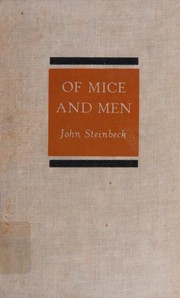
The perfect entry point: short, emotionally powerful, and a masterclass in Steinbeck's dialogue and compassion for the dispossessed. It introduces the Lennie-and-George dynamic that echoes across his work.
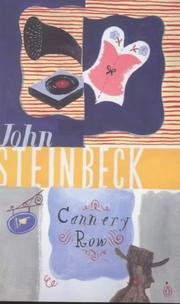
A looser, warmer, episodic novel set in Monterey that shows Steinbeck's humor and tenderness. Reading it second reveals a different, lighter register of his voice after the tragedy of Of Mice and Men.
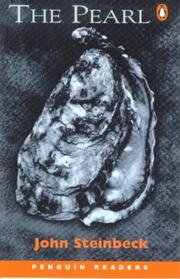
A fable-like parable about greed and corruption that reads almost like a folk tale. It deepens the reader's sense of Steinbeck's moral allegory before moving to longer, more complex works.
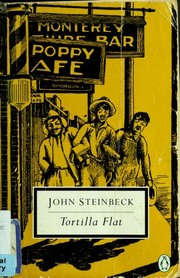
His first major commercial success, following a band of paisanos in Monterey with Arthurian irony and warmth. It rounds out the short-novel stage and firmly establishes his California world.
The Great Novels — Steinbeck at Full Power
IntermediateEngage with Steinbeck's two masterworks — one a searing social document, the other a multigenerational biblical epic — armed with the thematic and stylistic fluency built in Stage 1.
▸ Study plan for this stage
Pace: 10–12 weeks total: Weeks 1–5 for The Grapes of Wrath (~30–35 pages/day, including pauses on the intercalary chapters); Weeks 6–12 for East of Eden (~35–40 pages/day, with slower pacing around the "timshel" chapters and the Cathy/Kate arc). Reserve one full week mid-stage as a reflection and comparis
- The intercalary (interchapter) technique in The Grapes of Wrath — how Steinbeck alternates macro (societal) and micro (Joad family) chapters to create a dual-lens narrative
- Steinbeck's Dust Bowl naturalism: the land as a living, breathing character that both oppresses and sustains human dignity
- Collective vs. individual identity — the Joads' journey as a microcosm of an entire displaced people, and how Steinbeck uses 'the family' as a unit of moral evolution
- Biblical allegory and typology: the Exodus narrative in The Grapes of Wrath (Canaan/California, Moses/Tom Joad, the plagues) and the Cain-and-Abel myth as the structural spine of East of Eden
- The 'timshel' thesis in East of Eden — the Hebrew word meaning 'thou mayest' as Steinbeck's central philosophical argument about free will, moral choice, and the rejection of determinism
- Multigenerational saga structure in East of Eden: how Steinbeck mirrors the Trask and Hamilton families across generations to dramatize the cyclical nature of sin, redemption, and self-creation
- The nature of evil — Cathy Ames/Kate as Steinbeck's most radical character study: whether she represents innate human depravity or a deliberate authorial symbol
- Steinbeck's narrative voice: the shift from the urgent, prophetic, third-person collective voice of The Grapes of Wrath to the intimate, essayistic, first-person-inflected authorial intrusions in East of Eden
- How does Steinbeck use the intercalary chapters in The Grapes of Wrath to transform a single family's story into a universal American tragedy — and what would be lost if those chapters were removed?
- Trace the moral arc of Tom Joad from self-interested ex-convict to collective-consciousness activist. What specific events and characters (particularly Jim Casy) catalyze each stage of his transformation?
- In East of Eden, Steinbeck argues through the character of Lee that the correct translation of 'timshel' — 'thou mayest' — is the most important idea in human history. Do the novel's characters, especially Cal and Adam, bear out or complicate this argument?
- Compare and contrast Steinbeck's use of biblical allegory in both novels: how does the Exodus framework in The Grapes of Wrath differ in purpose and effect from the Cain-and-Abel framework in East of Eden?
- Is Cathy Ames a psychologically realistic character, a literary symbol, or both? What does Steinbeck's treatment of her reveal about the novel's — and his own — attitudes toward women, evil, and human nature?
- Both novels end ambiguously and without conventional resolution. Compare the final images of Rose of Sharon nursing the dying stranger (The Grapes of Wrath) and Adam's whispered 'timshel' to Cal (East of Eden). What thematic work do these endings perform, and how do they reflect each novel's core argument?
- Intercalary mapping: Create a two-column log as you read The Grapes of Wrath — left column summarizes each Joad chapter's plot, right column identifies the societal theme its paired intercalary chapter introduces. At the end, write a one-page reflection on the structural pattern you notice.
- Biblical parallel tracking: Keep a running annotation document for both novels. Each time you spot a biblical echo (character name, event, image, or direct allusion), note the passage, the biblical source, and what Steinbeck gains — or risks — by invoking it.
- 'Timshel' close reading: Re-read the full 'timshel' discussion between Lee, Samuel Hamilton, and Adam in East of Eden (Chapter 24). Write a 500-word argument either defending or challenging Lee's claim that 'thou mayest' is the 'most important' idea in the novel, using at least three other moments from the text as evidence.
- Character voice exercise: Choose one chapter from The Grapes of Wrath told in the collective 'they' voice (e.g., the turtle chapter, the used-car-lot chapter) and rewrite a single page of it from the first-person perspective of one named Joad. Then write a paragraph analyzing what is gained and lost in the translation.
- Comparative thematic essay (500–800 words): Both novels are fundamentally about whether human beings can transcend the forces — economic, biological, historical, moral — that oppress them. Using specific scenes from each book, argue which novel is more optimistic about that possibility, and why.
- Reading journal — Cathy/Kate arc: Each time Cathy or Kate appears in East of Eden, write a brief journal entry (3–5 sentences) from the perspective of a skeptical reader asking: 'Is this believable?' Track how your answer evolves across the novel and write a final verdict paragraph.
Next up: Mastering Steinbeck's two most ambitious novels — his social realism and his philosophical epic — equips the reader to appreciate how his later, shorter works either distill or deliberately retreat from these grand ambitions, setting up a nuanced examination of his post-masterwork career and legacy.
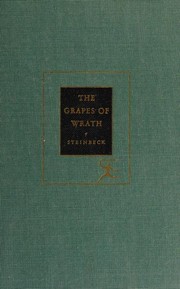
The crown of his social fiction and his Pulitzer Prize winner. Read first here because its documentary urgency and the Joad family's journey feel like the culmination of everything the short novels were building toward.

His most ambitious novel — a multigenerational saga wrestling with the nature of good and evil through the lens of Genesis. Best read after Grapes of Wrath, as it rewards a reader already fluent in Steinbeck's moral world.
The Nonfiction — The Man Behind the Work
ExpertUnderstand Steinbeck as a thinker, traveler, and witness to American life through his own essays and reportage, seeing how his real-world observations fed and reflected his fiction.
▸ Study plan for this stage
Pace: 10–12 weeks total. Week 1–5: Read the nonfiction and essay components of the Steinbeck Centennial Collection (focus on "In Search of America" and "Travels With Charley," ~25–30 pages/day, revisiting passages from "Grapes of Wrath," "Cannery Row," and "East of Eden" as cross-reference touchstones). W
- Steinbeck as witness and journalist: how his first-person reportage in 'Travels With Charley' and 'In Search of America' constructs an authorial 'I' distinct from his fiction narrators
- Non-teleological ('is') thinking: the philosophy of accepting what IS rather than what ought to be, developed explicitly in 'The Log from the Sea of Cortez' and traceable as a quiet undercurrent in his fiction
- Ecology as metaphor and method: the tide-pool as a model for human society in 'The Log from the Sea of Cortez,' linking biological observation to social commentary
- The myth and reality of America: how 'America and Americans' systematically interrogates national identity, paradox, and self-deception, building on the road-journey observations of 'Travels With Charley'
- Steinbeck's evolving relationship with place: California, the Dust Bowl corridor, the Sea of Cortez, and the post-war American highway as successive landscapes that shape his moral vision
- Collaboration and co-authorship: the partnership with Ed Ricketts in 'The Log from the Sea of Cortez' and what it reveals about Steinbeck's intellectual debts and creative process
- The tension between nostalgia and critique: how 'Travels With Charley' and 'America and Americans' simultaneously mourn a vanishing America and indict its failures of equality and purpose
- The feedback loop between nonfiction observation and fictional imagination: tracing specific images, arguments, and characters from the essays back into the Centennial Collection novels
- In 'The Log from the Sea of Cortez,' Steinbeck and Ricketts articulate a philosophy of 'non-teleological thinking.' What does this mean, and can you identify at least two moments in 'Travels With Charley' or 'America and Americans' where this same mode of observation is at work?
- How does Steinbeck use the road journey in 'Travels With Charley' and 'In Search of America' as a structural and rhetorical device — what does physical movement allow him to say about America that a stationary essay could not?
- 'America and Americans' was published in 1966, near the end of Steinbeck's life. How does its tone and argument compare to the relatively hopeful curiosity of 'Travels With Charley' (1962)? What changed, and why might that matter?
- The prefatory essay in 'The Log from the Sea of Cortez' is a memoir of Ed Ricketts as much as a scientific preface. What portrait of the ideal intellectual does Steinbeck construct there, and how does it illuminate his own self-image as a writer?
- Across 'America and Americans' and 'Travels With Charley,' Steinbeck repeatedly returns to themes of loneliness, restlessness, and the failure of prosperity to produce meaning. How do these themes connect to the fictional worlds of 'The Grapes of Wrath,' 'Of Mice and Men,' and 'East of Eden' in the Centennial Collection?
- How does Steinbeck's ecological thinking in 'The Log from the Sea of Cortez' — particularly the idea of the 'group animal' or 'phalanx' — reframe your reading of collective characters (the Okies, the workers, the town of Cannery Row) in his fiction?
- Parallel-passage mapping: Choose one major theme (e.g., American loneliness, the dignity of labor, ecological interdependence) and compile a two-column document — on the left, a passage from one of the nonfiction works ('Log,' 'Travels With Charley,' 'America and Americans,' or 'In Search of America'); on the right, a corresponding passage from one of the Centennial Collection novels. Write a 200-
- Non-teleological observation journal: For one week, practice Steinbeck's 'is' thinking by choosing a public place (a diner, a bus stop, a park) and writing a 300-word observational entry each day — describing only what IS, resisting the urge to explain causes or assign blame. Then re-read the opening chapters of 'The Log from the Sea of Cortez' and annotate where Steinbeck applies the same discipl
- Rhetorical analysis essay (600–800 words): Select one chapter from 'America and Americans' and analyze how Steinbeck builds his argument — what evidence does he use (anecdote, history, personal observation), what rhetorical appeals dominate, and where do you detect tension or contradiction in his stance toward his subject?
- Annotated map exercise: Using 'Travels With Charley' and 'In Search of America,' plot Steinbeck's routes on a physical or digital U.S. map. For each major stop, write a one-sentence note on what Steinbeck observes or concludes. Then write a one-paragraph reflection: does the geography of his journey shape the geography of his argument?
- Intellectual biography timeline: Create a timeline of Steinbeck's life events alongside the publication dates of all books in this stage. Annotate each book with: (a) what was happening in America at the time, (b) what was happening in Steinbeck's personal life, and (c) one sentence on how those contexts are visible in the text.
- Socratic seminar preparation: Draft five discussion questions about 'The Log from the Sea of Cortez' specifically targeting the relationship between scientific method and humanistic writing. Exchange with a fellow reader or writing group, answer each other's questions in writing, then discuss — focusing on whether Steinbeck succeeds in making biology a lens for ethics.
Next up: By grounding Steinbeck's ideas in his own nonfiction voice — his philosophy, his travels, his ecological and social thinking — the reader is now equipped to return to his fiction with a fully contextualized critical lens, ready to engage with scholarly biography, literary criticism, and the broader cultural legacy that the next stage will demand.
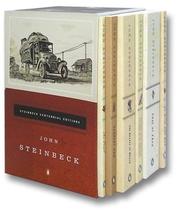
His late-career road trip across America with his poodle is the most personal and accessible of his nonfiction — a natural bridge from the novels, revisiting the American landscape he spent his career writing about.
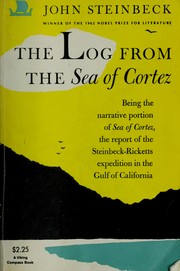
A record of his marine biology expedition with Ed Ricketts, blending science, philosophy, and travel writing. It reveals the ecological and humanist thinking that underpins all his fiction, especially Cannery Row.
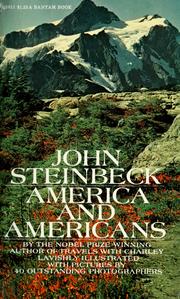
His final major work, a sweeping essay on the American national character. Read last, it functions as Steinbeck's own summation of the themes he pursued across a lifetime of writing.
Discussion
Keep reading
Paths that share books, cover the same subject, or open a related topic.