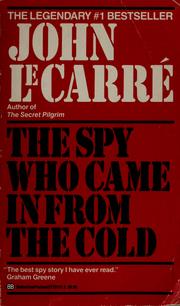
Start with The Spy Who Came in from the Cold. It is his third novel, it is short, and it is the book that ended the glamorous spy story as a genre — a burnt-out British agent sent on a last operation in Berlin, and an ending that reframes everything before it. It requires no prior reading, it is under three hundred pages, and if it does not convert you nothing else will.
Skip past Call for the Dead and A murder of quality for now, even though they come first and even though Call for the Dead is where George Smiley is introduced. They are apprentice novels — the first a thin spy story, the second a country-house murder mystery with a spy in it — and reading them first gives you a minor writer before you have met the major one. Come back to them after the trilogy, when the early sketches of Smiley become genuinely interesting.
The Karla trilogy
This is the main event and it must be read in order, because it is one continuous story about Smiley's pursuit of his Soviet opposite number.
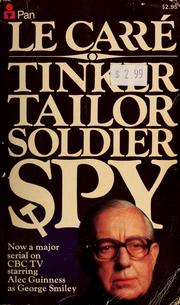
Tinker Tailor Soldier Spy first: a mole at the top of British intelligence, and a retired Smiley brought back to find him by reading files. It is the finest procedural in the language and it is also demanding — the first hundred pages throw jargon, timelines and a dozen names at you with no scaffolding. Push through. It is designed to reward a second reading and it repays the first.
Then The Honourable Schoolboy. Here is the honest warning: this is the one people abandon. It moves the action to Hong Kong and Southeast Asia, runs to six hundred pages, spends long stretches away from Smiley entirely with a journalist-agent in the field, and its reputation among le Carre readers is genuinely divided. It contains some of his best writing about colonial decay. It also sags badly in the middle third.
You can skip it. The trilogy still works: Smiley's People picks up the Karla thread and resolves it, and the plot of the missing volume is summarised sufficiently for you not to be lost. Do not let a completist instinct stall you between two masterpieces. If you skip it, consider returning once you have finished — it reads far better as a side-quest than as an obstacle.
Smiley's People closes the arc. It is the best-constructed of the three and the ending is the quietest, saddest triumph in spy fiction.
The standalones
A Perfect Spy is next and, for a large number of readers, is his actual masterpiece — a heavily autobiographical novel about a defector-in-waiting and his magnificent, ruinous confidence-trickster father. It is his most novelistic book and the least like a thriller.
The little drummer girl takes an English actress into an Israeli intelligence operation against a Palestinian bomber, and is his most morally uncomfortable book by design. The Constant Gardener moves to the pharmaceutical industry in Kenya, The tailor of Panama is a black comedy about invented intelligence, and A most wanted man is a post-2001 novel about a Chechen refugee in Hamburg and the agencies that fight over him.
Where to stop
After Smiley's People you have the core. After A Perfect Spy you have the writer at full height. Everything after the Cold War ends is a matter of subject interest — the late novels are angrier and more openly political, and readers who came for Cold War ambiguity sometimes find them blunter.
Do you have to read in order?
Only the Karla trilogy is a true sequence. Everything else stands alone. But Tinker Tailor Soldier Spy without The Spy Who Came in from the Cold first is a colder entry, and the Smiley of the trilogy means more if you have already seen him in the earlier books. Order buys accumulation, not comprehension. More paths like this on Discover.
Follow the full ordered path here: John le Carre Reading Order: Where to Start.