John le Carre Reading Order: Where to Start
John le Carré built one of the most intricate fictional worlds in 20th-century literature, centred on the moral ambiguities of Cold War espionage. This curriculum begins with his most accessible and celebrated novel to build intuition for his style and themes, moves through the complete George Smiley arc in sequence, then explores his standalone Cold War masterworks, and finally arrives at his rich, politically charged late novels — each stage deepening your feel for his prose, his tradecraft vocabulary, and his worldview.
The Gateway: Meeting le Carré's World
BeginnerGrasp le Carré's tone, moral universe, and spy-fiction vocabulary through his most celebrated and self-contained novel before committing to a longer series.
▸ Study plan for this stage
Pace: 2–3 weeks, ~20–25 pages/day — The Spy Who Came in from the Cold runs roughly 220 pages, so a relaxed daily pace leaves room for re-reading key scenes and journaling without burnout.
- Moral ambiguity over heroism: le Carré deliberately strips away the glamour of espionage, presenting intelligence work as bureaucratic, cynical, and ethically corrosive — Alec Leamas is an anti-Bond in every sense.
- The 'Circus' and Cold War tradecraft vocabulary: terms like 'lamplighters,' 'scalp-hunters,' 'the Circus,' 'joe,' and 'burned agent' form the backbone of le Carré's fictional world and recur across his entire body of work.
- Unreliable information and the manipulation of truth: the novel's central plot twist reveals that both Leamas and the reader have been fed a constructed narrative — knowledge itself is weaponized.
- Institutional betrayal: the British intelligence establishment (the 'Circus') sacrifices individuals — including its own officers — for strategic convenience, establishing le Carré's lifelong theme of the state as an indifferent, even predatory, employer.
- The human cost of ideology: characters on both sides of the Iron Curtain are shown to be pawns of abstract political systems; Liz Gold's idealism and Leamas's exhausted cynicism are two failed responses to the same dehumanizing machinery.
- Narrative misdirection as form: le Carré structures the novel so that the reader's assumptions mirror Leamas's own — the plot's architecture is itself a lesson in how deception operates.
- Sparse, grey prose style: le Carré's restrained, almost documentary prose — flat dialogue, bleak settings, minimal interiority — is a deliberate aesthetic choice that reinforces the novel's moral coldness.
- The 'coming in from the cold' metaphor: understand what 'the cold' represents (operational life, moral compromise, isolation) and what 'coming in' promises versus what it actually delivers.
- By the end of the novel, what is the real purpose of Leamas's mission, and at what point does the reader — alongside Leamas — realize they have been deceived?
- How does le Carré use Liz Gold as a moral counterweight to Leamas, and what does her fate suggest about the novel's view of idealism — whether Communist or Western?
- What specific techniques does the Circus use to manipulate Leamas, and how do those techniques mirror what Leamas himself does to the people around him?
- How does the novel's setting — the grey transit zones of Cold War Europe, the Berlin Wall, the dingy safe houses — function as an extension of its moral atmosphere?
- In what ways does Alec Leamas differ from the popular spy-fiction heroes of the same era (e.g., James Bond), and what is le Carré arguing by making those differences so stark?
- What does the novel ultimately say about the difference, if any, between the methods and morality of the East and the West?
- **Vocabulary log:** Keep a running glossary of le Carré's tradecraft terms as they appear (e.g., 'joe,' 'burned,' 'the Circus,' 'control'). After finishing, write a one-sentence plain-English definition for each — this will pay dividends in every subsequent le Carré novel.
- **Twist autopsy:** After completing the book, re-read chapters 18–25 with the ending in mind. Annotate every moment where le Carré planted a clue you missed on first read. This trains close-reading skills essential for his more complex later works.
- **Character moral compass:** Draw a simple two-axis chart (cynical ↔ idealistic / loyal ↔ betrayed). Place Leamas, Liz Gold, Control, Fiedler, and Mundt on it at the novel's opening and again at its close. Write 2–3 sentences explaining any character who moved.
- **Comparative prose exercise:** Find a passage of roughly one page from a James Bond novel (any Ian Fleming) and a passage of similar length from The Spy Who Came in from the Cold. Write a 300-word comparison of tone, sentence structure, and what each author seems to think the reader should *feel* about the spy.
- **Thematic journal entry:** Write 400–500 words responding to this prompt — 'Leamas tells Liz that the West's methods are no different from the East's. Is the novel asking us to agree with him?' Use at least three specific scenes as evidence.
- **Setting sketch:** Choose one location in the novel (the Berlin Wall crossing, the East German tribunal room, Leamas's bedsit) and write a paragraph describing what it looks like, then a second paragraph explaining what it *means* thematically. This builds the habit of reading le Carré's environments as moral landscapes.
Next up: Mastering le Carré's tone, vocabulary, and moral framework in this self-contained novel gives the reader the interpretive tools — and the appetite for complexity — needed to follow the multi-novel, multi-character architecture of his longer series.
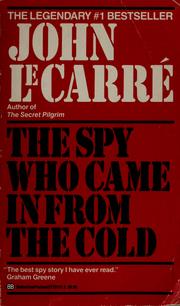
Le Carré's breakthrough novel and still his most perfectly constructed: short, devastating, and a complete introduction to his themes of betrayal, institutional cynicism, and moral compromise. Reading this first gives you the emotional and thematic key to everything that follows.
The Smiley Novels: The Karla Trilogy
BeginnerFollow George Smiley through his defining three-novel arc against Soviet spymaster Karla, experiencing le Carré's most sustained and novelistically ambitious achievement in sequence.
▸ Study plan for this stage
Pace: 10–12 weeks total; roughly 3–4 weeks per novel. Tinker Tailor Soldier Spy (~350 pp): ~25 pages/day. The Honourable Schoolboy (~530 pp): ~25–30 pages/day. Smiley's People (~340 pp): ~25 pages/day. Allow 2–3 buffer days between novels for reflection and journaling.
- The 'Circus' as institution: how le Carré uses the British intelligence bureaucracy (the Circus) as a microcosm of post-imperial decline, internal betrayal, and moral exhaustion
- George Smiley as anti-hero: Smiley's deliberate inversion of the glamorous spy archetype — his physical unimpressiveness, emotional restraint, and ethical ambivalence as sources of depth rather than weakness
- The mole-hunt structure in Tinker Tailor Soldier Spy: how le Carré builds suspense through retrospective reconstruction, unreliable memory, and institutional cover-up rather than action-thriller set pieces
- Karla as mirror and nemesis: the Soviet spymaster who never speaks yet dominates all three novels — understanding how le Carré uses Karla's silence and ideological certainty as a foil to Smiley's doubt
- Geographical and moral sprawl in The Honourable Schoolboy: how the shift to Southeast Asia (Hong Kong, Cambodia, Vietnam) expands the trilogy's canvas and interrogates whether the Circus's 'victories' are worth their human cost
- The tradecraft of patience: dead drops, cutouts, legend-building, and the slow accumulation of intelligence — le Carré's insistence on espionage as grinding, unglamorous craft
- Personal cost and the 'necessary betrayal': across all three novels, how Smiley's professional victories are inseparable from personal losses — Ann's infidelity, the deaths of agents, the corruption of loyalty
- Resolution and moral pyrrhic victory in Smiley's People: what it means that Smiley 'wins' against Karla but feels no triumph — le Carré's thesis on the price of defeating one's own mirror image
- In Tinker Tailor Soldier Spy, how does le Carré use the structure of Smiley's investigation — piecing together the past through interviews and documents rather than live action — to create both narrative tension and a meditation on institutional memory and self-deception?
- The Honourable Schoolboy is often called the 'odd one out' of the trilogy because Smiley is largely offstage while Jerry Westerby drives the plot. How does Westerby's doomed romanticism and eventual insubordination reflect and complicate the trilogy's central themes of loyalty and institutional betrayal?
- Karla appears in person only briefly across the trilogy yet is its dominant presence. How does le Carré construct Karla's menace and significance almost entirely through absence, reputation, and the single scene of his interrogation recalled in Tinker Tailor Soldier Spy?
- By the end of Smiley's People, Smiley has achieved what he set out to do. Why does le Carré frame this victory as hollow, and what does Smiley's famous closing line ('George, you won') reveal about the trilogy's moral argument?
- How does le Carré use the recurring motif of betrayed or abandoned women — Ann Smiley, Irina, Lizzie Worthington — to interrogate the human cost that the men of the Circus refuse to fully reckon with?
- Across all three novels, the Circus is shown to be compromised, underfunded, politically manipulated, and often wrong. What, if anything, does le Carré suggest justifies its continued existence — or does he?
- Karla's Dossier: After finishing Tinker Tailor Soldier Spy, write a one-page 'intelligence summary' of Karla as if you were a Circus analyst — what is known, what is inferred, what remains unknown. Revisit and update it after each subsequent novel to track how your picture of him evolves.
- Character web mapping: Draw a relationship map of the Circus personnel in Tinker Tailor Soldier Spy (Alleline, Haydon, Bland, Esterhase, Guillam, Smiley, Control). Annotate each connection with the nature of the relationship and whether it involves loyalty, rivalry, or betrayal. This is a practical exercise in tracking le Carré's dense ensemble casts.
- Parallel timeline: The Honourable Schoolboy cuts between London and Southeast Asia. Create a two-column timeline tracking Smiley's institutional maneuvering in London alongside Jerry Westerby's field movements. Note moments where the two tracks are causally linked but the characters are unaware of each other.
- Close-reading journal: Select one scene from each novel in which almost nothing 'happens' externally (e.g., Smiley sitting in a car, a conversation over tea, a walk through London). Write 200–300 words on what le Carré achieves in each scene through prose style, subtext, and what is deliberately left unsaid.
- The tradecraft glossary: As you read, keep a running list of le Carré's tradecraft vocabulary (legend, lamplighter, scalphunter, cutout, honey trap, etc.). After finishing all three novels, write a short paragraph explaining how this private language functions as a form of institutional identity and exclusion within the Circus.
- Comparative endings: Write a 400-word comparison of the final pages of all three novels. How does le Carré modulate tone — from the cold revelation of Tinker Tailor, to the bitter sacrifice of The Honourable Schoolboy, to the pyrrhic quiet of Smiley's People? What does the progression tell you about the trilogy's overall emotional arc?
Next up: Completing the Karla Trilogy gives the reader a deep command of Smiley's moral world and le Carré's mature novelistic method, providing the essential baseline from which to explore his later, post-Cold War work — where the enemy is no longer a Soviet mirror image but the ambiguities of capitalism, terrorism, and Western complicity.
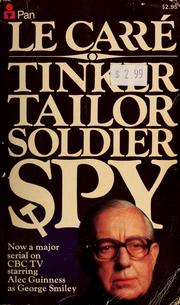
The first and foundational Karla novel, introducing the Circus, Smiley, and the mole-hunt plot. Its slow-burn, puzzle-box structure rewards patience and sets the template for the whole trilogy.
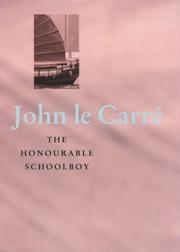
The middle novel of the trilogy, expanding the canvas to Southeast Asia. Reading it second, as intended, lets you see how le Carré stretches and tests the world he built in the first book.
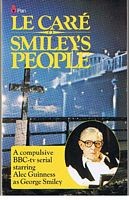
The trilogy's conclusion and Smiley's final reckoning with Karla. Its emotional payoff depends entirely on having lived through the previous two novels — this is where everything converges.
Smiley: The Earlier Novels
IntermediateReturn to Smiley's origins and early career to fill in the full portrait of the character, now that you understand who he becomes.
▸ Study plan for this stage
Pace: 2–3 weeks total; read "Call for the Dead" in the first week (~25–30 pages/day, it is a short novel) and "A Murder of Quality" in the second week at the same relaxed pace, leaving a few days at the end for reflection, comparison notes, and exercises.
- Smiley as origin: recognising the seeds of his mature character — moral seriousness, self-doubt, and quiet tenacity — in these earliest cases
- The detective-spy hybrid genre: both novels blend classic English detective fiction with the espionage world, and understanding that fusion is central to reading le Carré's tone
- Smiley's domestic wound: Lady Ann's infidelity and absence already haunts him in 'Call for the Dead', establishing the private grief that defines him throughout his career
- Institutional loyalty vs. personal conscience: 'Call for the Dead' introduces the tension between the Circus's interests and Smiley's individual sense of justice
- Class, privilege, and English institutions: 'A Murder of Quality' uses the closed world of Carne School to dissect the English class system, a theme le Carré returns to obsessively
- The unremarkable exterior as cover: both novels reinforce that Smiley's physical plainness and social awkwardness are not flaws but instruments — he is perpetually underestimated
- Guilt and complicity: both plots turn on the question of how ordinary, respectable people become capable of violence or betrayal, foreshadowing the moral complexity of the Karla trilogy
- Le Carré's prose style in embryo: spare, ironic, emotionally restrained narration that trusts the reader — noticing it here makes it easier to track its evolution in later works
- In 'Call for the Dead', how does Smiley's personal connection to Elsa Fennan complicate his investigation, and what does his handling of that complication reveal about his character?
- Both novels place Smiley outside his natural institutional habitat — how does each book use that displacement to comment on the limits of official structures?
- How does 'A Murder of Quality' use the setting of Carne School to explore English class anxiety, and why does le Carré choose a spy — rather than a conventional detective — to investigate a murder in that world?
- Lady Ann is physically absent from both novels yet feels like a presence. What narrative function does she serve at this early stage of Smiley's story?
- Compare the villains (or perpetrators) in each book: what do they share, and what does that commonality suggest about le Carré's view of how evil operates in respectable society?
- Having read the Karla trilogy before these novels (as the curriculum intends), which moments in 'Call for the Dead' or 'A Murder of Quality' feel like foreshadowing of the older, more battered Smiley you already know?
- Reverse character sketch: write one page describing Smiley strictly as another character in each book sees him — use only evidence from the text. This forces close reading of how le Carré constructs Smiley's exterior vs. interior.
- Genre mapping: draw a two-column table listing every scene or element in 'A Murder of Quality' that belongs to classic detective fiction on one side, and every element that belongs to spy fiction on the other. Write a short paragraph on what sits uncomfortably in both columns.
- Annotate the Ann motif: go back through both novels and highlight every reference — direct or oblique — to Lady Ann. Write a brief note on what each reference adds to Smiley's emotional state at that moment.
- Comparative villain analysis: write a one-page character study of the perpetrator in each novel, focusing on their social respectability and their motive. Then write a single closing sentence connecting both to the theme of institutional rot.
- Prose imitation: choose one paragraph of le Carré's narration from each book that you find particularly effective. Rewrite the same scene in a more conventional thriller style, then reflect in a few sentences on what is lost.
- Retrospective timeline: now that you have read both early novels and the Karla trilogy, sketch a rough personal timeline of Smiley's life as the books collectively imply it. Note any contradictions or gaps — these are worth sitting with rather than resolving.
Next up: By grounding you in Smiley's earliest cases and the personal wounds he carries from the very beginning, this stage completes the full arc of his character and prepares you to step beyond Smiley into le Carré's broader canvas — the later standalone novels where the institutional and moral themes he pioneered are tested in entirely new settings and protagonists.
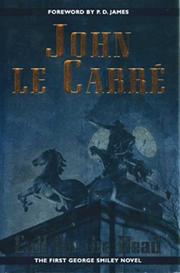
Le Carré's debut novel and Smiley's first appearance — a tight, almost noir mystery. Reading it after the Karla trilogy lets you appreciate how fully formed Smiley already was, and adds poignant retrospective depth.
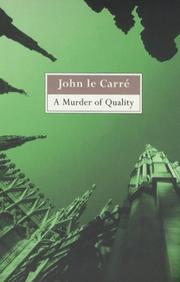
The second Smiley novel, a classic English murder mystery in structure. It rounds out the early Smiley and shows le Carré's range before the Cold War epics fully took over.
Standalone Cold War Masterworks
IntermediateExplore le Carré's finest non-Smiley Cold War novels, broadening your understanding of his moral and political vision beyond any single character.
▸ Study plan for this stage
Pace: 8–10 weeks total: spend weeks 1–4 on The Little Drummer Girl (~25–30 pages/day, including pause days for reflection after major plot turns), then weeks 5–9 on A Perfect Spy (~20–25 pages/day, given its denser psychological interiority), with week 10 reserved for comparative re-reading of key passage
- Theatre as espionage metaphor: In The Little Drummer Girl, le Carré frames the entire intelligence operation as a theatrical production — roles, scripts, costumes, and performances — interrogating whether any 'true self' survives deep cover work.
- The recruited outsider: Charlie in The Little Drummer Girl is a civilian actor drawn into the spy world, allowing le Carré to explore how idealism and identity are weaponised by professional manipulators.
- Moral equivalence and the Palestinian–Israeli conflict: The Little Drummer Girl refuses a simple villain/hero binary, demanding the reader hold competing political sympathies simultaneously — a signature le Carré ethical stance.
- Father-son trauma as espionage origin story: A Perfect Spy is le Carré's most autobiographical novel; Magnus Pym's compulsive betrayal is rooted in his con-man father Rick, establishing that the spy's psychology is formed long before any recruitment.
- Loyalty, betrayal, and self-invention: A Perfect Spy treats betrayal not as ideology but as a deeply personal, almost loving act — Pym betrays everyone precisely because he is incapable of a stable self to be loyal from.
- The novel-within-a-novel / confessional structure: A Perfect Spy is narrated through Pym's secret memoir, layering time and perspective and implicating the reader as confessor — a formal choice that mirrors the spy's hall-of-mirrors identity.
- Institutional complicity: Both novels show intelligence services as morally compromised bureaucracies that exploit human vulnerability rather than defend clear ethical values.
- Love as an instrument and a wound: Both Charlie and Magnus Pym experience love (romantic and filial) as simultaneously the most authentic thing in their lives and the primary lever by which they are controlled or destroyed.
- In The Little Drummer Girl, how does the theatrical metaphor function structurally — and what does Charlie's inability to distinguish performance from reality ultimately say about the nature of identity under coercion?
- Le Carré gives the Palestinian cause genuine moral weight in The Little Drummer Girl. How does he prevent the novel from becoming propaganda for either side, and where, if anywhere, do you detect his own sympathies leaking through?
- In A Perfect Spy, Rick Pym is not a spy yet he is arguably the novel's true architect of betrayal. How does le Carré use Rick to argue that espionage is less a profession than a personality disorder with biographical roots?
- Both Charlie and Magnus Pym are performers who lose track of their authentic selves. Compare the mechanisms of their self-dissolution: what does each novel suggest about whether a 'real' self ever existed to begin with?
- A Perfect Spy is widely considered le Carré's most personal novel. Based on the text alone (without recourse to biography), what internal evidence supports the idea that this is a confessional work, and how does that affect your reading of its moral judgements?
- Taken together, what vision of the Cold War do these two novels construct — and how does that vision differ from, or complicate, the Smiley novels' portrayal of East–West conflict?
- Character role-map for The Little Drummer Girl: Draw a diagram showing every role Charlie is asked to play (by Kurtz, by Joseph, by the Palestinians) and annotate each node with what part of her real self — if any — she brings to it. Use this map to write a one-page argument for or against the claim that Charlie is the novel's true spy.
- Moral ledger exercise: After finishing The Little Drummer Girl, create a two-column ledger — Israeli operation vs. Palestinian cause — and list every morally weighted act committed by each side. Then write a paragraph explaining why the ledger cannot be balanced, and what that imbalance reveals about le Carré's method.
- Close-reading of Rick Pym: Select three scenes in A Perfect Spy where Rick directly or indirectly shapes Magnus's behaviour as a spy. Write a 300-word analysis of each, focusing on the specific language le Carré uses to blur the boundary between fatherly love and manipulation.
- Structural timeline for A Perfect Spy: The novel moves between at least three time layers (Pym's childhood, his career, his final days writing the memoir). Map these layers onto a single timeline and annotate where each layer's revelations recontextualise something in another layer — then reflect on why le Carré chose this non-linear form over a straightforward confession.
- Comparative voice exercise: Find one passage of approximately one page from each novel in which the protagonist is most fully 'themselves.' Read them aloud, then write 200 words on how le Carré's prose style (sentence rhythm, free indirect discourse, irony) differs between the two books and what that difference signals about each character's relationship to self-knowledge.
- Thematic synthesis essay (500–700 words): Argue whether 'betrayal' in these two novels is primarily a political act, a psychological compulsion, or a form of love — drawing on specific scenes from both The Little Drummer Girl and A Perfect Spy to support your position.
Next up: By mastering le Carré's moral and psychological range outside the Smiley framework — across geopolitics (the Middle East), autobiography, and formal experimentation — the reader is now equipped to return to or deepen engagement with his later, post–Cold War work, where these same themes of identity, institutional betrayal, and moral ambiguity are transplanted into new global arenas such as corpora
A standalone thriller set in the Israeli-Palestinian conflict — le Carré's most complex female protagonist and his most morally vertiginous plot. It proves his themes transcend the Smiley world entirely.
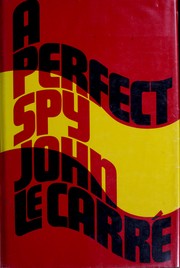
Widely considered his most autobiographical and novelistically ambitious work, a deep psychological portrait of a double agent. By this point in the curriculum you have the fluency to appreciate its layered complexity.
The Late Work: A World Remade
ExpertEngage with le Carré's post-Cold War novels, which turn his espionage lens on corporate power, the War on Terror, and global injustice — the full flowering of a lifetime's moral vision.
▸ Study plan for this stage
Pace: 9–11 weeks total: ~2.5–3 weeks per novel (~25–30 pages/day). Suggested order: The Tailor of Panama → The Constant Gardener → A Most Wanted Man, which traces le Carré's thematic arc from satirical farce to moral fury to quiet tragedy. Reserve the final week for comparative reflection, essay drafting,
- The pivot from Cold War to corporate and geopolitical power: le Carré's espionage lens is redirected from Soviet bloc intrigue toward multinational pharmaceutical companies (The Constant Gardener), American imperial ambition (The Tailor of Panama), and the post-9/11 War on Terror security apparatus
- Institutional complicity and systemic evil: all three novels argue that harm is rarely the work of lone villains but is instead produced by bureaucracies, corporations, and governments that diffuse moral responsibility until no single actor feels culpable.
- The 'useful lie' as political machinery: in The Tailor of Panama, Harry Pendel's fabrications are eagerly consumed by intelligence services hungry for a pretext — a savage commentary on how power manufactures the intelligence it needs.
- Love and grief as moral catalysts: Justin Quayle's investigation in The Constant Gardener is driven entirely by love for Tessa, transforming a passive diplomat into an agent of witness — le Carré frames personal grief as the only reliable engine of moral action.
- The innocent Muslim as mirror: Issa in A Most Wanted Man is less a fully realized character than a moral test administered to every institution around him — his fate measures the ethical bankruptcy of post-9/11 Western liberalism.
- The complicit narrator and unreliable institution: le Carré systematically withholds omniscience, forcing readers to reconstruct truth from partial, interested perspectives — mirroring the epistemological condition of citizens inside opaque states.
- Satire versus elegy: The Tailor of Panama operates in a mode of dark comedy inherited from Graham Greene, while The Constant Gardener and A Most Wanted Man move toward elegy and moral lamentation — tracking le Carré's own deepening disillusionment.
- Africa and the Global South as moral landscape: The Constant Gardener uses Kenya not merely as backdrop but as an indictment — the bodies of African trial subjects literalize the cost of Western corporate impunity.
- In The Tailor of Panama, how does Andy Osnard's manipulation of Harry Pendel expose the self-deception at the heart of intelligence work — and what does the novel say about the relationship between the stories power wants to hear and the 'intelligence' it ultimately acts upon?
- How does le Carré use the structure of Justin Quayle's retrospective investigation in The Constant Gardener to implicate the reader in the same willful blindness Justin himself must overcome? What formal choices reinforce this theme?
- Compare the role of the 'good bureaucrat' across all three novels — characters like Justin, Bachmann in A Most Wanted Man, and Osnard's handlers. How does each novel treat the possibility of ethical action from within a corrupt institution?
- A Most Wanted Man ends with Bachmann's operation dismantled by his own side. What does this ending argue about the relationship between individual moral competence and institutional imperatives in the War on Terror?
- All three novels feature protagonists who are, in some sense, tailors — people who construct narratives, identities, or cases. How does le Carré use this motif of fabrication to comment on the nature of truth in political life?
- How does le Carré's treatment of corporate power in The Constant Gardener differ from his treatment of state power in A Most Wanted Man — and does either novel suggest a path toward accountability?
- Close-reading journal: For each novel, select one scene where a character receives or transmits a piece of 'intelligence' or information. Write 400–500 words analyzing how le Carré signals the gap between what is reported and what is true — track his use of free indirect discourse, irony, and narrative withholding.
- Character network map: Draw a diagram for The Tailor of Panama showing the chain of transmission from Pendel's invention to political decision. Annotate each link with the question: 'What does this actor want to believe, and why?' Then write a one-paragraph reflection on how the map illustrates institutional self-deception.
- Comparative essay (800–1,000 words): Argue for or against the following claim — 'In his late work, le Carré replaces the moral ambiguity of his Cold War fiction with a clearer, angrier moral vision.' Use specific evidence from at least two of the three novels.
- Research and contextualize: Read one piece of investigative journalism about either (a) pharmaceutical drug trials in sub-Saharan Africa, (b) the 2003 Iraq War intelligence failures, or (c) post-9/11 rendition and Muslim profiling in Europe. Write a one-page reflection on how le Carré fictionalizes real systemic patterns and what fiction can do that journalism cannot.
- Tonal comparison exercise: Find one passage of dark comedy from The Tailor of Panama and one passage of elegy from A Most Wanted Man. Write a 300-word analysis of how le Carré's prose style — sentence rhythm, diction, ironic distance — shifts to serve each emotional register.
- Socratic discussion or written dialogue: Imagine Justin Quayle (The Constant Gardener) and Günther Bachmann (A Most Wanted Man) meet and compare notes on their experiences. Write a 500-word dialogue in which they debate whether working within corrupt institutions is ever morally defensible — staying true to each character's voice and worldview.
Next up: Mastering le Carré's late moral vision — his indictment of corporate, imperial, and security-state power — equips the reader to engage with critical and biographical perspectives on his entire career, understanding how the late work reframes and deepens everything that came before it.
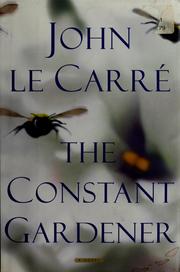
His defining post-Cold War novel, targeting Big Pharma and African exploitation with the same moral fury he once aimed at the Soviets. A natural bridge between his Cold War work and his late style.
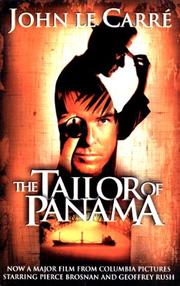
A darkly comic, Graham Greene-inflected standalone that deconstructs the spy genre itself — best appreciated once you know the conventions well enough to enjoy le Carré subverting them.

A searing post-9/11 novel about the War on Terror's human cost, and one of his leanest late works. It brings the curriculum full circle: the same institutional betrayal of The Spy Who Came in from the Cold, updated for a new century.
Discussion
Keep reading
Paths that share books, cover the same subject, or open a related topic.