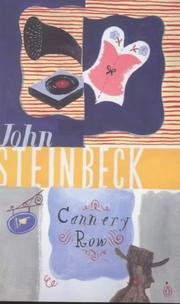
Start with Cannery Row. It is a hundred and fifty pages about a marine biologist, a flophouse of amiable layabouts, and a party that goes wrong twice, set on the Monterey sardine waterfront in the 1930s. There is barely a plot. It is warm, funny, strange, and completely unlike the grim slab most people remember being handed at fifteen — and it is the fastest way to discover that Steinbeck is a much better writer than his reputation as a Set Text suggests.
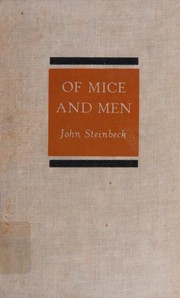
If you would rather start with something you have heard of, take Of Mice and Men, which is under a hundred pages, structured like a play, and does its terrible work with total economy. It is the most efficient Steinbeck. It is also the one most likely to be spoiled for you already.
The short novels
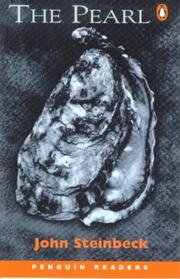
Cannery Row, then Of Mice and Men, then Tortilla Flat — an earlier, looser Monterey book, consciously modelled on Arthurian romance, and funnier than it has any business being — and The Pearl, a hundred-page parable about a diver who finds a fortune. The Pearl is the weakest of the four: schematic, a fable rather than a story, and often taught to teenagers for exactly that reason. Read it last of the short books or not at all.
By this point you will know whether the sentimentality that Steinbeck's critics complain about is a problem for you. It is real. He likes his poor characters very much and occasionally says so at length.
The two big ones
The Grapes of Wrath is the one that won the Pulitzer and got him boycotted, burned and investigated: the Joad family driven off an Oklahoma tenancy by dust and debt, moving west into California's labour camps. It is angry documentary journalism with a novel wrapped around it, and it is still the best thing he wrote.
One honest warning. Every other chapter is an intercalary chapter — a short, unnamed, sermon-like section about turtles, used-car salesmen or the migration in general, with no Joads in it. Some readers skip them. Do not. They carry the entire argument of the book, and the Joad chapters without them are just a sad family. Slow down instead.
East of Eden is the sprawling later novel he considered his real work: two families in the Salinas Valley, a rewriting of Cain and Abel, and a villain who is either the most frightening figure he created or a serious failure of characterisation depending on which critic you ask. It is baggier than The Grapes of Wrath and more ambitious, and many readers love it more.
Read The Grapes of Wrath first. It is tighter, and East of Eden is more rewarding when you already know what he can do with discipline.
The nonfiction
The Log from the Sea of Cortez is the surprise. It is the narrative half of a specimen-collecting voyage Steinbeck made in 1940 with the marine biologist Ed Ricketts — the model for Doc in Cannery Row — and it doubles as the clearest statement of the ecological, group-organism thinking that underwrites all the fiction. If you liked Cannery Row, this is the direct sequel to its intelligence.
America and Americans is the late essay collection, written in the mid-1960s, and it is worth reading for the tone of a man arguing with his own country near the end.
The Steinbeck Centennial Collection is the omnibus route, bundling seven titles including Travels with Charley, which is otherwise the notable absence from this list. Travels with Charley is his most-loved nonfiction and its factual accuracy has been publicly questioned by later researchers; enjoy it as a road book rather than a record.
Where to stop
Four short novels, two big ones, one nonfiction. That is the whole essential Steinbeck and it is a very reasonable two months of reading. The late fiction, including The Winter of Our Discontent, is for completists. More author paths on Discover.
Follow the full ordered path here: John Steinbeck Reading Order: Where to Start.