Cholera: The Best Books on the Disease That Invented Epidemiology, in Order
Cholera is the disease that taught medicine how to think. It arrived in Europe in the 1830s, killed fast and visibly, and could not be explained by the miasma theory everyone held — and the effort to explain it produced modern epidemiology, the sanitary movement, and the sewer systems that most large cities still run on. This path starts with the story everyone half-knows, John Snow and the Broad Street pump, then goes to the disease itself and Snow's own writing, then to what cholera did to three European cities, then to the scholarship that puts it inside the wider history of epidemics, and finally to the fact that cholera has not gone anywhere.
Start With the Story
BeginnerLearn the 1854 Soho outbreak, what Snow actually did, and why it took decades for anyone to believe him.
▸ Study plan for this stage
Pace: Two to three weeks for two readable trade books. The Ghost Map runs around 300 pages and most people finish it in a week; it opens with a detailed account of what cholera does to a body and of the scale of death in Soho in September 1854, and it does not abbreviate that. The Strange Case of the Broa
- The 1854 Broad Street outbreak: several hundred dead within about ten days in a few streets of Soho, and why that compression is what made the pattern legible
- Miasma theory — disease as the product of foul air — as the reasonable consensus of the day, held by intelligent men including Chadwick and Farr, and why the evidence available seemed to support it
- Snow's actual argument, which is that cholera is a disease of the alimentary canal transmitted by something swallowed, and that the water supply is the mechanism
- The map, and the thing about it most retellings get wrong: it plots deaths against walking distance to the pump rather than straight-line distance, and it came after the argument rather than producing it
- The anomalies that carried the case — the Broad Street brewery workers who drank beer and did not die, the workhouse with its own well, the widow in Hampstead who had the water delivered because she liked the taste
- Henry Whitehead, the local curate who set out to disprove Snow and ended up finding the index case: the infant at 40 Broad Street whose nappies were washed into a cesspit beside the well
- The pump handle as the story's most famous and least decisive moment — the outbreak was already declining when it was removed
- Why acceptance took decades: Snow was an outsider with no institutional standing, the vestry rejected the conclusion, and the sanitary establishment had a rival theory that also produced good public-health outcomes
- What did Snow actually do in Soho, in order, and which step did the map correspond to?
- Why was miasma theory a defensible position in 1854? Give the strongest version of the case for it.
- What role did Whitehead play, and why does his motive — he began as a sceptic — strengthen rather than weaken the finding?
- The Ghost Map ends with an argument about cities and density that is separable from the Soho narrative. State it, and say whether the historical material supports it.
- Hempel is better than Johnson on the medical politics. Name three specific obstacles that kept Snow from being believed.
- Redraw Snow's map yourself from the reproduction in either book: mark the pump, then mark the deaths, then draw the boundary of the area from which Broad Street is the nearest pump on foot. Doing the walking-distance step by hand is the only way to see why the map persuades.
- List every anomaly Snow had to explain away — the brewery, the workhouse, the Hampstead widow, the percussion-cap factory — and write the miasmatist's counter-explanation for each. Most of them have one.
- Write the two-paragraph summary of the outbreak you would give someone who has only heard 'he took the handle off the pump', correcting the two things that account gets wrong.
- Read Johnson and Hempel on the same episode — the vestry committee's response, say — and note where they differ in emphasis. Two popular accounts of one well-documented event is a cheap lesson in how narrative history is built.
Next up: You know the legend and roughly where it departs from the record, which is the right condition in which to meet the disease itself and Snow's own words.
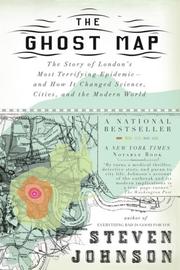
The popular account of the Broad Street outbreak, and the best possible entry point: fast, vivid, and organised around the detective work rather than the medicine. Its final chapter about cities is a separate argument you can take or leave.

A fuller biography of Snow himself — the anaesthetist, the vegetarian teetotaller, the outsider — and better than Johnson on the medical politics that kept him from being believed. Published in Britain as The Medical Detective; same book, so buy one.
The Disease and the Evidence
BeginnerUnderstand what Vibrio cholerae actually does to a body, and read the original argument in Snow's own words.
▸ Study plan for this stage
Pace: Three weeks. Hamlin's Cholera: The Biography is a compact Oxford volume of about 300 pages and is scholarly rather than narrative — two weeks at a steady pace, and expect it to complicate the previous stage rather than confirm it. The bracketed series name in our catalogue's display title is part of
- What Vibrio cholerae does: a toxin that reverses fluid transport in the small intestine, producing litres per hour of rice-water stool and killing a healthy adult by dehydration and circulatory collapse, sometimes within a day
- Why that clinical picture mattered historically — the speed, the visible dehydration, the blue-grey appearance of the dying — and why it read as poisoning rather than as fever
- Oral and intravenous rehydration as the answer, and the fact that it turns a disease killing roughly half of those infected into one killing well under one percent, using salt, sugar and clean water
- Hamlin's revisionist point: 'cholera' in the nineteenth century was a contested and unstable category, and the modern narrative of a single disease correctly identified by one man is a retrospective tidying
- The structure of Snow's real argument — the South London natural experiment comparing households supplied by the Lambeth company, which had moved its intake upriver, with those supplied by Southwark and Vauxhall, which had not
- Rate calculation as the actual epidemiological innovation: deaths per household per water company, which is a modern cohort comparison performed in 1854
- Filippo Pacini's 1854 observation of the organism, ignored, and Robert Koch's 1883-84 identification of the comma bacillus, accepted — and what the thirty-year gap says about how evidence becomes knowledge
- Pettenkofer's rival theory and his drinking a culture of the bacillus, which is the clearest reminder that clever, serious people held the other position on principle
- Describe the mechanism by which cholera kills, and explain why rehydration alone is nearly sufficient treatment.
- In On the Mode of Communication of Cholera, which piece of evidence does Snow himself treat as strongest? Is it the Broad Street map?
- How does the South London comparison work as a study design, and what would a modern epidemiologist call it?
- What is Hamlin's objection to the standard triumphalist account, and what evidence does he bring for it?
- Snow was arguing a case he had already committed to publicly. Where in the monograph can you see that pressure shaping the presentation?
- Why did identification of the organism not immediately settle the policy question?
- Take Snow's South London tables directly from the monograph and recompute the death rates per 10,000 households yourself. The numbers are all there. Doing the arithmetic is the fastest way to understand that this, not the map, is the founding document of epidemiology.
- Write out the case definition of cholera Snow is working with, then Hamlin's account of how contested that definition was at the time. Where they conflict, note what Snow would have had to concede.
- Read the Broad Street section of the monograph immediately after Johnson's chapter on the same events and mark every element of the popular account that has no counterpart in the source.
- Construct a one-page timeline: 1817 first pandemic, 1832, 1848-49, 1854, 1855 monograph, Pacini 1854, Koch 1884, and Pettenkofer's self-experiment. You will hang the next three stages on it.
- Sketch the modern rehydration formula and calculate how much fluid a 70 kg adult losing a litre an hour needs replaced over twelve hours. It makes the counterfactual mortality of the nineteenth century concrete.
Next up: With the mechanism and the original evidence in hand, the epidemics stop being medical puzzles and become what they were at the time: political events about water, money and who gets to die.

The scholarly account, from a leading historian of public health, and much less triumphalist than the popular versions — Hamlin is interested in how contested and confusing the disease was at the time. The bracketed series name is part of our catalogue's display title.

Snow's own 1855 monograph, and short. Reading the primary source after two secondary accounts is the fastest way to see how much of the modern legend is retrospective — the map is a small part of a much more careful argument.
What Cholera Did to Cities
IntermediateSee the epidemic as a political and infrastructural event in three cities, not a medical puzzle.
▸ Study plan for this stage
Pace: Six to eight weeks, dominated by one very long book. Death in Hamburg runs well past 600 pages of dense social history and deserves a month on its own; it is worth every page and it is not a quick read. The Great Stink of London is a much shorter engineering and administrative history, about a week.
- Hamburg 1892 as a controlled comparison the city did not intend: Hamburg drew unfiltered water from the Elbe, neighbouring Altona filtered its supply, and the epidemic stopped almost exactly at the municipal boundary
- The politics of not filtering — a merchant oligarchy running the city on a franchise property qualification, treating public expenditure as a threat to trade, with the delay being a decision rather than an oversight
- Evans's method: social history built from below out of death registers, housing records and police files, so class mortality gradients are demonstrated rather than asserted
- The Great Stink of 1858 and the fact that Parliament funded Bazalgette's intercepting sewers to stop a smell — the cholera benefit was a by-product of a miasmatic rationale
- Bazalgette's engineering decisions, particularly doubling his own diameter estimates, and the 1866 East London outbreak that revealed which district had not yet been connected
- Paris 1832 as class narrative: who died, who could afford to leave, the rumours of poisoning, and the deaths of prominent figures that forced the epidemic into national politics
- Cholera as an accelerant of state capacity — boards of health, notification requirements, inspection powers, compulsory purchase — and the resistance each of those attracted
- Infrastructure as the actual intervention: the sewers and filtration plants built in this period still carry much of the load in these cities, which is the material legacy of the argument
- What exactly happened at the Hamburg-Altona boundary in 1892, and why is it stronger evidence than Snow's Soho work?
- Who in Hamburg made the decision not to filter, what were their stated reasons, and what were their interests?
- Bazalgette's sewers were justified on miasmatic grounds. Does it matter to the history of science that the right infrastructure was built for the wrong reason?
- In the Paris account, how did the bourgeoisie explain the mortality distribution to itself, and what did that explanation license?
- Compare the three cities on one axis: in which did cholera most change the powers of the state, and what evidence supports the ranking?
- Evans works from municipal records rather than from medical sources. What can he see that a history of medicine cannot?
- Draw the Hamburg-Altona water supply as a diagram — intakes, filtration, distribution, the political boundary — and mark the case distribution on it. The map is the argument and drawing it fixes it permanently.
- Build a mortality-by-class table from Evans's figures for one Hamburg district and write two sentences on what the gradient is actually measuring: exposure, nutrition, housing density, or all three.
- Trace London's 1866 East London outbreak against Bazalgette's construction schedule. Identify which works were incomplete and say what the outbreak demonstrated about the system.
- For the Paris book, list the explanations contemporaries gave for why the poor died disproportionately, and beside each write what it allowed the authorities not to do.
- Write 400 words comparing the political response in the three cities using the same three headings — who paid, who decided, who died. The comparison is what the next stage generalises.
Next up: Three cities is enough of a sample to start asking what generalises, which is precisely the question the comparative and world-historical literature takes up.
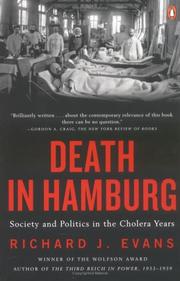
The great book on this subject: Hamburg's 1892 epidemic, the last major cholera outbreak in western Europe, and how the city's merchant oligarchy's refusal to filter the water made it possible. Long, and worth every page. Our catalogue's author field carries his honorifics.

Joseph Bazalgette and the building of London's intercepting sewers, which were commissioned to stop a smell and happened to stop cholera. The infrastructure half of the story the Snow books leave out.

The 1832 Paris epidemic as class history — who died, who fled, and how the bourgeoisie explained it to itself. Read it third for a case where the political reading is the whole point.
Cholera Inside the History of Epidemics
IntermediatePlace cholera in the longer pattern of how societies respond to epidemic disease, and see what generalises.
▸ Study plan for this stage
Pace: Eight to ten weeks, the heaviest stage on the path. The Cholera Years is a classic American monograph of moderate length and can be read in two weeks. Epidemics and Society runs near 600 pages and is effectively a full survey course in a book — a month, read a chapter at a time. Contagion and the St
- Rosenberg's three-epidemic structure for the United States — 1832, 1849, 1866 — showing the explanation shifting from divine judgement on the intemperate to sanitary failure to bacteriology, with the same disease each time
- Epidemic response as a mirror: what a society reaches for when frightened tells you what it already believed about the poor, the foreign and the sinful
- Snowden's comparative frame across plague, smallpox, cholera, tuberculosis, influenza and HIV, and the recurring repertoire of quarantine, cordon sanitaire, sanitation, vaccination and blame
- Baldwin's central finding: Britain, France, Germany and Sweden faced the same disease and adopted systematically different regimes, and the variation tracks geography, trade exposure and administrative tradition rather than science
- Quarantinism versus sanitationism as a policy axis with material interests attached — port cities and trading nations had reasons to prefer the theory that did not close harbours
- The consequence Baldwin forces: public-health policy was never simply applied science, which is a claim the Snow legend actively obscures
- McNeill's macroparasitism/microparasitism frame and the idea of disease as a determinant of world history — the book that created the field, with specifics that later research has revised
- How to read an influential older book honestly: take the frame, check the examples, and do not cite its epidemiological particulars as current
- Rosenberg shows the same disease explained three ways in thirty-four years. What drove each shift — new evidence, new institutions, or new social anxieties?
- Baldwin argues that national responses diverged for non-scientific reasons. Summarise his explanation for the British case and for the German one.
- Where do Snowden and Baldwin disagree about how much the science mattered?
- Which of McNeill's specific claims have been overtaken, and does the loss of them damage the frame?
- Across all four books, what actually generalises from cholera to other epidemics, and what is specific to a waterborne disease with a short incubation and a visible clinical course?
- Build a four-column comparison table from Baldwin — Britain, France, Germany, Sweden — with rows for quarantine policy, notification, isolation powers and the interest group driving each. Baldwin's argument is only fully visible in tabulated form.
- Take Rosenberg's 1832 and 1866 chapters and write out, in the sources' own language, the explanation each epidemic received. Set them beside each other; the change in vocabulary is the finding.
- Test McNeill's frame on the Hamburg case from the previous stage: does macroparasitism add anything to what Evans already showed, or does it restate it?
- Using Snowden's chapters on cholera, check three of his factual claims against Hamlin and Snow's monograph from stage two. Survey books compress, and finding out where is a real skill.
- Write 600 words answering the question Baldwin poses: if science did not determine policy, what did? Argue it with cases from this stage and the last.
Next up: Having established that response is political rather than merely technical, the final stage puts that conclusion against a disease that is still killing people now.
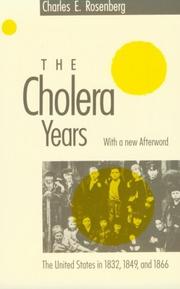
The classic American study, on the 1832, 1849 and 1866 epidemics in the United States and how the religious explanation gave way to the sanitary one. Sixty years old and still the model for how to write this kind of history.

A full survey course in a book, from plague to HIV, with substantial chapters on cholera and on the sanitary movement. The best single volume for putting everything above in context.

Comparative and demanding: why Britain, France, Germany and Sweden responded to the same disease in different ways. The scholarly capstone, and the book that shows public-health policy was never simply a matter of the science.

The book that made disease a category of world history. Some of its specifics have been overtaken, so read it as a framework rather than a reference — but the frame is the reason everything else on this stage exists.
Cholera Now
BeginnerFollow the seventh pandemic to Haiti and Yemen, and the water systems that still fail.
▸ Study plan for this stage
Pace: Two to three weeks. Both books are trade non-fiction of moderate length and read quickly. The Blue Death is by an epidemiologist and takes about a week; it is written as advocacy about drinking-water safety in wealthy countries and is straightforwardly arguing a case rather than surveying a field. P
- The seventh pandemic, which began in 1961 with the El Tor biotype and has never ended — cholera is currently the longest-running pandemic in the modern record
- The Sundarbans and the Bay of Bengal as the environmental reservoir where Vibrio cholerae persists in brackish water and plankton independently of human hosts
- Haiti 2010: an outbreak in a country with no recorded cholera in a century, genomically traced to a South Asian strain and to a UN peacekeeping camp's sanitation, and the years it took for responsibility to be acknowledged
- Yemen from 2016: over a million suspected cases, driven by the destruction of water and sanitation infrastructure during war — cholera as a consequence of policy rather than of poverty alone
- Why the disease persists despite a trivially cheap treatment: the constraint is water, sewerage and functioning institutions, not knowledge
- The Blue Death's argument about wealthy countries — ageing distribution systems, treatment failures, and the Milwaukee cryptosporidium outbreak of 1993 as a demonstration that safe water is maintained rather than achieved
- Shah's template model: reservoir, spillover, amplification through crowding and transport, and adaptation, with cholera as the worked example for pathogens that have not yet emerged
- The direct line from Snow's conclusion to present policy — that the intervention is infrastructure — and how rarely that conclusion is funded
- Why has the seventh pandemic lasted more than sixty years when the treatment costs pennies?
- How was the Haitian outbreak's origin established, and what did the response to that finding show about international accountability?
- What is Morris's specific worry about drinking water in wealthy countries, and how strong is the evidence he offers? He is arguing a case; assess it as one.
- Shah generalises from cholera to emerging pathogens. Which features of cholera transfer to a respiratory virus and which do not?
- Looking back across the whole path: what has actually changed since 1854 in how a society decides to spend money on clean water?
- Trace the Haiti outbreak on a map alongside Snow's Soho map. Same reasoning, 150 years apart, one done with genomics — write a paragraph on what the modern investigation could establish that Snow could not, and what it could not establish any better.
- Look up the current WHO cholera situation reports and note where cases are being recorded this year. Set that list beside Snowden's list of nineteenth-century epidemic countries.
- Take Morris's central claim about water-system safety and identify the strongest counter-evidence you can find. Reading an advocate well means being able to state the other side.
- Write the 500-word answer to the question the whole path has been building toward: cholera is cheap to treat and preventable by known engineering, so why does it still kill. Use Baldwin, Evans and Shah rather than generalities.
- Revisit the timeline you built in stage two and extend it to 1961, 2010 and 2016. The shape of that finished timeline is the honest summary of the subject.
Next up: You now hold the whole arc — a disease that created epidemiology, remade cities, and is still killing where the water systems have failed — and you can read any new outbreak story against a real historical baseline.
By an epidemiologist, on the state of drinking-water safety in wealthy countries — a direct continuation of the Snow story into the present, and considerably less reassuring than the nineteenth-century narrative implies.

Uses cholera as the template for how a new pathogen becomes a global disease, following it from the Sundarbans to Haiti. The right book to finish on, because it makes clear the story did not end in Soho in 1854.
Discussion
Keep reading
Paths that share books, cover the same subject, or open a related topic.